

Franz Kafka (1883–1924) was a German-speaking writer from Prague whose works have become foundational to 20th-century literature, particularly within the genres of existentialism and modernism. Known for his dark, surreal narratives and distinctive prose, Kafka’s writings often explore themes of alienation, bureaucratic absurdity, and existential dread. His characters frequently encounter incomprehensible forces, oppressive systems, and futile struggles, reflecting Kafka’s exploration of the complexities and anxieties of modern life.
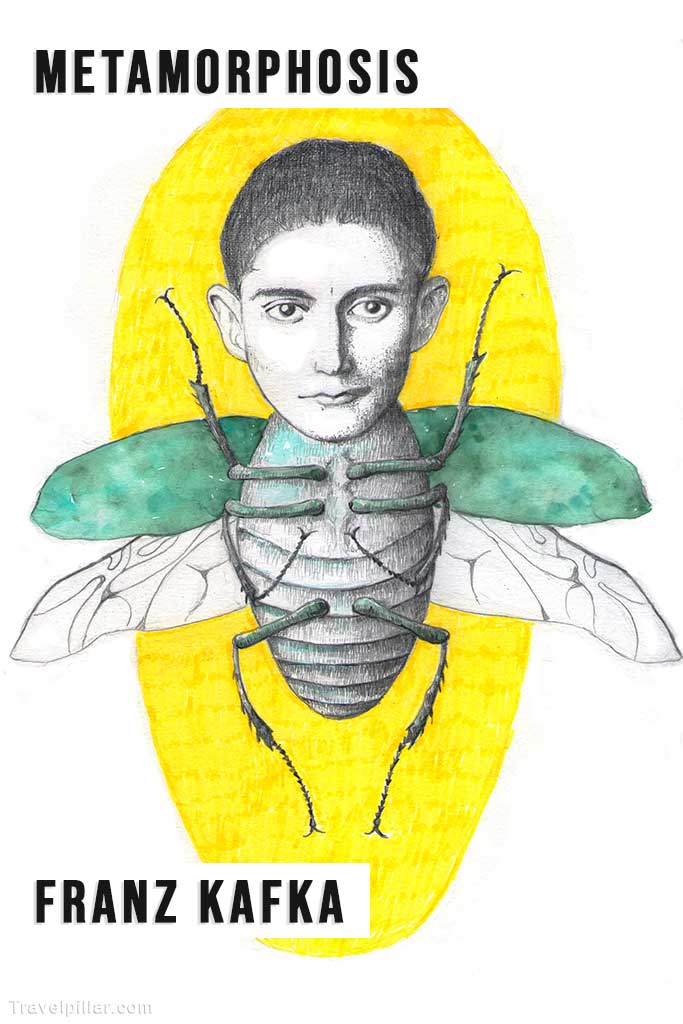
Kafka’s major works include The Metamorphosis (1915), The Trial (published posthumously in 1925), and The Castle (published posthumously in 1926). In The Metamorphosis, one of his most widely read stories, the protagonist, Gregor Samsa, awakens to find himself transformed into a giant insect. This absurd situation serves as a metaphor for alienation, depicting the struggles of identity and self-worth in a hostile world. Gregor’s transformation, though fantastical, reflects Kafka’s broader interest in how individuals cope—or fail to cope—within the isolating structures of society and family.
The Trial follows the story of Josef K., who is unexpectedly arrested and subjected to an opaque legal system without being informed of his crime. The novel delves into themes of justice, power, and the futility of navigating impersonal institutions. Kafka portrays a system where human agency is nullified by bureaucratic processes, creating a nightmarish world where meaning is perpetually out of reach. The novel captures Kafka’s view of modernity as a place where individuals confront an impersonal, often incomprehensible authority, a theme that resonates with existentialist philosophy.
The Castle, another unfinished novel, explores similar territory as it follows the protagonist, known only as K., in his futile attempts to gain access to a mysterious castle. Here, Kafka examines the elusive nature of authority and the frustration of individuals who seek validation or acceptance from structures that remain inaccessible and indifferent. The novel’s ambiguity underscores Kafka’s vision of a fragmented world where existential quests for purpose are met with endless obstacles.
Although Kafka published only a few works during his lifetime, his writing has become deeply influential. His style, marked by clear, precise language and surreal events, created a unique literary vision that blends realism with the absurd. Kafka’s portrayal of existential uncertainty and institutional absurdity has made his work highly relevant in modern literature and philosophy, where his themes continue to be explored in discussions of alienation, identity, and the struggles of modern life. His posthumous recognition and lasting impact reflect the universal appeal of his exploration of human vulnerability in the face of overwhelming systems and existential crises.