
The Metamorphosis, a novella by Franz Kafka published in 1915, tells the story of Gregor Samsa, a traveling salesman who awakens one morning to find himself transformed into a giant insect. This surreal event serves as the catalyst for a narrative that explores themes of alienation, family duty, and the human condition within an indifferent world. Through Gregor’s transformation, Kafka portrays a bleak vision of societal expectations, identity, and the collapse of personal relationships under pressure.
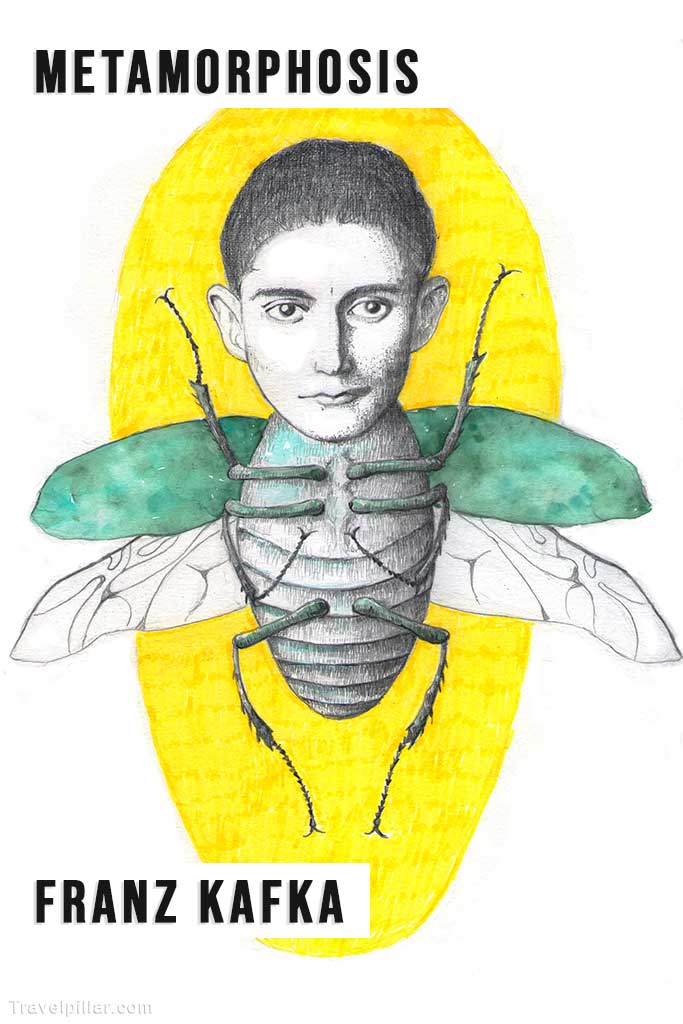
The story opens with Gregor’s startling discovery of his insect form, which is presented in a matter-of-fact tone that sets the tone for the novella’s absurd yet realistic narrative style. Despite his physical transformation, Gregor’s thoughts remain human; he is more concerned with his inability to go to work and support his family than with his new form. This sense of duty underscores Gregor’s role as the family’s primary breadwinner, a responsibility that he carries heavily. His family’s financial stability depends on him, as they live in modest circumstances and have little means of support aside from Gregor’s income.
As Gregor attempts to navigate his new form, he becomes increasingly isolated from his family, who are horrified by his appearance. His parents and sister, Grete, initially respond with shock and confusion, and as the story unfolds, their initial sympathy diminishes, giving way to frustration and resentment. Although Grete takes on the responsibility of feeding Gregor and cleaning his room, her actions gradually lose their compassion, and she begins to see him as a burden. This shift is most evident when Grete starts to call Gregor “it” rather than “he,” marking a symbolic severing of their familial connection and emphasizing Gregor’s descent into isolation.
Gregor’s transformation highlights themes of alienation, both within his family and within society at large. As he loses his ability to communicate with his family and experiences increasing physical degradation, he becomes less human in their eyes. This estrangement is mirrored by his family’s response, as they progressively distance themselves from him emotionally and physically. His transformation from a person to a perceived pest encapsulates the dehumanizing effects of societal and familial rejection, as Gregor’s family no longer views him as a person deserving of care but as a problem that disrupts their lives.
The novella also examines the limits of familial duty and obligation. While Gregor previously sacrificed his own desires to support his family, his family ultimately abandons him when he can no longer fulfill this role. As Gregor’s presence becomes more of a burden, his family begins to adapt to life without him, taking on jobs and finding ways to support themselves. This newfound independence allows them to see Gregor as expendable, leading them to contemplate removing him from the household. The final act of rejection occurs when Grete insists that they must “get rid of it,” solidifying Gregor’s complete alienation from his family.
In the novella’s conclusion, Gregor succumbs to his physical decay and dies in solitude. His death is treated with indifference by his family, who quickly resume their lives, experiencing a sense of relief rather than grief. They move to a smaller apartment, and Kafka concludes the story with an almost optimistic tone, as the family looks forward to a future without Gregor. This ending underscores the novella’s exploration of detachment and the fragility of familial bonds when tested by hardship.
The Metamorphosis remains one of Kafka’s most significant works, capturing themes of identity, alienation, and the strains of modern life. Through Gregor’s transformation and the unraveling of his relationship with his family, Kafka presents a dark yet poignant view of the human experience, illustrating the isolating effects of societal expectations and the often tenuous nature of human connections in an indifferent world.