

Rome’s historical sites represent its development from ancient imperial capital to modern state centre. The Pantheon, Colosseum, Roman Forum, and Imperial Fora illustrate Roman engineering and public life. Palatine Hill reveals aristocratic residences, while Castel Sant’Angelo reflects medieval and papal history. The Catacombs of Rome show early Christian practices, and the Baths of Caracalla demonstrate public bathing culture. Sites like the Quirinal Palace and the Keyhole of the Knights of Malta add later historical layers.
#1 The Pantheon

The Pantheon is a well-preserved ancient Roman temple dedicated to all gods, later converted into a Christian church. Completed during Emperor Hadrian’s reign around 126 AD, it features a massive dome with a central oculus, symbolizing the heavens. Its harmonious proportions and architectural innovation, including unreinforced concrete construction, have inspired structures worldwide. Located in Piazza della Rotonda, the Pantheon remains a significant cultural and historical landmark in Rome.
Official tourism website:
https://www.pantheonroma.com
Google map 4.8/5
#2 The Roman Forum – Foro Romano
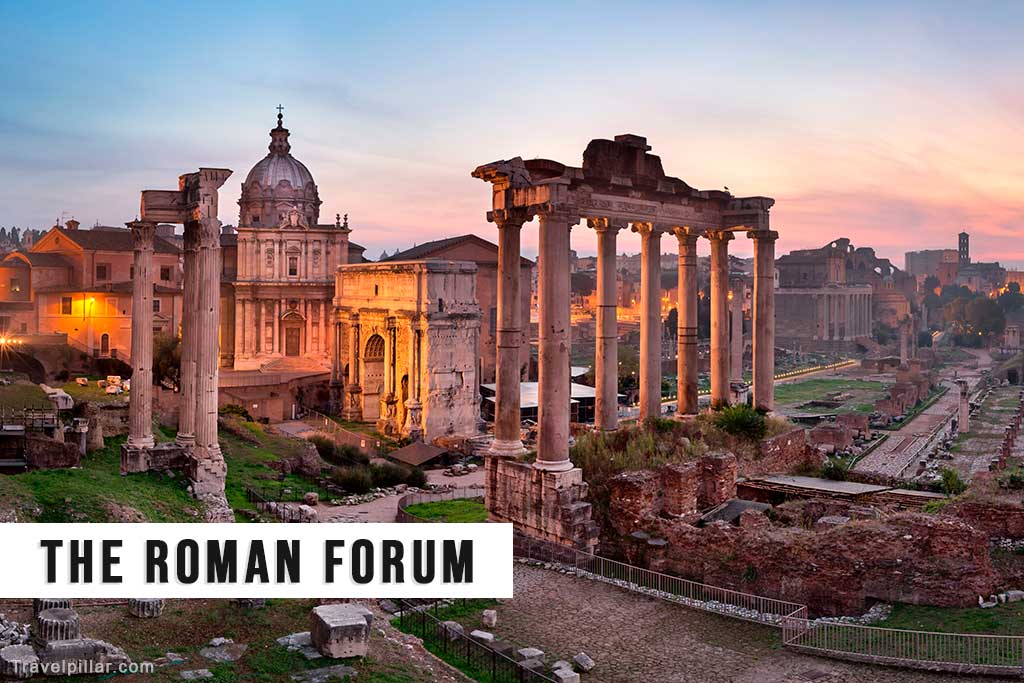
The Roman Forum, located between the Palatine and Capitoline Hills, was the political, religious, and social centre of ancient Rome. Developed over centuries, it features ruins of significant structures, including the Temple of Saturn, the Arch of Titus, and the Curia. The Forum hosted triumphal processions, public speeches, and market activities. As a symbol of Roman civilization, it offers valuable insights into the city’s history and architectural grandeur.
Official tourism website:
https://colosseo.it/en/
Entrance tickets can be purchased for 24hr or 48hr entry and include access to the Colosseum, Roman Forum and Palatine Hill – check website for prices and opening hours
Google map 4.7/5
#3 Colosseum

The Colosseum, also known as the Flavian Amphitheatre, is an iconic ancient Roman structure located in the heart of Rome. Completed in 80 AD under Emperor Titus, it hosted gladiatorial games, animal hunts, and public spectacles. Its elliptical design could accommodate up to 50,000 spectators. Despite damage over centuries, its architectural ingenuity and historical significance make it one of the most renowned landmarks in the world and a symbol of ancient Roman engineering.
Official tourism website:
https://colosseo.it/en/
Entrance tickets can be purchased for 24hr or 48hr entry and include access to the Colosseum, Roman Forum and Palatine Hill – check website for prices and opening hours
Google map 4.7/5
#4 Palatine Hill
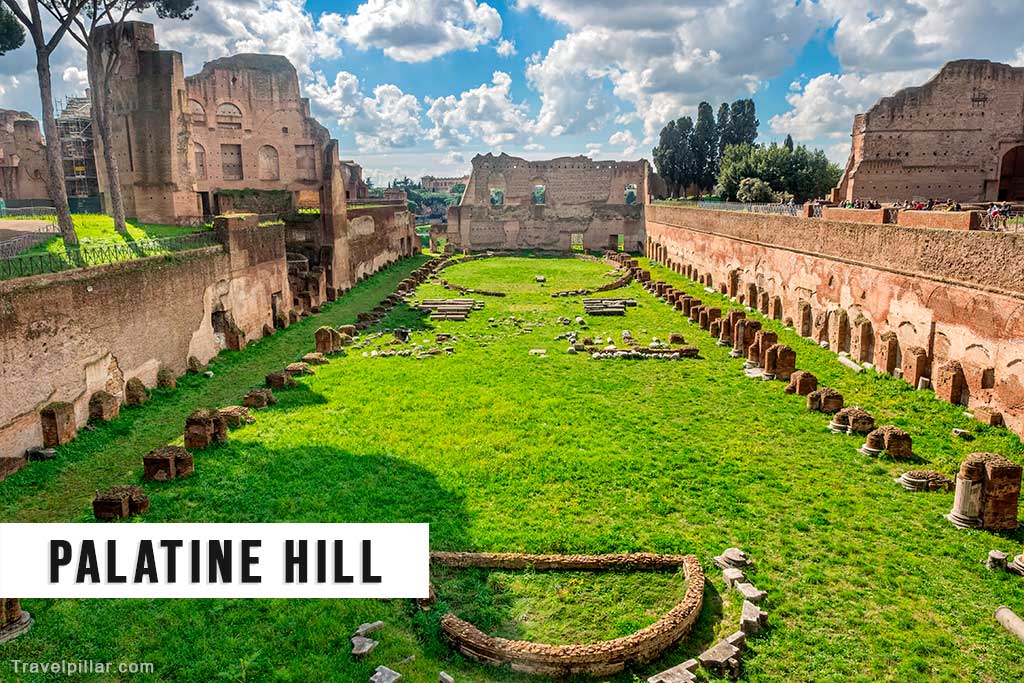
Palatine Hill, one of Rome’s seven hills, is a historically significant site overlooking the Roman Forum and Circus Maximus. Known as the legendary birthplace of Rome, it was home to emperors and aristocrats. Archaeological remains include imperial palaces, temples, and gardens. The site offers panoramic views and insights into ancient Roman civilization. Its rich history and central role in Rome’s founding make it an essential destination for visitors exploring the city’s heritage.
Official tourism website:
https://colosseo.it/en/
Entrance tickets can be purchased for 24hr or 48hr entry and include access to the Colosseum, Roman Forum and Palatine Hill – check website for prices and opening hours
Google map 4.7/5
#5 Castel Sant’Angelo

Castel Sant’Angelo, also known as the Mausoleum of Hadrian, is a historic fortress in Rome located on the banks of the Tiber River. Originally built as a mausoleum for Emperor Hadrian in the 2nd century AD, it later served as a papal residence, fortress, and prison. Today, it functions as a museum, showcasing its varied history and offering panoramic views of the city from its terraces.
Google map 4.7/5
#6 Imperial Fora
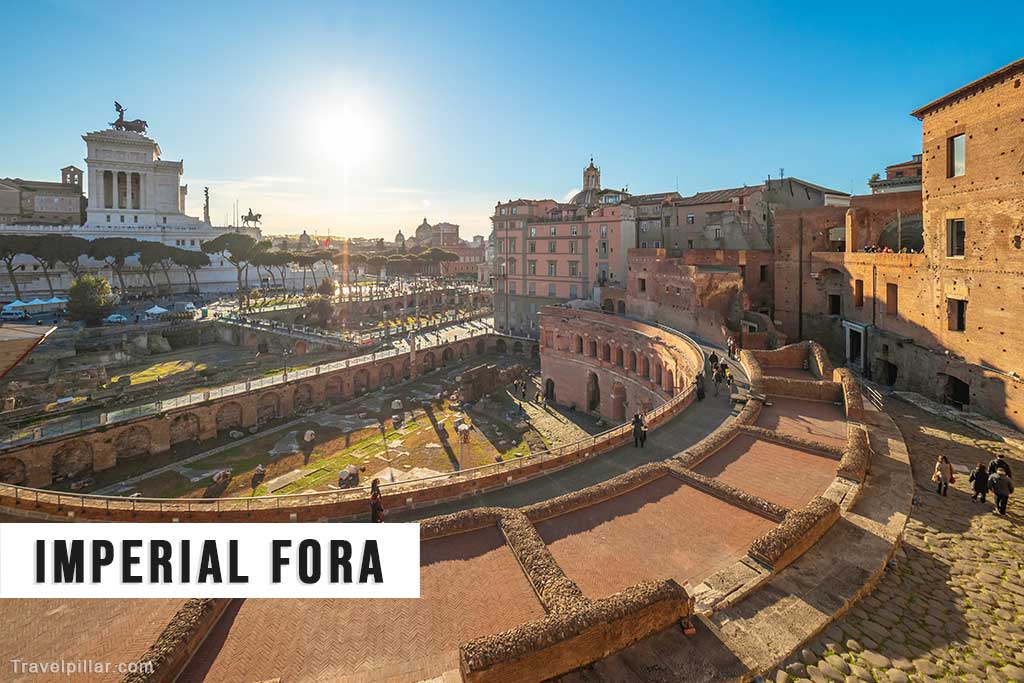
The Imperial Fora are a series of monumental public squares in Rome, built between 46 BC and 113 AD to serve as centers for political, religious, and commercial activities. The complex includes the Forum of Caesar, Forum of Augustus, Forum of Vespasian, Forum of Nerva, and Trajan’s Forum, each featuring temples, basilicas, and open spaces. These fora showcase the architectural and cultural achievements of ancient Rome and remain significant archaeological and historical sites.
Google maps 4.7/5
#7 The Keyhole of the Knights of Malta
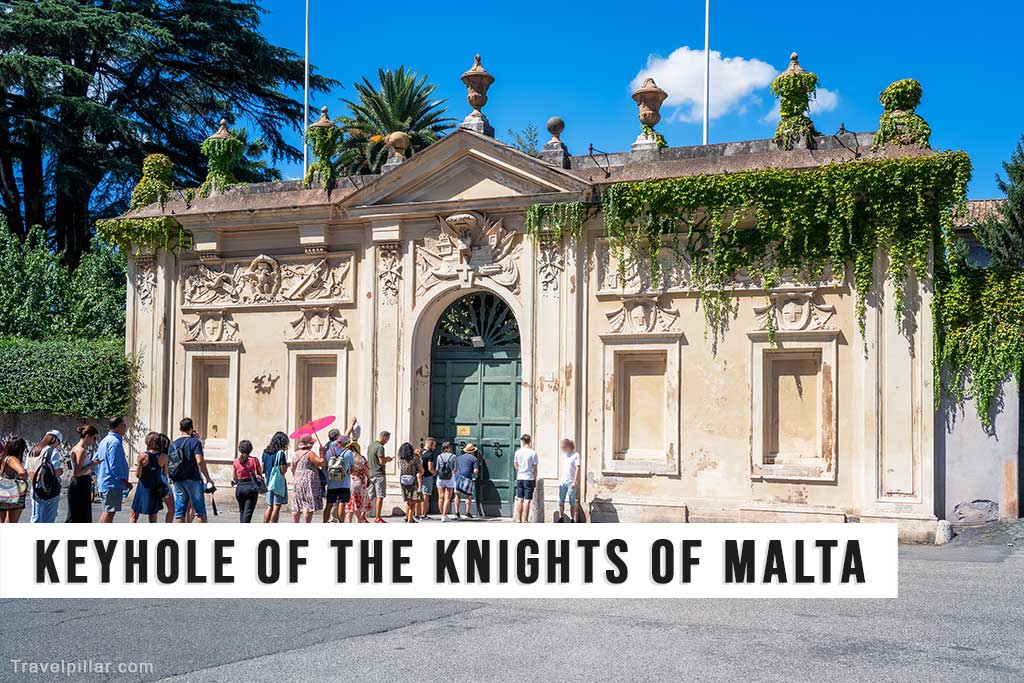
The Keyhole of the Knights of Malta, located on Aventine Hill, is a unique and intriguing attraction. Peering through the keyhole of the Villa del Priorato di Malta’s gate reveals a perfectly framed view of St. Peter’s Basilica. This alignment, blending nature and architecture, is both a curiosity and a symbol of perspective. The site, surrounded by historic charm and serene gardens, offers a subtle yet memorable experience for visitors.
Google map 4.4/5
#8 Put Your Hand in the Mouth of Truth

The Mouth of Truth (Bocca della Verità) is an ancient marble mask located in the portico of the Church of Santa Maria in Cosmedin in Rome. Dating back to the 1st century AD, the mask is believed to have served as a drain cover or fountain. It is famously associated with a medieval legend that claims it would bite off the hand of anyone who told a lie while placing their hand inside its mouth.
Google map 4.2/5
#9 Catacombs of Rome
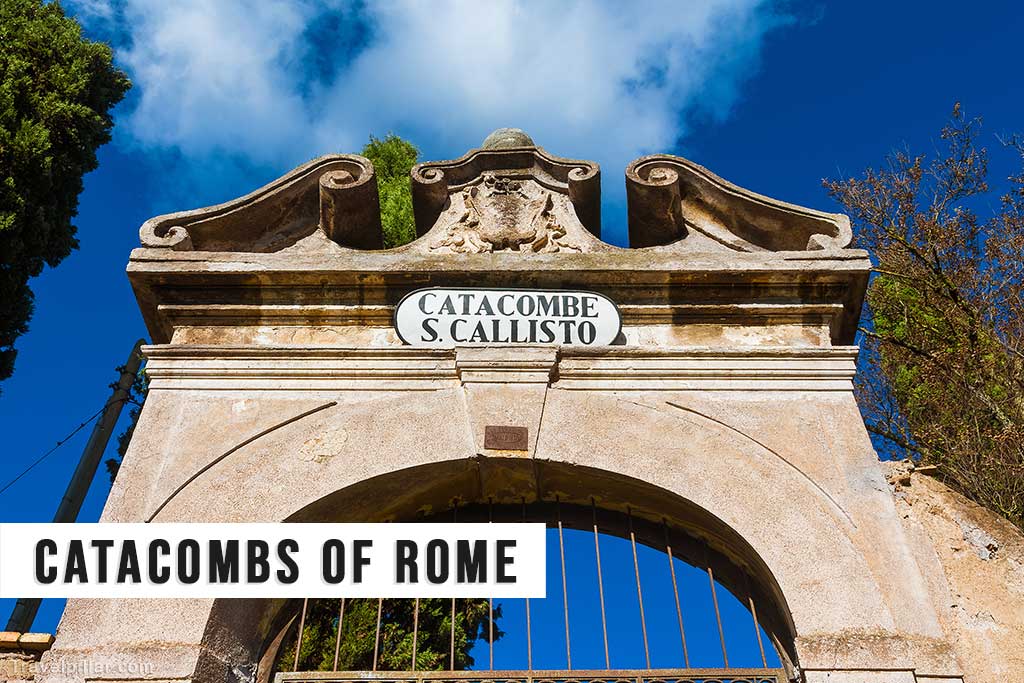
The Catacombs of Rome are a network of underground burial sites used by early Christians and Jews from the 2nd to 5th centuries AD. Located outside the city walls, these catacombs feature intricate tunnels and chambers with frescoes, inscriptions, and religious symbols. Notable sites include the Catacombs of San Callisto, San Sebastiano, and Domitilla, providing insight into early Christian funerary practices and art.
Google map (Catacombe di San Callisto) 4.6/5
Google map (Catacombe Domitilla) 4.6/5
Google map (Catacombe di San Sebastiano) 4.5/5
#10 Baths of Caracalla (Terme di Caracalla)

The Baths of Caracalla are a vast and well-preserved ancient Roman bath complex in Rome, built between 212 and 216 AD during Emperor Caracalla’s reign. Covering 25 hectares, the site features impressive ruins of the main bath chambers, gyms, and gardens. Once accommodating up to 1,600 bathers, the baths reflect Rome’s engineering prowess and social culture.
Google map 4.6/5
#11 Quirinal Palace

Quirinal Palace, situated on Rome’s Quirinal Hill, is the official residence of the President of Italy. Originally built in 1583 as a papal summer residence, it later served as a royal palace before becoming a symbol of the Italian Republic. The palace features elegant architecture, frescoed halls, and expansive gardens. Its historical and political significance, combined with its artistic heritage, make it a prominent landmark and an enduring symbol of Italian governance.
Official website: https://palazzo.quirinale.it/
Google map 4.7/5
#12 Circus Maximus
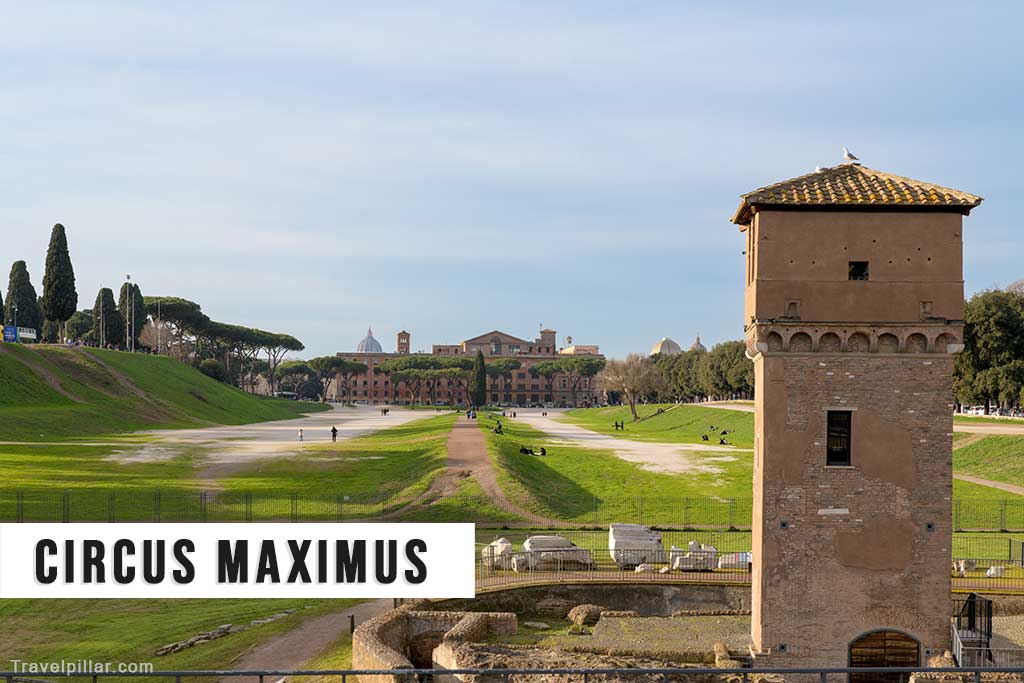
Circus Maximus, located between Rome’s Aventine and Palatine Hills, was an ancient Roman chariot racing stadium and mass entertainment venue. Dating back to the 6th century BCE, it could accommodate up to 250,000 spectators, making it one of the largest structures of its kind. Today, the site is an open park, retaining traces of its grand past. It remains a historically significant landmark reflecting Rome’s ancient engineering and cultural heritage.
Google map 4.5/5
#13 Via Appia Antica (Appian Way)
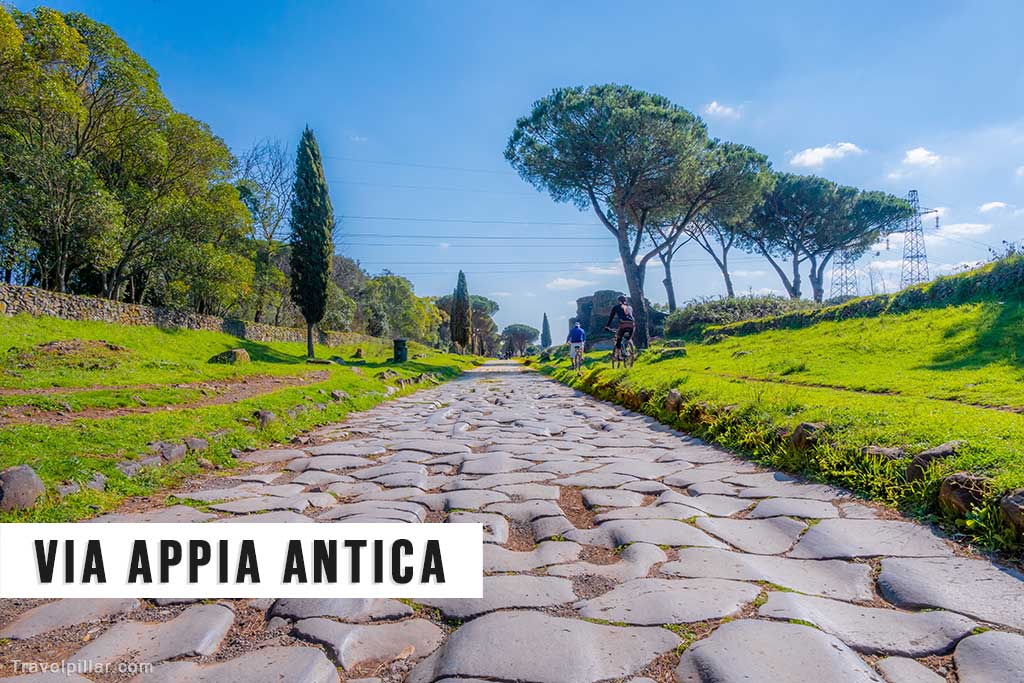
Via Appia Antica, known as the Appian Way, is one of ancient Rome’s earliest and most important roads, built in 312 BCE. Stretching from Rome to Brindisi, it served as a vital route for trade and military transport. Today, it offers a picturesque path lined with ruins, aqueducts, and catacombs, such as San Sebastiano. A popular destination for walkers and cyclists, it provides a glimpse into Roman history and infrastructure.
Google map 4.8/5
#14 Ara Pacis
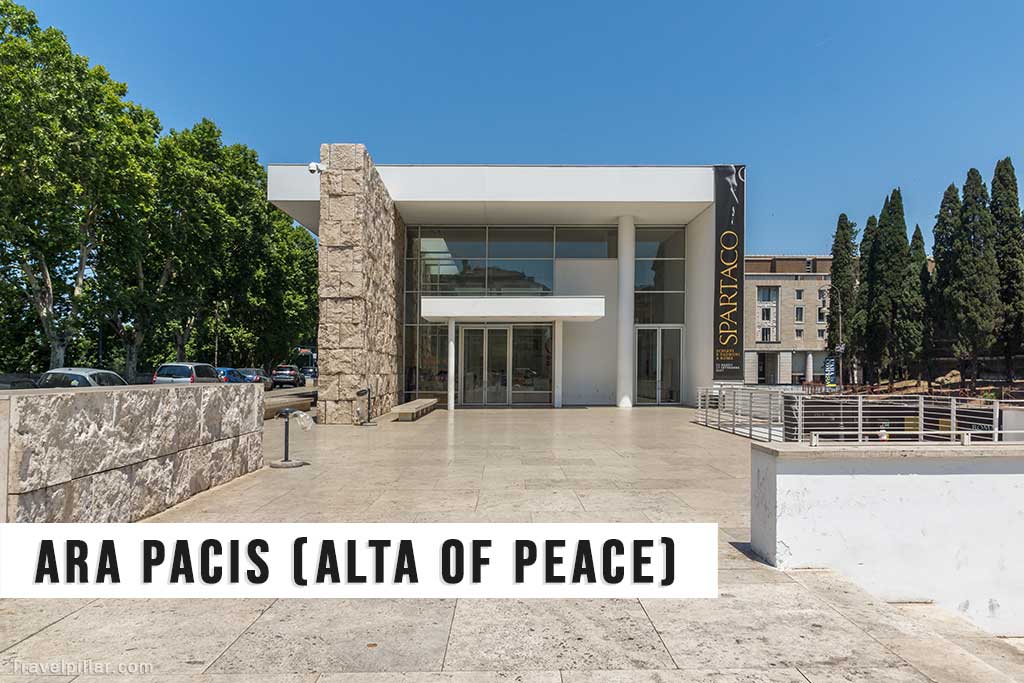
Ara Pacis, or the Altar of Peace, is an ancient Roman monument dedicated in 9 BCE to celebrate Emperor Augustus’s establishment of peace in the empire. Located near the Tiber River, the altar is enclosed in a modern glass pavilion designed by Richard Meier. Its intricate reliefs depict scenes of Roman mythology and imperial family members, symbolizing prosperity and unity. Ara Pacis remains a significant artifact of Roman art and political ideology.
Google map 4.5/5
#15 Teatro di Marcello

Teatro di Marcello, an ancient open-air theater in Rome, was commissioned by Julius Caesar and completed under Augustus in 13 BCE. Named after Augustus’s nephew, it could accommodate around 15,000 spectators and hosted performances of drama and music. Its design influenced later Roman amphitheaters, including the Colosseum. Today, its well-preserved arches and columns remain a testament to Roman engineering. The site also features medieval and Renaissance additions, showcasing layered historical significance.
Google map 4.6/5
#16 Cestius Pyramid
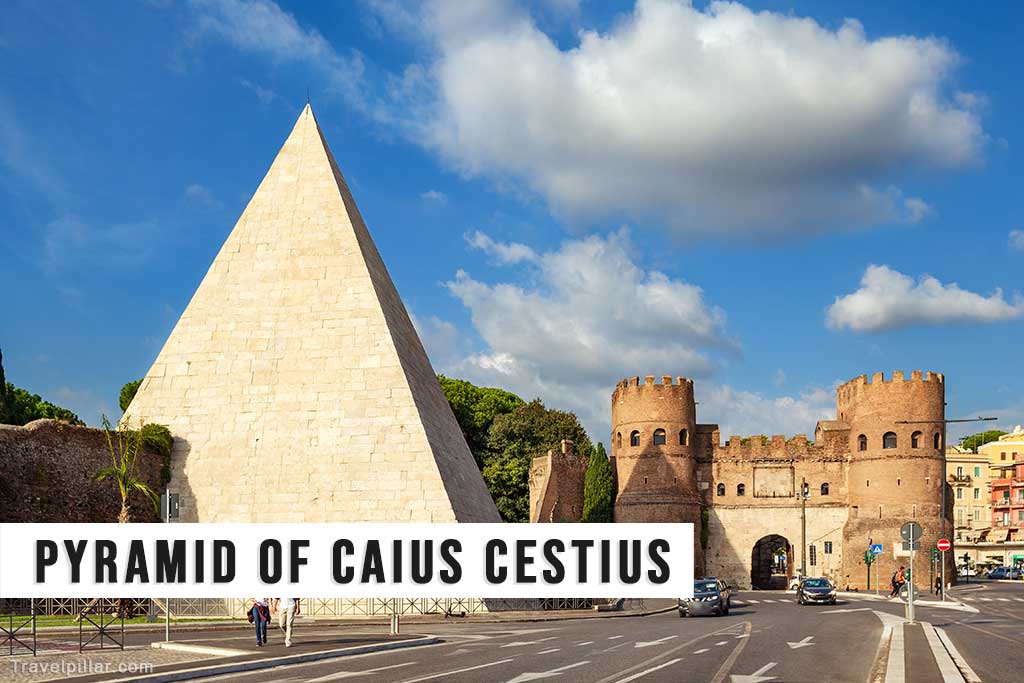
Cestius Pyramid, located near Rome’s Porta San Paolo, is a unique ancient Roman monument built around 12 BCE as a tomb for Gaius Cestius, a magistrate and priest. Inspired by Egyptian influence, the pyramid stands 36 meters tall and is made of white Carrara marble. It is integrated into the Aurelian Walls, reflecting its later defensive use. The pyramid’s preservation offers a distinctive glimpse into Rome’s eclectic architectural and cultural history.
Google map 4.3/5
#17 Largo di Torre Argentina
Largo di Torre Argentina, located in central Rome, is an archaeological site featuring the remains of four Republican-era temples and part of Pompey’s Theatre. It is historically notable as the site of Julius Caesar’s assassination in 44 BCE. Today, it also serves as a sanctuary for stray cats, adding a unique charm to its ancient ruins. The site provides valuable insights into Rome’s Republican history and architectural evolution.
Google map 4.5/5