
Scotland’s Great Trails are a network of long-distance routes designed to showcase the country’s landscapes, from coastal paths and river valleys to highland terrain and remote glens. These routes provide a structured way to explore Scotland on foot, with many sections also suitable for cycling.
Unlike National Trails in England and Wales, Scotland’s long-distance routes are managed under a separate system. Each trail is waymarked and maintained to a consistent standard, offering a range of distances and levels of difficulty. Some follow historic routes or natural corridors, while others link key regions and settlements.
The trails vary from relatively gentle paths through lowland countryside to more demanding routes across upland and coastal terrain. Many can be completed in sections, making them accessible to both casual walkers and those undertaking multi-day journeys. Together, they provide a comprehensive overview of Scotland’s geography, history and rural landscapes.
Official website for the full list of trails: https://www.nature.scot/
West Highland Way
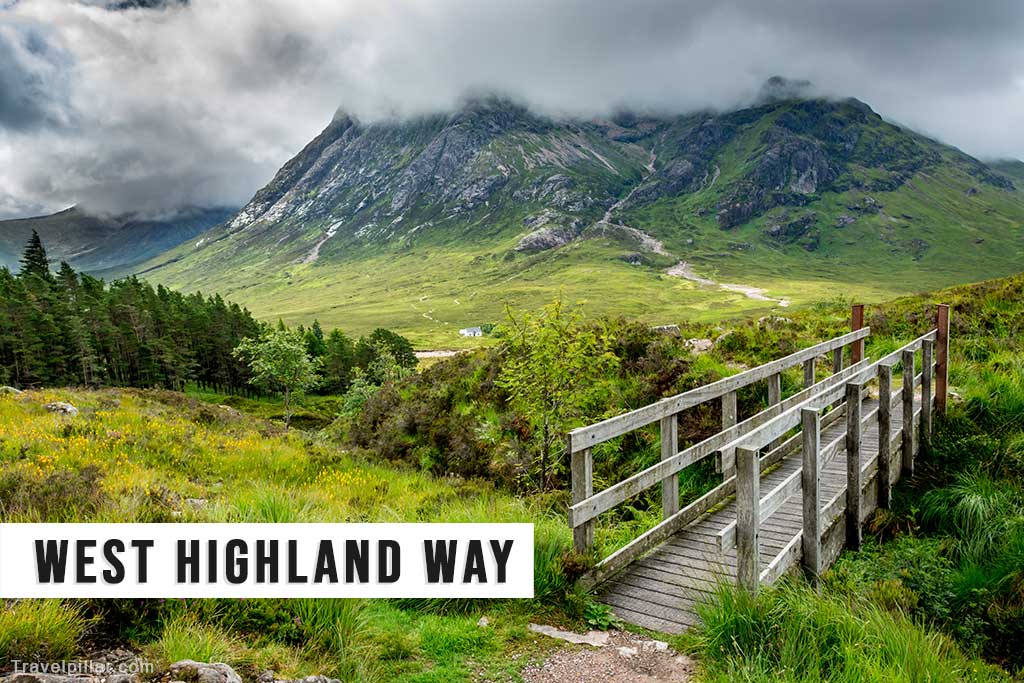
The West Highland Way runs for 96 miles from Milngavie near Glasgow to Fort William in the Scottish Highlands. It passes through varied landscapes, including lochs, forests and open moorland. The route crosses Rannoch Moor and follows the shores of Loch Lomond. It is one of the most popular long-distance trails in the UK, with well-developed infrastructure and accommodation along the route.
Official website: https://www.westhighlandway.org
Great Glen Way
The Great Glen Way runs from Fort William to Inverness, following a natural geological fault line through the Scottish Highlands. The route connects a series of lochs, including Loch Ness, and alternates between forest tracks, canal towpaths and hillside trails. It provides a relatively moderate long-distance walk compared to more challenging Highland routes and offers consistent views of water and surrounding hills.
Official website: https://www.greatglenway.com
Three Lochs Way
The Three Lochs Way runs from Balloch on Loch Lomond to Inveruglas, linking Loch Lomond, Gare Loch and Loch Long. The route passes through woodland, hills and lochside paths, offering varied scenery over a relatively short distance. It is suitable for a multi-day walk and includes both low-level and elevated sections. The trail provides views across the surrounding landscape and nearby mountains.
Official website: http://www.threelochsway.co.uk
Speyside Way
The Speyside Way follows the River Spey through north-east Scotland, linking Aviemore with the Moray coast. The route passes through woodland, farmland and small towns, including areas associated with whisky production. It provides a relatively gentle walking experience, with mostly flat or gradual terrain. The trail offers views of the Cairngorms and access to distilleries and rural communities along the route.
Official website: https://www.speysideway.co.uk
Southern Upland Way
The Southern Upland Way is a coast-to-coast route across southern Scotland, running from Portpatrick to Cockburnspath. It passes through remote hills, forests and farmland, offering a more isolated walking experience. The route includes long sections without facilities and requires careful planning. It provides extensive views across the surrounding countryside and is considered one of the more demanding long-distance trails.
Official website: https://dgtrails.org/southern-upland-way/
Fife Coastal Path
The Fife Coastal Path runs along the coastline of Fife from Kincardine to Newburgh. It passes fishing villages, beaches, cliffs and historic sites, including castles and harbours. The route offers views across the Firth of Forth and the North Sea. It is generally well maintained and accessible in sections, making it suitable for shorter walks as well as longer-distance routes.
Official website: https://fifecoastandcountrysidetrust.co.uk/
Rob Roy Way
The Rob Roy Way runs from Drymen to Pitlochry, passing through areas associated with the Scottish outlaw Rob Roy MacGregor. The route crosses varied terrain, including woodland, farmland and lochside paths. It passes through small towns and rural landscapes in central Scotland. The trail is less demanding than some Highland routes and offers a mix of natural scenery and historical associations.
Official website: https://www.robroyway.com
John Muir Way
The John Muir Way runs coast-to-coast across central Scotland from Helensburgh to Dunbar. It passes through a range of landscapes, including urban areas, farmland, woodland and coastal paths. Named after the conservationist John Muir, the route links natural and cultural sites. It is accessible in sections and suitable for walking and cycling, with relatively moderate terrain overall.
Official website: https://www.johnmuirtrust.org/john-muir-way
Borders Abbeys Way
The Borders Abbeys Way is a circular route through the Scottish Borders, linking four historic abbeys: Melrose, Kelso, Jedburgh and Dryburgh. The trail passes through countryside, riverside paths and small towns. It combines historical interest with varied landscapes and relatively moderate terrain. The route is well signposted and can be completed in sections or as a longer multi-day walk.
Official website: https://www.scotborders.gov.uk/
St Cuthbert’s Way
St Cuthbert’s Way runs from Melrose in Scotland to Lindisfarne in England, following a route associated with Saint Cuthbert. The trail passes through farmland, hills and coastal landscapes, ending with a tidal crossing to Holy Island. It combines historical and religious significance with varied scenery. The route is generally moderate, with clear waymarking and a range of accommodation along the way.
Official website: https://www.stcuthbertsway.info
Dava Way
The Dava Way runs between Forres and Grantown-on-Spey in north-east Scotland, following the route of a former railway line. The path passes through moorland, woodland and open countryside, with relatively gentle gradients. It is suitable for walking and cycling and provides a quieter alternative to more popular routes. The trail offers views across the surrounding landscape and local wildlife habitats.
Official website: https://davaway.org.uk
Cateran Trail
The Cateran Trail is a circular route in central Scotland, passing through Perthshire and Angus. It explores glens, farmland and forested areas, following paths linked to historic cattle droving and raiding routes. The trail passes small settlements and rural landscapes, with moderate terrain overall. It provides a quieter walking experience, with sections that require navigation and planning.
Official website: https://www.pkct.org/cateran-trail
Moray Coast Trail
The Moray Coast Trail follows the coastline from Forres to Cullen in north-east Scotland. It passes cliffs, beaches, fishing villages and coastal formations, with views across the Moray Firth. The route includes sections of uneven terrain and requires careful planning in places. It offers opportunities to observe wildlife, including dolphins, and connects a series of small coastal communities.
Official website: https://www.morayways.org.uk/