

Segovia is a historic city located in the central region of Spain, just 90 km northwest of Madrid. The city is known for its stunning Roman aqueduct, medieval castle, and beautiful Gothic cathedral, making it a popular destination for history and architecture enthusiasts.
The Roman aqueduct is one of Segovia’s most famous landmarks and is considered one of the best-preserved examples of Roman engineering in the world. The aqueduct dates back to the 1st century AD and features over 160 arches that stretch for over 800 meters through the city.
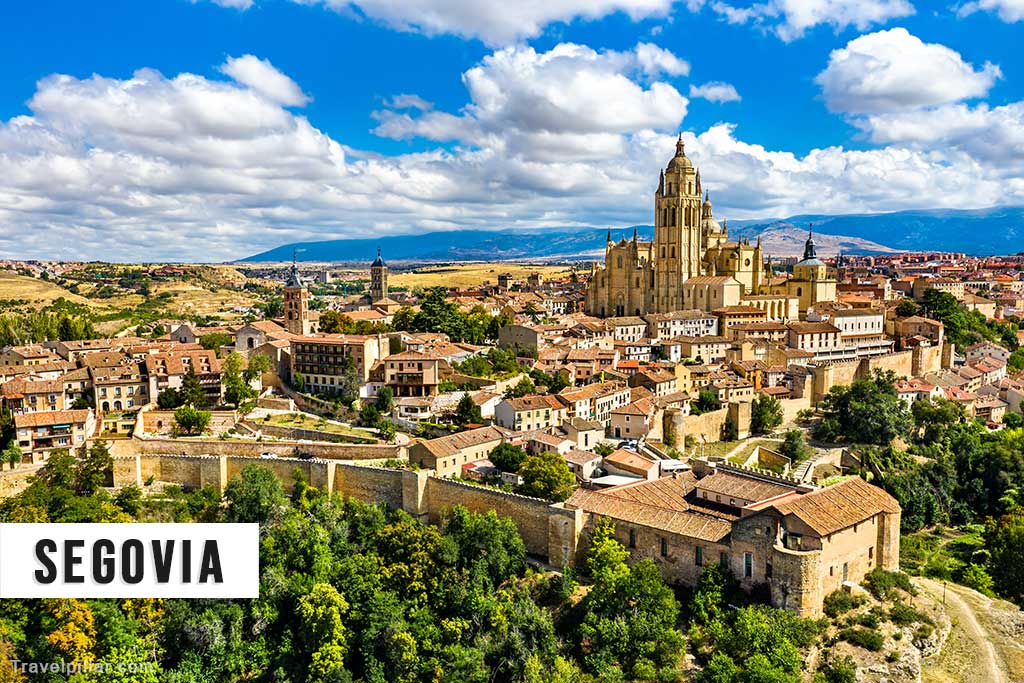
Another popular attraction in Segovia is the Alcázar of Segovia, a stunning medieval castle that sits atop a rocky hill overlooking the city. The castle dates back to the 12th century and has served as a royal palace, a prison, and a military academy over the years.
Segovia is also home to a number of beautiful churches and monasteries, including the stunning Gothic-style Segovia Cathedral, which was built in the 16th century and is considered one of the last great Gothic cathedrals in Spain.
Overall, Segovia is a beautiful and historic city that offers a perfect blend of culture, history, and natural beauty, making it a must-visit destination for anyone traveling to central Spain.
Google map of Segovia
The Top 10 Places to Visit in Segovia
Roman Aqueduct (Acueducto de Segovia)
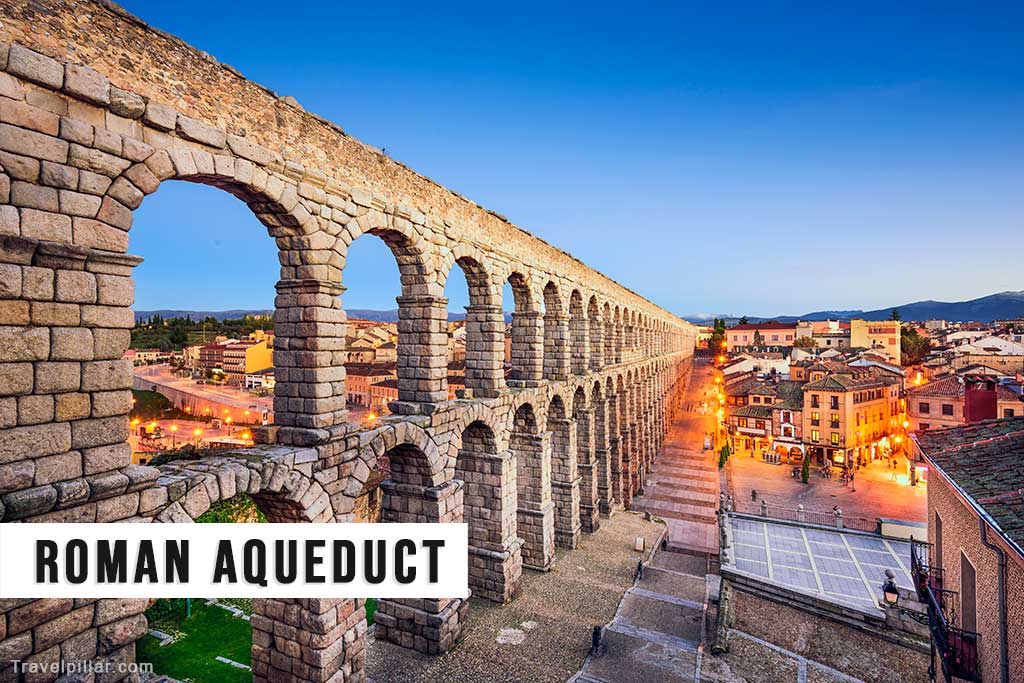
The Roman Aqueduct is Segovia’s most significant landmark, representing one of the best-preserved Roman structures on the Iberian Peninsula. Constructed in the 1st or 2nd century AD without mortar, the aqueduct features 167 arches and reaches a maximum height of 28 meters. Originally built to transport water from the Frio River to the city, today, it stands as a testament to Roman engineering prowess and is a UNESCO World Heritage Site.
Google map 4.8/5
Alcázar of Segovia
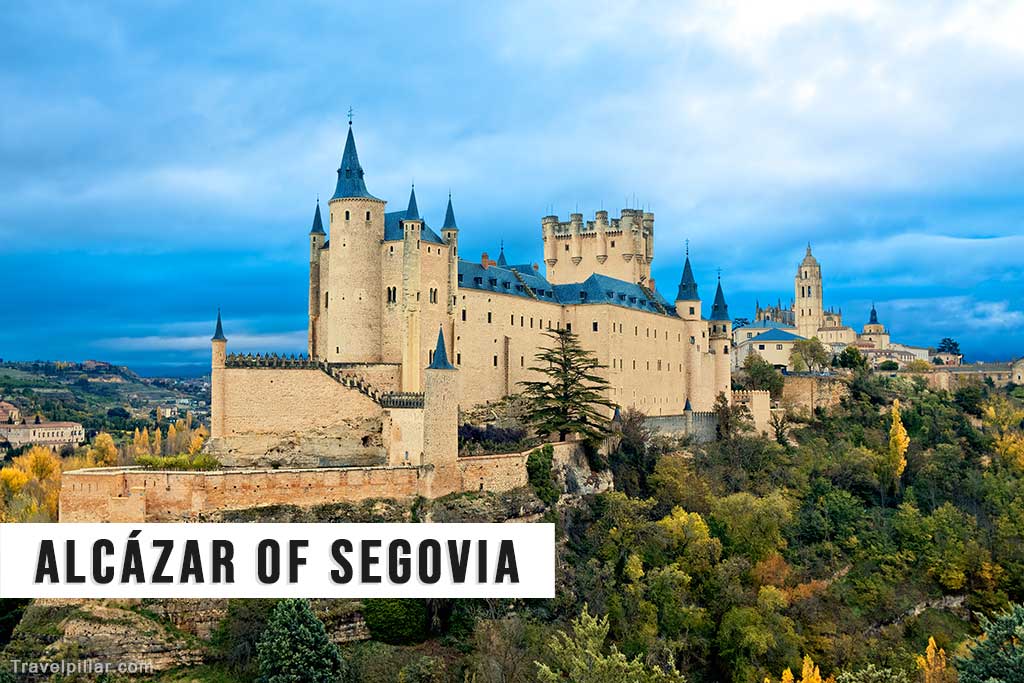
This beautiful castle is located on a hilltop and provides a panoramic view of the city. It was originally built as a fortress in the 12th century and has served as a royal palace, a prison, and a military academy over the years. The castle features a mix of architectural styles, including Romanesque, Gothic, and Renaissance, and is considered one of the most distinctive castles in Spain. The interior of the castle is equally impressive, featuring grand halls, ornate ceilings, and historic furnishings.
Official website: https://www.alcazardesegovia.com (in Spanish)
Google map 4.7/5
Segovia Cathedral (Catedral de Segovia)
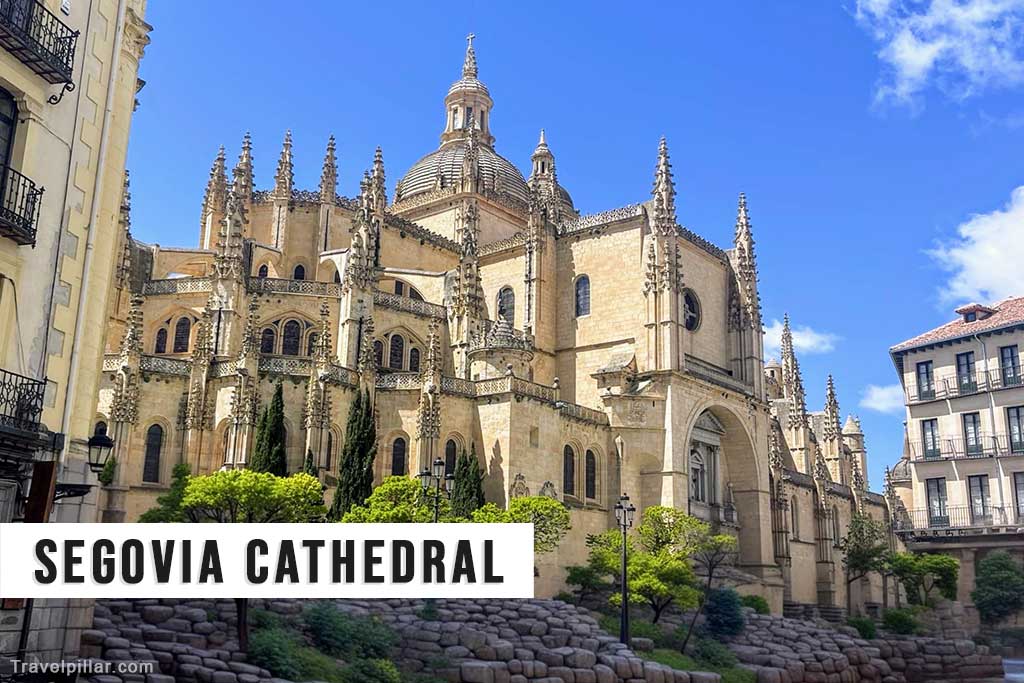
Segovia Cathedral, known as the “Lady of Cathedrals,” is a prominent example of late Gothic architecture. Located in the main square of Segovia, the Cathedral was constructed between the 16th and 18th centuries. It boasts three high naves, a beautiful cloister, and numerous chapels. The main altarpiece, crafted from marble, bronze, and precious stones, is a masterpiece in itself. The Cathedral’s impressive spire, rising to 90 meters, is a distinctive feature in Segovia’s skyline.
Official website: https://catedralsegovia.es (in Spanish)
Google map 4.7/5
Mirador de la Pradera de San Marcos (viewpoint)
Mirador de la Pradera de San Marcos is a scenic viewpoint located on the outskirts of Segovia, Spain. It offers sweeping views of the city’s iconic landmarks including the Alcázar, Segovia Cathedral, and the surrounding cityscape. Nestled by the Eresma River, the spot is popular with locals and tourists alike for picnics, leisurely strolls, or simply appreciating the panoramic views. The picturesque vista from Mirador de la Pradera de San Marcos offers a distinct perspective of Segovia’s historical grandeur and natural beauty.
Google map 4.8/5
San Esteban Church (Iglesia de San Esteban)
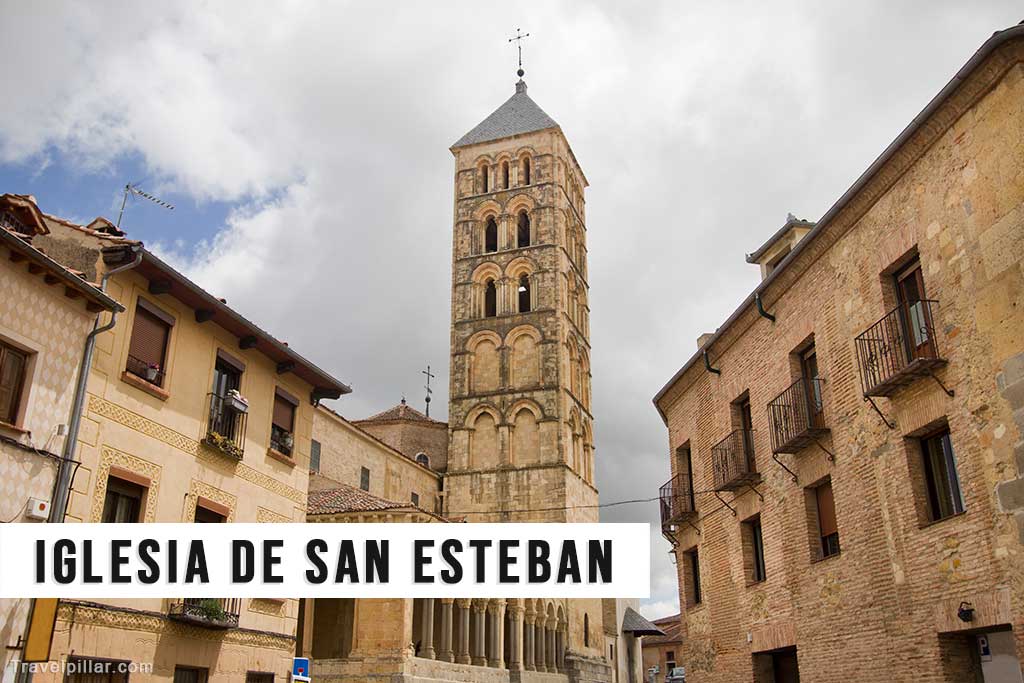
San Esteban Church is a striking Romanesque church located in Segovia, Spain. Established in the 12th century, it is renowned for its tall, graceful bell tower which is a landmark in the city’s skyline. The church features a semicircular apse with beautiful corbels and large arched windows, characteristic of the Romanesque style. The interior is home to a baroque altarpiece and a treasured statue of the Virgin of the Rosary. San Esteban Church exemplifies Segovia’s rich religious and architectural heritage.
Google map 4.7/5
Jewish Quarter
Located in the heart of Segovia, the Jewish Quarter features narrow streets, historic houses, and stunning views of the city. The quarter was once home to a vibrant Jewish community and features a number of important historic buildings, including the synagogue, which is one of the best-preserved in Spain. Visitors can explore the synagogue and learn about the rich history of the Jewish community in Segovia.
Plaza Mayor
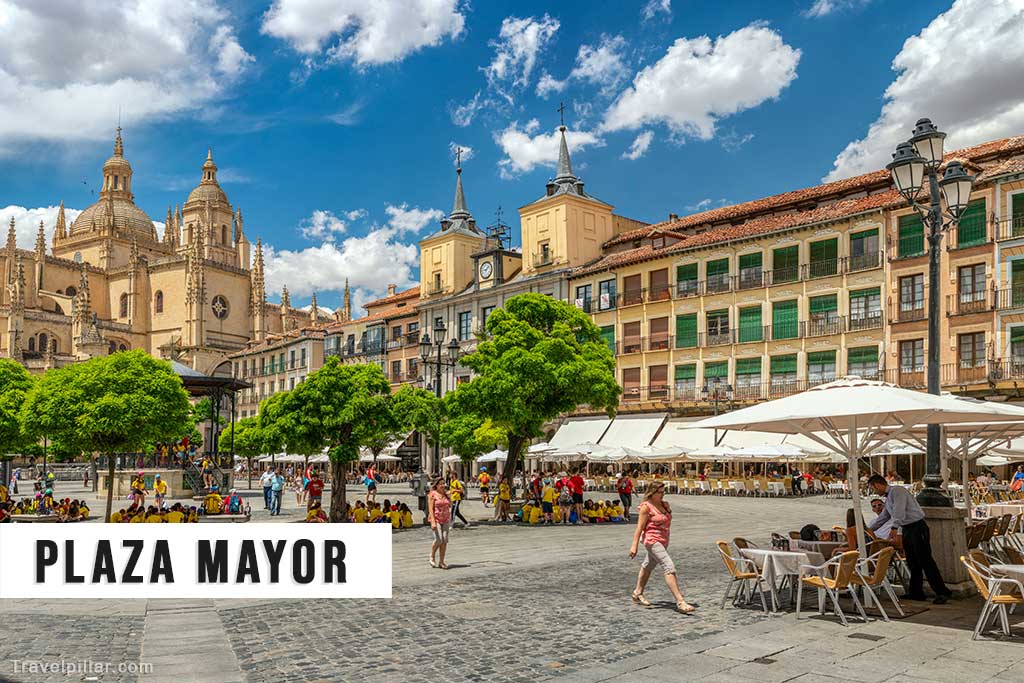
This central square is the heart of Segovia’s social life and features many bars and restaurants, as well as a lively atmosphere. The square is surrounded by historic buildings, including Segovia Cathedral, the City Hall and the Church of San Miguel, and is a great place to people-watch and soak up the atmosphere of the city. The square is especially lively during festivals and celebrations, such as the popular Segovia Hay Festival.
Google map 4.6/5
Muralla de Segovia
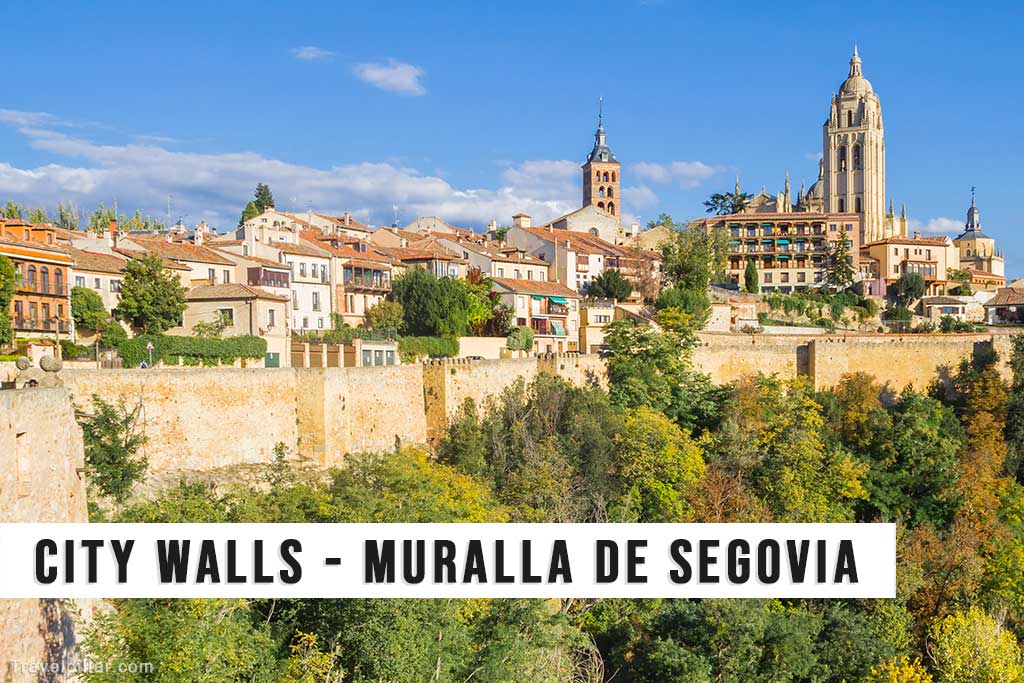
The Muralla de Segovia is the ancient wall that encircles Segovia’s old town in Spain. Constructed largely during the 11th century, it played a critical role in the city’s defense. The wall stretches approximately 3 kilometers and features several gates and watchtowers, illustrating the military architecture of the Middle Ages. Today, parts of the wall are accessible for public exploration, providing visitors with a tangible connection to Segovia’s rich historical past and offering spectacular views of the city and its surroundings.
Google map 4.7/5
Monastery of Santa María del Parral
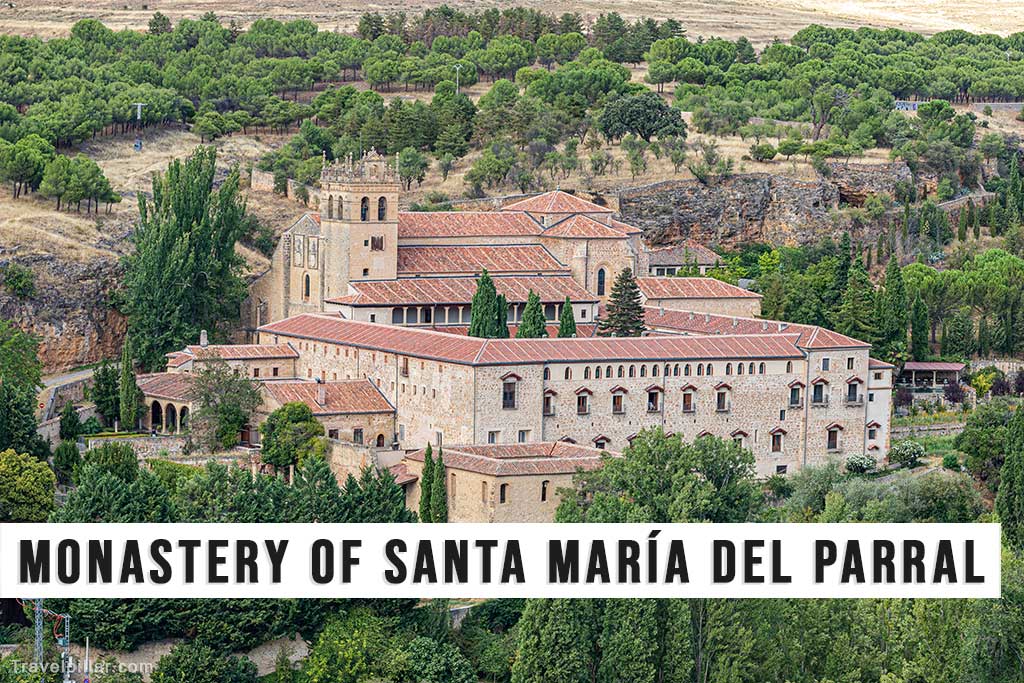
Monastery of Santa María del Parral is a tranquil and historically significant monastery located on the outskirts of Segovia, Spain. Founded in 1454 by King Henry IV of Castile, it houses the Hieronymites, an order dedicated to solitary and contemplative life. The architecture is primarily Gothic, with Mudejar influences evident in the cloister. The church’s high altar features a beautiful 16th-century retablo, and the sacristy holds a collection of valuable religious art. Its peaceful ambiance offers a respite from the city’s bustling activity.
Official website: https://monjesjeronimos.es (in Spanish)
Google map 4.6/5
The Santos Justo and Pastor Church (Iglesia de los Santos Justo y Pastor)
The Santos Justo and Pastor Church is a Romanesque religious site located in the old quarter of Segovia, Spain. Dating back to the 12th century, it is distinguished by its simple yet elegant design. Noteworthy features include its semicircular apse, adorned with blind arches and corbels, and a notable wooden Mudejar coffered ceiling. The church, dedicated to the young martyrs Justus and Pastor, stands as a testament to Segovia’s rich ecclesiastical architectural tradition and provides a serene oasis in the heart of the city.
Google map 4.6/5
Church of the True Cross (Iglesia de la Vera Cruz)
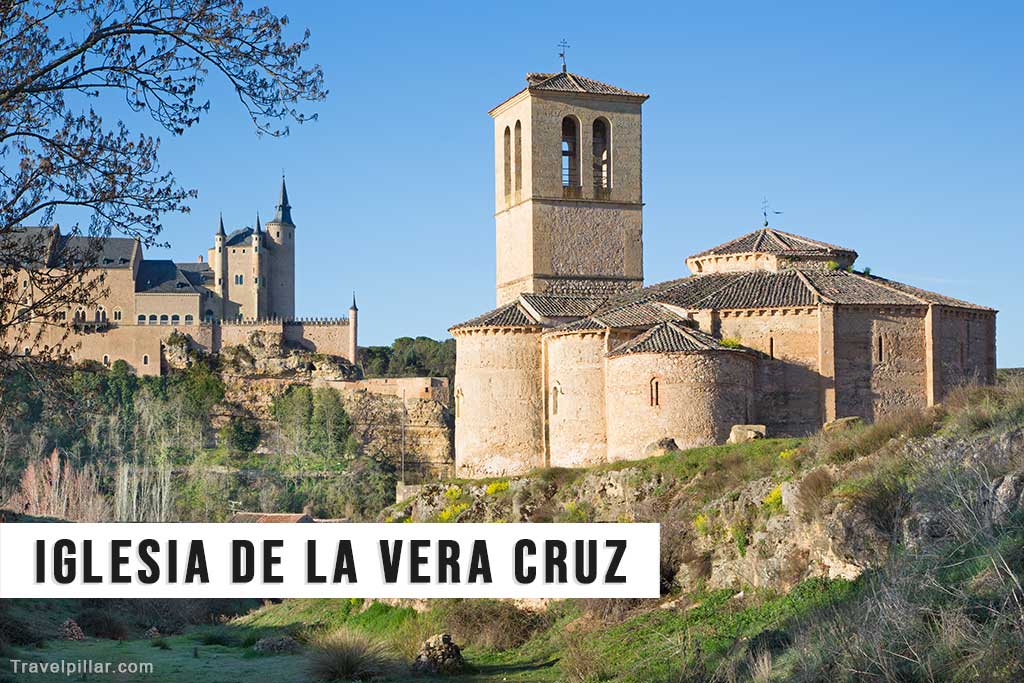
Iglesia de la Vera Cruz is an emblematic 12th-century church located outside Segovia’s city walls. Built by the Knights Templar, the church has a unique 12-sided design inspired by the Church of the Holy Sepulchre in Jerusalem. Inside, the two-story circular nave surrounds a central altar. The church is named after the “True Cross” and serves as a remarkable example of the Romanesque architecture prevalent in Segovia during the Middle Ages.
Official website: https://www.ordendemalta.es/ (in Spanish)
Google map 4.5/5
Saint Emilian Church (Iglesia de San Millán)
Iglesia de San Millán is a significant Romanesque church situated in Segovia, Spain. Built between the 11th and 12th centuries, it features a basilica plan with three naves and three apses. Its tall, four-story bell tower is an icon of the Segovia skyline. The church also hosts one of the most valuable Romanesque image collections in Segovia. Notable interior features include the Corinthian columns in the main nave, demonstrating the influence of ancient Roman architecture.
Google map 4.5/5
House Museum of Antonio Machado (Casa-Museo de Antonio Machado)
Casa-Museo de Antonio Machado is the former residence of renowned Spanish poet Antonio Machado during his time as a professor in Segovia, from 1919 to 1932. Located in the Jewish Quarter, the house has been converted into a museum dedicated to Machado’s life and work. The museum preserves the poet’s study, bedroom, and classroom, and displays a collection of his manuscripts, personal belongings, and photographs. A visit provides insight into the daily life of one of Spain’s most cherished literary figures.
Official website: https://turismodesegovia.com/en/
Google map 4.5/5
Museum of Segovia (Casa del Sol – Museo de Segovia)
This museum features a wide range of exhibits on the history and culture of Segovia, including artwork, archaeological artifacts, and historical documents. The museum is housed in a beautiful historic building and offers visitors the chance to learn about the city’s rich history and cultural heritage.
Google map 4.5/5
Royal Museum of the Mint of Segovia (Museo Real Casa de Moneda de Segovia)
The Royal Museum of the Mint of Segovia, or Real Casa de Moneda, is a significant historical and industrial site in Segovia, Spain. Commissioned by King Philip II and built between 1583 and 1588, it is considered one of the oldest and most preserved minting facilities in the world. The museum exhibits delve into the process of minting coins, the history of money, and the influence of the mint on the local economy. Visitors can explore the restored waterwheel, hydraulic hammers, and coining and rolling machines, offering a unique insight into the past.
Google map 4.4/5
Iglesia de San Martín
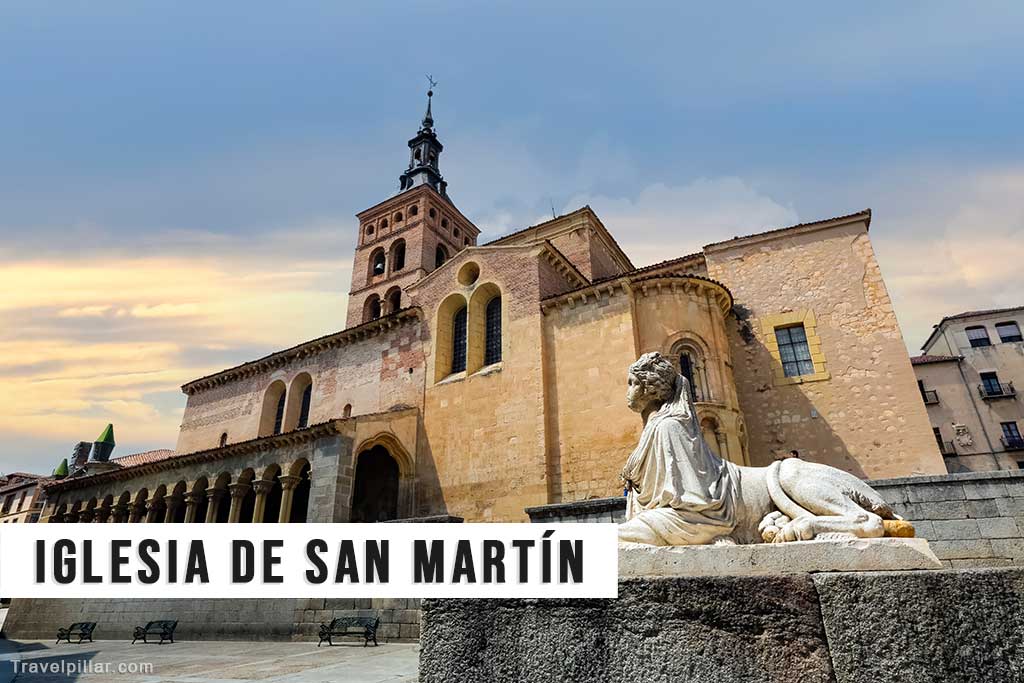
The Iglesia de San Martín is a Romanesque church located in the center of the city. Dating from the 12th century, it features a characteristic arcaded gallery, a bell tower with Mozarabic elements, and a combination of Romanesque and Mudéjar influences. The church is notable for its use of brick and stone and for its historical integration into the surrounding urban fabric. It remains an important architectural and religious site in the city.
Google map 4.4/5
Casa de los Picos
This historic house is known for its striking exterior, which is covered in diamond-shaped stone blocks. The house was built in the 15th century and has served as a residence, a prison, and a cultural center over the years. Visitors can explore the unique architecture of the house, as well as its beautiful interior and art exhibitions.
Google map 4.3/5