

Seville Cathedral, officially known as the Cathedral of Saint Mary of the See (Catedral de Santa María de la Sede), is the largest Gothic cathedral in the world and a UNESCO World Heritage Site. Located in the heart of Seville, its construction began in 1401 on the site of a former mosque, reflecting the city’s historical layers and cultural shifts. Completed in the early 16th century, the cathedral stands as a testament to the city’s wealth and religious significance during the Spanish Golden Age.
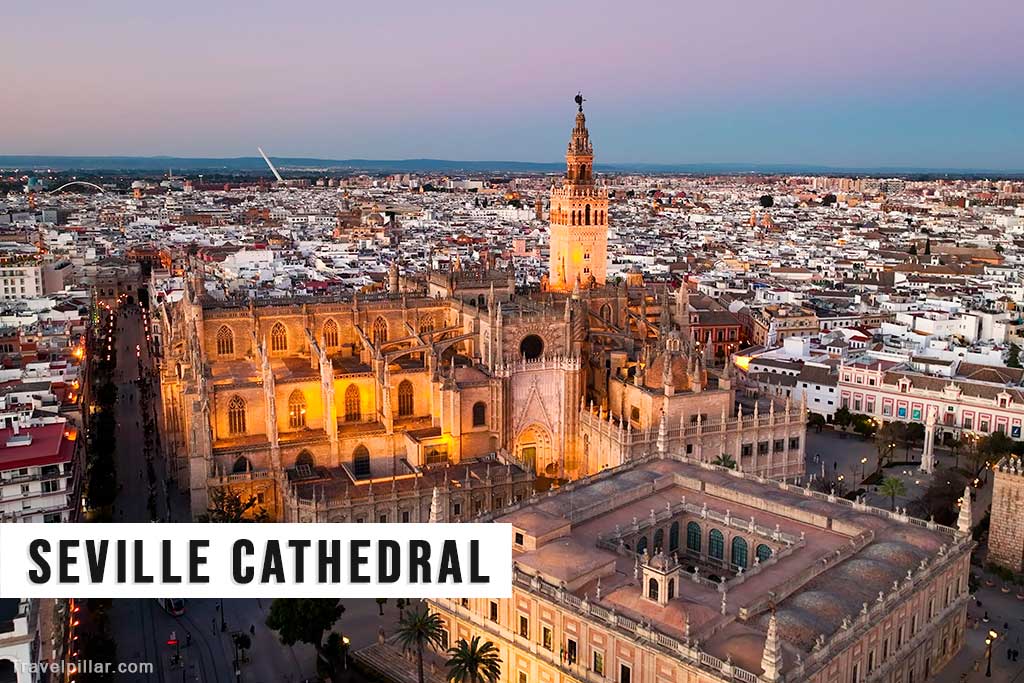
The exterior of the cathedral is marked by its vast dimensions and Gothic architectural features. Flying buttresses, pinnacles, and large rose windows dominate its facade. Its main entrance, the Puerta del Perdón, retains some elements from the mosque, including its horseshoe arch and intricate plasterwork. The main bell tower, La Giralda, originally served as the minaret of the mosque and was converted into a bell tower during the cathedral’s construction. Standing at 104 meters, La Giralda is an iconic symbol of Seville, offering panoramic views of the city.
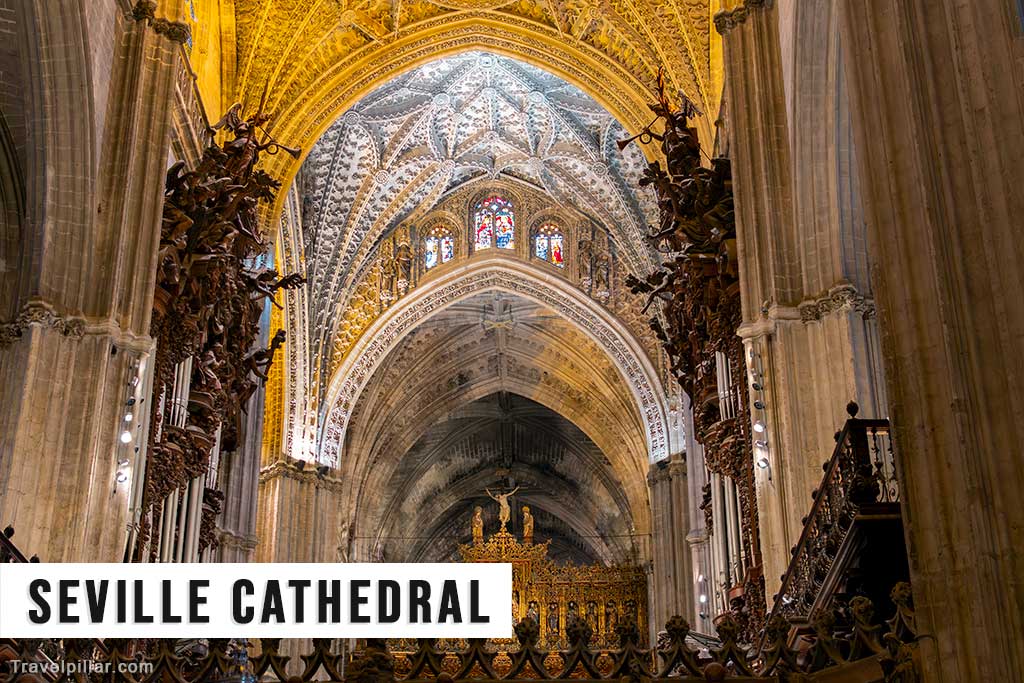
Inside, the cathedral’s immense size becomes apparent. It covers an area of over 11,500 square meters and features a nave rising to 42 meters at its highest point. The vast interior contains five naves supported by massive columns and is characterized by its richly decorated chapels, altars, and tombs. The Capilla Mayor (Main Chapel) houses the Retablo Mayor, an elaborate Gothic altarpiece that took nearly a century to complete. Covered in gold leaf, it depicts scenes from the life of Christ and the Virgin Mary and is considered one of the largest altarpieces in the Christian world.
One of the cathedral’s notable features is the tomb of Christopher Columbus, housed within the south transept. The monument, designed by sculptor Arturo Mélida, features four heraldic figures representing the kingdoms of Spain, carrying the explorer’s casket. The authenticity of Columbus’s remains has been a subject of debate, but DNA testing in 2006 confirmed their connection to his family.
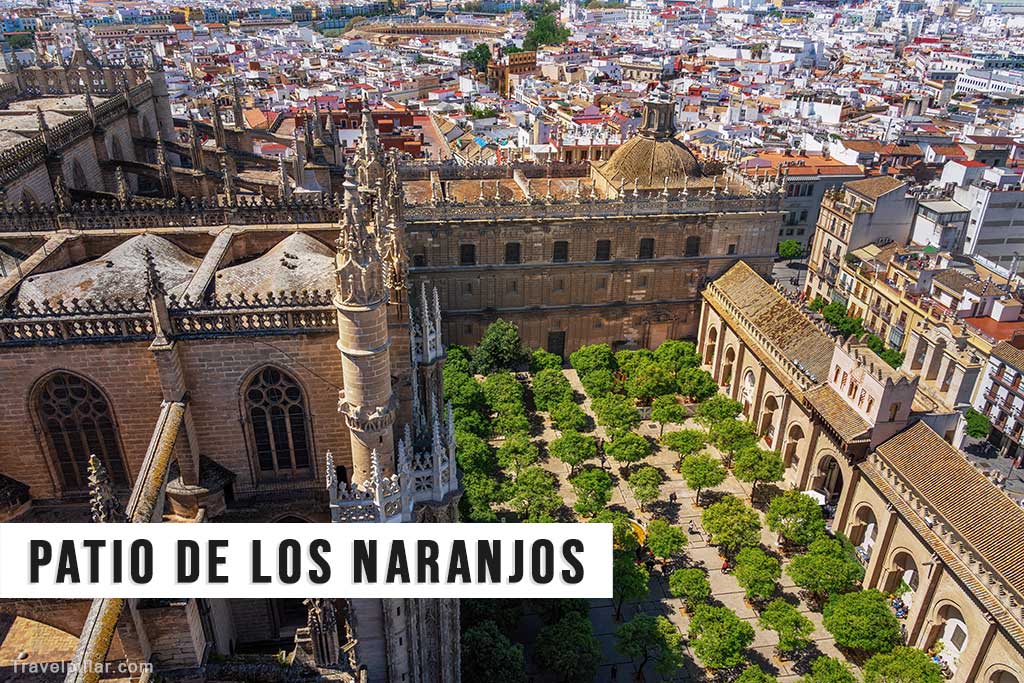
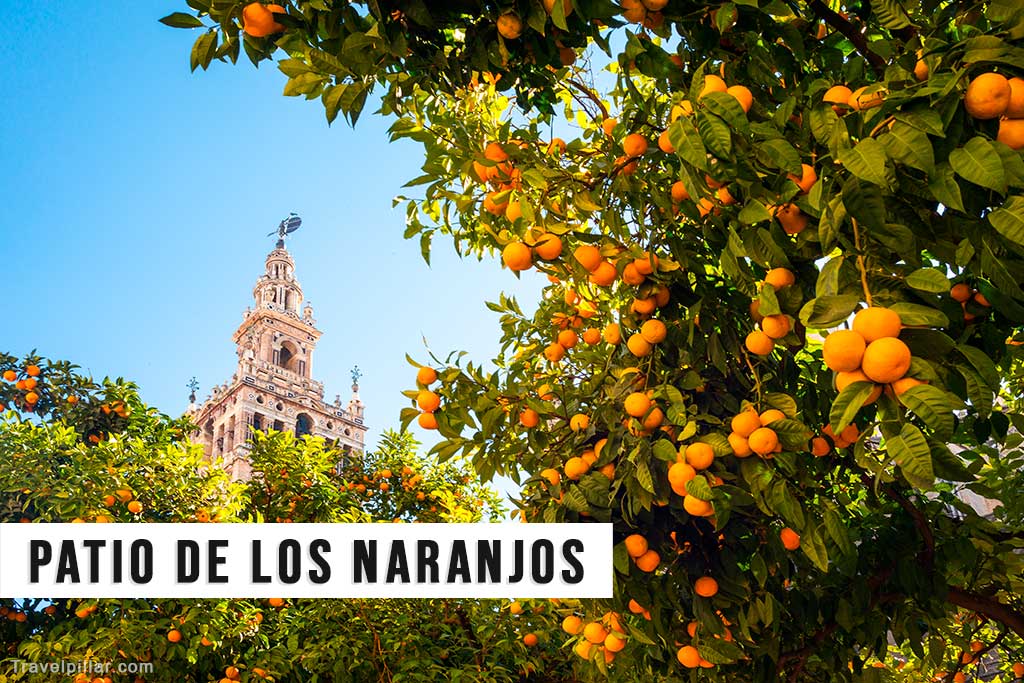
The cathedral also includes the Patio de los Naranjos, an inner courtyard filled with orange trees, which was part of the original mosque. This peaceful space provides a contrast to the ornate interior, offering visitors a place to reflect on the cathedral’s historical layers.
Seville Cathedral is not only a religious center but also an architectural and historical landmark. Its size, artistic elements, and blend of Islamic and Gothic influences reflect Seville’s complex history and the city’s role as a cultural hub during Spain’s colonial expansion.
Opening times:
Mon to Sat 10:45am – 6pm, Sun 2:30pm – 7pm
Official website:
https://www.catedraldesevilla.es/ (Spanish)
https://catedraldesevilla.entradasdemuseos.com (tickets)
Seville Cathedral Art Collection
Seville Cathedral houses a vast collection of artwork, showcasing pieces from the Gothic to the Baroque periods. In the Sacristía Mayor, visitors can find paintings by Bartolomé Esteban Murillo, including Saint Anthony of Padua with the Christ Child, and works by Francisco de Zurbarán. The Chapter House contains Murillo’s Immaculate Conception, exemplifying the Spanish Golden Age style.
The Retablo Mayor, located in the Capilla Mayor, is a significant Gothic altarpiece featuring 45 carved scenes from the life of Christ and the Virgin Mary. Crafted by Pierre Dancart, it is covered in gold leaf and took nearly a century to complete. The cathedral’s chapels also display works by other prominent artists, such as St. Christopher by Francisco de Goya. This extensive collection reflects the artistic and religious heritage of Spain, making the cathedral a key cultural site.