

Winchester, situated in Hampshire, is renowned for its rich history and well-preserved architecture. Once the capital of Anglo-Saxon England, the city holds numerous landmarks that reflect its past. Winchester Cathedral, one of the largest in Europe, dates back to the 11th century and showcases a blend of Norman and Gothic architectural styles. The cathedral contains the tombs of notable figures, including Jane Austen.
Nearby, the Great Hall, the last remaining part of Winchester Castle, houses the medieval Round Table, linked to the legend of King Arthur. The city’s streets feature a variety of historical buildings, including the Winchester College and the Hospital of St. Cross, England’s oldest charitable institution. Winchester’s City Museum offers further insight into its Roman, medieval, and modern history.
The blend of historical sites and traditional market streets makes Winchester a key destination for exploring England’s cultural heritage.
The Best Things to Do in Winchester
Winchester Cathedral
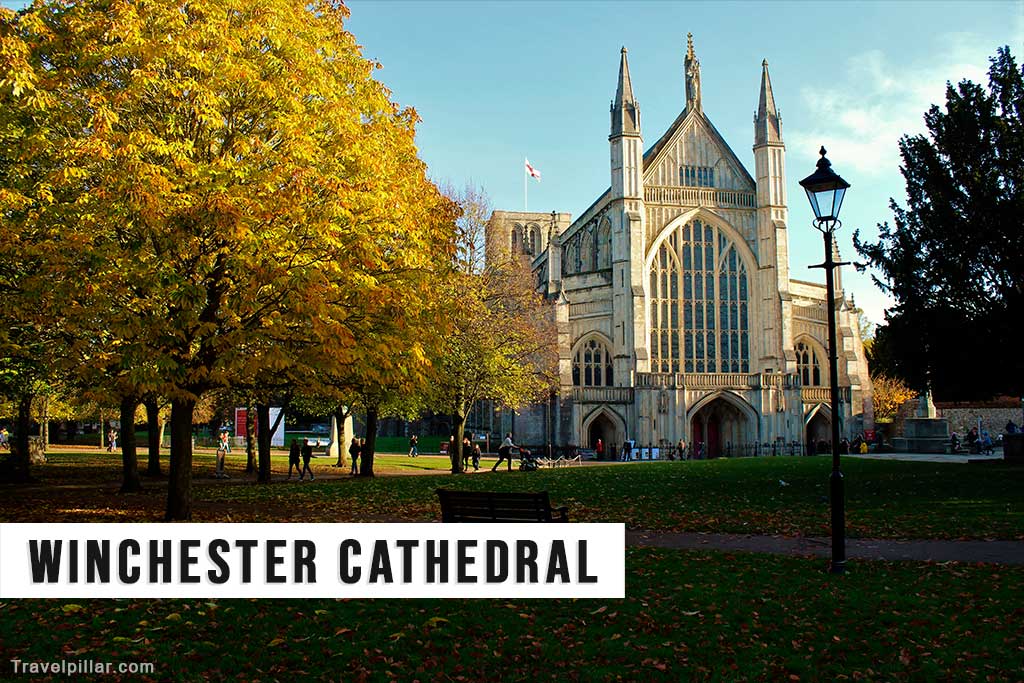
Winchester Cathedral, one of the largest in Europe, was built in the 11th century and showcases a blend of Norman and Gothic architectural styles. Its interior features medieval stained glass, carved stonework, and the longest Gothic nave in Europe. The cathedral also houses the tombs of historical figures, including Anglo-Saxon kings and author Jane Austen. It serves as a key site for understanding England’s religious and architectural heritage.
Official website: https://www.winchester-cathedral.org.uk/
Google map 4.7/5
Prior’s Gate
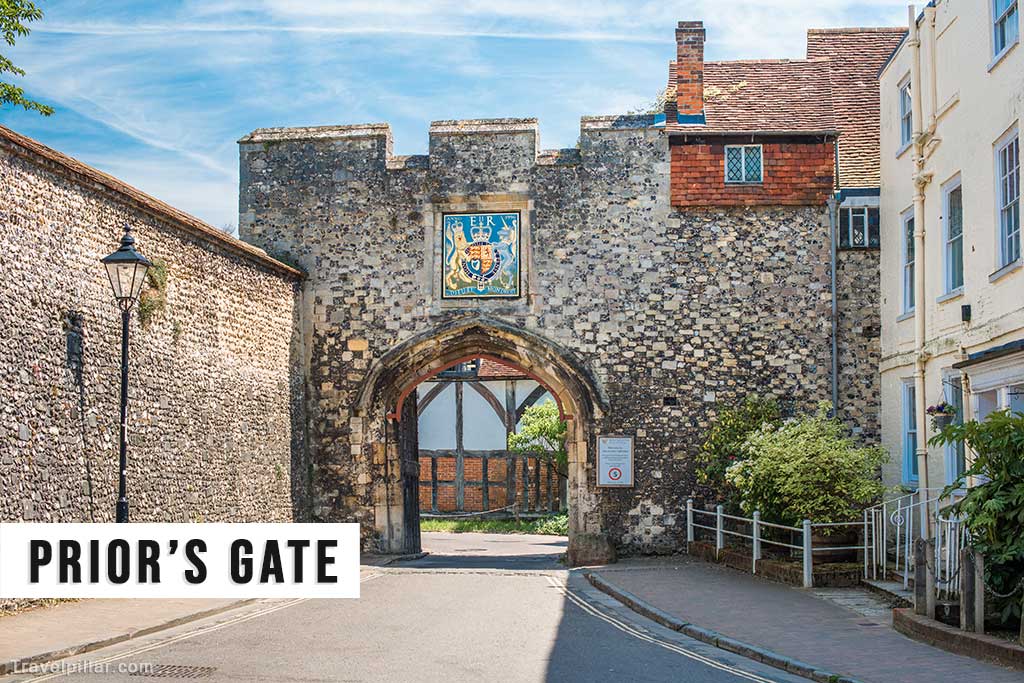
Prior’s Gate is a medieval entrance located within the grounds of Winchester Cathedral. Built in the 14th century, it formed part of the monastic complex and provided controlled access to the priory buildings. The stone gateway features a pointed arch and retains elements of its original structure despite later restoration. Today it stands as a reminder of the cathedral’s former role as a Benedictine monastery before the Dissolution.
Google map 4.8/5
The Great Hall and King Arthur’s Round Table
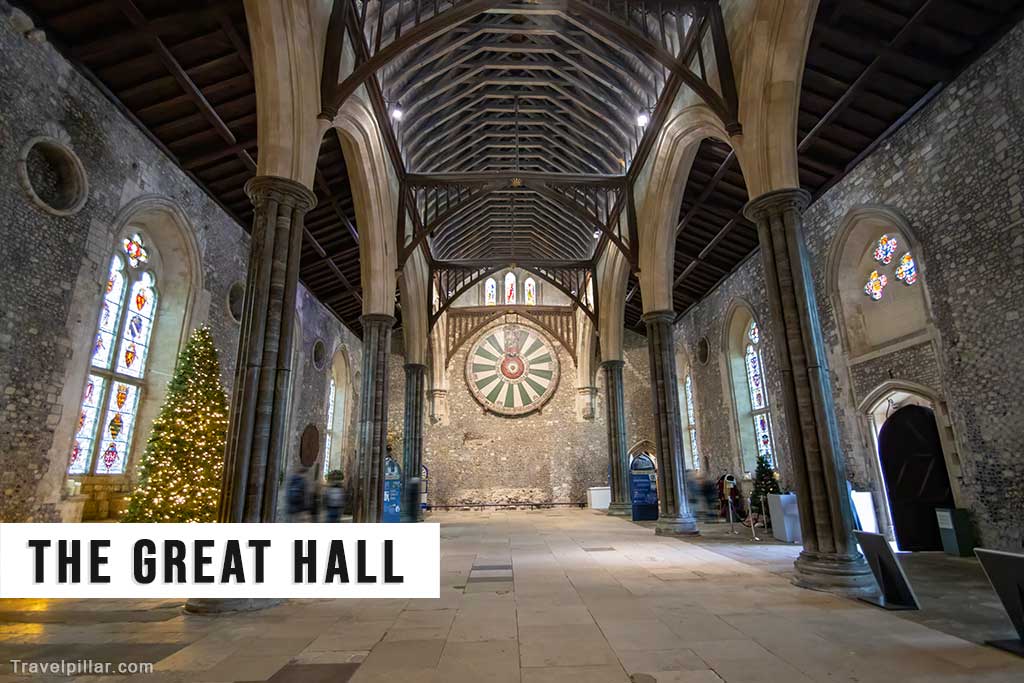
The Great Hall and King Arthur’s Round Table are key historical attractions in Winchester. The Great Hall, dating back to the 13th century, is the only surviving part of Winchester Castle. Inside, the Round Table, an iconic symbol linked to the legend of King Arthur, hangs on the wall. Though constructed in the medieval period, the table adds to the mythic allure of the site, reflecting Winchester’s rich historical and cultural heritage.
Official website: https://historicwinchester.co.uk/
Google map 4.4/5
Winchester City Centre
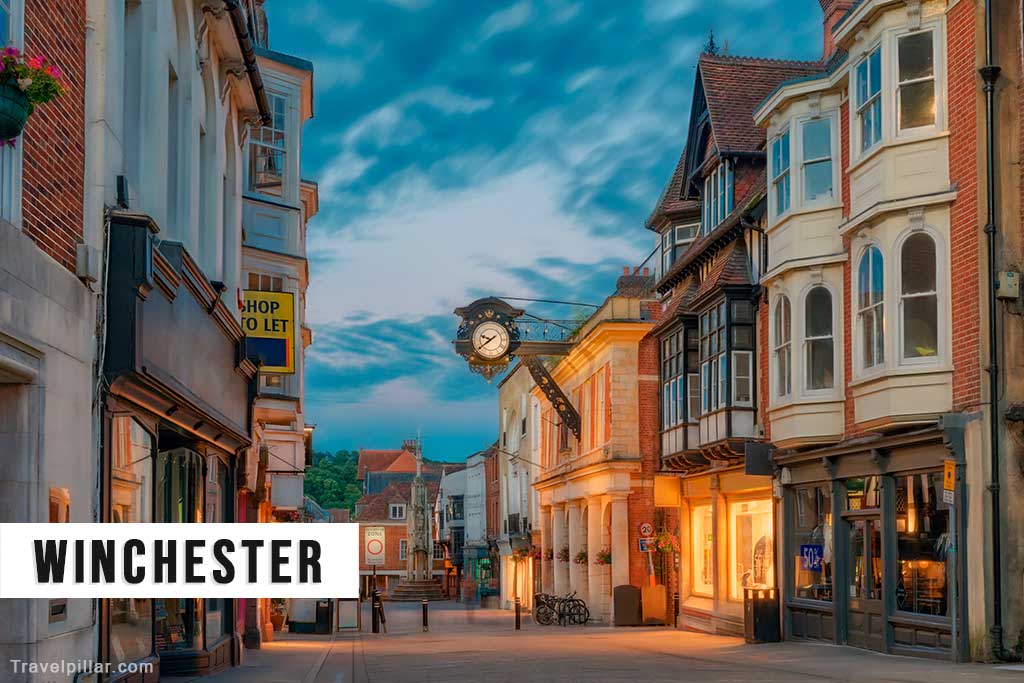
Winchester city centre is a blend of historic architecture and modern amenities. Its narrow, medieval streets are lined with a mix of independent shops, cafes, and traditional markets. Key landmarks include the 14th-century Buttercross and the Guildhall, reflecting the city’s rich heritage. The area also hosts the Winchester Farmers’ Market, offering local produce. Its compact layout and variety of cultural and shopping options make the city centre an essential part of the Winchester experience.
King Alfred the Great Statue

The King Alfred the Great Statue in Winchester stands prominently at the east end of the Broadway. Erected in 1899 to mark the millennial anniversary of Alfred’s death, the statue commemorates his role as a unifier of England and defender against Viking invasions. Crafted by sculptor Hamo Thornycroft, it depicts Alfred with a sword held aloft. The statue serves as a reminder of Winchester’s historical significance as a Saxon capital and Alfred’s enduring legacy.
Google map 4.5/5
Winchester City Museum
Winchester City Museum provides an overview of the city’s history from its Roman origins to the Victorian period. Located near the cathedral, the museum features archaeological finds, medieval artefacts, and displays on Alfred the Great and Jane Austen. Exhibits include models of Roman Winchester and reconstructions of historic streets. The museum offers insight into the city’s development and cultural heritage, making it a useful starting point for visitors exploring Winchester’s past.
Official website: https://historicwinchester.co.uk/
Google map 4.4/5
South Downs Way

South Downs Way is a 100-mile national trail starting in Winchester and stretching to Eastbourne. The route passes through the South Downs National Park, offering scenic views of rolling hills, woodlands, and coastal cliffs. It is popular for walking, cycling, and horse riding, with well-marked paths suitable for all levels. The trail showcases historical sites, including Iron Age hill forts and traditional villages, highlighting the natural and cultural heritage of southern England.
Winchester City Mill
Winchester City Mill is a restored 18th-century watermill situated on the River Itchen. Operated by the National Trust, it offers a working example of traditional flour milling. The mill’s exhibits provide insights into its history, dating back to Saxon times. Visitors can watch milling demonstrations and explore the surrounding riverside gardens. The mill’s location near the city center makes it an accessible site for learning about Winchester’s industrial heritage and milling practices. FREE entry
Official website: https://www.nationaltrust.org.uk/
Google map 4.6/5
Wolvesey Castle
Wolvesey Castle, the medieval residence of the Bishops of Winchester, dates back to the 12th century. Now a ruin managed by English Heritage, it showcases the remains of the great hall, chapel, and other structures. The castle played a key role during the Norman and medieval periods, including hosting the wedding feast of Queen Mary I. Located near Winchester Cathedral, it provides visitors with insights into the city’s ecclesiastical and architectural history. FREE entry
Official website: https://www.english-heritage.org.uk/
Google map 4.4/5
St Catherine’s Hill
St Catherine’s Hill is a natural chalk hill located just south of Winchester. It features an Iron Age hill fort and a 12th-century chapel’s remains, offering a glimpse into the area’s ancient past. The hill is surrounded by woodlands and wildflower meadows, providing diverse walking trails with panoramic views of the South Downs and Winchester. Accessible via the Itchen Navigation path, it is a popular spot for history enthusiasts and nature walkers alike.
Google map 4.7/5