

South Downs Way is a 100-mile national trail stretching from Winchester to Eastbourne. Beginning in Winchester, it traverses the South Downs National Park, offering a varied landscape of rolling chalk hills, woodlands, river valleys, and coastal cliffs. The trail follows ancient routes and droveways, providing a connection to the region’s historical and natural heritage.
- Start: Winchester, Hampshire
- End: Eastbourne, East Sussex
- Length: 100 miles (160 km)

Starting at the statue of King Alfred the Great in Winchester, the trail heads southeast through farmland and countryside before reaching the elevated chalk downs. As it progresses, walkers encounter a range of natural features, including open grassland, chalk escarpments, and areas of woodland. The trail’s elevation offers panoramic views across the Weald, the English Channel, and the surrounding countryside, making it popular among hikers, cyclists, and horse riders.
South Downs Way is well-maintained and clearly marked, with sections suitable for walkers of varying abilities. Most of the trail consists of bridleways and footpaths, making it accessible to both cyclists and horse riders for much of its length. Its relatively gentle gradients, compared to other long-distance trails, make it a manageable option for those seeking a multi-day walking experience.
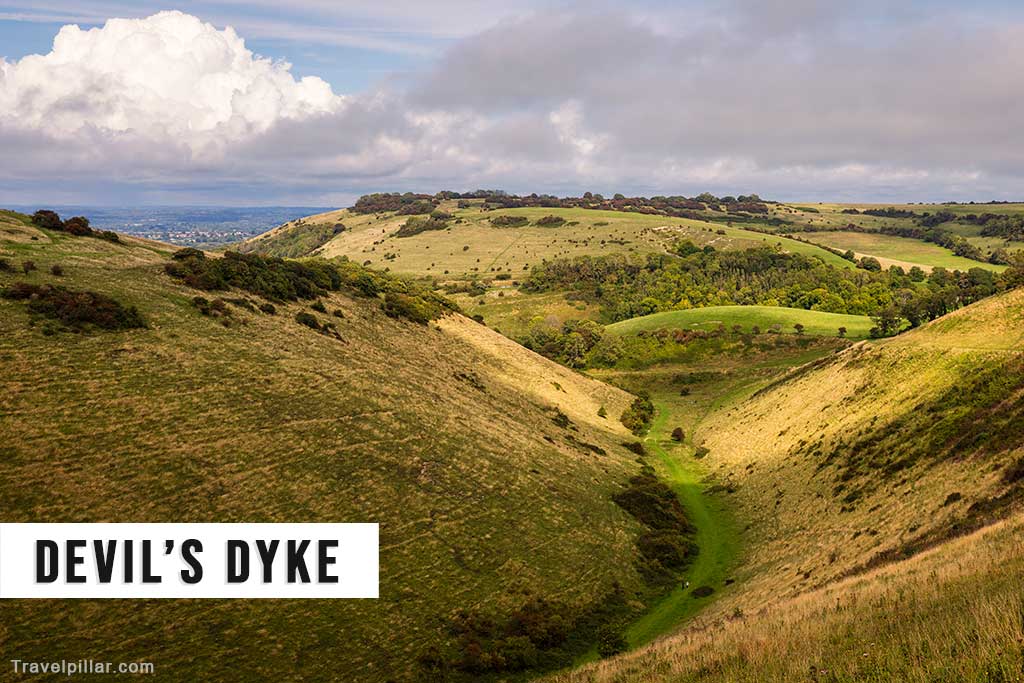
Along the route, visitors can explore historical and cultural sites. Iron Age hill forts, such as Old Winchester Hill and Chanctonbury Ring, offer glimpses into the area’s ancient past. The trail also passes by medieval churches, traditional thatched cottages, and remnants of past agricultural practices, reflecting the long history of human settlement in the region. Waypoints such as the Devil’s Dyke, a deep V-shaped valley, and the chalk cliffs around Beachy Head and nearby Seven Sisters Country Park near Eastbourne, add natural highlights to the journey.

Numerous small villages and market towns lie along the South Downs Way, providing opportunities for accommodation, refreshments, and rest. Many of these settlements, including places like Alfriston and Amberley, retain their historical character with traditional pubs, inns, and local shops. This proximity to amenities makes the trail feasible for those wishing to break the route into smaller, more manageable sections.
Wildlife enthusiasts may also find the South Downs Way rewarding. The chalk grassland supports a variety of flora and fauna, including rare orchids and butterfly species. Birdwatchers can spot skylarks, kestrels, and buzzards as they traverse the open landscape.
Overall, South Downs Way offers a blend of natural beauty, historical interest, and outdoor recreation. Its connection to Winchester, combined with its diverse landscapes and cultural sites, makes it a key attraction for those exploring the southern English countryside.
Official website: https://www.nationaltrail.co.uk/
Google map Statue of King Alfred the Great, Winchester,
Google map Eastbourne, East Sussex