
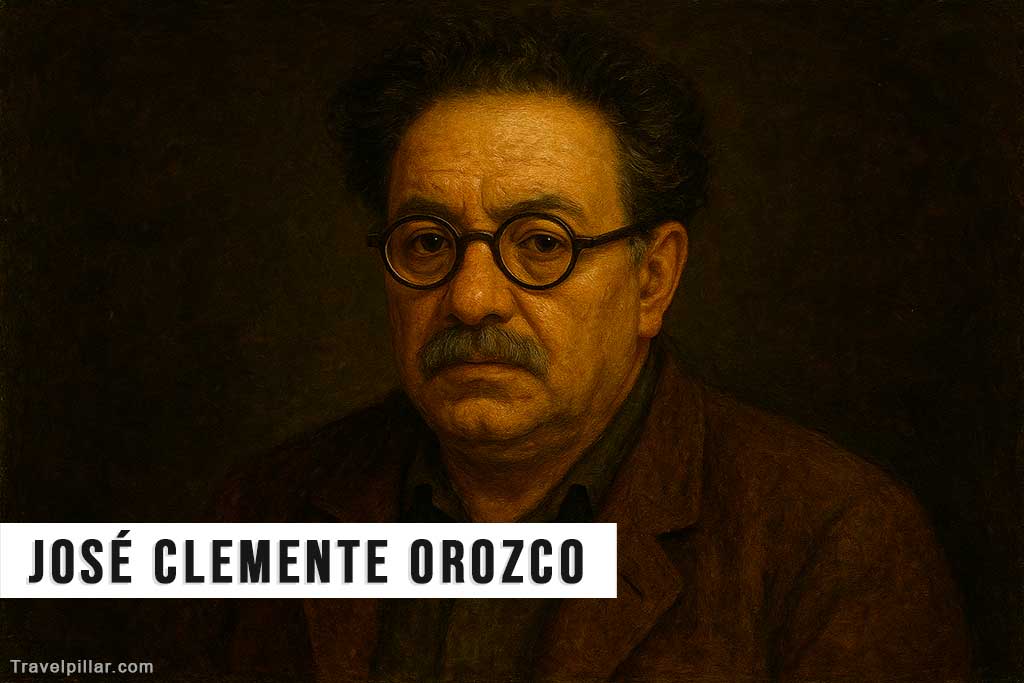
José Clemente Orozco, born on November 23, 1883, in Ciudad Guzmán, Jalisco, Mexico, was a distinguished Mexican painter and muralist renowned for his powerful and often somber depictions of human suffering and social injustices. As one of the prominent figures in the Mexican Muralism movement, alongside Diego Rivera and David Alfaro Siqueiros, Orozco’s work is celebrated for its emotional depth, dramatic style, and poignant social commentary.
Orozco’s early life was marked by hardship. He lost his left hand in a fireworks accident at the age of 17, an event that profoundly influenced his worldview and artistic expression. He studied at the Academy of San Carlos in Mexico City, where he initially pursued a career in architecture before turning to painting. His experiences during the Mexican Revolution deeply impacted his art, instilling in him a keen awareness of the human cost of social upheaval.
Orozco’s murals are characterized by their intense, often apocalyptic imagery and bold, expressive lines. He employed a limited color palette, favoring stark contrasts to convey the gravity of his themes. His works frequently depict scenes of revolution, suffering, and redemption, reflecting his critical perspective on both the historical and contemporary social landscape.
One of Orozco’s most significant works is the series of murals at the Hospicio Cabañas in Guadalajara, created between 1936 and 1939. These murals, including the famous “The Man of Fire,” are hailed for their powerful depiction of the human struggle and existential themes. Another notable project is his mural series at Dartmouth College in New Hampshire, painted between 1932 and 1934, which presents a critical view of American and Mexican history.
Despite the often grim subject matter, Orozco’s work is also imbued with a sense of hope and resilience. He believed in the transformative power of art and its ability to inspire social change. His murals not only reflect the tumultuous history of Mexico but also address universal themes of human suffering and the quest for justice.
José Clemente Orozco passed away on September 7, 1949, in Mexico City. His legacy endures through his monumental murals, which continue to resonate with audiences for their profound emotional impact and incisive social critique. Orozco’s contributions to the Mexican Muralism movement and his unique artistic vision have cemented his place as one of the most important figures in 20th-century art.