
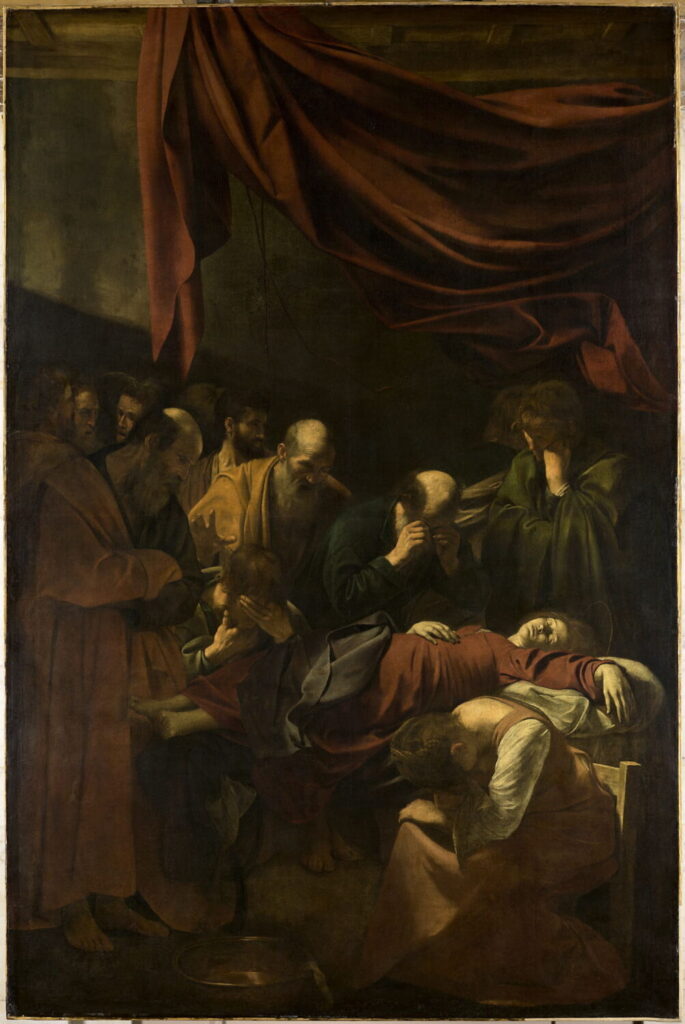
Displayed in the Louvre Museum in Paris, Death of the Virgin by Caravaggio is one of the most influential religious paintings of the early Baroque period. Painted between 1605 and 1606 by the Italian artist Michelangelo Merisi da Caravaggio, the work depicts the death of the Virgin Mary surrounded by grieving apostles. Today the painting is admired for its realism and emotional intensity, although its original audience reacted very differently.
At the centre of the composition lies the body of Mary, dressed in a simple red garment. Around her, the apostles and Mary Magdalene mourn quietly in an atmosphere of exhaustion and grief. Unlike earlier Renaissance paintings that often portrayed holy figures as idealised and serene, Caravaggio painted ordinary human emotion with striking realism. The room is dark and bare, with dramatic light falling across the figures from above, creating an almost theatrical sense of intimacy.
The painting became controversial shortly after its completion. Commissioned for a church in Rome, it was rejected by the Carmelite monks who had ordered it. Many viewers were disturbed by the realistic portrayal of the Virgin, who appeared swollen, barefoot and unmistakably dead. According to later rumours, Caravaggio may even have used the body of a drowned woman as his model, though historians debate whether this story is true. Regardless, the controversy reflected how radically different Caravaggio’s approach was from traditional religious art.
Caravaggio’s style transformed European painting. Rather than filling compositions with ideal beauty and balanced harmony, he focused on dramatic lighting, physical realism and ordinary humanity. This technique, known as chiaroscuro, used intense contrasts between light and darkness to direct attention and heighten emotion. The figures in Death of the Virgin feel less like distant saints and more like real people confronting loss.
The artist himself was also a deeply controversial figure. Caravaggio lived a turbulent life marked by violence, legal troubles and eventual exile after killing a man in Rome. His unpredictable personality contributed to his reputation as both artistic genius and dangerous outsider.
Many people consider Death of the Virgin a masterpiece because it changed expectations about religious painting. Caravaggio replaced idealised spirituality with human vulnerability, making sacred stories feel immediate and emotionally believable.
For visitors exploring the Louvre Museum, the painting offers a powerful contrast to the grandeur of many Renaissance works nearby. Its darkness, realism and emotional honesty continue to feel surprisingly modern more than four hundred years after it was painted.
Weblink: https://collections.louvre.fr/en/