
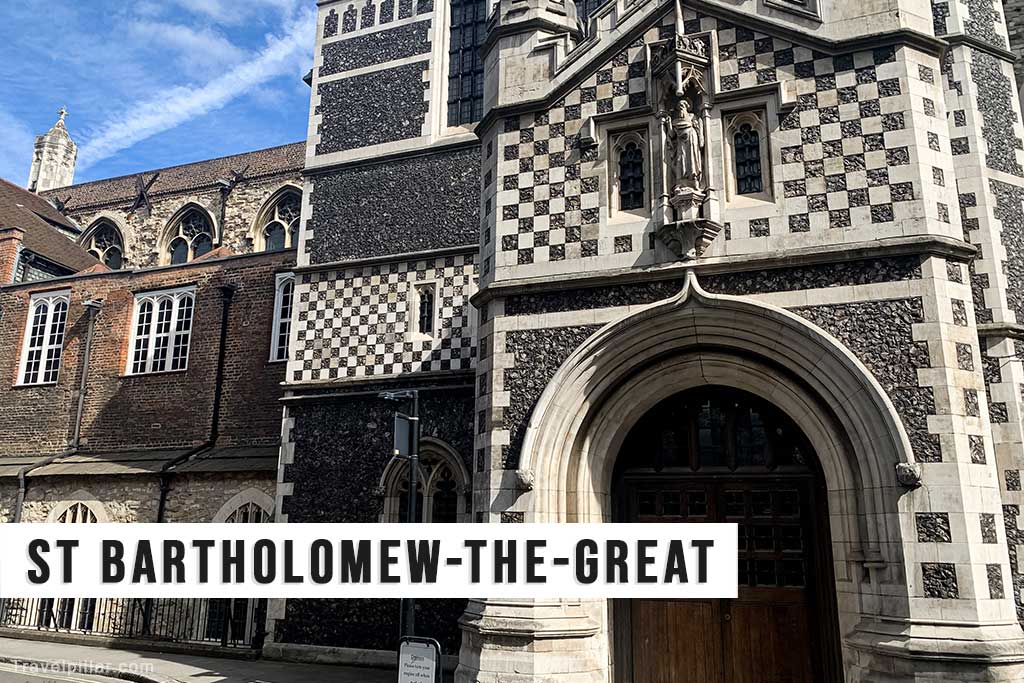
St Bartholomew-the-Great is a historic Anglican church located in the Smithfield area of the City of London. Founded in 1123 by Rahere, a courtier of King Henry I, the church is one of the oldest and most significant examples of Norman architecture in the city. Over the centuries, St Bartholomew-the-Great has survived various upheavals, including the dissolution of the monasteries under King Henry VIII and extensive damage during the Blitz of World War II.
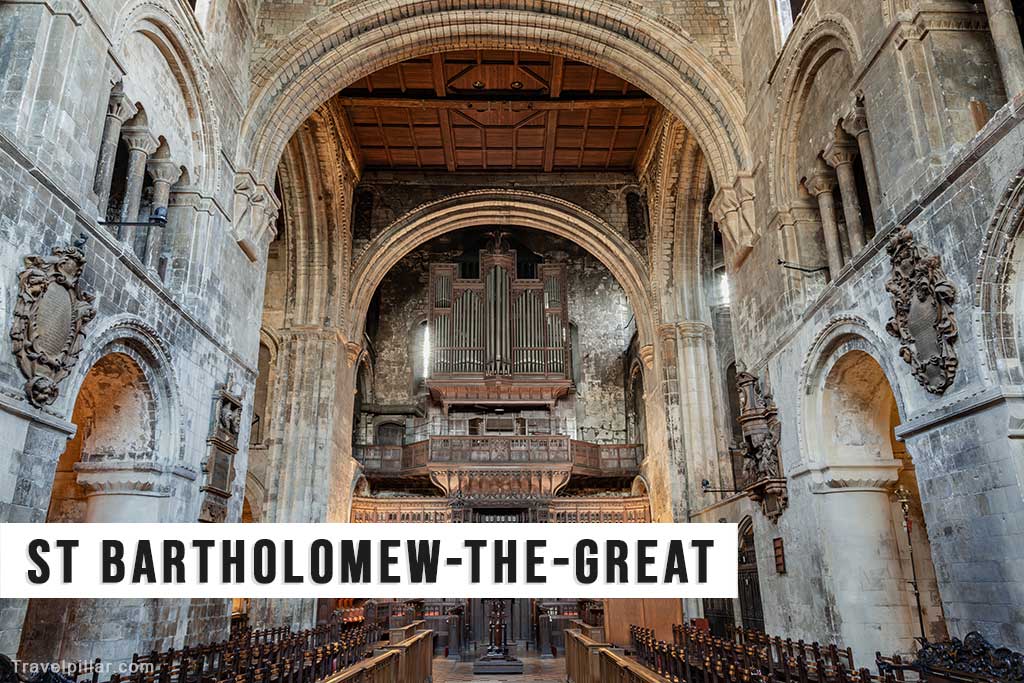
The church features a striking Romanesque design, with rounded arches, thick walls, and an impressive timber roof. The interior of St Bartholomew-the-Great is characterized by its atmospheric and evocative spaces, including the nave, choir, and Lady Chapel, adorned with a mix of medieval and later-period artworks, monuments, and stained glass windows.
The church is an active place of worship, hosting regular services and special events, such as concerts, lectures, and exhibitions. The church is also a popular destination for film and television productions, having appeared in numerous productions, including “Shakespeare in Love,” “Four Weddings and a Funeral,” and “The Other Boleyn Girl.”
Admission to the church is free for worship, but there is a small fee for visitors wishing to explore the historic building. The nearest underground stations are Barbican and Farringdon. As a significant architectural and historical site, the church offers a fascinating and tranquil experience for those interested in London’s rich ecclesiastical heritage.
Official website: https://www.greatstbarts.com
Google map 4.8/5