
Renaissance architecture marked a rebirth of the ideas and principles of Classical Greece and Rome following the Middle Ages. Originating in Florence during the early 15th century, it replaced the soaring verticality of Gothic architecture with buildings based on symmetry, proportion and mathematical harmony. Inspired by the rediscovery of ancient texts and ruins, Renaissance architects sought to create structures that reflected balance, order and human achievement.
The movement developed alongside the Renaissance, a period of extraordinary cultural, scientific and artistic innovation that transformed Europe. Wealthy merchants, powerful rulers and the Catholic Church commissioned magnificent churches, palaces, libraries and public buildings, providing architects with opportunities to experiment with new ideas. Many of history’s greatest artists, including Filippo Brunelleschi, Leon Battista Alberti, Donato Bramante, Michelangelo and Andrea Palladio, made lasting contributions to Renaissance architecture.
Unlike the richly decorated Gothic cathedrals that came before it, Renaissance architecture drew heavily upon the forms of Classical antiquity. Columns, domes, rounded arches, pediments and carefully proportioned façades became defining features of the style. Architects also relied on geometry and perspective to achieve visual harmony, believing that architecture should reflect the natural order of the world.
From its beginnings in Florence, Renaissance architecture spread rapidly throughout Italy before influencing much of Europe. Although each country developed its own interpretation, the movement shaped countless churches, palaces, civic buildings and villas that remain among the world’s greatest architectural treasures.
For travellers, Renaissance architecture is one of the highlights of visiting Italy and many other parts of Europe. Whether admiring Brunelleschi’s magnificent dome in Florence, exploring the Vatican in Rome or discovering elegant palaces in Venice, understanding Renaissance architecture provides a deeper appreciation of one of history’s most influential artistic movements.
One of the movement’s defining moments came when Filippo Brunelleschi designed the enormous dome of Florence Cathedral. Completed in 1436, it demonstrated remarkable engineering ingenuity and proved that the ambitious construction techniques of the ancient Romans could once again be achieved. Brunelleschi’s success inspired a new generation of architects to embrace Classical forms and mathematical precision.
History of Renaissance Architecture
Renaissance architecture emerged in Florence during the early 1400s, a time when the city was becoming one of Europe’s leading centres of trade, finance and culture. Scholars rediscovered the writings of the ancient Roman architect Vitruvius, while artists and architects carefully studied the surviving monuments of Ancient Rome. Their aim was not simply to copy Classical buildings but to adapt their principles for a new age.
During the 15th and 16th centuries, Renaissance architecture flourished throughout Italy. Florence remained at the heart of the movement, while Rome became an important centre following the patronage of successive popes. Grand churches, elegant palaces and impressive civic buildings transformed the appearance of Italian cities, with architects such as Leon Battista Alberti, Donato Bramante, Michelangelo and Andrea Palladio producing many of the period’s finest works.
The movement gradually spread across France, Spain, Germany, England and other parts of Europe, where Renaissance ideas blended with local traditions to create distinctive regional styles. By the late 16th century, the dramatic forms of Baroque architecture began to replace the balanced restraint of the Renaissance, but its influence continued to shape architecture for centuries to come.
Key Characteristics of Renaissance Architecture
Renaissance architecture revived many of the design principles of Ancient Greece and Rome while introducing new approaches based on mathematics, geometry and perspective.
Symmetry and Proportion
Perhaps the defining characteristic of Renaissance architecture is its emphasis on perfect balance. Buildings were carefully designed using mathematical ratios to create harmonious proportions, with each element relating naturally to the whole.
Classical Columns and Pilasters
Architects revived the Classical Orders—Doric, Ionic and Corinthian—using columns and decorative pilasters to organise façades and interior spaces. These features created a sense of order and elegance that became central to Renaissance design.
Rounded Arches
Unlike the pointed arches of Gothic architecture, Renaissance buildings typically feature rounded Roman arches inspired directly by Classical architecture. These appear in arcades, windows, entrances and courtyards throughout the period.
Domes
The dome became one of the most important symbols of Renaissance architecture. Advances in engineering allowed architects to construct magnificent domes that dominated city skylines, none more famous than Brunelleschi’s dome in Florence and Michelangelo’s later dome for St Peter’s Basilica.
Geometric Layouts
Squares, circles and other simple geometric forms played a major role in Renaissance planning. Architects believed that geometry reflected the order of the natural world, creating buildings that felt calm, logical and beautifully balanced.
Restrained Decoration
Although often richly detailed, Renaissance buildings avoid excessive ornamentation. Sculptures, mouldings and decorative elements were carefully placed to complement the building’s overall symmetry rather than overwhelm it.
Famous Examples of Renaissance Architecture
Florence Cathedral (Santa Maria del Fiore), Florence, Italy

Although construction of Florence Cathedral began during the Gothic period, it became one of the defining monuments of the Renaissance when Filippo Brunelleschi completed its magnificent brick dome in 1436. At the time, it was the largest dome ever built and remains one of the greatest engineering achievements in architectural history. Today it dominates the skyline of Florence and symbolises the birth of Renaissance architecture.
St Peter’s Basilica, Vatican City

St Peter’s Basilica is one of the most important churches in Christianity and one of the greatest masterpieces of Renaissance architecture. Designed by several renowned architects, including Bramante, Raphael and Michelangelo, the basilica combines perfect Classical proportions with an enormous dome that became a model for countless churches throughout Europe and beyond.
Palazzo Medici Riccardi, Florence, Italy
Built for the powerful Medici family, Palazzo Medici Riccardi established the blueprint for the Renaissance palace. Designed by Michelozzo, its rusticated stone façade, elegant proportions and spacious central courtyard influenced the design of grand residences throughout Italy during the 15th century.
Tempietto, Rome, Italy
Designed by Donato Bramante around 1502, the Tempietto is widely regarded as one of the finest examples of High Renaissance architecture. Although small in size, its perfectly proportioned circular plan, Doric columns and harmonious design embody the Renaissance ideals of balance and Classical beauty.
Villa Rotonda, Vicenza, Italy
Designed by Andrea Palladio, Villa Rotonda is one of the world’s most influential Renaissance buildings. Its symmetrical design, identical temple-like façades and central dome inspired countless country houses, public buildings and government institutions across Europe and North America. Palladio’s ideas continue to influence architecture today.
Ospedale degli Innocenti, Florence, Italy
Designed by Brunelleschi in the early 15th century, the Ospedale degli Innocenti (Hospital of the Innocents) is considered one of the first true Renaissance buildings. Its graceful arcade of Corinthian columns, rounded arches and carefully calculated proportions introduced a completely new architectural language inspired by Classical antiquity.
Palazzo Pitti, Florence, Italy

Originally built for the wealthy Pitti family before becoming the principal residence of the Medici rulers, Palazzo Pitti is one of Florence’s grandest Renaissance palaces. Its imposing rusticated stone façade reflects the wealth and influence of one of Italy’s most powerful families, while its magnificent gardens and museums continue to attract visitors from around the world.
Château de Chambord, France
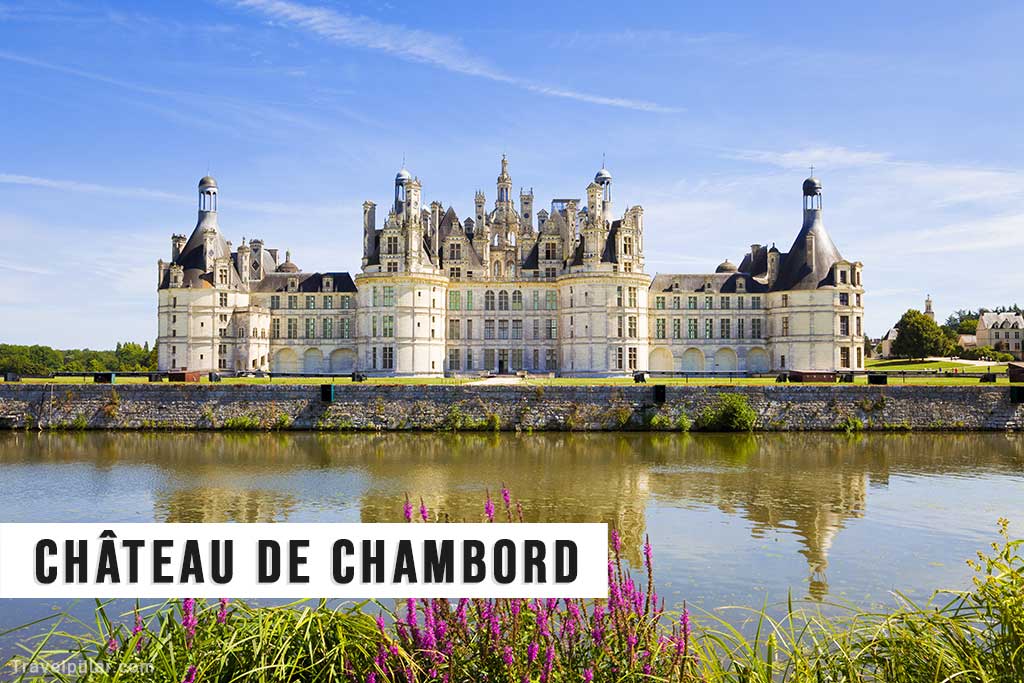
One of the most recognisable castles in Europe, Château de Chambord combines French medieval traditions with Renaissance ideas imported from Italy. Commissioned by King Francis I, it is renowned for its spectacular roofline, elegant symmetry and extraordinary double-helix staircase, which is often attributed to the influence of Leonardo da Vinci.
Santa Maria Novella, Florence, Italy
The elegant marble façade of Santa Maria Novella, designed by Leon Battista Alberti, is regarded as one of the masterpieces of Renaissance architecture. Alberti successfully combined Classical proportions with an existing medieval church, creating a façade that became highly influential throughout Italy.
Pazzi Chapel, Florence, Italy
Located beside the Basilica of Santa Croce, the Pazzi Chapel is another masterpiece by Brunelleschi. Its restrained decoration, harmonious proportions and elegant use of columns, arches and geometric forms perfectly demonstrate the principles that defined early Renaissance architecture.
Where to See Renaissance Architecture
Although Renaissance architecture spread throughout Europe, Italy remains the undisputed centre of the movement and contains many of its greatest masterpieces.
Some of the best destinations include:
- Florence, Italy – The birthplace of Renaissance architecture, home to Florence Cathedral, Palazzo Medici Riccardi, Ospedale degli Innocenti, the Pazzi Chapel and countless other masterpieces.
- Rome & Vatican City – St Peter’s Basilica, the Tempietto, Palazzo Farnese and many churches designed by Bramante, Michelangelo and other Renaissance masters.
- Vicenza, Italy – Famous for Andrea Palladio’s elegant villas and palaces, including the iconic Villa Rotonda.
- Venice, Italy – Renaissance palaces line the Grand Canal, while churches and civic buildings demonstrate the city’s distinctive interpretation of the style.
- France – The Loire Valley is home to magnificent Renaissance châteaux, including Chambord, Chenonceau and Azay-le-Rideau.
- England – Although influenced by local traditions, buildings such as Hampton Court Palace and Hardwick Hall reflect the spread of Renaissance ideas into Tudor and Elizabethan architecture.
Why Renaissance Architecture Matters
Renaissance architecture transformed the way buildings were designed and remains one of the most influential architectural movements in history. By reviving the principles of Classical Greece and Rome while embracing new ideas in engineering, mathematics and perspective, Renaissance architects created buildings that were both beautiful and functional. Their emphasis on symmetry, proportion and harmony has continued to inspire architects for more than 500 years.
For travellers, Renaissance architecture offers the opportunity to experience the cultural rebirth that shaped modern Europe. From the magnificent dome of Florence Cathedral and the grandeur of St Peter’s Basilica to the elegant palaces of Venice and the châteaux of the Loire Valley, these buildings reflect an age of artistic innovation and intellectual discovery. Understanding the principles behind Renaissance architecture allows visitors to appreciate not only their beauty but also the remarkable achievements of the architects who designed them.
Whether you’re exploring the streets of Florence, wandering through the Vatican or visiting the great palaces of Italy and France, Renaissance architecture provides an unforgettable insight into one of the most creative periods in European history.
See Also
If you enjoyed learning about Renaissance architecture, you may also be interested in:
- Classical Architecture – The Greek and Roman buildings that inspired Renaissance architects.
- Gothic Architecture – The medieval style that Renaissance architecture gradually replaced.
- Baroque Architecture – The dramatic and highly decorative movement that evolved from the Renaissance during the late 16th century.
- The Renaissance – Discover the artists, thinkers and innovators who transformed Europe during this remarkable period.