
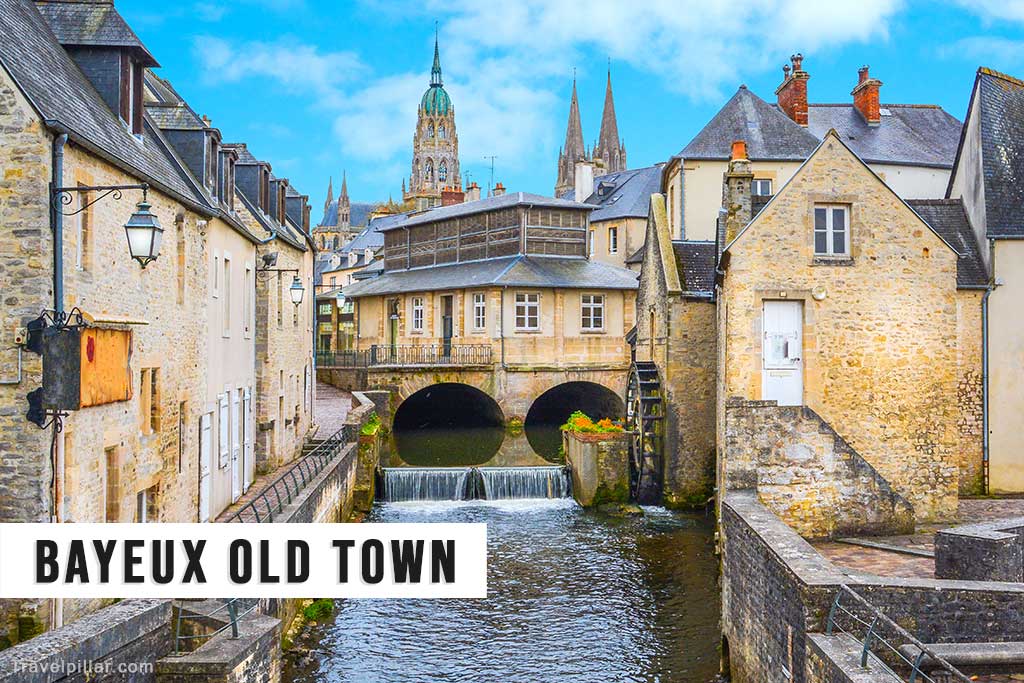
Bayeux is a historic town in the Normandy region of northwestern France, known primarily for its well-preserved medieval architecture and the world-renowned Bayeux Tapestry. Located near the D-Day landing beaches, The town has become a significant destination for visitors interested in both medieval history and World War II heritage.
At the heart of the town is the Bayeux Cathedral, a striking example of Norman Gothic architecture. Originally consecrated in 1077 in the presence of William the Conqueror, the cathedral has undergone various restorations but retains much of its original character. It served as the original location where the Bayeux Tapestry is thought to have been displayed.
The Bayeux Tapestry itself is housed in the Musée de la Tapisserie de Bayeux. This 70-metre-long embroidered cloth depicts the events leading up to the Norman conquest of England in 1066, including the Battle of Hastings. The museum provides a detailed historical context and a multilingual audio guide, making it accessible to a broad audience.
Beyond the tapestry and cathedral, Bayeux’s Old Town contains numerous well-preserved timber-framed buildings, cobbled streets, and examples of 17th- and 18th-century architecture. The central area remains relatively unspoiled by modern development, allowing visitors to explore a townscape that retains much of its historical charm.
The town also serves as a gateway to the nearby D-Day beaches. The Battle of Normandy Museum (Musée Mémorial de la Bataille de Normandie), located on the town’s outskirts, offers a detailed presentation of the Allied landings and the subsequent military campaign (see Battle of Normandy). Bayeux War Cemetery, the largest Commonwealth cemetery in France, lies nearby and commemorates over 4,000 soldiers who died during the conflict.
The town is accessible by train from Caen and Paris, and its compact size makes it suitable for exploration on foot. Local markets, traditional Norman cuisine, and small boutiques add to its cultural interest. Though small in scale, the town offers a dense concentration of historical significance, making it a worthwhile destination for those seeking insight into both medieval and modern European history.
Official tourism website:
https://bayeux-bessin-tourisme.com/en/
https://www.bayeux.fr/en
Google map Bayeux Town
The Best Thing to Do in Bayeux
Bayeux War Cemetery
The Bayeux War Cemetery is the largest Commonwealth cemetery in France, containing over 4,000 graves of soldiers who died during the Battle of Normandy in 1944. Located near the Memorial Museum of the Battle of Normandy, the cemetery includes graves of British, Canadian, and other Allied troops. A memorial wall honours over 1,800 missing soldiers. The site is maintained by the Commonwealth War Graves Commission and remains a place of quiet reflection.
Official website: https://www.cwgc.org/
Google map 4.9/5
Cathédrale Notre-Dame de Bayeux

The Cathédrale Notre-Dame de Bayeux is a Roman Catholic cathedral dating from the 11th century. Originally consecrated in 1077, it is closely linked to William the Conqueror and Norman history. The structure combines Romanesque and Gothic elements, with later additions in the 13th century. Notable features include its twin towers, vaulted nave, and stained-glass windows. The cathedral once displayed the Bayeux Tapestry, which is now housed in a nearby museum.
Website: https://www.bayeux.fr/
Google map 4.7/5
Bayeux Tapestry Museum
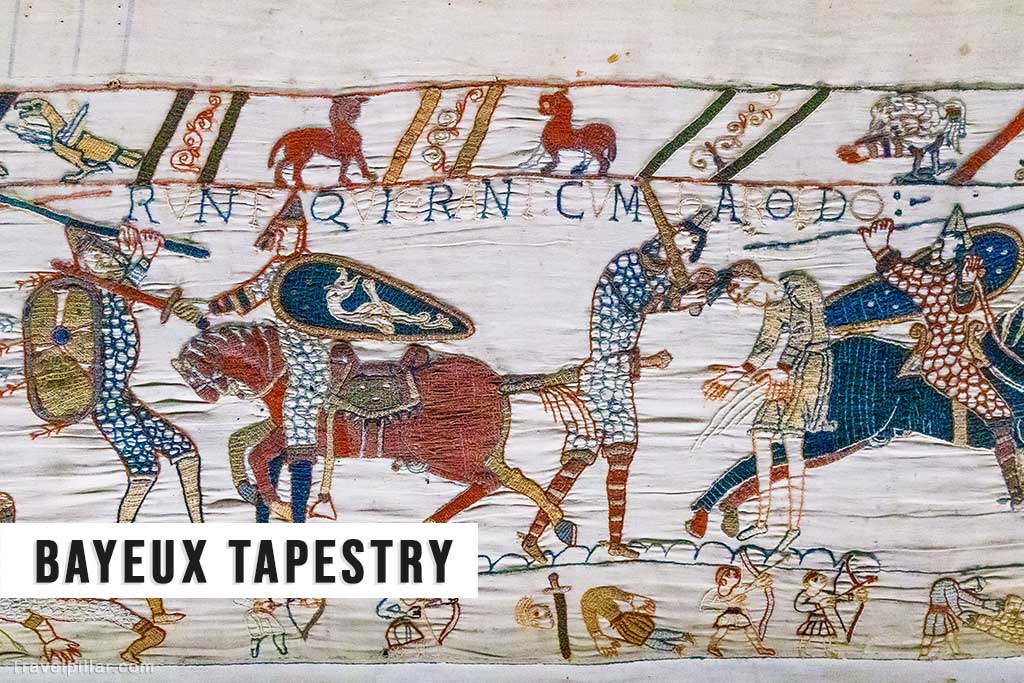
The Bayeux Tapestry Museum houses the famous 11th-century embroidered cloth depicting the events leading to the Norman conquest of England in 1066. The 70-metre-long tapestry illustrates the Battle of Hastings in detailed narrative scenes. The museum presents the artifact with multilingual audio guides and explanatory displays. Located in a former seminary, it offers historical context and interpretation, making it a central attraction for visitors interested in medieval European history.
Google map 4.6/5
Museum of the Battle of Normandy
The Museum of the Battle of Normandy presents a detailed account of the military operations that followed the D-Day landings in June 1944. Covering the period from 6 June to 29 August, the museum features photographs, uniforms, weapons, and military vehicles. It provides chronological and thematic displays explaining the Allied campaign in Normandy. Located near the Bayeux War Cemetery, the museum serves as a key site for World War II history.
Google map 4.5/5
Musée d’Art et d’Histoire Baron Gérard
The Musée d’Art et d’Histoire Baron Gérard, located in the former episcopal palace of Bayeux, offers a comprehensive overview of the region’s artistic and historical heritage. Its collections span archaeology, medieval art, ceramics, lace, and fine arts from the 15th to the 20th century. The museum integrates local history with broader artistic developments, providing insight into the town’s cultural evolution from antiquity through the modern era in a well-curated setting.
Google map 4.6/5