
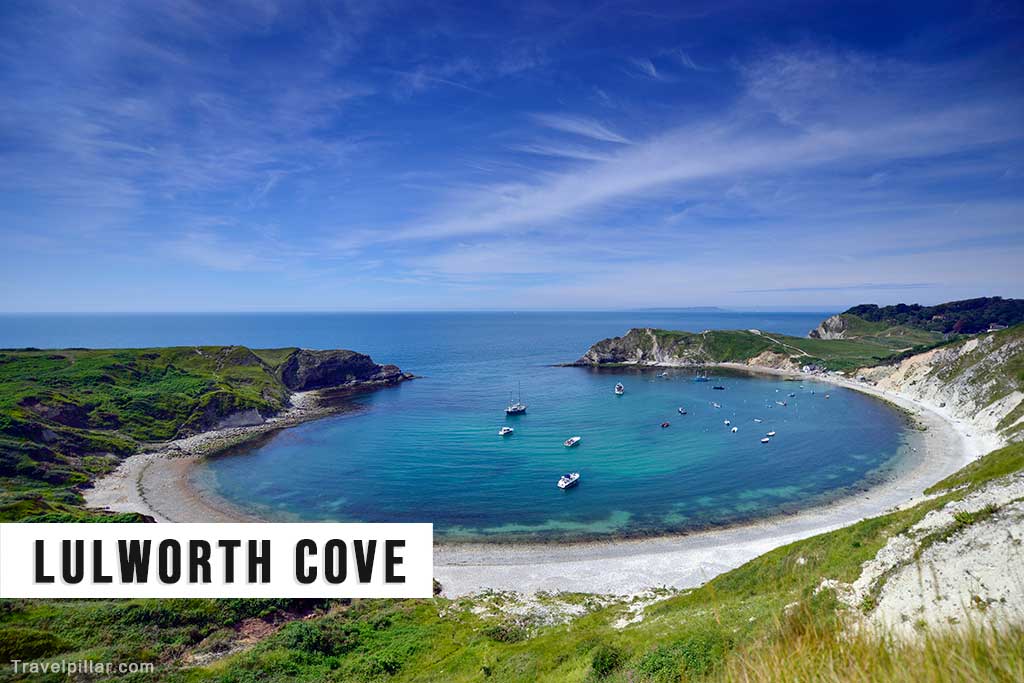
Lulworth Cove is one of England‘s most beautiful natural landmarks and one of the highlights of Dorset‘s Jurassic Coast. Located beside the picturesque village of West Lulworth, this almost perfectly circular cove is famous for its crystal-clear water, dramatic limestone cliffs and fascinating geology. Together with nearby Durdle Door, it forms one of the most visited sections of the Jurassic Coast UNESCO World Heritage Site and attracts visitors from around the world.
Sheltered from the open sea by a narrow gap in the limestone cliffs, Lulworth Cove has a peaceful atmosphere that contrasts with the dramatic coastline surrounding it. The attractive pebble beach, colourful fishing boats and gently curving shoreline make it a wonderful place to relax, while the surrounding cliffs offer spectacular walking and panoramic views across the English Channel.
Lulworth Cove is also an excellent base for exploring the Jurassic Coast. The South West Coast Path links the cove with Durdle Door, Man O’ War Bay, Stair Hole and Mupe Bay, making it one of Dorset’s best destinations for walkers and photographers. Combined with cafés, pubs, a visitor centre and excellent facilities, it is an ideal place to spend a few hours or a full day exploring one of England’s finest coastal landscapes.
Official website: https://lulworth.com/
The Best Things to Do at Lulworth Cove
Explore the Cove

The cove itself is the main attraction. Its sheltered waters and almost perfectly circular shape make it one of the most distinctive coastal landforms in Britain. A level path follows the edge of the beach, providing beautiful views across the water and towards the narrow entrance where the sea continues to shape the coastline. The colourful fishing boats pulled up onto the shore add to the cove’s traditional charm and make it one of Dorset’s most photographed locations.
Google map of Lulworth Cove 4.7/5
Walk to Durdle Door
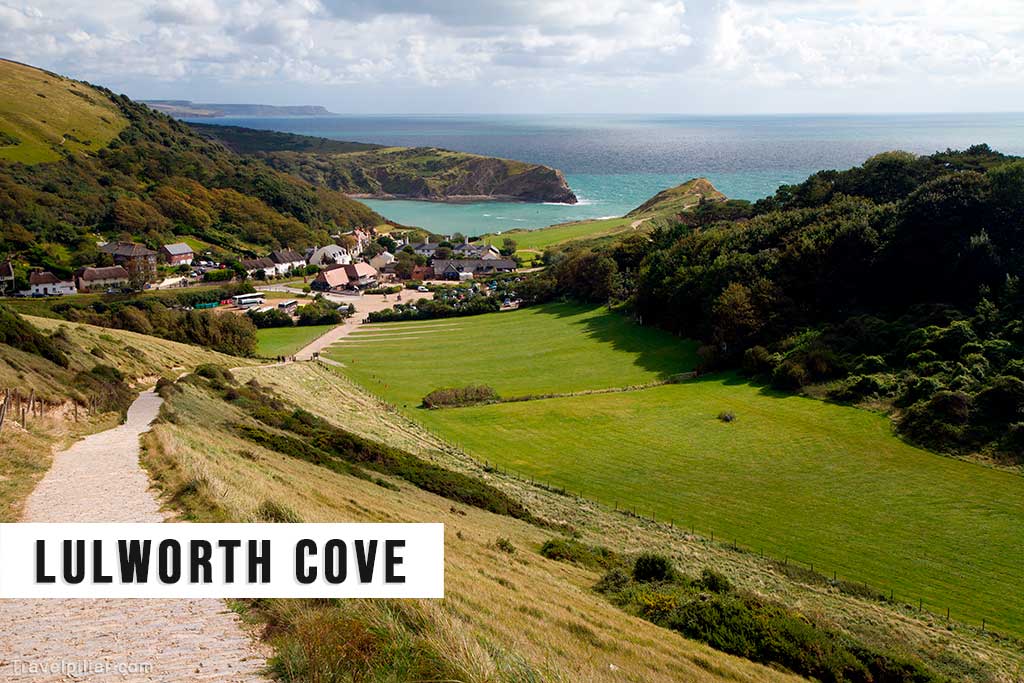
One of Dorset’s most popular walks follows the South West Coast Path from Lulworth Cove to nearby Durdle Door. The route is around one mile (1.6 km) each way and takes approximately 30 minutes, climbing over the headland before descending towards the famous limestone arch. Along the way, walkers enjoy breathtaking views of the Jurassic Coast and pass several of the area’s most impressive geological features.
Google map Start of the walk to Durdle Door (starts at the far end of main car park)
Visit Stair Hole
Just a few minutes’ walk west of the cove lies Stair Hole, one of the Jurassic Coast’s most fascinating natural features. Here, the sea has begun cutting through the limestone cliffs, creating caves, arches and narrow inlets that illustrate the early stages of cove formation. Information boards explain how Stair Hole provides a glimpse of what Lulworth Cove may have looked like thousands of years ago.
Google map 4.8/5
Walk the South West Coast Path
Lulworth Cove is one of the best starting points for exploring the South West Coast Path. Walkers heading east can visit Durdle Door, Man O’ War Bay and Bat’s Head, while those travelling west are rewarded with quieter scenery towards Mupe Bay and Worbarrow Bay. The route offers some of the finest coastal walking in southern England, with dramatic cliffs and ever-changing sea views around every corner.
Visit the Lulworth Cove Visitor Centre
The free Lulworth Cove Visitor Centre provides an excellent introduction to the Jurassic Coast and explains the geology, wildlife and history of the area through interactive displays and exhibits. It is well worth visiting before exploring the coastline, particularly if you’re interested in understanding how the cove and surrounding landscape were formed.
Official website: https://lulworth.com/
Google map Visitors Centre and car park 4.4/5
Explore West Lulworth Village

The attractive village of West Lulworth lies just a few minutes’ walk from the cove and is well worth exploring. Many of its traditional stone and thatched cottages date back hundreds of years, creating one of Dorset’s prettiest coastal villages. The village also offers a good selection of cafés, pubs, restaurants and small shops, making it an ideal place to relax before or after exploring the Jurassic Coast.
Google map West Lulworth Village
Visit Lulworth Castle

Located around one mile inland from Lulworth Cove, Lulworth Castle is one of Dorset’s finest historic houses. Built in the early 17th century as a hunting lodge, the beautifully restored castle is surrounded by extensive parkland and woodland walks. Visitors can explore the elegant interiors, climb the tower for panoramic views across the Dorset countryside and discover the attractive church of St Andrew, one of England’s earliest Roman Catholic churches built after the Reformation.
Official website: https://lulworth.com/
Google map Lulworth Castle 4.6/5
Photography
Lulworth Cove is a favourite location for photographers throughout the year. The best views are from the surrounding cliffs, where the almost perfect circular shape of the cove can be fully appreciated. Sunrise and sunset often provide beautiful lighting, while aerial-style viewpoints along the coast path create some of the most iconic images of the Jurassic Coast.
How Was Lulworth Cove Formed?

Lulworth Cove was created over millions of years as the sea gradually eroded weaker bands of rock behind a resistant limestone coastline. Once the waves broke through the narrow limestone barrier, they rapidly wore away the softer clays and sands behind it, creating the almost perfectly circular shape seen today.
Because the cove clearly demonstrates the process of coastal erosion, it is regarded as one of the finest examples of its kind anywhere in the world and is frequently visited by students studying geography and geology.
The Jurassic Coast
Lulworth Cove forms part of the Jurassic Coast, England’s only natural UNESCO World Heritage Site. Stretching 95 miles (153 km) from Exmouth in Devon to Old Harry Rocks in Dorset, this extraordinary coastline reveals around 185 million years of Earth’s history through its cliffs, beaches and rock formations. The area is internationally recognised for its geological importance, but it is equally celebrated for its spectacular scenery, coastal walks and opportunities to discover fossils.
Lulworth Cove is one of the Jurassic Coast’s best-known landmarks and provides an excellent starting point for exploring nearby attractions including Durdle Door, Man O’ War Bay, Stair Hole and Mupe Bay.
Visitor Information
Lulworth Cove is open throughout the year and is one of the easiest locations on the Jurassic Coast to visit. The main Lulworth Cove Visitor Centre & Car Park is situated just a short, level walk from the beach and provides convenient access to the cove, visitor facilities and the South West Coast Path.
The Visitor Centre offers information about the geology, wildlife and history of the area, while nearby you’ll find public toilets, cafés, pubs, restaurants, small shops and convenience stores in the village of West Lulworth. Unlike nearby Durdle Door, Lulworth Cove has excellent facilities, making it an ideal destination for families and anyone planning to spend several hours exploring the area.
Parking charges apply and the main car park can become extremely busy during the summer holidays and on sunny weekends, so arriving early is recommended.
Google map Lulworth Cove Car Park
Swimming and Water Safety
The sheltered waters of Lulworth Cove are generally much calmer than many nearby beaches, making it a popular place for paddling, swimming and kayaking. However, visitors should remember that this is still a natural beach with no lifeguard service, and conditions can change depending on the weather and tide.
The beach is made up mainly of pebbles, and the water becomes deep quite quickly in places, so children should always be supervised. Anyone entering the sea should take sensible precautions and assess the conditions before swimming.
Accessibility
Compared with many locations along the Jurassic Coast, Lulworth Cove is relatively accessible. The walk from the main car park to the cove follows a mostly level surfaced path, allowing most visitors to reach the harbour and beach without difficulty.
However, visitors planning to continue to Durdle Door, Stair Hole or other sections of the South West Coast Path should be aware that these routes involve steep climbs, uneven paths and steps, making them unsuitable for wheelchairs and challenging for pushchairs or anyone with limited mobility.
Best Time to Visit
Lulworth Cove is beautiful throughout the year, although late spring and early autumn are often the best times to visit, offering pleasant weather with fewer crowds than the busy summer months. Summer is ideal for swimming, kayaking and enjoying the beach, but the village and car park can become extremely busy during school holidays.
Photographers often favour early morning or late afternoon when the light is softer and the crowds are smaller. Winter provides a quieter atmosphere, with dramatic seas and excellent opportunities to appreciate the natural beauty of the Jurassic Coast.
Nearby Attractions
Lulworth Cove is perfectly positioned for exploring some of Dorset’s finest coastal scenery. Durdle Door is just a 30-minute walk away along the South West Coast Path, while Man O’ War Bay lies immediately beyond the famous limestone arch. Stair Hole, only a few minutes from the cove, is one of the Jurassic Coast’s most fascinating geological features, while Mupe Bay offers a quieter alternative for walkers looking to escape the crowds.
Further afield, visitors can explore Corfe Castle, Kimmeridge Bay, Weymouth, the Isle of Purbeck and many of the attractions featured in the Dorset Travel Guide.
Why Visit Lulworth Cove?
Lulworth Cove is much more than a beautiful beach. Its unique geology, spectacular scenery and excellent visitor facilities make it one of the highlights of the Jurassic Coast and an ideal destination for families, walkers and photographers alike. Whether you’re exploring the coastline, enjoying a meal in the village, learning about the area’s remarkable geology or walking to nearby Durdle Door, Lulworth Cove offers one of the finest coastal experiences in England and is an essential stop on any visit to Dorset.