
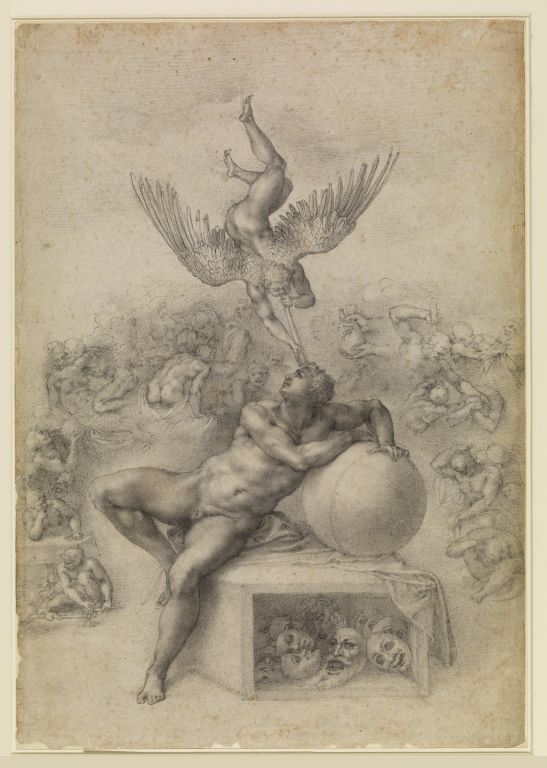
Displayed in the Courtauld Gallery in London, The Dream (Il Sogno) is one of Michelangelo’s most intriguing and mysterious drawings. Created around 1533 during the Italian High Renaissance, the work differs greatly from the monumental frescoes and sculptures for which Michelangelo is best known. Instead of depicting a straightforward biblical or historical scene, the drawing presents an elaborate allegory filled with symbolism, idealised figures and philosophical meaning.
At the centre of the composition sits a muscular nude male figure leaning upward as though awakening from sleep or deep thought. Around him are numerous smaller figures engaged in scenes associated with temptation, pleasure, conflict and human weakness. Above the central figure appears a winged trumpet-blowing angel-like form, often interpreted as a symbol of spiritual awakening or divine inspiration.
Historians continue debating the exact meaning of the drawing. Some believe it represents the human soul attempting to rise above earthly desires toward spiritual truth, while others connect it to Renaissance ideas about dreams, morality and the struggle between physical temptation and intellectual enlightenment. Like many Renaissance artists and thinkers, Michelangelo was deeply influenced by Neoplatonism, a philosophy that linked physical beauty with higher spiritual ideals.
One reason the drawing fascinates viewers is its unfinished and highly personal quality. Unlike major public commissions such as the Sistine Chapel ceiling, The Dream appears more intimate and intellectual, possibly intended as a gift for the young Roman nobleman Tommaso dei Cavalieri, with whom Michelangelo shared a close friendship. The nature of their relationship has been widely discussed by historians and adds another layer of intrigue to the work.
The drawing also demonstrates Michelangelo’s extraordinary understanding of the human body. Even in a relatively small composition, the figures possess the muscular energy and sculptural power associated with his larger works. The twisting poses and idealised anatomy reflect the Renaissance belief that the human form could express both physical and spiritual ideas.
Many people consider The Dream a masterpiece because it combines technical brilliance with mystery and symbolism. Unlike artworks with a single obvious interpretation, the drawing encourages viewers to think about ambition, morality, desire and the search for meaning.
For visitors exploring the Courtauld Gallery in London, The Dream offers a quieter but deeply rewarding encounter with Michelangelo’s imagination. The work reveals not only his artistic skill but also the philosophical and spiritual concerns that shaped Renaissance culture at its height.
Weblink: https://gallerycollections.courtauld.ac.uk/object-d-1978-pg-424