
Lucas Cranach the Elder (1472–1553) was a prominent German painter and printmaker, known for his contributions to the Northern Renaissance. Born in Kronach, Bavaria, Cranach became the court painter to the Electors of Saxony in Wittenberg, a position that solidified his influence in both the artistic and political spheres of the time. His career spanned over five decades, during which he produced a wide variety of works, including portraits, religious scenes, and mythological subjects.

Cranach’s early work was influenced by late Gothic styles, but he soon adapted the Renaissance’s focus on realism and naturalism. He developed a distinctive style characterized by elongated figures, graceful compositions, and detailed landscapes. His ability to capture both the spiritual and physical aspects of his subjects made him one of the leading portraitists of his time. Among his most famous sitters were key figures of the Protestant Reformation, including Martin Luther, with whom Cranach maintained a close relationship.
Lucas Cranach the Elder’s involvement in the Reformation was not limited to his portraits of reformers. He produced numerous woodcuts and engravings that were used as propaganda in support of Lutheran ideas. His workshop in Wittenberg became a hub for Reformation art, producing both religious and secular works that reflected the changing religious landscape of Europe.
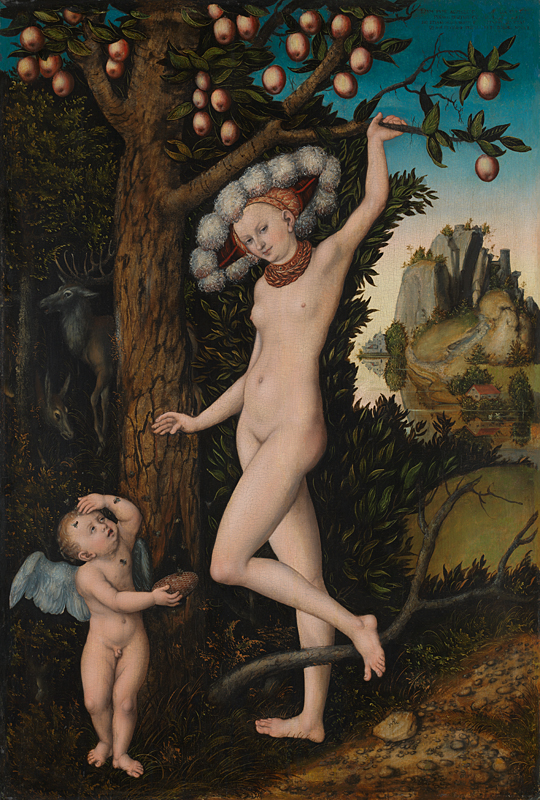
In addition to his religious and portrait works, Cranach is known for his mythological paintings, such as The Judgment of Paris and Venus and Cupid, which demonstrate his skill in depicting classical themes. These works often featured idealized, yet somewhat stylized, representations of the human form.
Cranach’s workshop was highly productive, and his sons, particularly Lucas Cranach the Younger, continued his artistic legacy after his death. Cranach the Elder’s contributions to Renaissance art, particularly in Germany, remain significant, with his works displayed in major museums across the world. His ability to blend religious and secular themes, along with his connection to the Reformation, make him a central figure in Northern European art history.