

Situated in London‘s bustling Trafalgar Square, the National Gallery is a distinguished institution dedicated to the exhibition and preservation of European fine art. Established in 1824, the gallery houses a remarkable collection of over 2,300 paintings, spanning from the mid-13th century to the early 20th century. Visitors can immerse themselves in the rich artistic heritage of the Western world, exploring masterpieces by renowned artists such as Leonardo da Vinci, Vincent van Gogh, and J.M.W. Turner.

One of the gallery’s most iconic paintings is da Vinci’s “The Virgin of the Rocks,” a mesmerizing piece that showcases the artist’s mastery of chiaroscuro and sfumato techniques. The captivating “Sunflowers” by Van Gogh is another must-see work, radiating warmth and vitality through its vibrant colors and expressive brushstrokes.

The National Gallery’s extensive collection also features notable works by other eminent artists, including Titian, Rembrandt, and Botticelli. The diversity of styles and movements represented, from Renaissance and Baroque to Impressionism and Post-Impressionism, offers visitors a comprehensive overview of the evolution of European art.

To enhance the visitor experience, the National Gallery provides a variety of guided tours, audio guides, and educational programs. These resources enable individuals to delve deeper into the artistic, historical, and cultural contexts surrounding the displayed works. Additionally, the gallery hosts temporary exhibitions, lectures, and workshops, ensuring a dynamic and engaging experience for art enthusiasts and novices alike.
Admission to the National Gallery is free, making it an accessible and enriching cultural destination for all. Whether you are a seasoned art connoisseur or a curious first-time visitor, a trip to the National Gallery is an enlightening and inspiring journey through the annals of European artistic tradition.
Official website: https://www.nationalgallery.org.uk
Google map 4.7/5 – Located in Trafalgar Square
National Gallery Highlights from the collection include
Here are some highlights of the National Gallery’s collection, along with links to their relevant National Gallery pages:
Room 2
“An Allegory with Venus and Cupid” by Bronzino
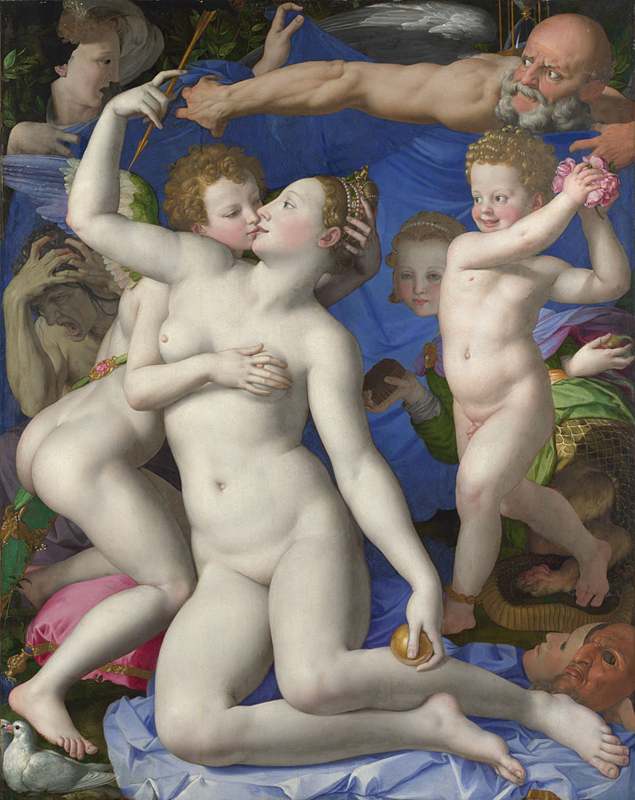
This complex Mannerist painting presents Venus and Cupid entwined in an ambiguous embrace, surrounded by allegorical figures representing Time, Folly, and Jealousy. The polished surfaces and elongated forms reflect Bronzino’s courtly style. Its cool palette and intricate symbolism create an intellectually charged composition, characteristic of mid-sixteenth-century Florentine art and its fascination with artifice and concealed meaning.
https://www.nationalgallery.org.uk/
Room 9
“Virgin of the Rocks” by Leonardo da Vinci

This painting shows the Virgin Mary with the Christ Child, John the Baptist, and an angel in a rocky landscape. It demonstrates Leonardo’s mastery of sfumato, creating soft transitions between light and shadow. The complex composition and gestures emphasise the figures’ relationships within a mysterious, atmospheric setting.
https://www.nationalgallery.org.uk/
“The Entombment” by Michelangelo

This unfinished painting shows Christ’s body being carried to his tomb. The figures are arranged in a complex composition, revealing Michelangelo’s sculptural approach to form. The work demonstrates his focus on anatomy and movement, with strong contours and muscular detail, highlighting his early development as a painter in Florence.
https://www.nationalgallery.org.uk/
“The Manchester Madonna” by Michelangelo

This unfinished painting depicts the Virgin Mary with the Christ Child and infant John the Baptist, surrounded by angels. It shows Michelangelo’s early interest in powerful anatomical forms and sculptural modelling. The work combines delicate areas with rough sketches, revealing his process and focus on structure rather than detailed surface finish.
https://www.nationalgallery.org.uk/
“The Origin of the Milky Way” by Jacopo Tintoretto
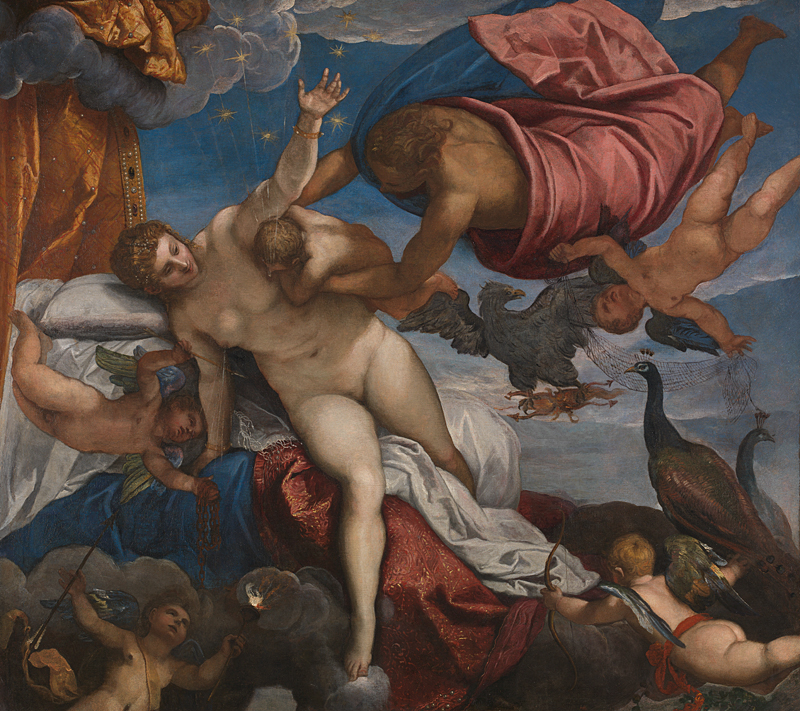
This painting depicts the mythological scene of Hera nursing Heracles, whose spilled milk forms the Milky Way. The dramatic composition shows Tintoretto’s dynamic style, with strong diagonal movement and vigorous brushwork. The figures are illuminated against a dark background, emphasising their physicality and the theatrical nature of the subject.
https://www.nationalgallery.org.uk/
Room 12
“The Ambassadors” by Hans Holbein the Younger

This double portrait shows two French diplomats surrounded by objects symbolising knowledge, science, and mortality. It is noted for its detailed realism and the anamorphic skull at the bottom, a memento mori visible from a specific angle. The painting demonstrates Holbein’s precision and the intellectual interests of the Renaissance elite.
https://www.nationalgallery.org.uk/
Room 18
“Samson and Delilah” by Peter Paul Rubens

This painting depicts the moment Delilah orders Samson’s hair to be cut, causing his loss of strength. Rubens uses dramatic lighting, rich colours, and dynamic figures to enhance the scene’s tension. The composition emphasises sensuality and betrayal, characteristic of his Baroque style with its focus on movement and emotional intensity.
https://www.nationalgallery.org.uk/
“The Judgement of Paris” by Peter Paul Rubens

This painting depicts the mythological judgement of Paris, who must choose the fairest goddess among Hera, Athena, and Aphrodite. Rubens presents idealised nude figures in a lush landscape, emphasising sensuality and classical beauty. The composition is dynamic, with rich colouring and detailed forms characteristic of his mature Baroque style.
https://www.nationalgallery.org.uk/
Room 24
“Belshazzar’s Feast” by Rembrandt

This painting illustrates the biblical story of Belshazzar’s Feast, showing the moment a divine hand writes a judgement on the wall. Rembrandt uses dramatic lighting and expressive faces to heighten the scene’s tension. The rich textures and strong contrasts emphasise the opulence of the banquet and the king’s sudden terror.
https://www.nationalgallery.org.uk/
Room 25
“Cupid Complaining to Venus” by Lucas Cranach the Elder
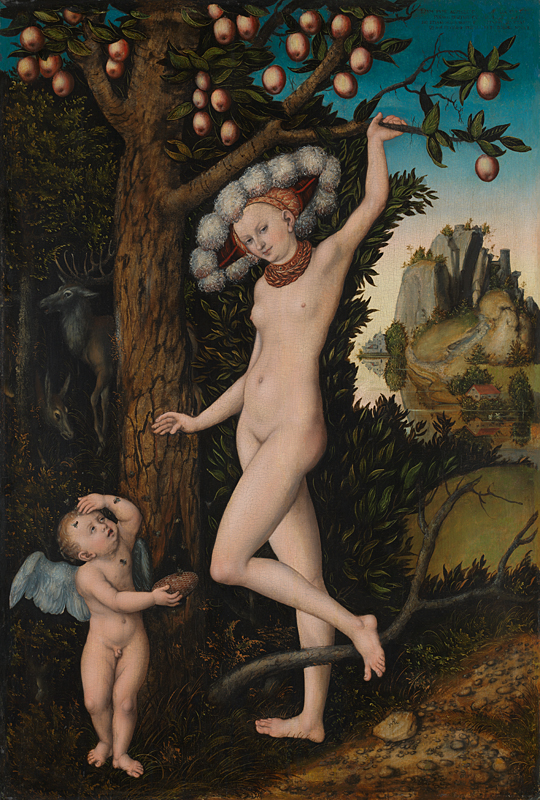
This painting depicts Cupid complaining to Venus after being stung by bees while stealing honey. Venus stands nude with Cupid beside her, set against a detailed landscape. The work combines moral symbolism with mythology, suggesting the pain of love. Cranach’s style is evident in the elongated figures and precise detailing.
https://www.nationalgallery.org.uk/
Room 26
“The Madonna of the Pinks” by Raphael

This small painting shows the Virgin Mary playing with the Christ Child, who holds pink flowers symbolising love and marriage. The intimate composition reflects Raphael’s delicate approach to form and expression. Soft modelling and balanced arrangement create a sense of tenderness, characteristic of his early devotional works in Florence.
https://www.nationalgallery.org.uk/
Room 27
“Christ Mocked (The Crowning with Thorns)” by Hieronymus Bosch
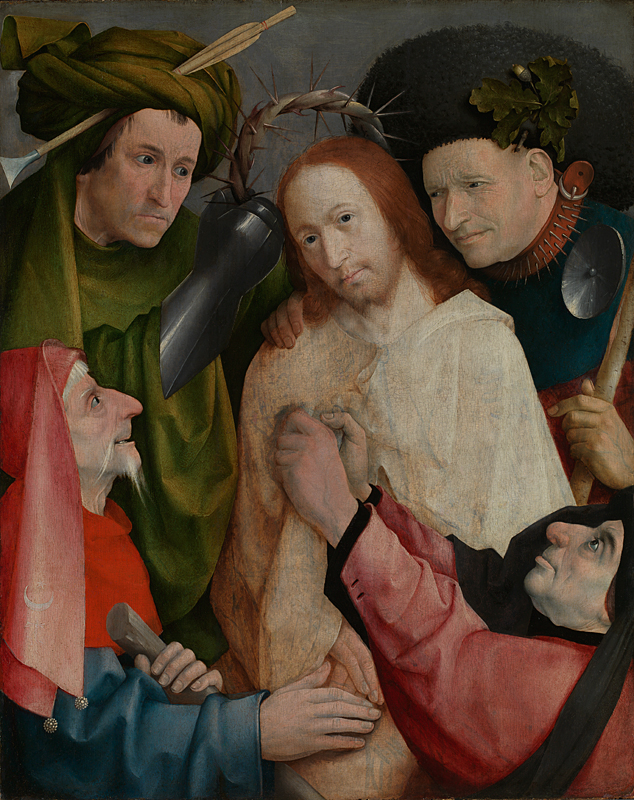
This painting depicts Christ being mocked and crowned with thorns, surrounded by four men with grotesque features. Bosch focuses on the psychological intensity of the scene, contrasting Christ’s calm expression with the aggression around him. The tightly cropped composition and detailed faces emphasise human cruelty, typical of Bosch’s moralising style.
https://www.nationalgallery.org.uk/
Room 28
“The Arnolfini Portrait” by Jan van Eyck

This painting portrays a wealthy couple standing in a domestic interior, often interpreted as a marriage or betrothal scene. Van Eyck demonstrates meticulous attention to detail, texture, and light. The convex mirror reflects the room and two figures, enhancing realism. Symbolic objects emphasise themes of wealth, status, and domestic virtue.
https://www.nationalgallery.org.uk/
Room 29
“Doge Leonardo Loredan” by Giovanni Bellini

This portrait depicts the Doge of Venice in his ceremonial robes and corno ducale against a flat blue background. Bellini uses precise oil technique to create a sculptural effect, highlighting the sitter’s dignity and authority. The detailed rendering of fabrics and calm expression conveys political power and serene, composed leadership.
https://www.nationalgallery.org.uk/
“Bacchus and Ariadne” by Titian
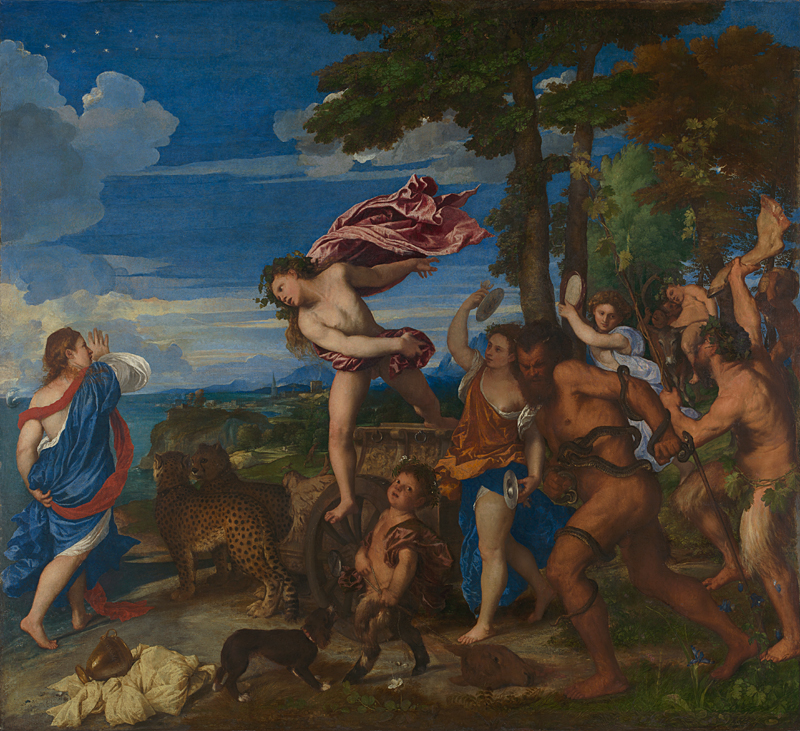
This painting depicts Bacchus leaping from his chariot towards Ariadne, who has been abandoned by Theseus. Titian’s dynamic composition and vibrant colours convey movement and drama. The scene combines mythological narrative with rich landscape detail, while the vivid figures and diagonal arrangement exemplify the artist’s Venetian Renaissance style and mastery.
https://www.nationalgallery.org.uk/
“Saint George and the Dragon” by Jacopo Tintoretto
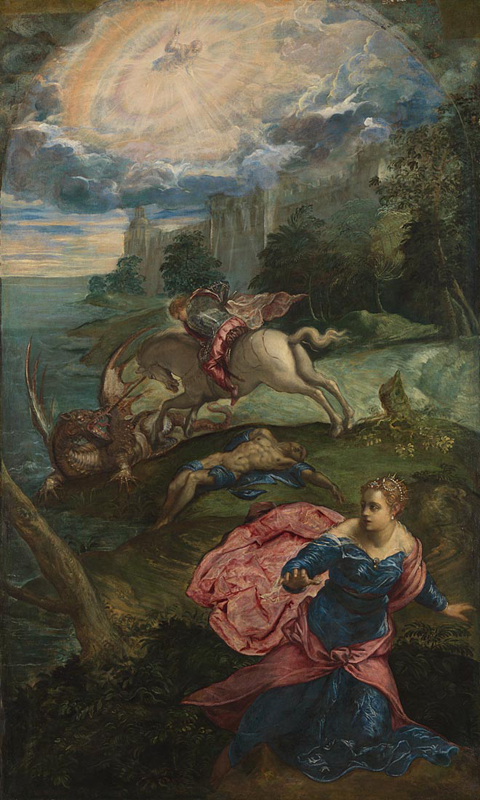
This painting depicts St George slaying the dragon to rescue a princess, shown fleeing in the background. Tintoretto uses dramatic lighting and vigorous brushwork to create movement and tension. The dynamic composition, with strong diagonals and dark tones, exemplifies his Mannerist style and focus on energetic, emotionally charged scenes.
https://www.nationalgallery.org.uk/
Room 30
“The Toilet of Venus (‘The Rokeby Venus’)” by Diego Velázquez

This painting depicts Venus reclining with her back to the viewer, attended by Cupid holding a mirror. Velázquez employs soft tonal modelling and restrained colour to create a naturalistic sense of flesh and space. The informal pose and subtle brushwork distinguish it from earlier idealised nudes, reflecting the artist’s interest in observation and the influence of Italian painting.
https://www.nationalgallery.org.uk/
Room 31
“The Triumph of Pan” by Nicolas Poussin
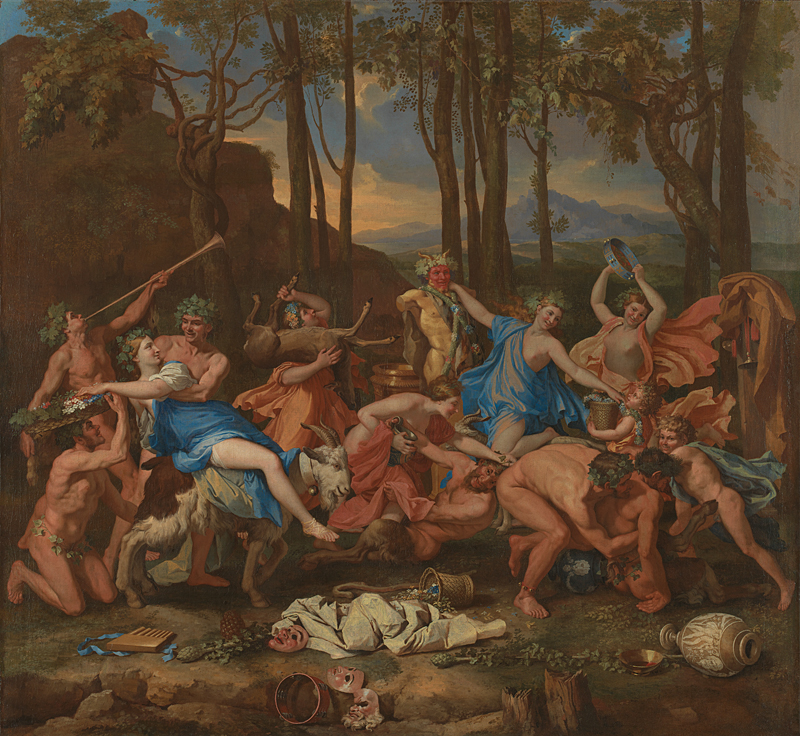
This painting depicts a bacchanalian scene celebrating Pan, surrounded by dancing satyrs and nymphs. Poussin arranges the figures in a balanced, classical composition, emphasising order and idealised form. The work reflects his interest in antiquity, mythology, and structured design, characteristic of his intellectual and restrained French Baroque style.
https://www.nationalgallery.org.uk/
“The Adoration of the Golden Calf” by Nicolas Poussin

This painting depicts the Israelites worshipping the golden calf while Moses receives the Ten Commandments. Poussin arranges the figures in a structured composition, combining dynamic dancing with classical poses. The work reflects his interest in biblical narratives, moral themes, and controlled design, characteristic of his rational and disciplined Baroque style.
https://www.nationalgallery.org.uk/
Room 34
“Rain, Steam, and Speed” by J.M.W. Turner

This painting depicts a steam train crossing a bridge in heavy rain, merging natural and industrial elements. Turner uses loose brushwork and atmospheric effects to evoke movement and speed. The blurred forms and glowing light create a dramatic impression, reflecting his interest in modernity, weather, and the sublime power of nature.
https://www.nationalgallery.org.uk/
“An Experiment on a Bird in the Air Pump” by Joseph Wright of Derby

This painting shows a scientific demonstration of a vacuum experiment, with a white cockatoo deprived of air in a glass vessel. Wright contrasts candlelit figures reacting with curiosity, concern, or indifference. The work combines dramatic chiaroscuro with Enlightenment themes, emphasising the tension between scientific progress and moral considerations.
https://www.nationalgallery.org.uk/
“Portrait of Mrs. Sarah Siddons” by Thomas Gainsborough

This portrait depicts the actress Sarah Siddons seated, wearing an elegant blue and white gown with a feathered hat. Gainsborough uses fluid brushwork and subtle colouring to convey refinement and grace. The composition emphasises her poised, thoughtful expression, reflecting her status as a leading figure in 18th-century British theatre and society.
https://www.nationalgallery.org.uk/
Room 35
“Mr. and Mrs. Andrews” by Thomas Gainsborough

This painting portrays a landowning couple seated outdoors, with Mr Andrews standing beside his wife, who sits holding embroidery. The landscape emphasises their wealth, showing cultivated fields and woodland. Gainsborough combines portraiture with landscape painting, using clear light and precise detail to convey status, ownership, and the harmony of people and land.
https://www.nationalgallery.org.uk/
Room 36
“Dido Building Carthage” by J.M.W. Turner

This painting depicts Queen Dido overseeing the construction of Carthage, inspired by Virgil’s Aeneid. Turner combines classical architecture with a glowing sunrise, creating a luminous, atmospheric effect. The composition reflects his admiration for Claude Lorrain, blending historical narrative with idealised landscape to explore themes of empire, civilisation, and transience.
https://www.nationalgallery.org.uk/
Room 40
“The Fighting Temeraire” by J.M.W. Turner

This painting shows the decommissioned warship HMS Temeraire being towed to be broken up, set against a luminous sunset. Turner contrasts the fading sailing ship with a dark steam tug, suggesting the transition from old to new technology. The atmospheric light and expressive colour demonstrate his mature Romantic style and interest in maritime history and modern change.
https://www.nationalgallery.org.uk/
“The Hay Wain” by John Constable

This painting presents a rural Suffolk scene centred on a wagon crossing a shallow river near Flatford Mill. Constable emphasises close observation of landscape, sky, and natural detail. The balanced composition and fresh handling of paint reflect his commitment to painting directly from nature, contributing to the development of nineteenth-century landscape art in Britain.
https://www.nationalgallery.org.uk/
Room 41
“Surprised!” by Henri Rousseau

This painting shows a tiger creeping through dense jungle foliage during a storm. Rousseau uses vivid colours and stylised forms to create a dreamlike, exotic scene. The composition combines detailed plants with a dramatic pose, reflecting his imaginative approach to nature despite never visiting such landscapes, characteristic of his naive style.
https://www.nationalgallery.org.uk/
“Hillside in Provence” by Paul Cezanne
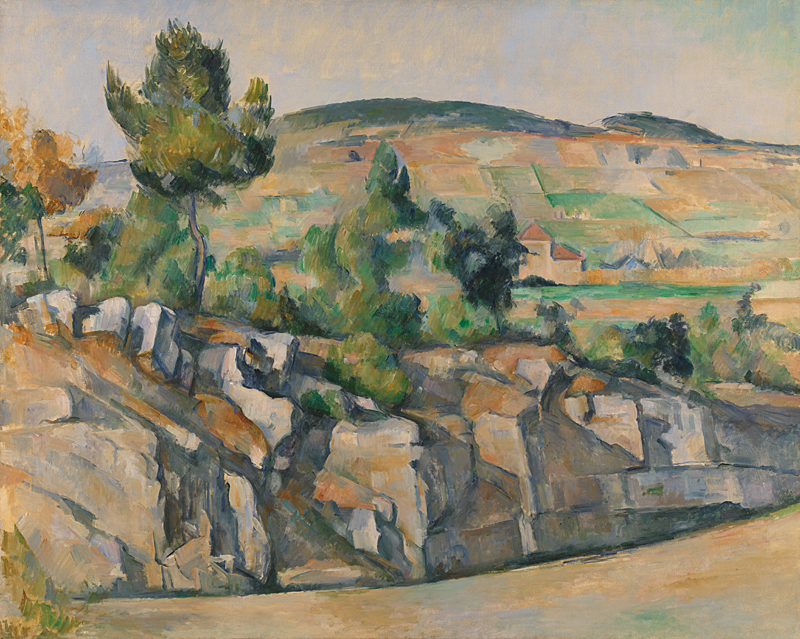
This painting depicts a hillside landscape in Provence with trees and buildings integrated into the terrain. Cézanne uses structured brushstrokes and subtle tonal variations to create form and depth. The composition reflects his focus on underlying geometric shapes in nature, marking a transition towards modernist abstraction in early 20th-century painting.
https://www.nationalgallery.org.uk/
“Water-Lilies” by Claude Monet

This painting depicts water lilies floating on a pond’s surface, with reflections of sky and trees creating a sense of depth. Monet uses loose brushstrokes and subtle colour variations to capture light and atmosphere. The composition lacks a clear horizon, emphasising abstraction and his focus on visual experience over defined form.
https://www.nationalgallery.org.uk/
Room 43
“Sunflowers” by Vincent Van Gogh

This painting features a group of sunflowers arranged in a simple vase against a flat background. Van Gogh uses thick, textured brushstrokes and vibrant yellows to create intensity and movement. The simplified forms and bold colour reflect his expressive approach to still life, produced during his time in Arles and associated with his exploration of colour and emotion.
https://www.nationalgallery.org.uk/
“Bathers at Asnières” by Georges Seurat

This painting depicts working-class men and boys relaxing by the River Seine at Asnières. Seurat uses precise brushwork and an early form of pointillism to create light effects and atmosphere. The composition balances figures and landscape harmoniously, reflecting his interest in social scenes, optical theory, and structured design characteristic of Neo-Impressionism.
https://www.nationalgallery.org.uk/
“Late Afternoon in our Meadow” by Camille Pissarro

This painting depicts a sunlit meadow with trees and figures working in the fields during late afternoon. Pissarro uses broken brushstrokes and varied greens to capture light and atmosphere. The composition reflects his focus on rural life, natural harmony, and the transient effects of light, characteristic of his Impressionist style.
https://www.nationalgallery.org.uk/
“The Boulevard Montmartre at Night” by Camille Pissarro

This painting depicts the Boulevard Montmartre in Paris illuminated at night. Pissarro uses rapid, broken brushstrokes to capture artificial lights, reflections, and urban movement. The composition conveys the energy of city life, with carriages and figures under glowing lamps, reflecting his interest in modernity and Impressionist exploration of atmospheric effects.
https://www.nationalgallery.org.uk/
“Farms near Auvers” by Vincent Van Gogh
This painting depicts farm buildings and fields near Auvers-sur-Oise, rendered with Van Gogh’s characteristic bold brushstrokes and vibrant colours. The composition combines undulating roofs and green crops under a dynamic sky, reflecting his emotional engagement with rural landscapes during his final months and his distinctive Post-Impressionist approach to form and colour.
https://www.nationalgallery.org.uk/
“Two Crabs” by Vincent Van Gogh
This painting depicts two crabs on a flat surface, one upright and the other overturned. Van Gogh uses bold outlines and contrasting reds and greens to create a striking composition. The textured brushwork and vivid colours reflect his interest in Japanese prints and his expressive approach to simple, everyday subjects.
https://www.nationalgallery.org.uk/
“Motherhood (La Maternité)” by Pablo Picasso
This painting depicts a mother nursing her child, rendered in soft blues and greys characteristic of Picasso’s Blue Period. The simplified forms and subdued palette create a mood of quiet melancholy and tenderness. The composition reflects his focus on human vulnerability and emotional depth during this early stage of his career.
https://www.nationalgallery.org.uk/
Room 44
“Bathers at La Grenouillere” by Claude Monet
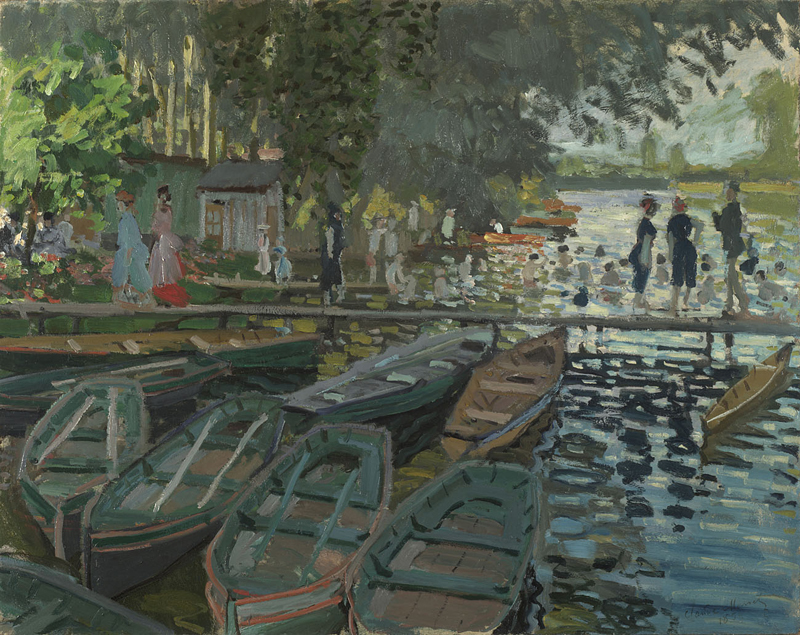
This painting depicts people bathing and relaxing at La Grenouillère, a popular riverside leisure spot near Paris. Monet uses rapid, broken brushstrokes and vibrant colours to capture reflections, water movement, and light effects. The composition conveys an impression of transient moments, characteristic of his early exploration of Impressionist techniques and modern life.
https://www.nationalgallery.org.uk/
“The Thames below Westminster” by Claude Monet

This painting shows the Thames with Westminster Bridge and the Houses of Parliament in hazy light. Monet uses soft brushstrokes and muted colours to capture atmospheric effects and reflections on the water. The composition reflects his interest in urban landscapes, weather conditions, and the fleeting qualities of light typical of Impressionism.
https://www.nationalgallery.org.uk/
“The Execution of Maximillian” by Édouard Manet

This painting depicts the execution of Emperor Maximilian of Mexico and his generals by firing squad. Manet arranges the figures in a stark, frontal composition, emphasising the brutality of the event. The loose brushwork and muted palette convey immediacy, while its political subject reflects his engagement with contemporary historical events.
https://www.nationalgallery.org.uk/
“Ballet Dancers” by Edgar Degas
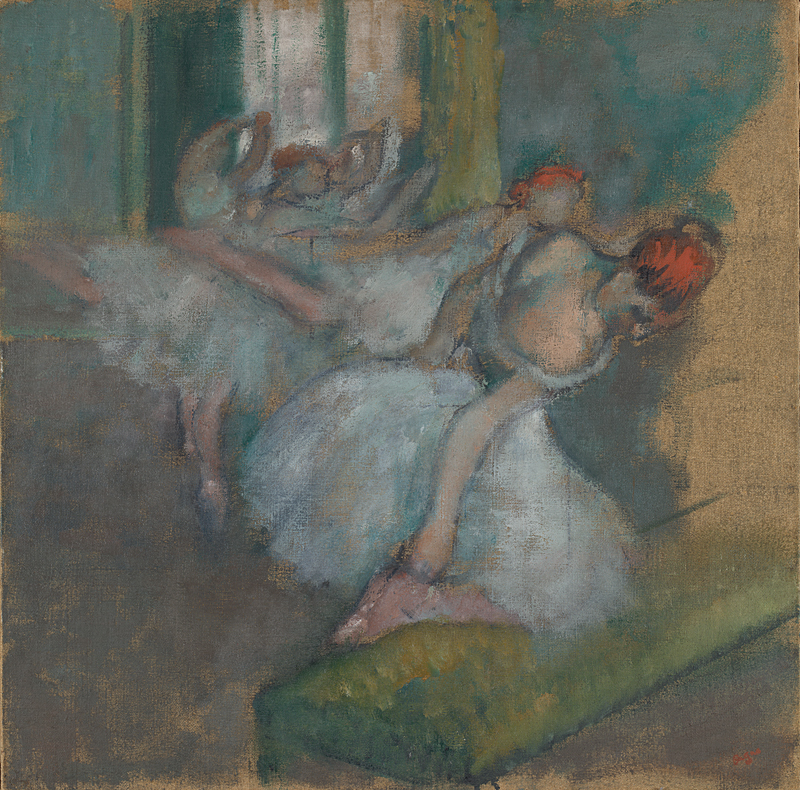
This painting depicts ballet dancers in rehearsal, captured in varied poses and movements. Degas uses loose brushwork and subtle colouring to convey texture and light. The composition combines informal arrangement with precise observation, reflecting his interest in contemporary life, the human figure in motion, and behind-the-scenes aspects of Parisian culture.
https://www.nationalgallery.org.uk/
“Young Spartans Exercising” by Edgar Degas
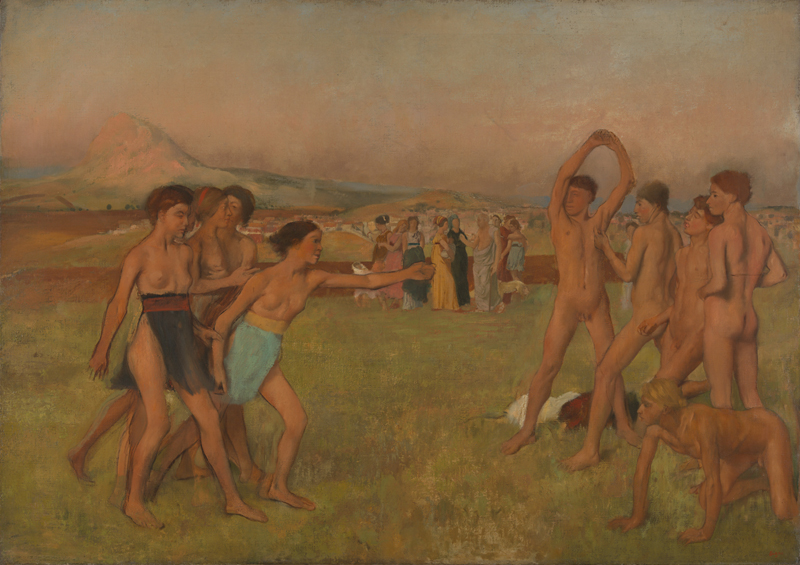
This painting depicts young Spartan boys and girls exercising and taunting each other under adult supervision. Degas combines classical subject matter with modern realism, using muted earth tones and careful figure arrangement. The unfinished areas reveal his working process, while the composition reflects his interest in human anatomy, movement, and social interaction.
https://www.nationalgallery.org.uk/
“At the Theatre” by Pierre-Auguste Renoir

This painting depicts a woman seated in a theatre box, looking out with a fan in her hand. Renoir uses loose brushwork and soft, luminous colours to capture textures and light effects. The composition reflects his interest in contemporary leisure scenes, portraying elegance, femininity, and the social atmosphere of Parisian theatre life.
https://www.nationalgallery.org.uk/
Room 45
“The Execution of Lady Jane Grey” by Paul Delaroche

This painting depicts the execution of Lady Jane Grey, England’s nine-day queen, blindfolded and guided to the block. Delaroche uses meticulous detail and dramatic lighting to heighten emotional impact. The composition emphasises her youth and vulnerability, reflecting his academic style and interest in historical subjects presented with theatrical realism.
https://www.nationalgallery.org.uk/
Room 46
“The Baptism of Christ” by Piero della Francesca

This painting depicts Christ’s baptism by John the Baptist in the River Jordan, with angels observing. Piero della Francesca uses clear geometry, balanced composition, and soft lighting to create a serene, timeless scene. The work exemplifies his interest in perspective, harmonious proportion, and the calm, intellectual beauty of the Renaissance.
https://www.nationalgallery.org.uk/
Room 51
The Wilton Diptych

This small portable diptych depicts King Richard II kneeling before the Virgin and Child, accompanied by saints. The work exemplifies the refined style of International Gothic painting, with rich colour, gold background, and delicate detail. Its symbolic imagery reinforces royal authority and divine favour, offering insight into late fourteenth-century English court culture.
https://www.nationalgallery.org.uk/
Room 61
“The Mond Crucifixion” by Raphael

This altarpiece shows Christ crucified, flanked by the Virgin Mary, Saint John the Evangelist, and other saints. Raphael organises the figures in a clear, harmonious composition, reflecting High Renaissance balance and clarity. The calm expressions and measured gestures demonstrate his synthesis of Umbrian tradition and Florentine influence during his early career.
https://www.nationalgallery.org.uk/
Room 62
“Venus and Mars” by Sandro Botticelli

This painting depicts the goddess Venus watching over a sleeping Mars, while playful satyrs interact with his armour. Botticelli arranges the figures in a linear, decorative style with precise contours and refined detail. The subject reflects Renaissance interest in classical mythology, possibly symbolising the triumph of love over war within a courtly Florentine context.
https://www.nationalgallery.org.uk/