

Édouard Manet (1832-1883) was a seminal French artist known for his pivotal role in the transition from Realism to Impressionism. His work bridged the gap between the traditional, academically accepted art of the mid-19th century and the avant-garde movement that was to follow.
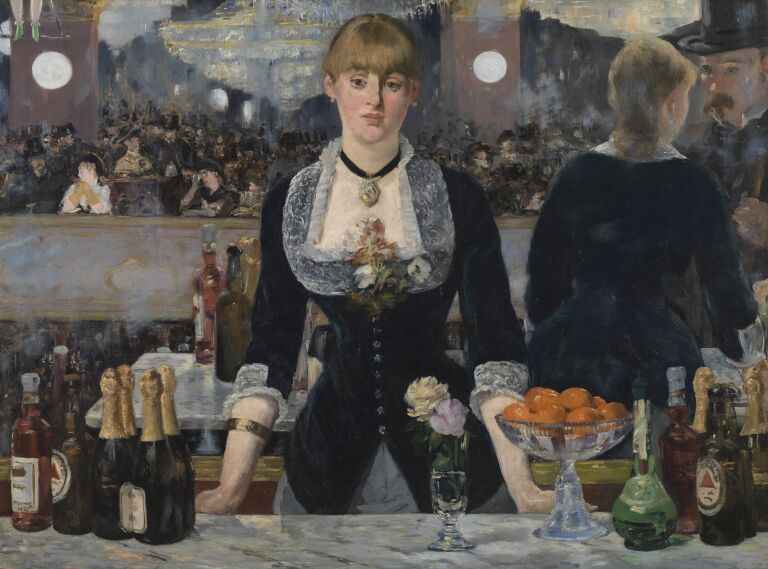
Born into an affluent Parisian family, Manet initially pursued a career in the navy before turning to art. Despite receiving academic training, he rejected the traditional historical and mythical subjects in favor of contemporary scenes, often imbued with critical social commentary.
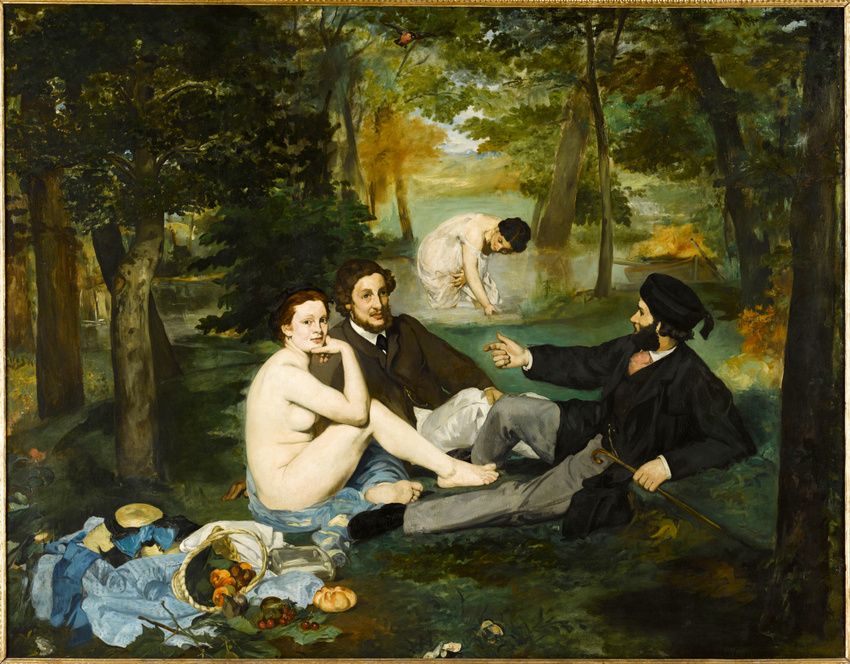
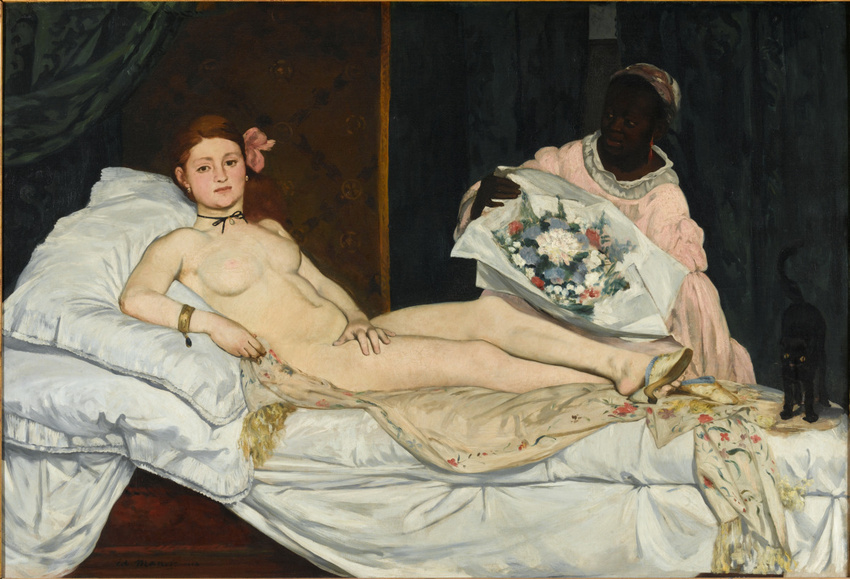
Manet’s most famous work, “Le Déjeuner sur l’herbe,” depicted a nude woman casually lunching with two fully clothed men. Exhibited at the Salon des Refusés in 1863, the painting caused a scandal due to its departure from the academic norms of the time. Similarly, “Olympia,” another of Manet’s iconic works, presented a reclining nude woman in a contemporary setting, further challenging established conventions.
Manet’s loose brushwork and his innovative approach to composition had a profound influence on the Impressionists, despite his ambivalent relationship with the movement. He preferred to work from his studio rather than plein air (outdoors), and he continued to submit his works to the official Paris Salon, unlike the Impressionists.
Manet’s bold depiction of modern life, his innovative use of lighting and color, and his disregard for traditional narrative and compositional rules marked a decisive break from academic painting. This, in turn, laid the groundwork for the rise of modern art.
Despite facing criticism and rejection during his lifetime, Manet’s impact on the art world is undeniable. His departure from tradition and his emphasis on the representation of modern, everyday life have earned him recognition as one of the forefathers of modern art.