

The Musée d’Orsay, located on the Left Bank of the Seine in Paris, is one of the world’s most renowned art museums. Housed in a former Beaux-Arts railway station, the Gare d’Orsay, the museum showcases an extensive collection of art from the mid-19th century to the early 20th century, including painting, sculpture, photography, and decorative arts.
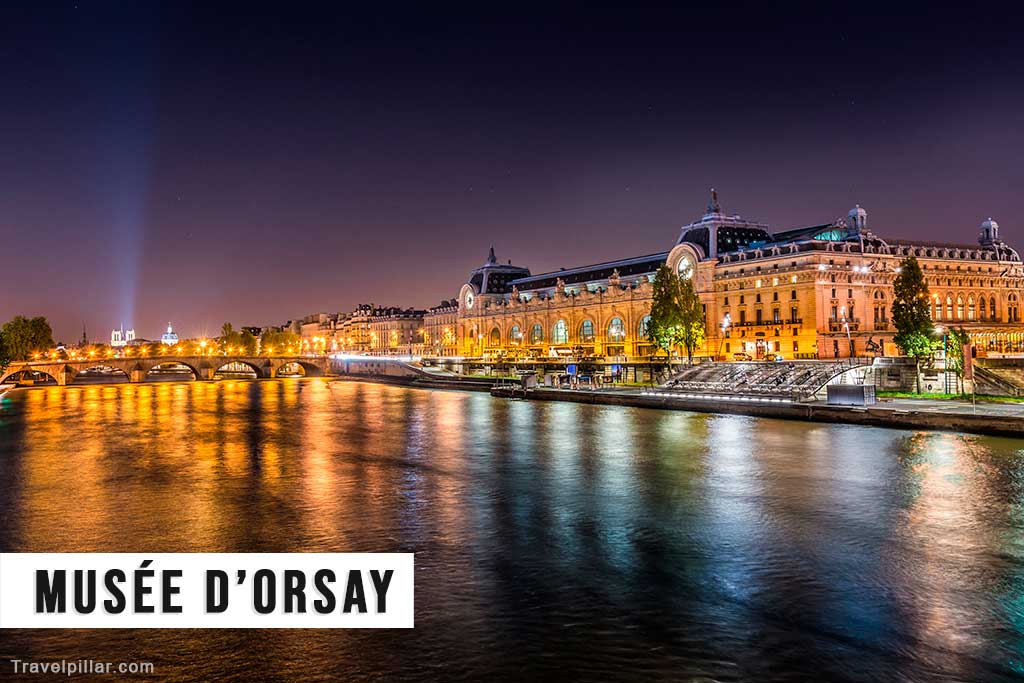
The building itself is an architectural masterpiece. Designed by Victor Laloux and completed in 1900, it served as a railway station until 1939, after which it was repurposed and opened as a museum in 1986. The transformation preserved much of its original grandeur, including its iconic glass roof and expansive main hall, which provides a stunning setting for its art collections.

The museum is particularly celebrated for its collection of Impressionist and Post-Impressionist masterpieces, one of the largest in the world. Visitors can view iconic works by artists such as Claude Monet, Pierre-Auguste Renoir, Edgar Degas, and Vincent van Gogh. Highlights include Van Gogh’s Starry Night Over the Rhône, Degas’s ballet dancer sculptures, and Monet’s The Water Lily Pond. The collection also features significant works by Édouard Manet, Paul Cézanne, and Paul Gauguin. (see further down the page for collection highlights)
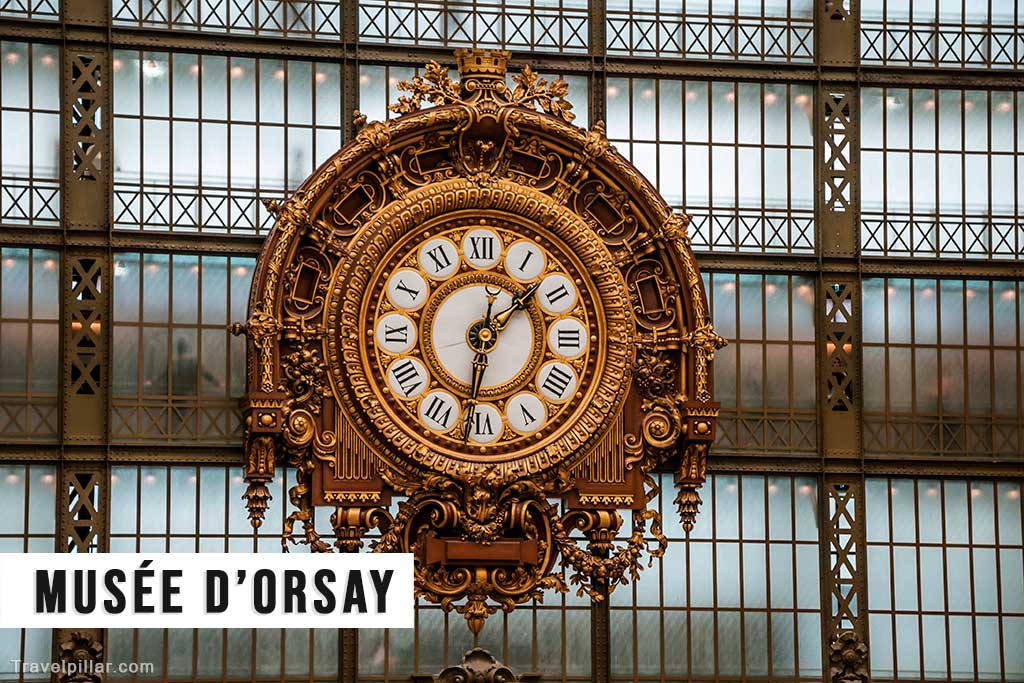
In addition to painting, the Musée d’Orsay displays a wide range of sculptures, decorative arts, and photographs, providing a comprehensive view of the artistic trends that shaped this pivotal period in history. The museum’s temporary exhibitions often explore specific themes, artists, or movements, attracting art enthusiasts from around the globe.
The Musée d’Orsay’s location along the Seine adds to its appeal, with views of Paris landmarks such as the Louvre and the Tuileries Gardens from its terraces. The museum also features a restaurant and café, both situated in beautifully restored spaces from its railway station days.
Today, the Musée d’Orsay stands as a testament to the vibrancy of 19th-century and early 20th-century art, offering visitors an immersive cultural experience. Its combination of architectural splendor and world-class collections makes it an essential destination for anyone visiting Paris.
Official website: https://www.musee-orsay.fr/en
Google map 4.7/5
Highlights of the Musee d’Orsay
Starry Night Over the Rhône – Vincent van Gogh
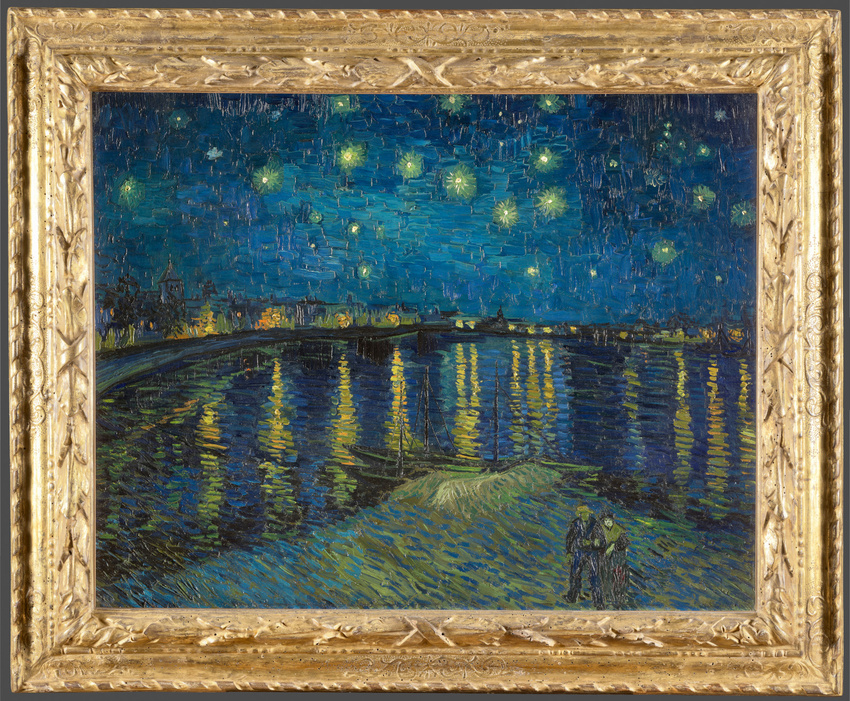
Starry Night Over the Rhône (1888) by Vincent van Gogh depicts the night sky reflected on the Rhône River in Arles. The composition features a star-filled sky, gas-lit reflections on the water, and a couple walking in the foreground. Painted during Van Gogh’s stay in southern France, it demonstrates his interest in light, color, and atmospheric effect. The work is a key example of his expressive brushwork and use of contrasting tones.
https://www.musee-orsay.fr/en/
Olympia by Édouard Manet
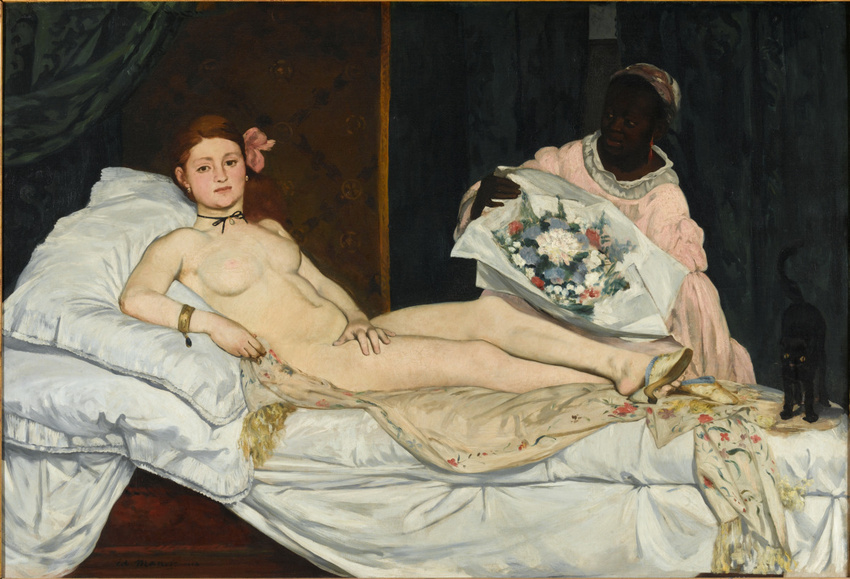
Olympia (1863) by Édouard Manet portrays a reclining nude woman attended by a maid, challenging traditional representations of the female form. Based on Titian’s Venus of Urbino, the painting caused controversy for its confrontational gaze and modern setting. The stark lighting, flat perspective, and absence of idealization marked a departure from academic norms. Olympia is considered a pivotal work in the development of modern art and the transition toward Impressionism.
https://www.musee-orsay.fr/en/
Le Déjeuner sur l’herbe by Édouard Manet
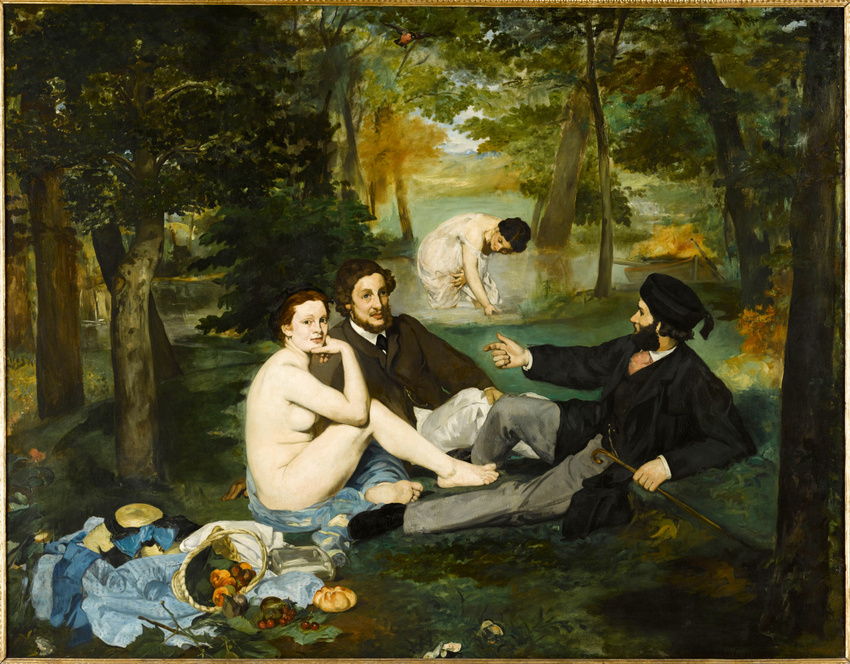
Painted in 1863, Luncheon on the Grass (Le Déjeuner sur l’herbe) shows two fully dressed men picnicking with a nude woman who meets the viewer’s gaze directly. A second lightly clothed bather appears behind them. The scene, based loosely on Renaissance compositions, caused scandal at the Salon des Refusés. Manet rejected academic idealisation, presenting a modern subject with flat light and abrupt contrasts that challenged traditional expectations of history painting.
https://www.musee-orsay.fr/en/
The Gare Saint-Lazare – Claude Monet
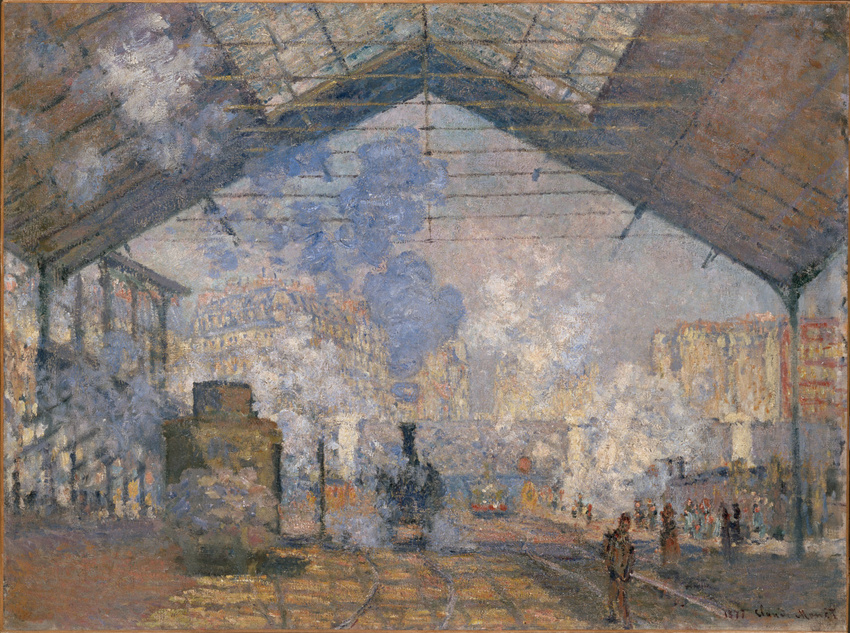
Painted in 1877, The Gare Saint-Lazare forms part of a series depicting Paris’s busy railway terminus. Monet focuses on steam, light and atmosphere rather than precise architectural detail. Trains dissolve into clouds of vapour beneath the iron roof, while loose brushwork captures movement and modern industry. The painting reflects Impressionism’s interest in contemporary urban life and the fleeting effects of light.
https://www.musee-orsay.fr/en/
Bal du Moulin de la Galette – Pierre-Auguste Renoir
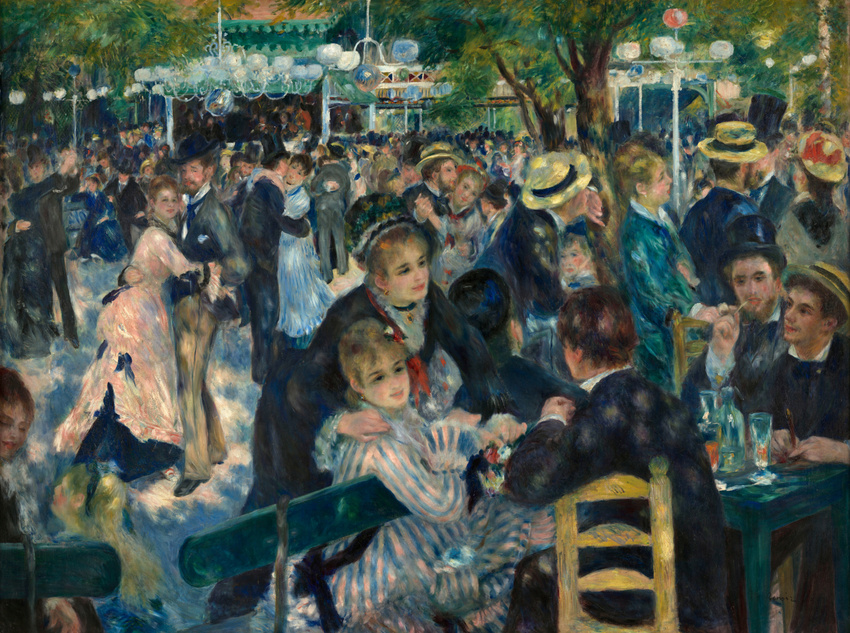
Bal du Moulin de la Galette (1876) by Pierre-Auguste Renoir depicts a lively outdoor dance at a popular venue in Montmartre. The painting captures the social atmosphere of late 19th-century Paris with figures engaged in conversation, dancing, and leisure. Renoir’s use of dappled light, loose brushwork, and vibrant colors exemplifies Impressionist techniques. The composition emphasizes movement and spontaneity, reflecting the artist’s interest in contemporary urban life and informal social gatherings.
https://www.musee-orsay.fr/en/
Poppy Field (Les Coquelicots) – Claude Monet

Painted in 1873 near Argenteuil, Poppy Field (Les Coquelicots) shows a woman and child walking through tall red flowers beneath an open sky. The figures appear twice, suggesting movement across the hillside. Monet uses broken brushwork and bright colour to capture shifting light and atmosphere. The painting exemplifies early Impressionism’s focus on everyday leisure and the transient qualities of landscape.
https://www.musee-orsay.fr/en/
Bedroom in Arles (La Chambre de Van Gogh à Arles) – Vincent van Gogh

Painted in 1888, Bedroom in Arles depicts Van Gogh’s simple room in the Yellow House. The tilted perspective and outlined furniture create a sense of instability, while flat areas of colour intensify the emotional atmosphere. Van Gogh described the work as expressing rest and simplicity, yet the bold contrasts suggest psychological tension. The painting reflects his move toward expressive colour over naturalistic accuracy.
https://www.musee-orsay.fr/en/
Self-Portrait – Vincent van Gogh

Self-Portrait (1889) by Vincent van Gogh is one of several self-depictions created during his time in Saint-Rémy-de-Provence. The painting features the artist in a three-quarter view with a focused expression, set against a swirling blue background. Van Gogh’s characteristic brushwork and colour contrasts highlight his emotional state and artistic style. This work reflects his interest in psychological intensity and serves as a key example of late 19th-century self-portraiture.
https://www.musee-orsay.fr/en/
Arrangement in Grey and Black No.1 – James Abbott McNeill Whistler

Arrangement in Grey and Black No.1 (1871) by James Abbott McNeill Whistler is a portrait of the artist’s mother, Anna McNeill Whistler, seated in profile against a plain background. Often referred to as “Whistler’s Mother,” the work emphasizes tonal harmony and compositional balance over narrative content. The restrained palette and formal arrangement reflect Whistler’s interest in aesthetic principles, influenced by Japanese art and the notion of “art for art’s sake.”
https://www.musee-orsay.fr/en/
Tahitian Women on the Beach – Paul Gauguin
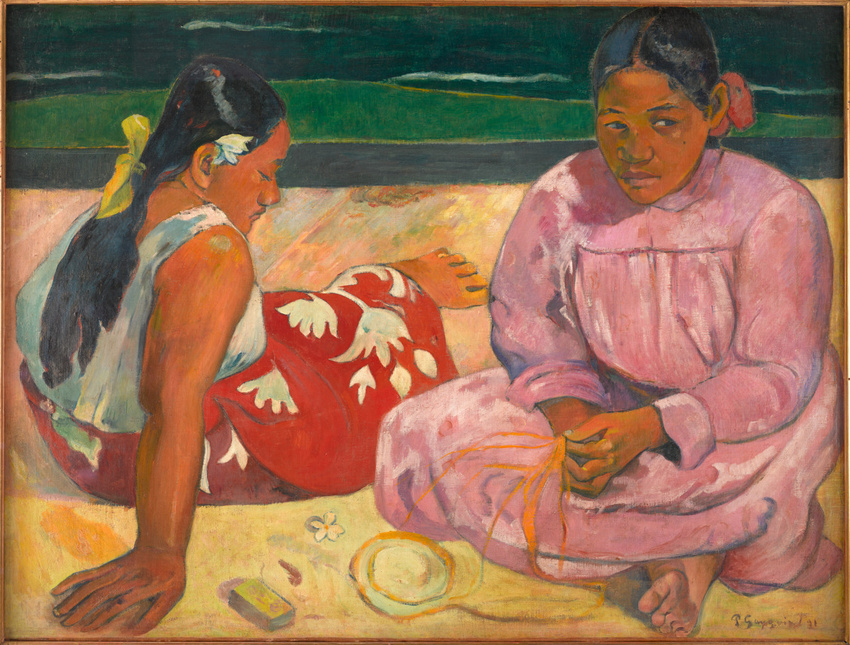
Tahitian Women on the Beach (1891) by Paul Gauguin depicts two seated women in a calm coastal setting in Tahiti. The painting reflects Gauguin’s interest in non-Western subjects and simplified forms, using bold outlines and flat areas of color. Created during his first stay in French Polynesia, the work exemplifies his departure from naturalism in favor of symbolic and decorative elements, contributing to the development of Post-Impressionism and Primitivism in modern art.
https://www.musee-orsay.fr/en/
The Circus (Le Cirque) – Georges Seurat
The Circus (Le Cirque, 1890–1891) by Georges Seurat is an unfinished painting portraying a lively performance under the big top. Executed in the Pointillist technique, it uses small dots of pure color to create form and luminosity. The composition features acrobats, a ringmaster, and a vibrant audience, arranged in a structured layout. The work reflects Seurat’s interest in visual harmony, optical theory, and the interplay between popular culture and formal artistic methods.
https://www.musee-orsay.fr/en/
The Dance Class – Edgar Degas
Painted in 1874, The Dance Class shows young ballet dancers rehearsing under the supervision of their instructor, Jules Perrot. Degas arranges the figures asymmetrically, with empty floor space emphasising informal movement rather than staged performance. Cropped edges and varied poses reflect the influence of photography and Japanese prints. The work examines discipline, repetition and the structured environment behind public spectacle.
https://www.musee-orsay.fr/en/
The Gleaners (Les Glaneuses) – Jean-François Millet
The Gleaners (Les Glaneuses, 1857) by Jean-François Millet depicts three peasant women collecting leftover grain after the harvest. The composition emphasizes physical labor and rural poverty through muted tones and grounded figures. Highlighting a moment of subsistence work, the painting reflects the artist’s focus on social realism. Initially controversial for its depiction of the lower class, it later gained recognition as a significant portrayal of 19th-century rural life and agrarian hardship.
https://www.musee-orsay.fr/en/
Related Post:
Best Museums in the World

Museums preserve the artistic, scientific and cultural achievements of civilisation. The institutions listed below contain some of the world’s most important collections, ranging from ancient archaeology and Renaissance painting to modern art, natural history and science.
This ranking is inevitably subjective, but the museums below stand out for the scale of their collections, the quality of their exhibitions, their historical importance and the overall visitor experience. Click on the museum name or image to explore each museum in more detail.