
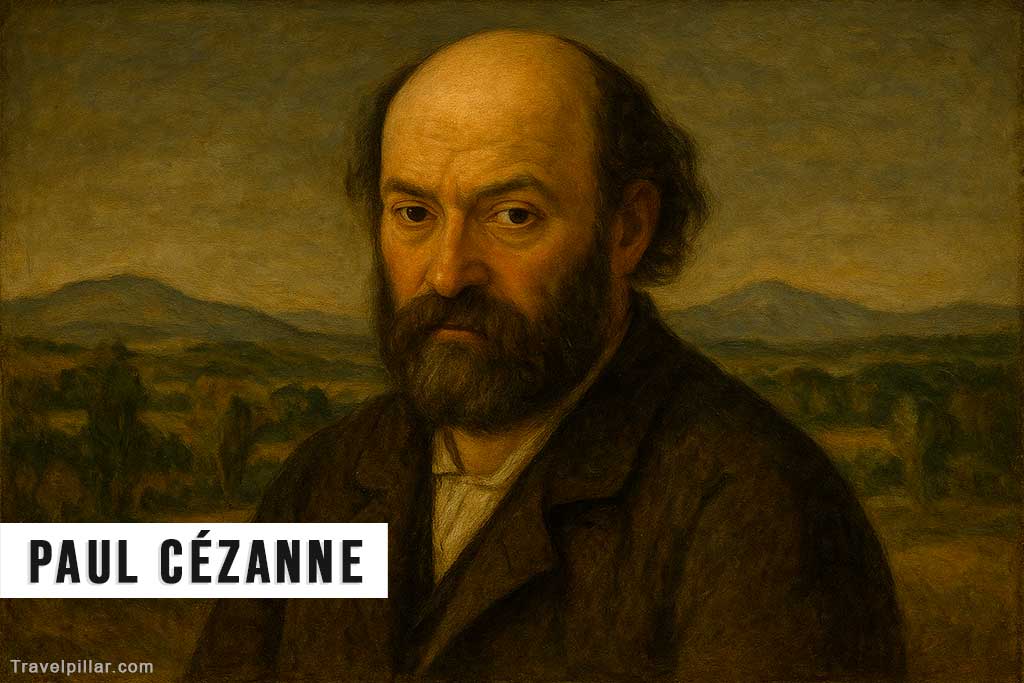
Paul Cézanne (1839–1906) was a Post-Impressionist French painter whose work laid the groundwork for modern art in the 20th century. Born in Aix-en-Provence, Cézanne developed a distinct style characterized by the use of bold colors, simplified shapes, and a focus on the underlying structure of nature. His innovative approach influenced later movements, including Cubism and Fauvism, earning him recognition as a pivotal figure in the transition from 19th-century artistic conventions to modernism.

Cézanne’s early work was influenced by the Impressionists, especially his friendships with artists like Camille Pissarro. However, he gradually moved away from the loose brushwork and emphasis on light characteristic of Impressionism. Instead, Cézanne focused on exploring the geometric forms within nature, breaking down objects into basic shapes such as cylinders, spheres, and cones. His approach sought to capture the essence of his subjects rather than merely imitating their appearance.
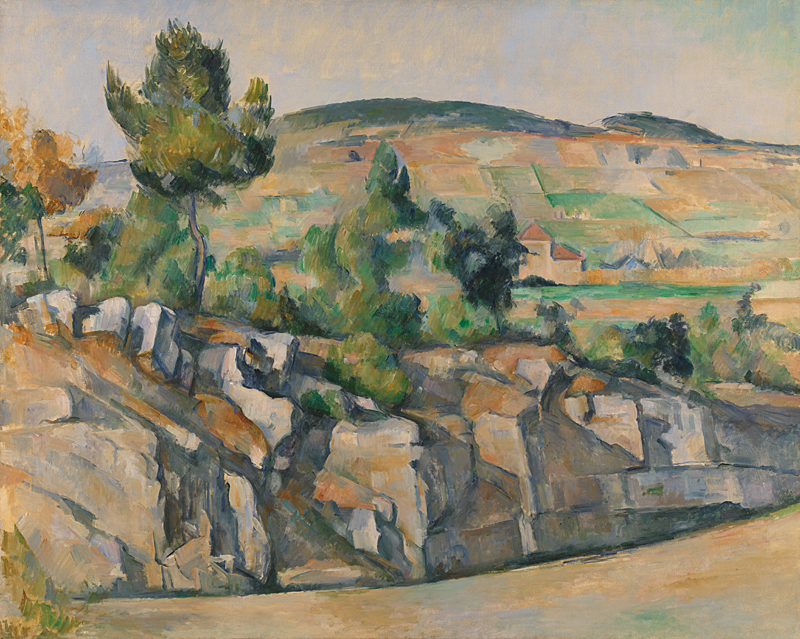
One of Cézanne’s recurring themes was the landscape of his native Provence. The Mont Sainte-Victoire, a mountain near Aix-en-Provence, featured prominently in many of his paintings. He depicted this landscape repeatedly, experimenting with perspective and color to convey different moods and structures. These works illustrate his fascination with capturing the harmony between nature’s forms and the canvas’s surface.
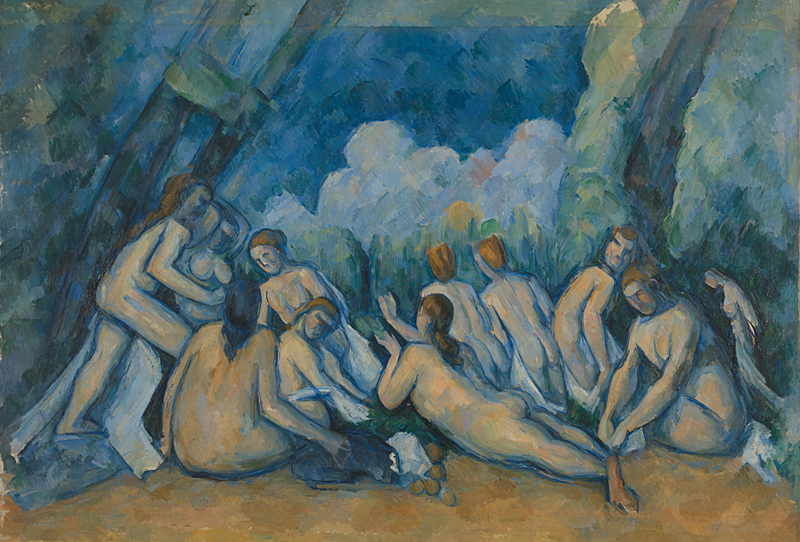
Still-life painting was another important genre for Cézanne. His compositions of fruit, bottles, and everyday objects demonstrated his exploration of spatial relationships and perspective. He often used multiple viewpoints within a single painting, a technique that later influenced Cubist artists like Pablo Picasso and Georges Braque. Cézanne’s still lifes, including his iconic “Still Life with Apples,” reflect his interest in the interplay between color, shape, and structure.
Cézanne’s impact on modern art can be seen in his innovative use of color and form. He adopted a method of applying paint in small, deliberate brushstrokes, creating a sense of depth and solidity. His work moved away from traditional linear perspective, suggesting a more subjective view of space that inspired artists in the early 20th century.
Travelers interested in Cézanne’s life and work can visit Aix-en-Provence, where his studio, the Atelier Cézanne, has been preserved. The city and surrounding landscapes provide insight into the environment that shaped his artistic vision. Additionally, art museums like the Musée d’Orsay in Paris and the Museum of Modern Art in New York house significant collections of his paintings, offering a closer look at the evolution of his style and his contributions to modern art.