
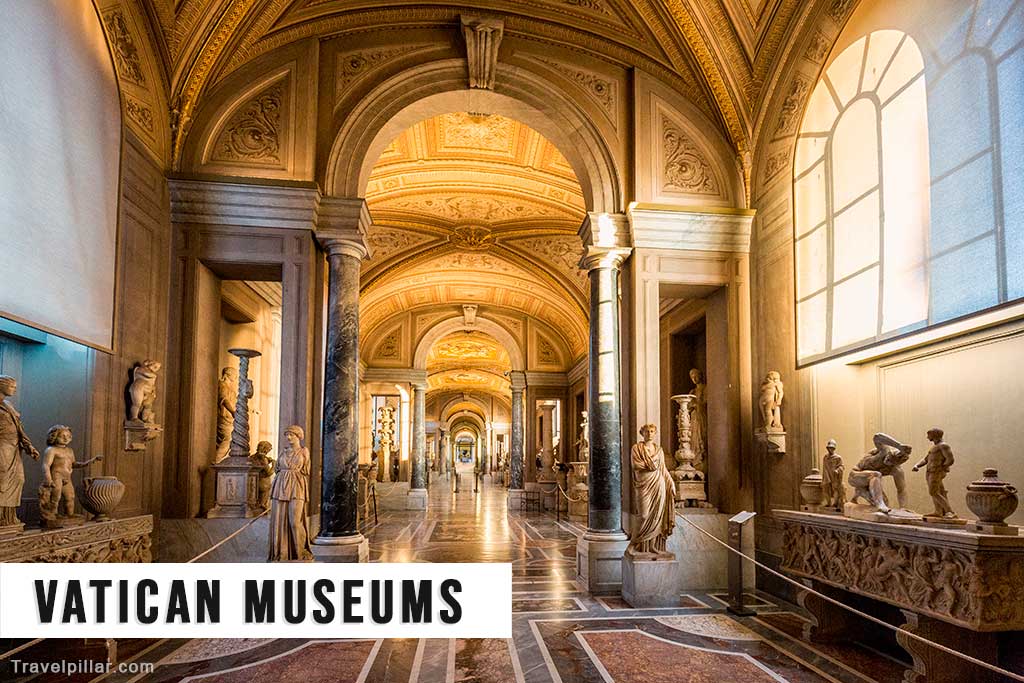
The Vatican Museums, located within Vatican City, Rome, constitute one of the world’s most extensive and significant collections of art and historical artifacts. Founded by Pope Julius II in the early 16th century, the museums display works accumulated by the Roman Catholic Church over centuries, offering a comprehensive overview of Western art history.
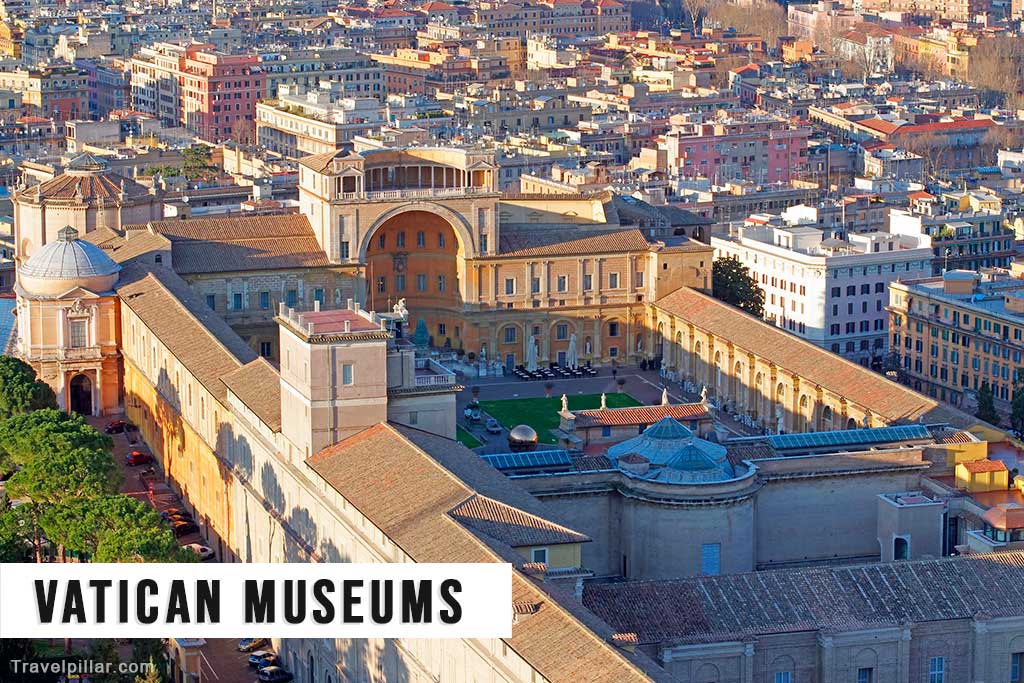
The museums comprise multiple sections, each with its own unique focus and collection. Key among these is the Gregorian Egyptian Museum, which showcases ancient Egyptian artifacts, including mummies, statues, and inscriptions. The Gregorian Etruscan Museum features artifacts from the Etruscan civilization, providing insights into Italy’s pre-Roman history.

One of the most famous sections is the Sistine Chapel, renowned for its ceiling painted by Michelangelo between 1508 and 1512. The chapel’s ceiling frescoes, depicting scenes from the Book of Genesis, and The Last Judgment on the altar wall are considered masterpieces of Renaissance art. The chapel remains a central venue for significant religious ceremonies, including the papal conclave.
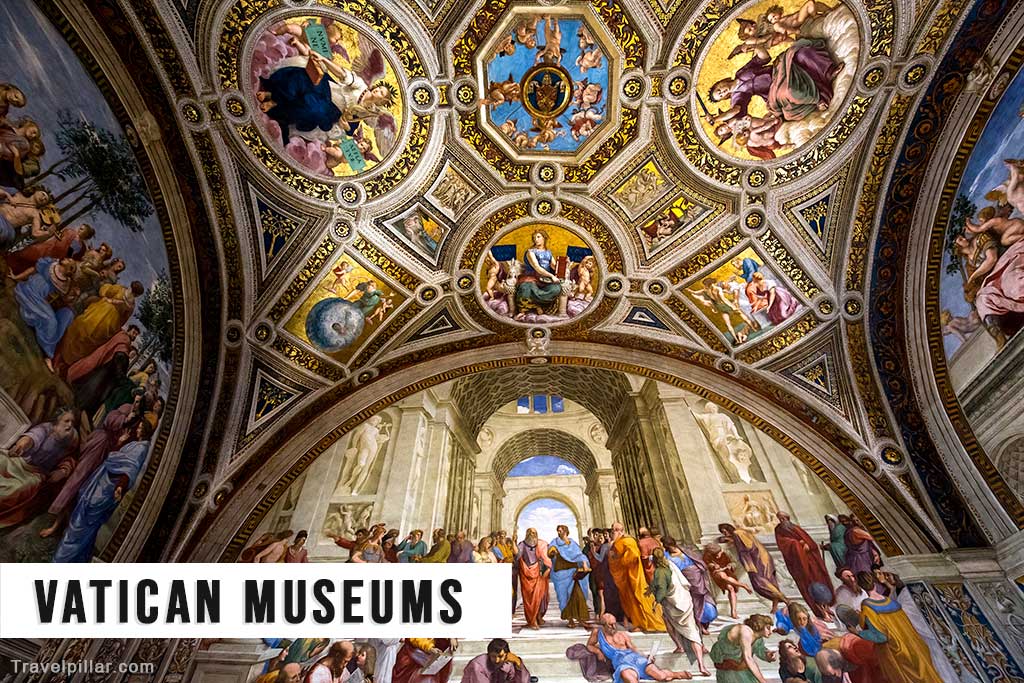
The Raphael Rooms, another highlight, contain frescoes painted by Raphael and his workshop. These rooms, originally part of the Papal Apartments, feature notable works such as The School of Athens (see below), which exemplifies the Renaissance ideals of classical learning and artistic excellence.
The Vatican Pinacoteca, or art gallery, houses paintings from the medieval period to the 19th century, including works by renowned artists such as Leonardo da Vinci, Caravaggio, and Titian. The collection provides a broad overview of the development of Western art.
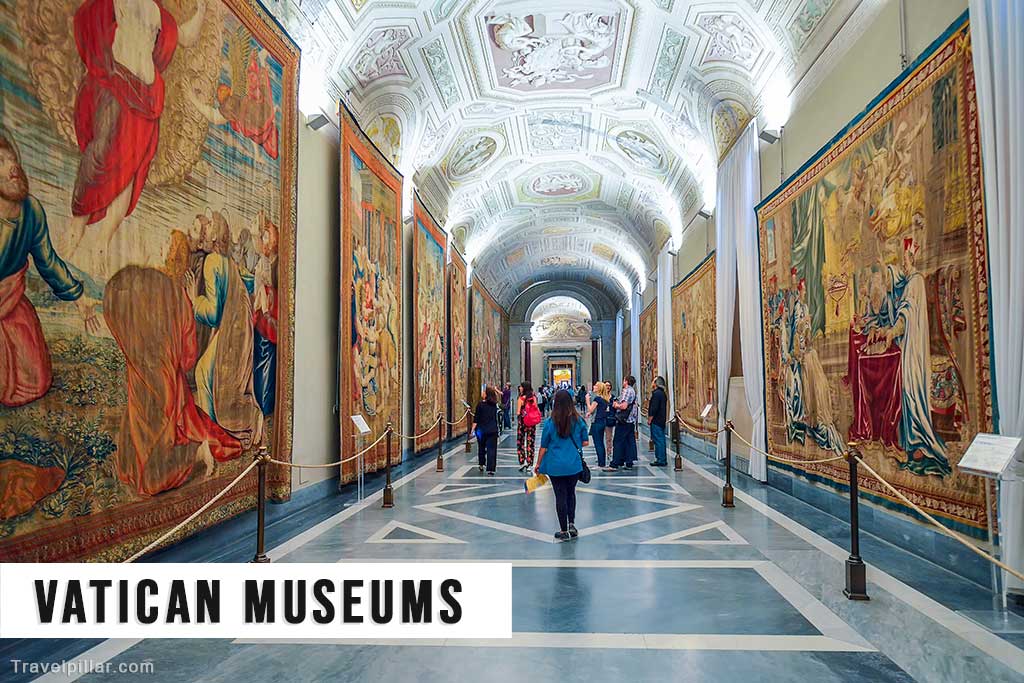
Visitors to the Vatican Museums can also explore the Gallery of Maps, which displays topographical maps of Italy, and the Pio-Clementine Museum, known for its classical sculptures, including the Laocoön and His Sons.

Open to the public, the Vatican Museums attract millions of visitors annually. Tickets can be purchased in advance, and guided tours are available to enhance the visitor experience. The museums are open Monday to Saturday, with additional hours on the last Sunday of each month, offering a rare opportunity for free admission. Due to their popularity, visitors are advised to plan their visit carefully to fully appreciate the vast and varied collections.
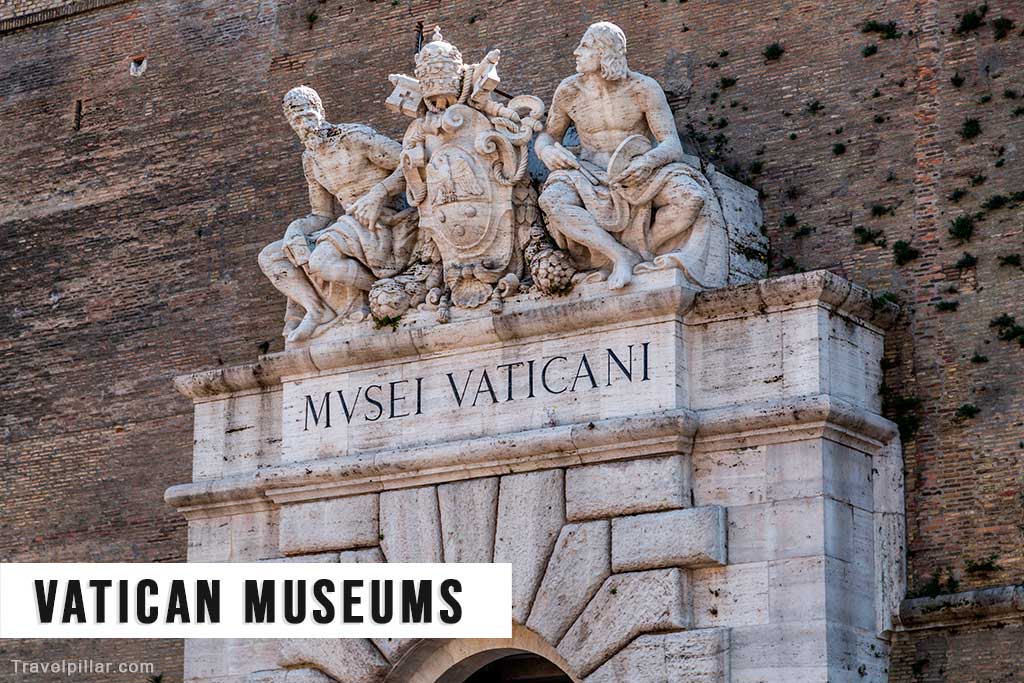
Official website: https://www.museivaticani.va
Google map 4.6/5
Raphael’s “The School of Athens”
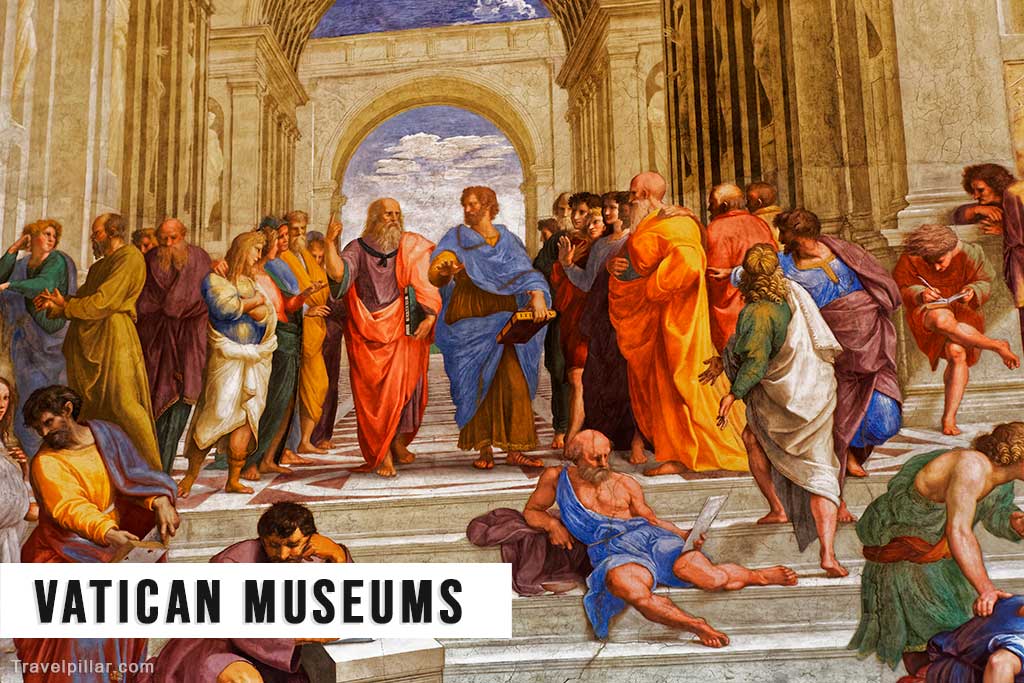
Raphael’s The School of Athens, located in the Apostolic Palace within Vatican Museums, is a masterpiece of Renaissance art. Painted between 1509 and 1511 as part of a commission by Pope Julius II, it adorns one wall of the Stanza della Segnatura, one of Raphael’s four Vatican Rooms. This fresco symbolizes the theme of philosophy, celebrating classical knowledge and human intellectual achievement.
The composition depicts an idealized gathering of ancient philosophers, scientists, and mathematicians within an architectural space reminiscent of classical Roman and Greek design. The central figures, Plato and Aristotle, dominate the scene. Plato, holding his Timaeus and gesturing upward, symbolizes the realm of ideals and metaphysics, while Aristotle, holding his Ethics and gesturing outward, represents empirical observation and practical knowledge.
The figures are arranged in a dynamic yet harmonious layout, grouped according to their intellectual disciplines. Notable figures include Socrates, engaging others in dialogue; Pythagoras, demonstrating a mathematical theorem; and Diogenes, reclining on the steps in a contemplative pose. In the foreground, Euclid, portrayed as the architect Donato Bramante, uses a compass to illustrate a geometric principle, emphasizing the interconnectedness of philosophy and the visual arts.
Raphael’s inclusion of contemporaries among the classical figures adds another layer of meaning. Michelangelo, depicted as the brooding Heraclitus, reflects Raphael’s admiration for his rival’s work on the Sistine Chapel ceiling. Raphael himself appears on the far right, observing the scene.
The architectural setting, inspired by Bramante’s plans for St. Peter’s Basilica, reinforces the classical themes of proportion and harmony. The use of linear perspective draws the viewer’s eye to the vanishing point between Plato and Aristotle, emphasizing their centrality.
The School of Athens epitomizes the Renaissance ideals of humanism, intellectual inquiry, and artistic mastery. Its celebration of reason and learning, combined with Raphael’s skill in composition and figure drawing, has solidified its place as one of the greatest works of Western art. It continues to captivate viewers with its depth, precision, and enduring message of the pursuit of knowledge.
Related Post:
Best Museums in the World

Museums preserve the artistic, scientific and cultural achievements of civilisation. The institutions listed below contain some of the world’s most important collections, ranging from ancient archaeology and Renaissance painting to modern art, natural history and science.
This ranking is inevitably subjective, but the museums below stand out for the scale of their collections, the quality of their exhibitions, their historical importance and the overall visitor experience. Click on the museum name or image to explore each museum in more detail.