
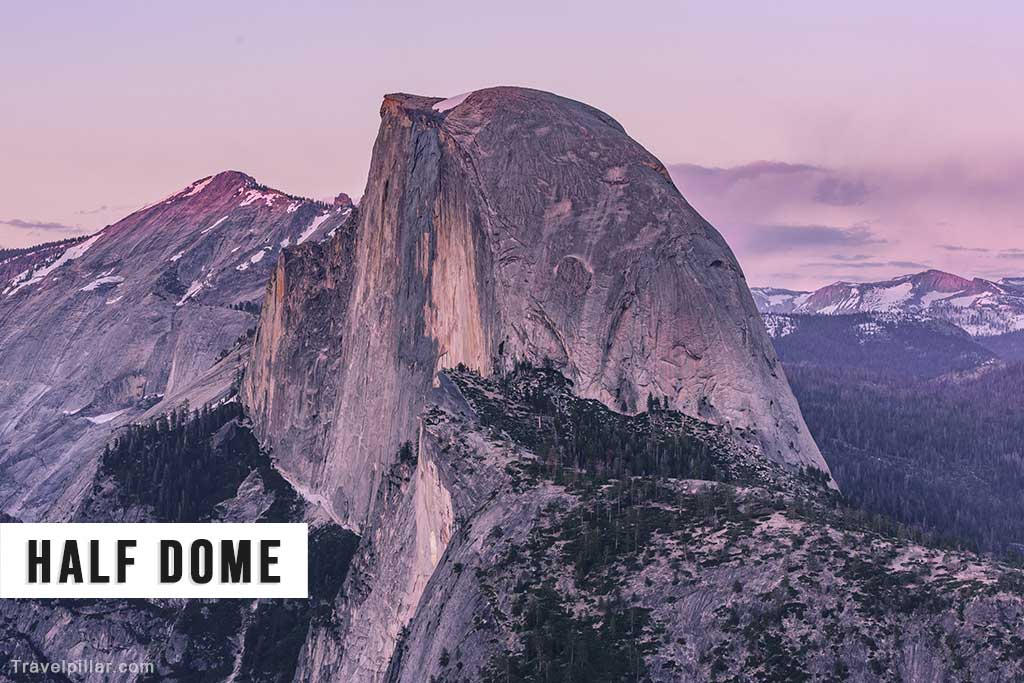
Half Dome is one of the most recognisable natural features in Yosemite National Park, located at the eastern end of Yosemite Valley. Rising 4,737 feet (1,444 metres) above the valley floor and with a total elevation of 8,844 feet (2,695 metres), it is a granite dome notable for its sheer northwest face and rounded opposite side. Its shape was formed through a combination of intrusive igneous processes, exfoliation, and glacial erosion, which removed much of the rock’s outer layers and accentuated its distinctive profile.
Half Dome is visible from numerous locations within the park, including Glacier Point, Tunnel View, and various points along the Merced River. It has become a symbolic icon of Yosemite, frequently featured in photography, artwork, and promotional material for the park.

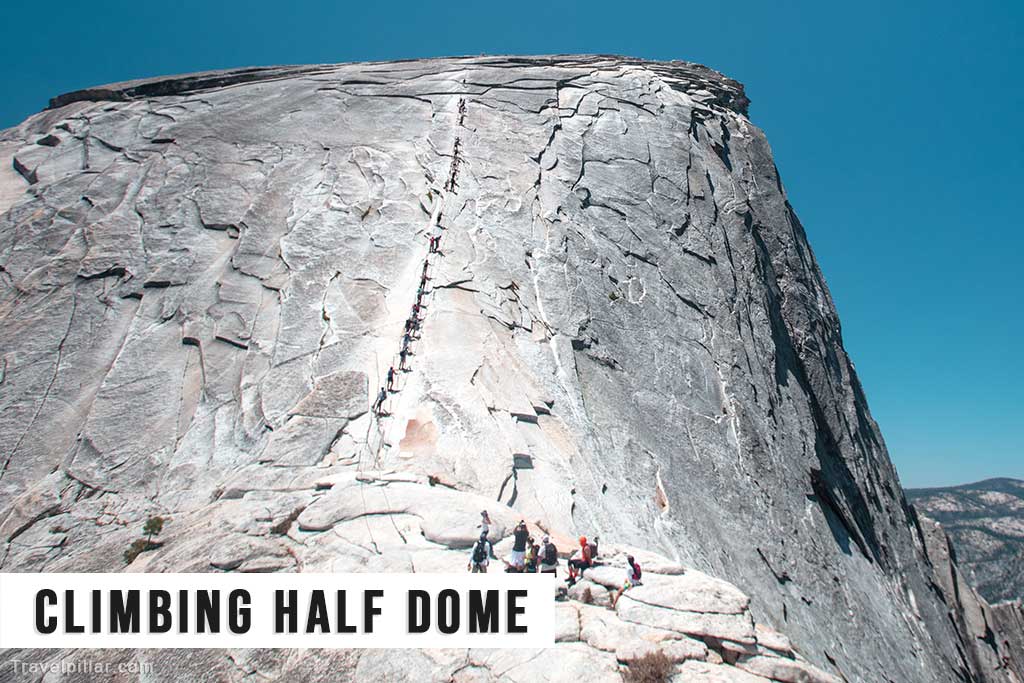
The formation is a major destination for hikers. The most well-known route is the Half Dome Trail, a 14- to 16-mile (22–26 kilometre) round trip with an elevation gain of approximately 4,800 feet (1,463 metres) from the valley floor. The final section of the ascent involves climbing a steep granite slope assisted by fixed steel cables, which are installed seasonally, typically from late May to early October. A permit system is in place to manage visitor numbers and reduce environmental impact. The hike requires a high level of physical fitness, preparation, and suitable weather conditions.
In addition to hiking, Half Dome attracts experienced rock climbers, with established routes on its vertical northwest face. The Regular Northwest Face route was first ascended in 1957 and remains one of the most notable big-wall climbs in the United States.
From a geological perspective, Half Dome is part of the Sierra Nevada batholith, composed primarily of granite formed deep underground more than 80 million years ago. Over time, uplift, erosion, and glaciation shaped it into its current form.
Culturally, Half Dome has long been significant to the region’s Indigenous people, including the Ahwahneechee, who had their own names and stories for the formation. Today, it is both a physical challenge and a visual landmark, representing the park’s combination of geological history, recreational opportunity, and scenic prominence.
Google map 4.9/5