
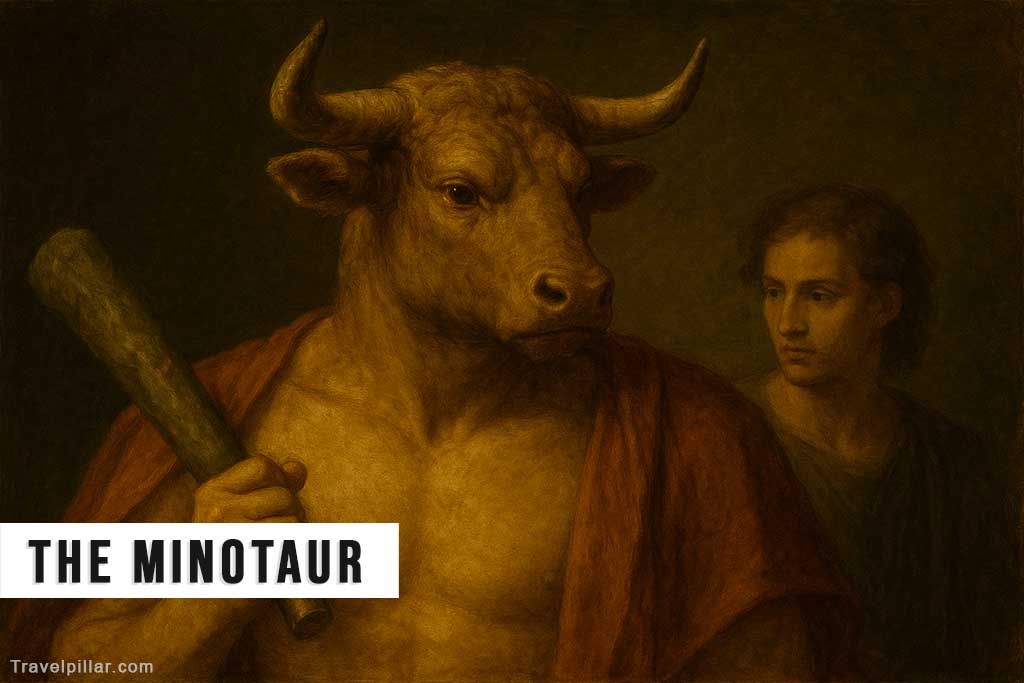
The Minotaur, a famous figure in Greek mythology, was a creature with the body of a man and the head of a bull. He was born from the union of Pasiphaë, the wife of King Minos of Crete, and a majestic bull sent by the god Poseidon. As a result of this unnatural birth, the Minotaur was a monstrous being who became a symbol of terror and power.
To contain the Minotaur, King Minos commissioned the construction of a vast labyrinth designed by the master craftsman Daedalus. The labyrinth was an elaborate, maze-like structure located beneath the palace of Knossos, which made it impossible for anyone trapped inside to escape. The Minotaur lived within this labyrinth, and over time, it became a place of sacrifice. Athens, having lost a war to Crete, was forced to send seven young men and seven young women every year as tributes to be sacrificed to the Minotaur.
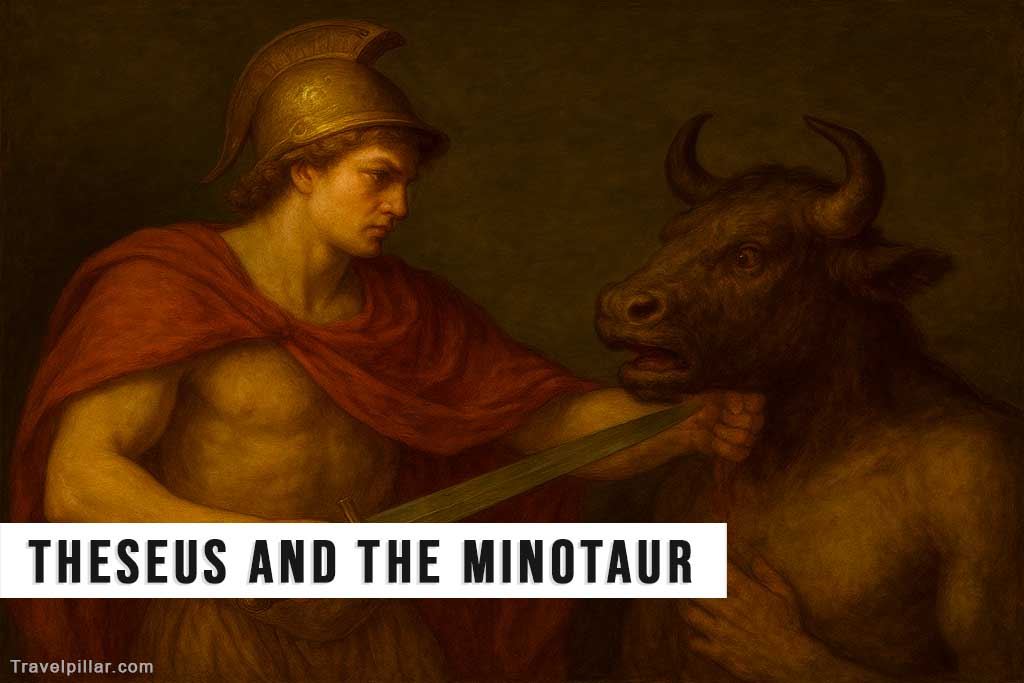
The hero Theseus, son of King Aegeus of Athens, volunteered to end this deadly tribute by killing the Minotaur. When he arrived in Crete, he received help from Ariadne, the daughter of King Minos, who gave him a ball of thread to unravel as he entered the labyrinth, allowing him to retrace his steps. Theseus successfully navigated the maze, confronted the Minotaur, and killed the creature, freeing Athens from its obligation to Crete.
The myth of the Minotaur is deeply connected to Crete, particularly to the archaeological site of Knossos, where the palace and labyrinth were said to have been located. Modern visitors to Crete can explore the ruins of the palace, which reflect the grandeur of Minoan civilization and its association with these ancient myths. The Minotaur’s story, with its themes of heroism, sacrifice, and the struggle between man and beast, continues to capture the imagination and remains an essential part of Greek mythological history.