
Baroque architecture emerged in Italy during the late 16th century and became one of the most dramatic and theatrical architectural styles in European history. Characterised by grand façades, sweeping curves, elaborate decoration and magnificent domes, Baroque buildings were designed to impress, inspire and evoke emotion. The style transformed churches, palaces and public squares into spectacular works of art, reflecting the wealth, confidence and ambitions of both the Catholic Church and Europe’s ruling monarchs.
Developing from the balanced forms of Renaissance architecture, Baroque architects introduced movement, contrast and a greater sense of drama. Buildings became more dynamic through curved walls, oval spaces, monumental staircases and richly decorated interiors filled with sculpture, frescoes, marble and gilded ornamentation. Rather than simply creating beautiful buildings, Baroque architects sought to produce emotional experiences that inspired awe and admiration.
The style flourished during the Counter-Reformation, when the Catholic Church commissioned magnificent churches designed to reinforce its power and attract worshippers. At the same time, European kings and emperors embraced Baroque architecture to demonstrate their authority, commissioning lavish palaces and gardens that showcased their wealth and influence. As a result, Baroque architecture spread rapidly from Italy to France, Spain, Austria, Germany, Portugal, Central Europe and much of Latin America.
Although the style gradually gave way to Neoclassical architecture during the 18th century, many of the world’s greatest churches, royal palaces and civic buildings remain outstanding examples of Baroque design. Today they rank among Europe’s most visited landmarks and continue to captivate travellers with their scale, beauty and artistic richness.
For travellers, Baroque architecture offers some of the most breathtaking buildings ever constructed. Whether admiring the grandeur of St Peter’s Square, exploring the Palace of Versailles or discovering the magnificent churches of Vienna and Rome, understanding Baroque architecture provides a deeper appreciation of an era when art, architecture and power came together to create extraordinary monuments.
History of Baroque Architecture
Baroque architecture originated in Rome during the late 1500s, evolving directly from the Renaissance. While Renaissance architects valued harmony, proportion and restraint, Baroque architects sought to create buildings that inspired emotion through movement, scale and elaborate decoration.
The movement was closely linked to the Catholic Counter-Reformation. Following the Protestant Reformation, the Catholic Church commissioned magnificent churches intended to reaffirm its spiritual authority and inspire devotion through spectacular architecture. Architects such as Carlo Maderno, Gian Lorenzo Bernini and Francesco Borromini transformed Rome with innovative churches, piazzas and fountains that combined architecture, sculpture and urban planning into unified works of art.
During the 17th century, Baroque architecture spread throughout Europe. In France, the style developed into a more restrained and symmetrical form, reaching its greatest expression at the Palace of Versailles. Austria, southern Germany and parts of Central Europe embraced richly decorated churches and monasteries, while Spain and Portugal developed distinctive regional variations that were later carried to their overseas empires in Latin America.
By the middle of the 18th century, changing artistic tastes led to the rise of Neoclassical architecture, which returned to the simpler forms of Ancient Greece and Rome. Nevertheless, Baroque architecture left an enduring legacy, influencing palace design, church architecture and urban planning across much of the world.
Key Characteristics of Baroque Architecture
Baroque architecture is immediately recognisable by its sense of movement, grandeur and rich decoration. Although regional styles differ, most Baroque buildings share several distinctive features.
Monumental Scale
Baroque buildings were designed to impress. Grand churches, enormous palaces and expansive public squares conveyed wealth, authority and religious power through their impressive proportions.
Curved Forms
Unlike the straight lines favoured during the Renaissance, Baroque architects introduced sweeping curves, oval spaces, undulating façades and dramatic staircases that created movement and visual excitement.
Domes
Large domes became focal points of many Baroque churches, often dominating city skylines. Their interiors were richly decorated with frescoes that appeared to open towards the heavens.
Rich Ornamentation
Baroque buildings feature lavish decoration including sculptures, gilded details, coloured marble, elaborate cornices and highly decorative façades. Every surface was designed to contribute to the overall visual impact.
Dramatic Use of Light
Architects carefully manipulated natural light to enhance the emotional atmosphere of interiors. Combined with painted ceilings and elaborate decoration, light became an essential part of the architectural experience.
Ceiling Frescoes and Sculpture
Many Baroque churches and palaces feature spectacular painted ceilings that create the illusion of open skies or heavenly scenes. Sculpture was often integrated directly into the architecture, blurring the boundaries between the different artistic disciplines.
Famous Examples of Baroque Architecture
St Peter’s Square and St Peter’s Basilica, Vatican City

Although St Peter’s Basilica began during the Renaissance, many of its most spectacular features belong to the Baroque period. Gian Lorenzo Bernini designed the magnificent elliptical piazza with its sweeping colonnades, creating one of the most impressive public spaces in the world. Inside, Bernini’s enormous bronze Baldachin beneath the dome perfectly captures the grandeur and theatricality of Baroque design.
Palace of Versailles, France

Originally a modest hunting lodge, the Palace of Versailles was transformed by King Louis XIV into one of the grandest royal residences ever built. Its vast palace, formal gardens, fountains and the magnificent Hall of Mirrors became symbols of absolute monarchy and established the French Baroque style, influencing palace architecture across Europe.
Church of the Gesù, Rome, Italy

The Church of the Gesù, the mother church of the Jesuit Order, is considered one of the earliest and most influential Baroque churches. Its richly decorated interior, dramatic ceiling frescoes and harmonious proportions became a model for countless Catholic churches throughout Europe and Latin America.
Karlskirche, Vienna, Austria
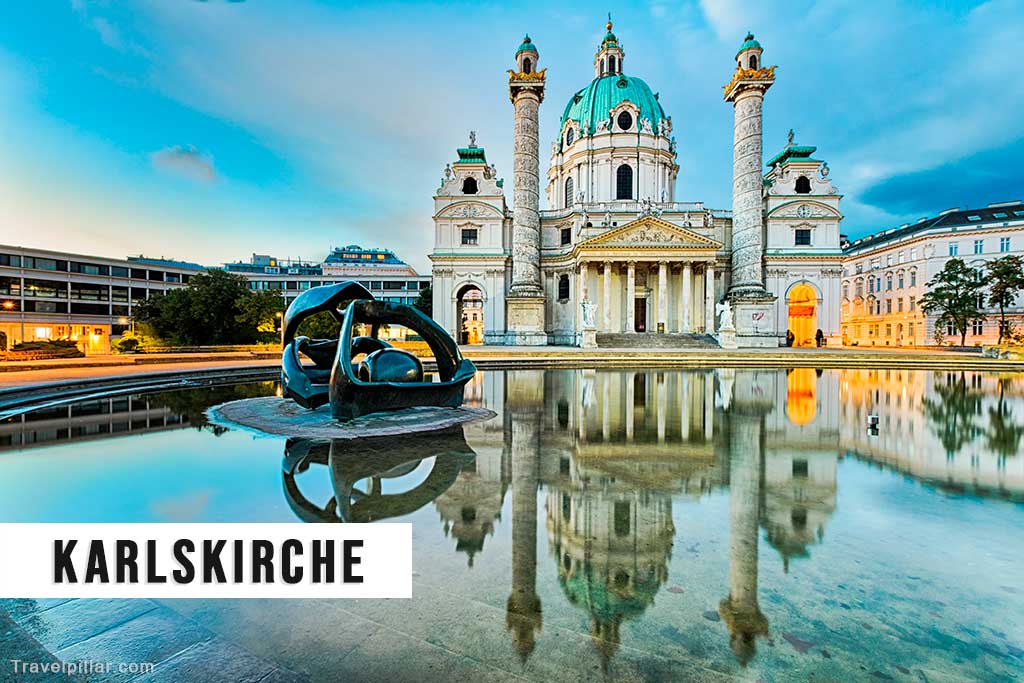
Built during the early 18th century, Karlskirche is one of Vienna’s finest Baroque landmarks. Designed by Johann Bernhard Fischer von Erlach, it combines a magnificent dome with monumental columns inspired by Ancient Rome, creating one of the most distinctive churches in Central Europe.
Schönbrunn Palace, Vienna, Austria
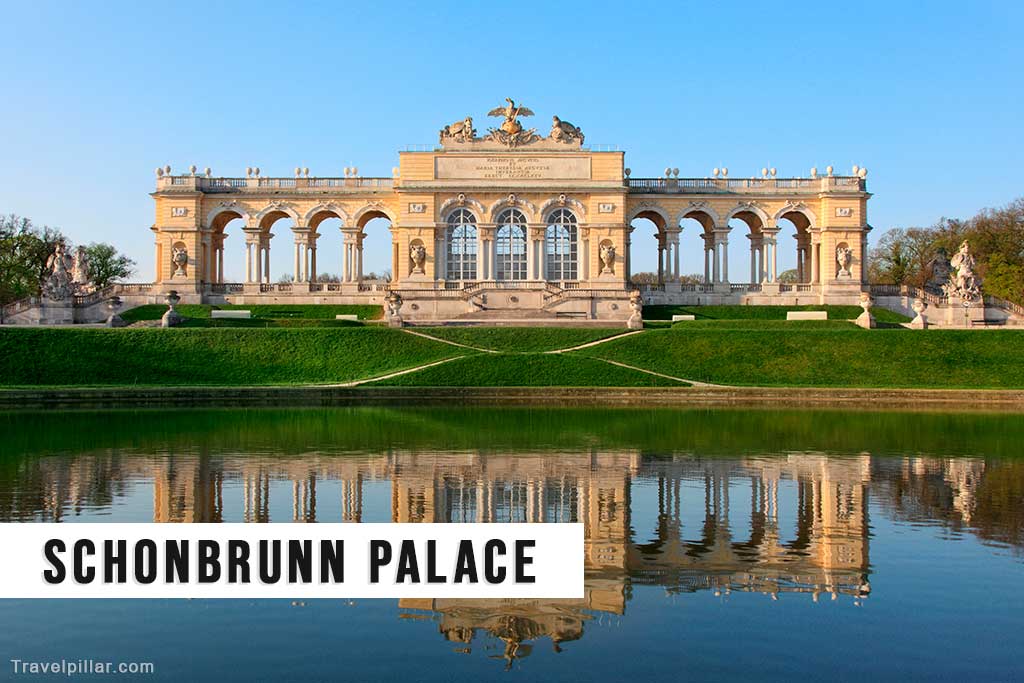
The former summer residence of the Habsburg emperors, Schönbrunn Palace is one of Europe’s most impressive Baroque palaces. Its elegant yellow façade, richly decorated state rooms and beautifully landscaped gardens reflect the wealth and power of the Austrian Empire.
Winter Palace, Saint Petersburg, Russia
Designed by Bartolomeo Rastrelli, the Winter Palace is one of the greatest achievements of Russian Baroque architecture. Its richly ornamented green-and-white façade, lavish interiors and monumental scale made it the official residence of the Russian tsars. Today it forms part of the world-famous Hermitage Museum.
Basilica of Superga, Turin, Italy
Standing high above Turin, the Basilica of Superga is a masterpiece of late Italian Baroque architecture. Its elegant dome, grand portico and commanding hilltop location make it one of northern Italy’s most recognisable landmarks while offering spectacular views across the city and the Alps.
Würzburg Residence, Germany
The Würzburg Residence is widely regarded as one of Europe’s finest Baroque palaces. A UNESCO World Heritage Site, it is famous for its magnificent Imperial Hall, richly decorated state apartments and the spectacular staircase crowned by one of the world’s largest ceiling frescoes, painted by Giovanni Battista Tiepolo.
Zwinger Palace, Dresden, Germany
Originally built as an orangery and royal entertainment complex, Dresden’s Zwinger Palace is one of Germany’s greatest Baroque masterpieces. Its richly sculptured pavilions, elegant galleries and ornamental gardens showcase the artistic ambitions of the Saxon rulers during the 18th century.
Mafra National Palace, Portugal
Located just north of Lisbon, the Palace-Convent of Mafra is one of Portugal’s most ambitious Baroque monuments. Built by King João V, the enormous complex includes a royal palace, basilica, monastery and one of Europe’s most beautiful historic libraries, reflecting the wealth generated by Portugal’s colonial empire.
Where to See Baroque Architecture
Baroque architecture flourished across much of Europe and later spread to Latin America through the Spanish and Portuguese empires. Many cities contain remarkable churches, palaces and public squares from this magnificent period.
Some of the best destinations include:
- Rome, Italy – The birthplace of Baroque architecture, featuring St Peter’s Basilica, Piazza Navona, the Church of the Gesù and many masterpieces by Bernini and Borromini.
- Paris and Versailles, France – Home to the magnificent Palace of Versailles and numerous grand Baroque churches and public buildings.
- Vienna, Austria – Karlskirche, Schönbrunn Palace, Belvedere Palace and many elegant Baroque streetscapes.
- Dresden, Germany – The Zwinger Palace, Dresden Cathedral and numerous restored Baroque landmarks have earned the city the nickname “Florence on the Elbe.”
- Prague, Czech Republic – A rich collection of Baroque churches, palaces and gardens complements the city’s medieval and Gothic architecture.
- Lisbon and Mafra, Portugal – Discover magnificent royal palaces, monasteries and churches reflecting Portugal’s Golden Age.
- Salzburg, Austria – One of Europe’s finest Baroque cities, with elegant churches, palaces and squares set against a dramatic Alpine backdrop.
Why Baroque Architecture Matters
Baroque architecture represents one of the most ambitious and visually spectacular periods in architectural history. By combining architecture, sculpture, painting and landscape design into unified works of art, Baroque architects created buildings that were designed not only to function but also to inspire wonder and emotion. Their innovative use of light, movement and rich decoration transformed churches, palaces and public spaces into unforgettable experiences that continue to captivate visitors today.
For travellers, Baroque architecture offers the chance to explore some of Europe’s most magnificent cities and monuments. Whether standing beneath the vast dome of St Peter’s Basilica, walking through the Hall of Mirrors at Versailles or admiring the elegant palaces of Vienna and Dresden, these buildings reveal the wealth, confidence and artistic achievements of the 17th and 18th centuries. Understanding the defining features of Baroque architecture allows visitors to appreciate the remarkable craftsmanship and engineering behind some of the world’s greatest landmarks.
Whether you’re exploring the grand churches of Rome, the royal palaces of France or the richly decorated monasteries of Central Europe, Baroque architecture provides an unforgettable glimpse into an age of extraordinary artistic creativity and architectural ambition.
See Also
If you enjoyed learning about Baroque architecture, you may also be interested in:
- Renaissance Architecture – The balanced and harmonious style from which Baroque architecture evolved.
- Neoclassical Architecture – The movement that replaced Baroque during the 18th century with a return to the simplicity of Classical design.
- Classical Architecture – The ancient Greek and Roman principles that continued to influence Baroque architects.
- The Renaissance – Discover the cultural movement that laid the foundations for the artistic innovations of the Baroque period.