
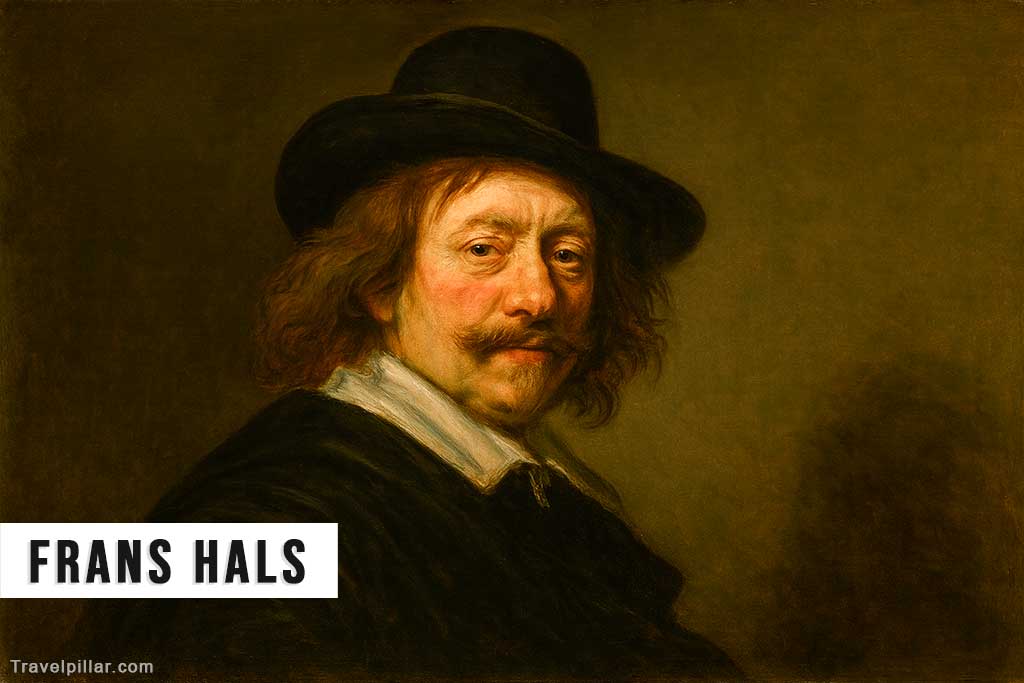
Frans Hals (1582-1666) was a Dutch painter, known for his innovative and vibrant style of portraiture. Born in Antwerp, Hals moved to Haarlem as a child due to the Spanish Fury of Antwerp, where he lived and worked for the rest of his life.
Hals is celebrated for his ability to capture the liveliness and individuality of his subjects. He developed a loose brushwork technique that imbued his figures with a sense of vitality and immediacy. This was a radical departure from the smooth, painstakingly detailed style of his contemporaries. His technique lent his work a sense of spontaneity and movement, capturing not just the physical likeness but the personality and mood of the sitter.
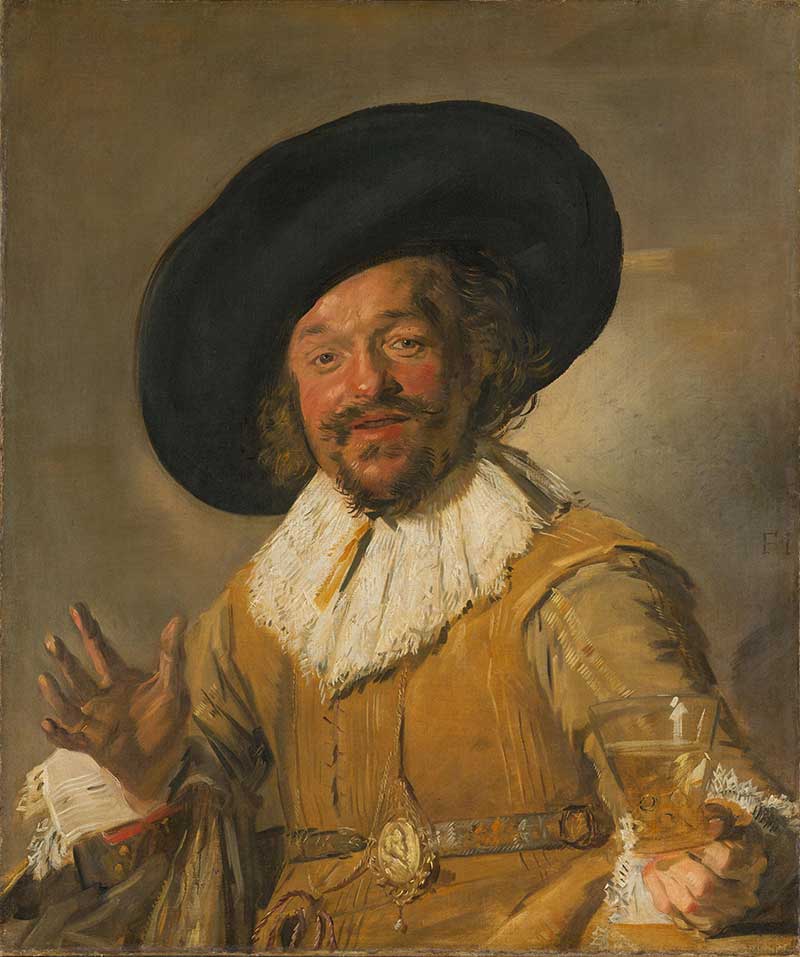
His most famous works include “The Laughing Cavalier,” “The Gypsy Girl,” and the monumental civic guard group portraits “The Officers of the St. George Militia Company” and “The Officers of the St. Hadrian Civic Guard Company.” These group portraits, which were common during the Dutch Golden Age, demonstrate Hals’s ability to differentiate each figure in terms of personality and stature.
Despite his artistic success, Hals experienced financial difficulties in his later years. He died in poverty and was buried in an unmarked grave in Haarlem.
Frans Hals’s influence is evident in later generations of artists, notably the Impressionists, who admired his ability to capture the vitality of the moment. Édouard Manet and Vincent van Gogh were among those who found inspiration in his dynamic brushwork and ability to convey human vitality. Despite the challenges he faced during his life, Hals’s contributions to the field of portraiture mark him as one of the most important artists of the Dutch Golden Age. His innovative techniques have left an indelible mark on the history of painting.