

Northumberland National Park protects some of the most remote and unspoilt landscapes in England. Located close to the Scottish border, it is the northernmost national park in the country and one of the least visited, making it an excellent destination for those seeking open space, tranquillity and dark skies rather than crowds.
Covering more than 1,000 square kilometres, the park consists of rolling hills, heather moorland, ancient forests, river valleys and upland landscapes shaped by thousands of years of human history. It is home to sections of Hadrian’s Wall, one of Britain’s most important Roman monuments, as well as prehistoric hillforts, medieval border settlements and traditional farming communities.
Walking is one of the main reasons to visit. Long-distance trails such as the Pennine Way and St Cuthbert’s Way cross the park, while shorter routes lead through the Cheviot Hills, Coquetdale, Simonside and the Breamish Valley. Wildlife enthusiasts may spot red squirrels, otters, curlews and birds of prey, while photographers are drawn by the dramatic landscapes and changing light.
One of Northumberland’s greatest attractions appears after sunset. The park forms part of the Northumberland International Dark Sky Park, one of the largest protected dark-sky areas in Europe. On clear nights visitors can see thousands of stars, the Milky Way and occasional meteor showers with remarkable clarity.
Although less famous than the Lake District or Peak District, Northumberland National Park offers a unique combination of natural beauty, fascinating history and genuine wilderness. For many visitors, its greatest appeal lies in the sense of space and solitude that has become increasingly rare elsewhere in England.
Official website:
https://www.northumberlandnationalpark.org.uk
https://www.nationalparks.uk/park/northumberland/
Google map 4.8/5
Best Things to Do in Northumberland National Park
1. Explore Hadrian’s Wall

Hadrian’s Wall is the most famous attraction in Northumberland National Park and one of the most important Roman monuments in Europe. Built in AD 122 during the reign of Emperor Hadrian, the wall once marked the northern frontier of the Roman Empire. Today visitors can walk alongside remarkably well-preserved sections while enjoying spectacular views across the surrounding countryside. The Hadrian’s Wall Path National Trail provides one of England’s finest long-distance walks.
2. Visit Vindolanda
Vindolanda is one of Britain’s most significant archaeological sites. This former Roman fort and settlement continues to produce remarkable discoveries, including leather shoes, armour, tools and the famous Vindolanda Tablets, which contain some of the oldest surviving handwritten documents in Britain. The excellent museum helps bring Roman frontier life vividly to life.
Official website: https://www.vindolanda.com
Google map 4.8/5
3. Discover Housesteads Roman Fort
Perched high on the Whin Sill escarpment, Housesteads is the best-preserved Roman fort along Hadrian’s Wall. Visitors can explore the remains of barracks, granaries, defensive walls and one of the oldest surviving communal toilet blocks in Britain. The dramatic location also offers some of the most iconic views within the national park.
Official website: https://www.english-heritage.org.uk/
4. Hike The Cheviot
At 815 metres, The Cheviot is the highest peak in Northumberland and dominates the northern part of the national park. The walk to the summit crosses remote moorland and provides sweeping views across northern England and southern Scotland. On clear days the panorama stretches for many miles in every direction.
Google map 4.8/5
5. Walk in the Simonside Hills
The Simonside Hills are among the most scenic and accessible areas of the national park. Rocky outcrops, heather-covered slopes and extensive views across Coquetdale make them a favourite destination for walkers. Local legends tell of mysterious creatures known as the Simonside Dwarfs, adding a touch of folklore to the landscape.
Google map 4.8/5
6. Explore the Coquet Valley
The beautiful Coquet Valley is one of Northumberland’s most attractive rural landscapes. The River Coquet winds through rolling hills, traditional farmland and peaceful villages such as Alwinton and Harbottle. Walking, wildlife watching and simply enjoying the tranquillity are among the main attractions.
Google map
7. Visit Kielder Water and Forest Park
Located on the western edge of the national park, Kielder Water is the largest artificial lake in the United Kingdom. Surrounded by vast forests and open countryside, it offers excellent opportunities for walking, cycling, kayaking and wildlife watching. The scenic Lakeside Way provides a popular route around the reservoir.
Official website: https://www.visitkielder.com
Google map Kielder Water 4.7/5
8. Experience the Dark Skies at Kielder Observatory
Northumberland National Park forms part of the Northumberland International Dark Sky Park, one of the largest protected dark-sky areas in Europe. Kielder Observatory hosts astronomy events throughout the year, allowing visitors to observe planets, star clusters and distant galaxies through powerful telescopes. Even without equipment, clear nights reveal extraordinary views of the Milky Way.
Official website: https://kielderobservatory.org
Google map Kielder Observatory 4.8/5
9. Explore the Breamish Valley
The Breamish Valley combines beautiful scenery with a remarkable concentration of prehistoric archaeology. Walking routes lead to ancient hillforts, burial cairns and panoramic viewpoints overlooking the Cheviot Hills. It is one of the best places in the park to combine history, archaeology and outdoor exploration.
Google map
10. Visit Harbottle and the Drake Stone
The village of Harbottle sits within one of the most picturesque parts of the national park and provides access to several excellent walking routes. Nearby, the mysterious Drake Stone balances dramatically on a hillside and is associated with local legends and folklore. The surrounding countryside offers superb views and a strong sense of remoteness.
Google map Harbottle
Google map The Drake Stone 4.8/5
Best Day Trips from Northumberland National Park
Northumberland Coast National Landscape
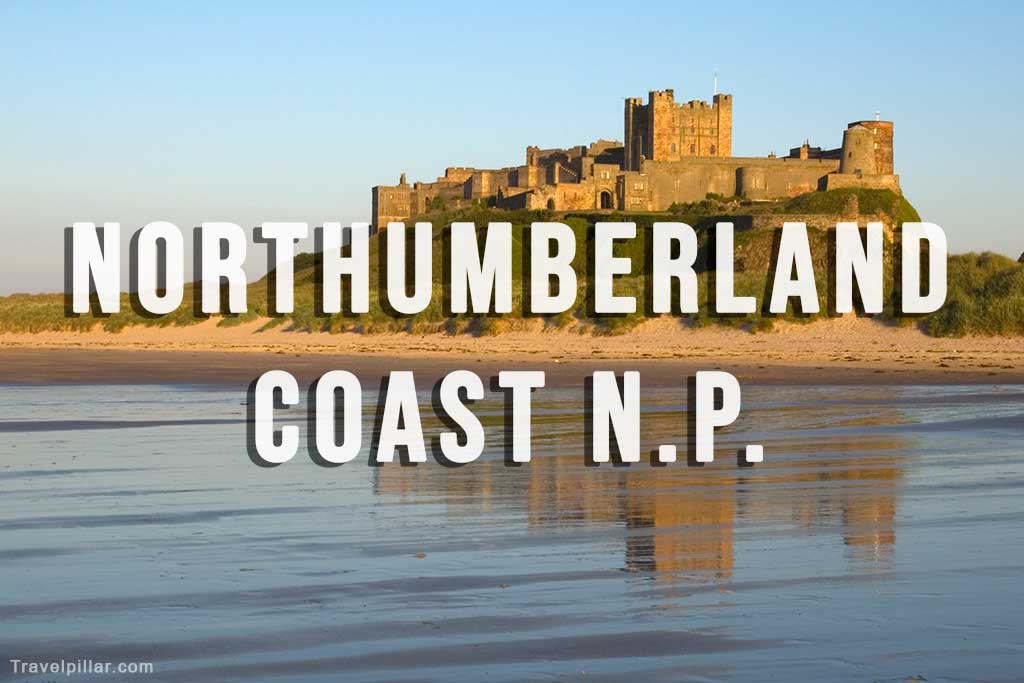
The Northumberland Coast National Landscape protects one of the most beautiful stretches of coastline in England. Wide sandy beaches, dramatic castles, wildlife-rich dunes and picturesque fishing villages make it a perfect complement to the rugged landscapes of the national park. Highlights include Bamburgh Castle, Holy Island and the Farne Islands.
Official website: https://www.northumberlandcoast-nl.org.uk
Google map 4.8/5
Bamburgh Castle

Standing on a volcanic outcrop above the North Sea, Bamburgh Castle is one of England’s most impressive coastal fortresses. The castle has dominated this stretch of coastline for centuries and offers magnificent views across Bamburgh Beach and the Farne Islands.
Official website: https://www.bamburghcastle.com
Google map 4.7/5
Holy Island (Lindisfarne)

Connected to the mainland by a tidal causeway, Holy Island is one of England’s most important historic and religious sites. Attractions include Lindisfarne Priory, Lindisfarne Castle and the island’s beautiful coastal scenery. Visitors should always check tide times before travelling.
Official website: https://www.nationaltrust.org.uk/ (Lindisfarne Castle)
Google map Holy island
Google map Holy Island Causeway 4.8/5
Google map Lindisfarne Castle 4.5/5
Alnwick Castle

One of the largest inhabited castles in England, Alnwick Castle has been home to the Percy family for over 700 years. The castle has featured in numerous films and television productions and is complemented by the nearby Alnwick Garden.
Official website: https://www.alnwickcastle.com
Google map 4.5/5
Farne Islands

Located just offshore, the Farne Islands are renowned for their wildlife. Boat trips allow visitors to see puffins, seals, guillemots and many other seabirds. During the breeding season, the islands become one of Britain’s most important wildlife spectacles.
Google map 4.8/5