

Paris offers many significant historical sites. The Eiffel Tower, built in 1889, remains the city’s most recognised landmark. The Arc de Triomphe, commissioned by Napoleon I, honours French military victories. The Panthéon in the Latin Quarter serves as a mausoleum for prominent figures. Place de la Concorde is historically significant for its role during the French Revolution. The Palais Royal, originally a royal residence, features formal gardens and arcades. Les Invalides contains Napoleon’s tomb and military museums. The Conciergerie, once a royal palace and prison, illustrates medieval and revolutionary history. These sites reflect Paris’s diverse historical periods, from medieval to modern times, and provide insight into its cultural, political, and architectural heritage across the centuries.
#1 Eiffel Tower
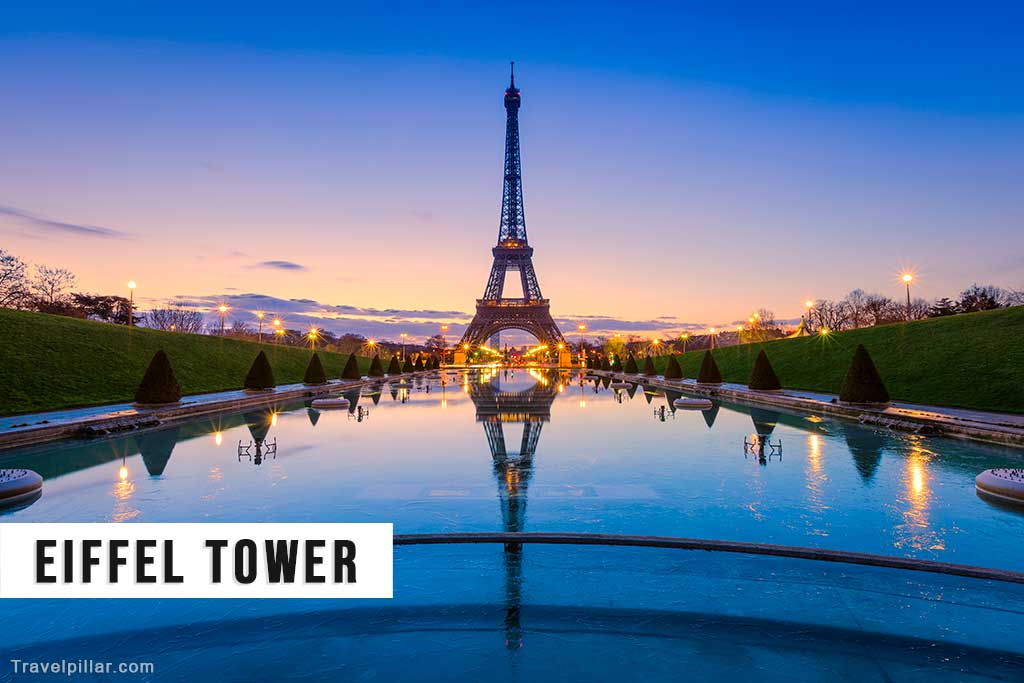
The Eiffel Tower (Tour Eiffel) is France’s iconic landmark and one of the most recognisable structures in the world. Standing at 330 metres tall the tower was constructed from 1887 to 1889 as the centrepiece of the 1889 World’s Fair. It was named after the engineer Gustave Eiffel whose company designed and built the tower.
Official website:
https://www.toureiffel.paris/en
https://www.toureiffel.paris/en/rates-opening-times (prices)
Google map 4.6/5
#2 Arc de Triomphe
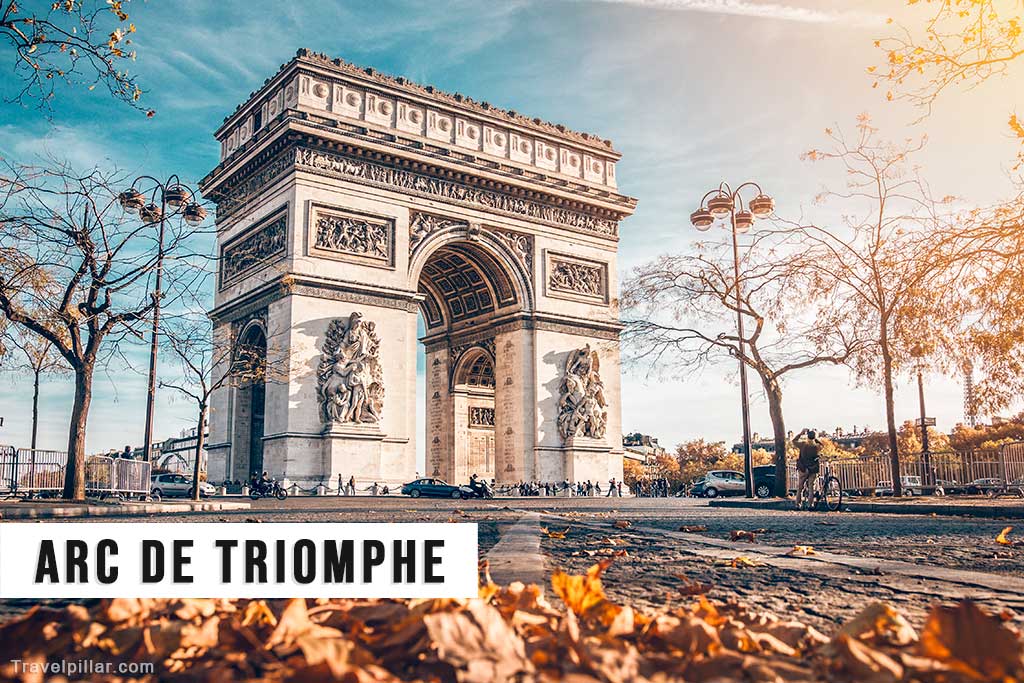
The Arc de Triomphe is a prominent Parisian monument, commissioned by Napoleon in 1806 to commemorate his military victories. Situated at the western end of the Champs-Élysées, this 50-meter-tall structure boasts ornate reliefs and sculptures, honoring French soldiers and generals. The Tomb of the Unknown Soldier, with its eternal flame, pays tribute to World War I casualties. Visitors can climb 284 steps to the top for panoramic views and visit the onsite museum detailing the monument’s history.
Official website: https://www.paris-arc-de-triomphe.fr/en/
Google map 4.7/5
#3 Palais Garnier (Opera National de Paris)
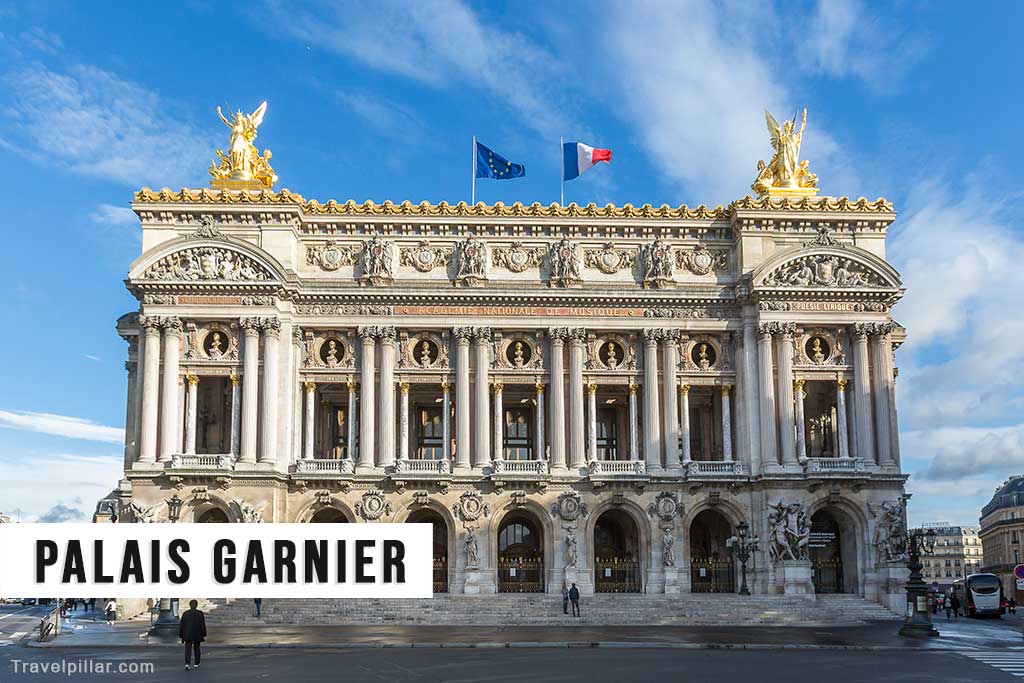
Palais Garnier Opera House is a 19th-century architectural masterpiece, designed by Charles Garnier as part of Emperor Napoleon III’s Parisian renovation plan. This opulent Beaux-Arts building features lavish marble, gold leaf, and frescoes, exemplifying the grandeur of the Second Empire. The auditorium’s ceiling, painted by Marc Chagall, depicts famous composers and their works. Visitors can explore the grand staircase, foyers, and auditorium, or attend performances ranging from ballet to opera.
Official website: https://www.operadeparis.fr
Google map 4.7/5
#4 Panthéon

Panthéon is a neoclassical mausoleum in Paris’s Latin Quarter, originally built as a church dedicated to St. Genevieve. With its iconic dome and imposing columns, the monument houses the remains of illustrious French figures, such as Voltaire, Rousseau, and Marie Curie. Visitors can explore the crypt, admire the frescoes depicting St. Genevieve’s life, and enjoy panoramic views from the colonnade.
Official website: https://www.paris-pantheon.fr/en/
Google map 4.6/5
#5 Pont Alexandre III

Pont Alexander III Bridge is a Beaux-Arts style bridge spanning the River Seine, inaugurated in 1900 to mark the Franco-Russian alliance. Featuring ornate lampposts, sculptures, and gold-leafed details, it is considered one of Paris’s most elegant bridges. Four monumental pylons at each corner represent Art, Science, Commerce, and Industry. The bridge connects the Grand Palais and Petit Palais on the right bank to the Hôtel des Invalides on the left bank, offering picturesque riverside views.
Google map 4.7/5
#6 Palace of Versailles

Palace of Versailles is a magnificent royal château located 20 kilometers southwest of Paris, built by King Louis XIV as a symbol of French absolutism and artistic supremacy. The sprawling estate comprises the ornate palace, with its Hall of Mirrors, opulent state apartments, and exquisite gardens, designed by André Le Nôtre, featuring fountains, sculptures, and the Grand Canal. The estate also includes the Grand Trianon, the Petit Trianon, and Marie Antoinette’s Hamlet. Guided tours and audio guides are available.
Official website: https://en.chateauversailles.fr
Google map 4.6/5
#7 Hôtel des Invalides

Hôtel des Invalides, situated in Paris’s 7th arrondissement, is a historic complex built in the 17th century by Louis XIV to house war veterans (“les invalides”). Its centerpiece is the majestic Dôme des Invalides, a Baroque masterpiece housing Napoleon Bonaparte’s tomb. The complex also hosts the Musée de l’Armée, showcasing centuries of French military history through weapons, armor, and artifacts. It remains a significant cultural and historical site, drawing visitors interested in military heritage and architecture.
Google map 4.7/5
Place Vendôme

Place Vendôme, located in Paris’s 1st arrondissement, is a historic square renowned for its elegant architecture and luxury establishments. Designed by Jules Hardouin-Mansart in the late 17th century, it features uniform façades and the iconic Vendôme Column, commemorating Napoleon’s military victories. The square is home to high-end jewelers, fashion boutiques, and the Hôtel Ritz. A symbol of sophistication and opulence, Place Vendôme epitomizes Paris’s reputation for refinement and grandeur.
Google map 4.7/5
#8 Trocadero (Palais de Chaillot)
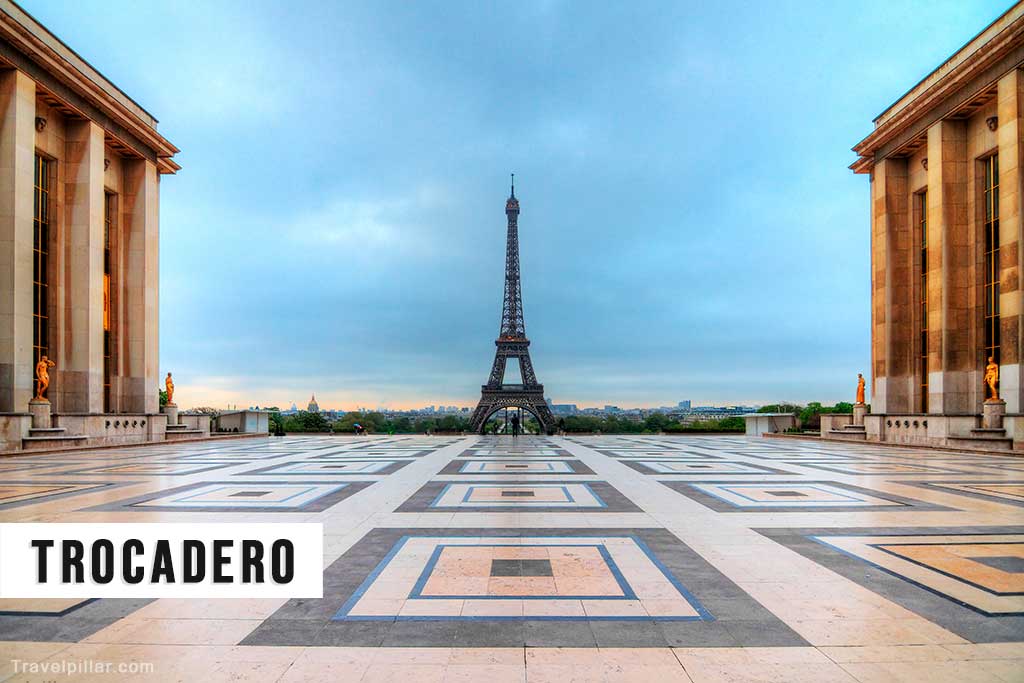
The Trocadéro is a prominent square offering exceptional views of the Eiffel Tower. Home to the Palais de Chaillot, it features gardens, fountains, and cultural institutions, such as the Musée de l’Homme and the Musée de la Marine, as well as an aquarium.
Official website: https://parisjetaime.com/eng/
Google map 4.6/5
#9 Place de la Concorde

Place de la Concorde, Paris’s largest square, is a historic and architectural landmark located between the Champs-Élysées and the Tuileries Gardens. Established in 1772, it is notable for the Luxor Obelisk, an ancient Egyptian monument gifted to France in the 19th century. The square’s elegant fountains and surrounding statues exemplify 18th-century design. Once the site of public executions during the French Revolution, it now serves as a symbol of Parisian.
Google map 4.5/5
#10 Petit Palais

Petit Palais is a Beaux-Arts museum situated opposite the Grand Palais, constructed for the 1900 Exposition Universelle. As the Museum of Fine Arts for the City of Paris, it houses an eclectic collection ranging from ancient artifacts to 19th-century paintings. Visitors can admire works by artists such as Rembrandt, Monet, and Delacroix while exploring the ornate architecture, courtyard garden, and mosaic-adorned galleries.
Official website: https://www.petitpalais.paris.fr/en
Google map 4.7/5
#11 Père Lachaise Cemetery

Père Lachaise Cemetery, located in Paris’s 20th arrondissement, is the city’s largest and most famous burial ground. Established in 1804, it spans 44 hectares and is renowned for its ornate tombs and tranquil pathways. It is the final resting place of notable figures such as Oscar Wilde, Jim Morrison, and Edith Piaf. Combining history, art, and serenity, the cemetery attracts visitors seeking reflection and an exploration of cultural heritage.
Google map 4.6/5
#12 Pont Neuf

Pont Neuf, the oldest standing bridge in Paris, spans the Seine River and connects the Île de la Cité to both banks of the city. Completed in 1607 under King Henry IV, the bridge features 12 arches and decorative stone masks. Renowned for its historic significance and architectural design, it offers picturesque views of the river and surrounding landmarks. Pont Neuf remains a key symbol of Paris’s enduring heritage.
Google map 4.6/5
#13 Grand Palais

Grand Palais is a historic Beaux-Arts exhibition hall and museum complex. Hosting major art exhibitions, cultural events, and Paris Fashion Week, the venue boasts an impressive glass-domed roof and intricate ironwork, making it an architectural gem in its own right.
Official website: https://www.grandpalais.fr/en
Google map 4.5/5
#14 Château de Vincennes
The Château de Vincennes, located just outside Paris, is a well-preserved medieval fortress with a rich history. Originally a royal hunting lodge, it was expanded into a fortified château in the 14th century. Highlights include its imposing keep, the tallest in Europe, and the Sainte-Chapelle de Vincennes, showcasing Gothic architecture. The site offers insights into medieval French history and served as a royal residence and later as a military stronghold.
Google map 4.5/5
#15 Les Deux Magots (historic café)
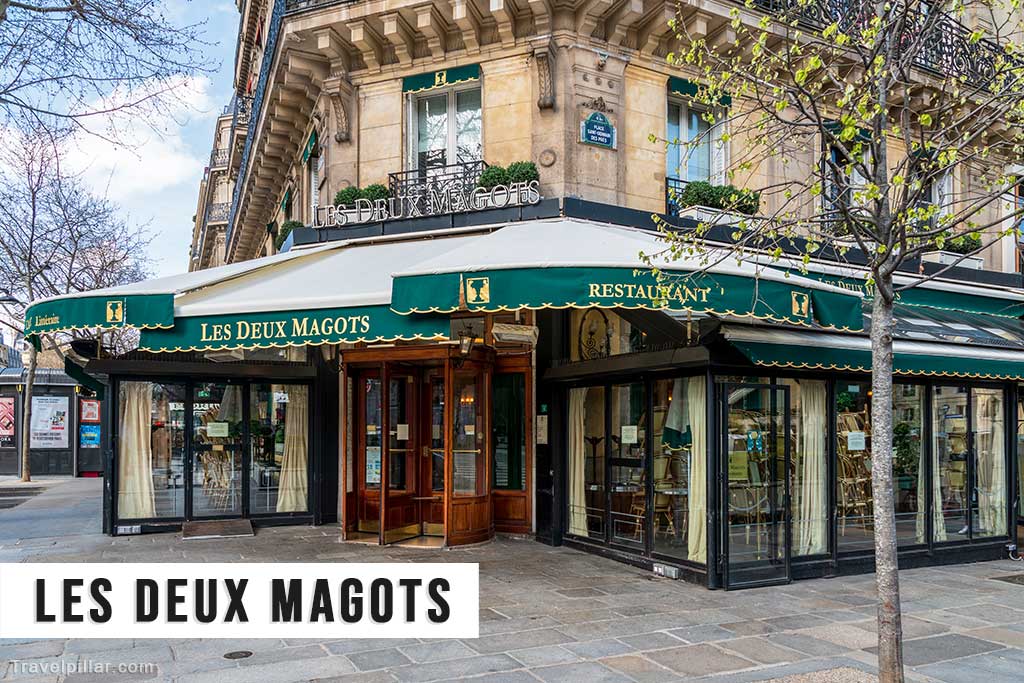
Les Deux Magots, located in Paris’s Saint-Germain-des-Prés district, is a historic café renowned for its literary and cultural heritage. Established in 1885, it was a favored meeting place for intellectuals and artists such as Simone de Beauvoir, Jean-Paul Sartre, and Ernest Hemingway. Known for its classic Parisian ambiance, it offers traditional French cuisine and beverages. Les Deux Magots remains a symbol of Paris’s intellectual and artistic legacy, attracting visitors worldwide.
Google map 4.2/5
#16 Catacombs of Paris
The Catacombs of Paris, located beneath the city, house the remains of over six million individuals. Established in the late 18th century to alleviate overcrowded cemeteries, the ossuary spans approximately 200 miles of underground tunnels. Visitors can explore a designated section, featuring meticulously arranged skulls and bones. This macabre yet fascinating site offers insights into Paris’s history, geology, and practices surrounding death, making it a unique cultural and historical experience.
Google map 4.1/5