
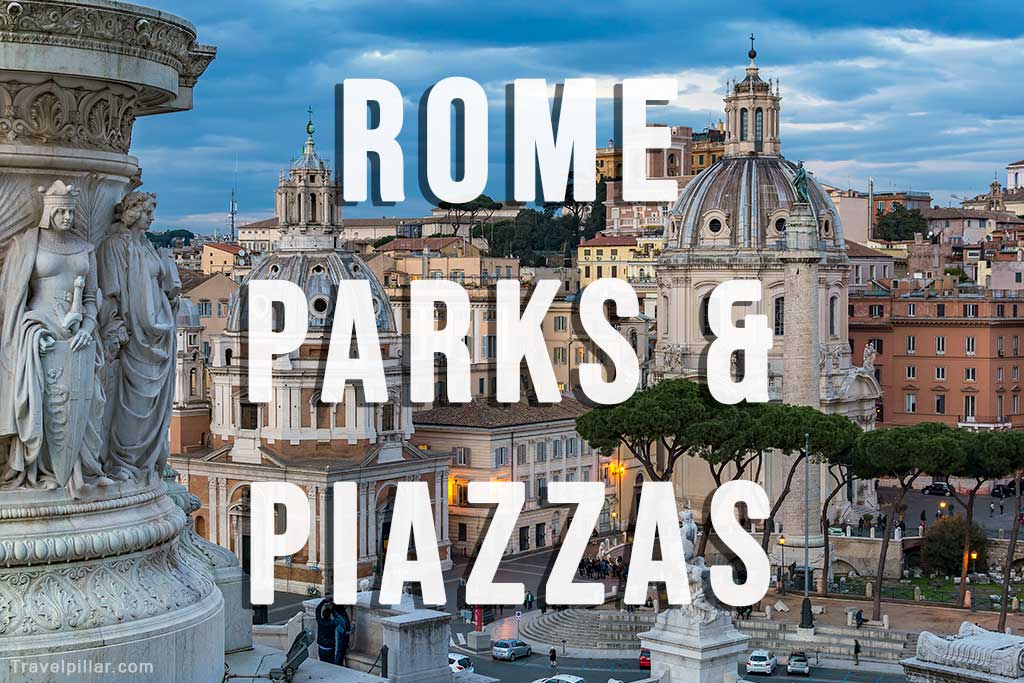
Rome’s parks and piazzas include significant civic spaces and landscaped areas reflecting the city’s urban and architectural history. St Peter’s Square serves as the Vatican’s main ceremonial space, while Piazza Navona and Piazza di Spagna are noted for Baroque design and fountains. Piazza Venezia and Piazza del Campidoglio reflect Renaissance and modern interventions. Giardino degli Aranci offers views over Rome, and other piazzas combine social, religious, and commercial functions within the city’s daily life.
#1 St. Peter’s Square (Piazza San Pietro)

Saint Peter’s Square, located in Vatican City, is a monumental piazza designed by Gian Lorenzo Bernini in the 17th century. Framed by an elliptical colonnade, the square symbolizes the embrace of the Catholic Church. Its central features include an ancient Egyptian obelisk and two fountains. The square serves as a gathering place for papal audiences and religious events, reflecting its significance as a spiritual and architectural landmark in Rome.
Google map 4.8/5
#2 Trevi Fountain (Piazza di Trevi)

The Trevi Fountain is an iconic Baroque masterpiece completed in 1762. Designed by Nicola Salvi and adorned with sculptures by Pietro Bracci, it depicts Neptune flanked by allegorical figures. The fountain’s grandeur and cascading water symbolize abundance and vitality. Tradition holds that tossing a coin ensures a return to Rome. Positioned at the junction of three ancient aqueducts, it remains a celebrated landmark and a symbol of Roman artistry.
Official website: https://www.turismoroma.it
Outdoor public attraction, FREE entrance
Google map 4.8/5
#3 Piazza Navona
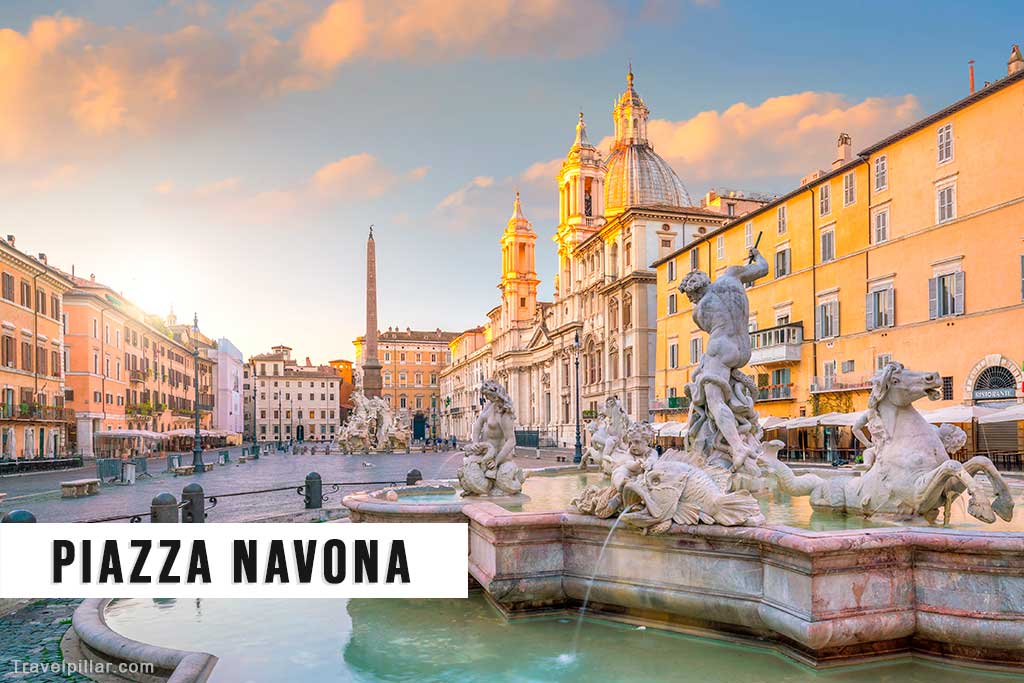
Piazza Navona is a historic square built on the site of the ancient Stadium of Domitian. Renowned for its Baroque architecture, it features the Fountain of the Four Rivers by Gian Lorenzo Bernini, the Church of Sant’Agnese in Agone by Francesco Borromini, and two additional fountains. Once a venue for public events, the piazza is now a lively gathering place, showcasing Rome’s artistic heritage and vibrant atmosphere.
Official website: https://www.turismoroma.it
Outdoor public attraction, FREE entrance
Google map 4.7/5
#4 Piazza Venezia
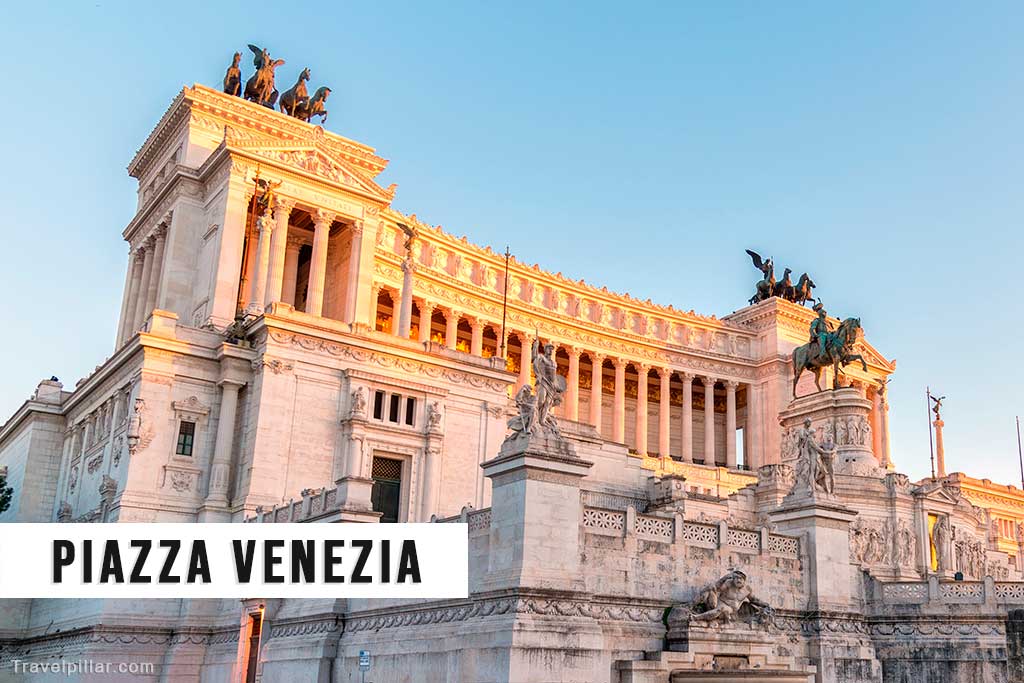
Piazza Venezia is a major intersection and historic square. Dominated by the imposing Vittorio Emanuele II Monument, it commemorates Italy’s unification. The square connects key landmarks, including the Roman Forum and Via del Corso. Palazzo Venezia, once a papal residence, adds to its historical significance. As a hub of activity, Piazza Venezia serves as a focal point for exploring Rome’s cultural and architectural heritage.
Official website: https://www.turismoroma.it
Outdoor public attraction, FREE entrance
Google map 4.7/5
#5 Capitoline Hill (Piazza del Campidoglio)

Piazza del Campidoglio, designed by Michelangelo in the 16th century, is a historic square on Rome’s Capitoline Hill. It is surrounded by significant buildings, including Palazzo Senatorio, Palazzo dei Conservatori, and Palazzo Nuovo, which house the Capitoline Museums. The square features the Equestrian Statue of Marcus Aurelius, a prominent landmark in Rome.
Google map 4.7/5
#6 Giardino degli Aranci (Orange Garden)

Giardino degli Aranci, or the Orange Garden, is a serene park located on Aventine Hill. Established in the 1930s, it features shaded walkways, fragrant orange trees, and a terrace offering panoramic views of the Tiber River and St. Peter’s Basilica. Known for its peaceful ambiance, the garden is a popular spot for both locals and visitors seeking tranquility and scenic beauty. Its charm lies in its simplicity and breathtaking vistas.
Google map 4.7/5
#7 Spanish Steps (Piazza dei Spagna)
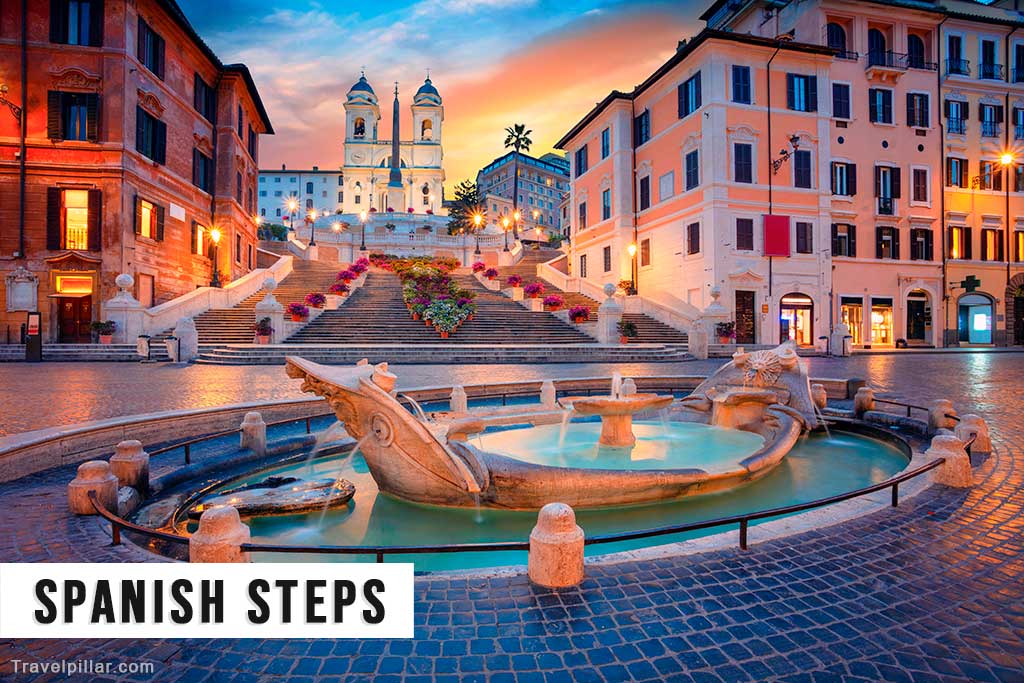
The Spanish Steps, located in Rome’s Piazza di Spagna, are an iconic 18th-century architectural feature. Designed by Francesco de Sanctis, the 135 steps connect the Trinità dei Monti Church with the piazza below. At their base lies the Barcaccia Fountain, attributed to Pietro Bernini. A popular meeting spot, the steps offer views of the surrounding area and provide access to nearby landmarks, blending elegance and functionality in the heart of Rome.
Google map 4.5/5
#8 Piazza del Popolo

Piazza del Popolo, located in northern Rome, is a grand neoclassical square designed by Giuseppe Valadier in the 19th century. Its central feature is an ancient Egyptian obelisk dedicated to Ramses II, surrounded by fountains. Flanked by twin churches, Santa Maria dei Miracoli and Santa Maria in Montesanto, the piazza also leads to the Pincio Terrace, offering panoramic views. Historically a gateway to Rome, it remains a vibrant cultural and architectural landmark.
Google map 4.6/5
#9 Piazza Colonna (Colonna di Marco Aurelio)
Piazza Colonna, located in central Rome, is named after the Column of Marcus Aurelius, an ancient Roman monument celebrating the emperor’s military victories. Erected in 193 AD, the column features intricate reliefs spiraling upward. The square is surrounded by significant buildings, including the Palazzo Chigi, now the seat of Italy’s Prime Minister. As a hub of political and historical significance, Piazza Colonna remains a prominent and vibrant part of Rome’s urban landscape.
Google map 4.7/5
#10 Piazza di Santa Maria (Trastevere)
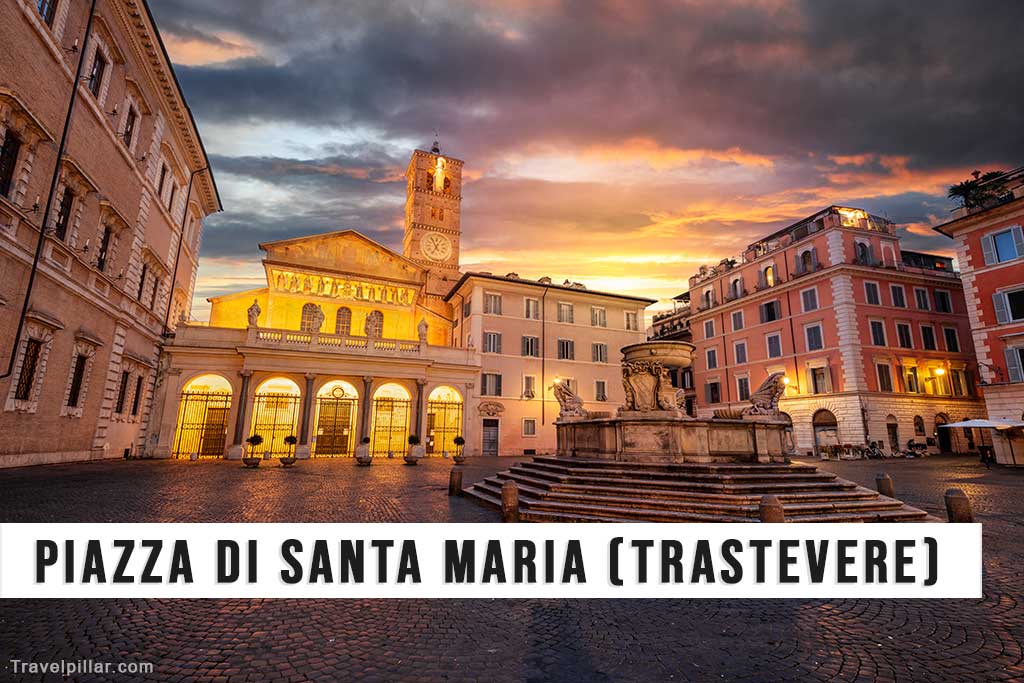
Piazza di Santa Maria in Trastevere is the central square of the Trastevere district. It is dominated by the Basilica di Santa Maria in Trastevere, one of Rome’s oldest churches, known for its 12th-century mosaics. The square features a 17th-century octagonal fountain and is surrounded by historic buildings, restaurants, and cafes. It serves as a social hub for the area, illustrating the district’s medieval urban character and vibrant local atmosphere.
Google map
Google map Basilica of Santa Maria in Trastevere 4.7/5
#11 Villa Borghese (Gardens)
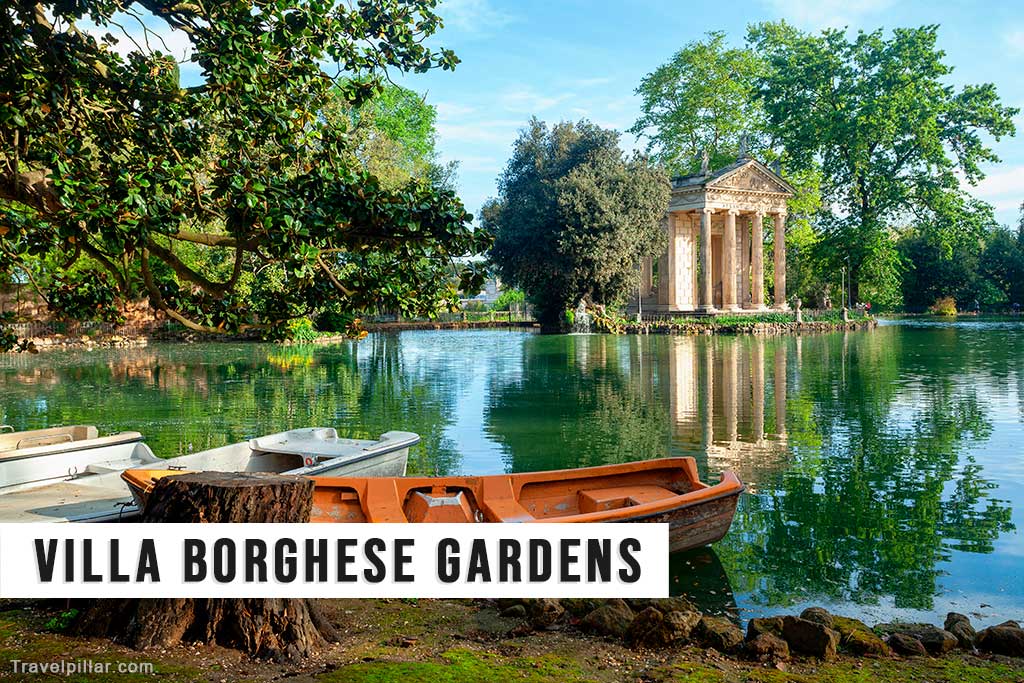
Villa Borghese Gardens is Rome’s central public park, covering approximately 80 hectares. Originally developed in the 17th century as a private estate for Cardinal Scipione Borghese, it combines landscaped gardens, wooded areas, and formal avenues. The park contains cultural institutions such as the Borghese Gallery, Bioparco Zoo, and Globe Theatre. It serves as a recreational space for walking, cycling, and boating, offering visitors both leisure facilities and significant cultural and historical attractions.
Google map 4.6/5
#12 Campo de’ Fiori
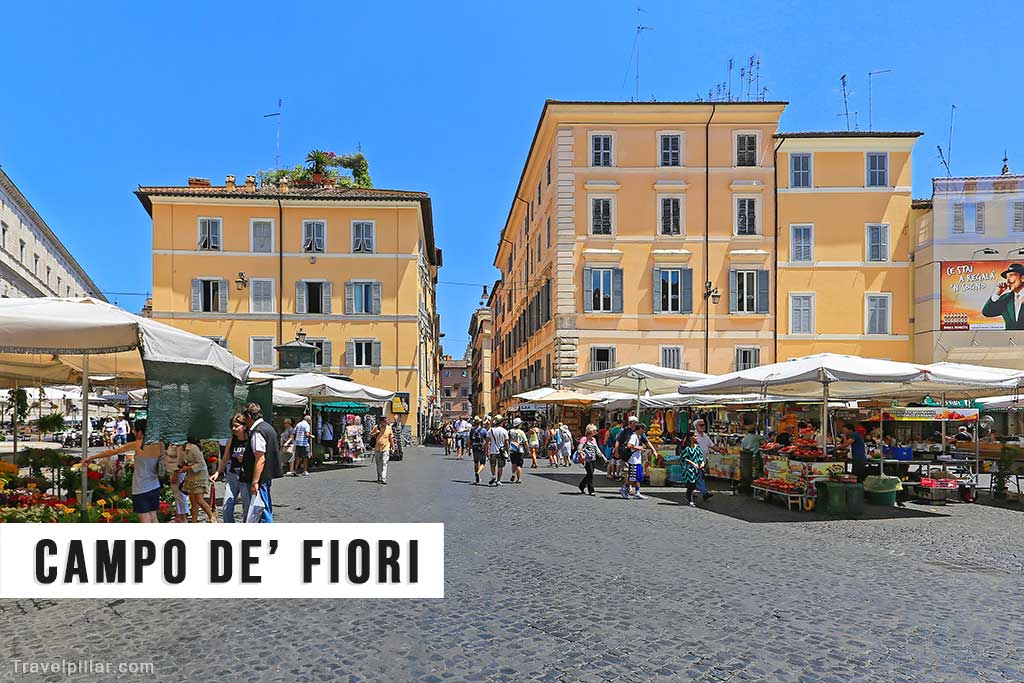
Campo de’ Fiori is a lively square in Rome known for its vibrant daily market, selling fresh produce, flowers, and local goods. The square, whose name means “Field of Flowers,” is surrounded by cafes, restaurants, and shops. It is also notable for the statue of Giordano Bruno, commemorating the philosopher executed here in 1600.
Google map 4.4/5
#13 Villa d’Este (Tivoli)
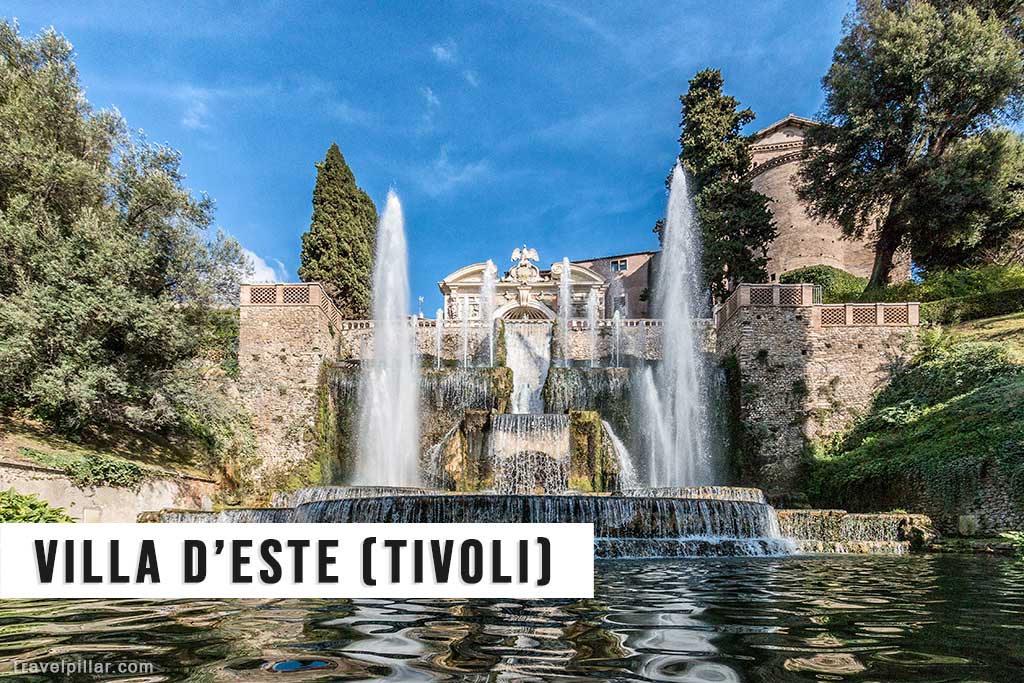
Villa d’Este, located in Tivoli near Rome, is a UNESCO World Heritage site renowned for its Renaissance gardens and fountains. Built in the 16th century for Cardinal Ippolito II d’Este, the villa features lavish frescoes and intricate designs. Its terraced gardens are celebrated for their hydraulic engineering, with highlights like the Fountain of Neptune and the Hundred Fountains. Villa d’Este is a masterpiece of landscape architecture and Renaissance artistry.
Google map 4.7/5