
The Primordial Deities in Greek mythology represent the first gods and elements of the universe, emerging from Chaos, the void. These deities embody fundamental aspects of the cosmos, such as Gaia (Earth), Uranus (Sky), Tartarus (the Abyss), and Eros (Love). They were the precursors to the Titans and Olympians, playing a foundational role in the creation myths. Their offspring shaped the world and divine hierarchy, establishing the structure of the mythological universe that followed.
Chaos
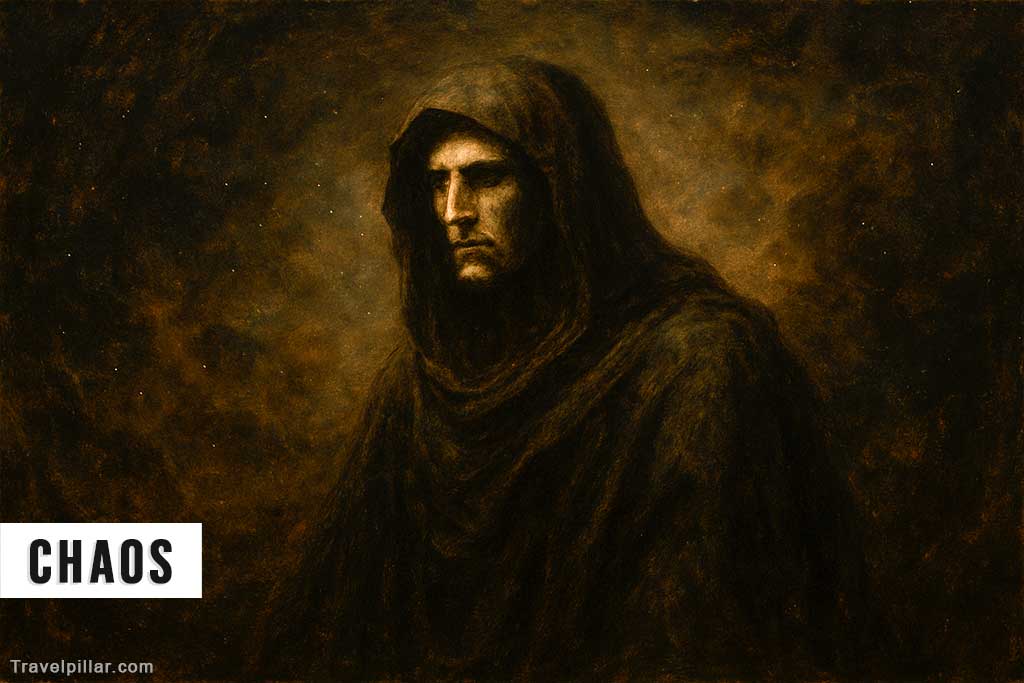
Chaos is the primordial void from which all existence emerged. It represents the empty, formless state that preceded the creation of the universe. From Chaos came the first deities, including Gaia (Earth), Tartarus (the Abyss), and Eros (Love), laying the foundation for the world and the divine hierarchy in Greek myth. Chaos is a fundamental concept in Greek cosmogony, representing the beginning of creation. Visitors to ancient sites can explore the myth’s influence on early Greek cosmology.
Gaia

Gaia, also known as Gaea, is the primordial Greek goddess representing the Earth. She is considered the ancestral mother of all life, giving birth to both gods and mortals, as well as the land, seas, and mountains. Gaia played a central role in the Greek creation myth, generating the Titans, Cyclopes, and other key figures of mythology. Revered as a nurturing force, Gaia was worshipped in natural settings, symbolizing the Greeks’ deep connection with the earth and nature’s fertility.
Uranus
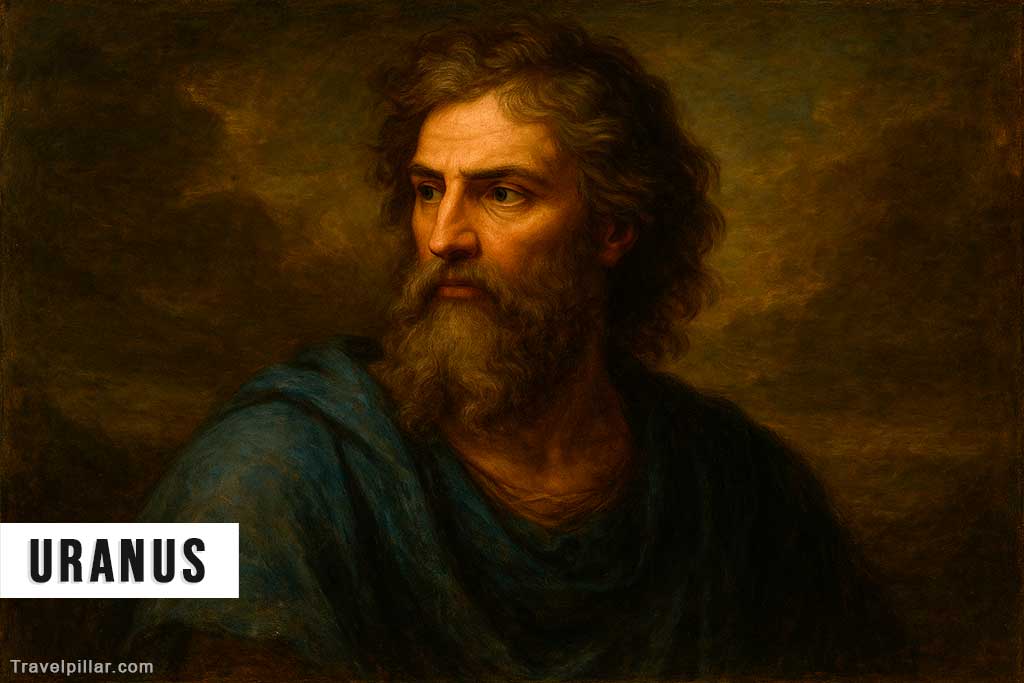
Uranus, in Greek mythology, is the primordial god of the sky and the personification of the heavens. As the father of the Titans, Cyclopes, and other mythological beings, Uranus played a central role in the early creation myths. He was the partner of Gaia, the Earth, and together they produced many of the first divine beings. Uranus was overthrown by his son Cronus, marking the beginning of the reign of the Titans in Greek mythological history.
Eros
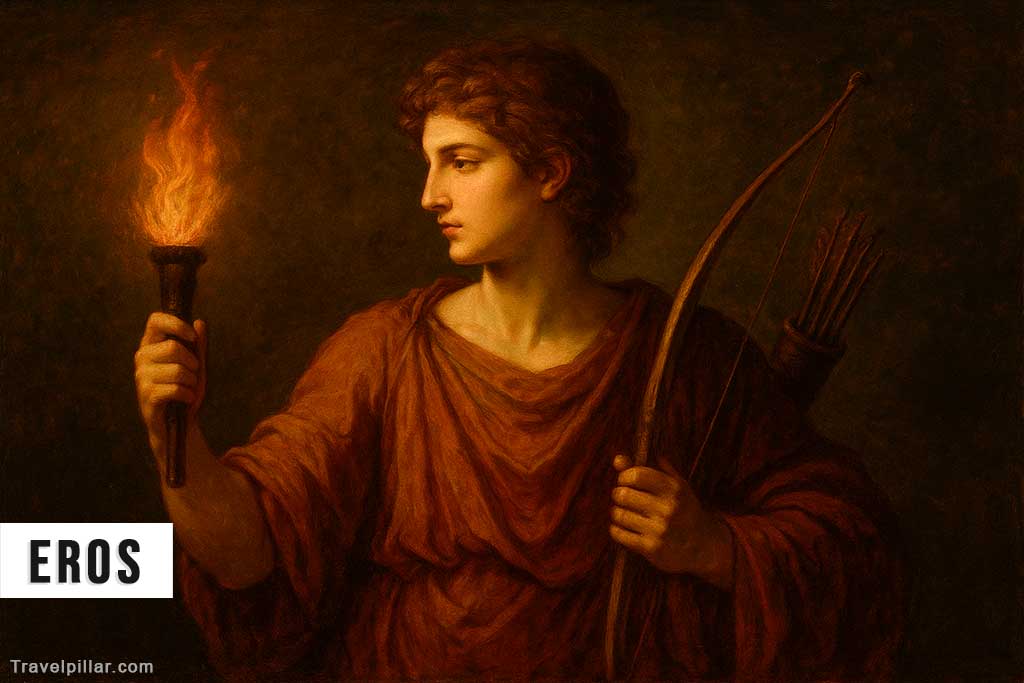
Eros, in Greek mythology, is the primordial god of love and desire. He represents the force of attraction and passion that brings beings together. In early myths, Eros is depicted as a powerful, primordial deity who emerged from Chaos, symbolizing the creative force behind life itself. Later myths portray him as the mischievous son of Aphrodite, armed with arrows to incite love in gods and mortals alike. Eros’ influence underscores the significance of love and desire in Greek culture.
Tartarus
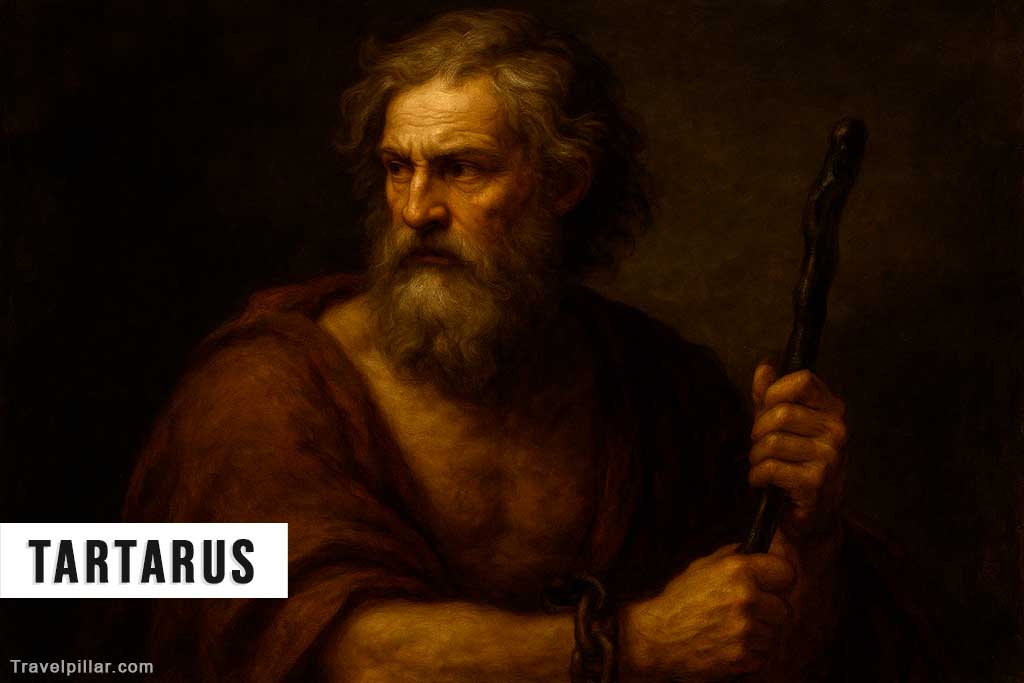
Tartarus is both a primordial deity and a deep abyss used as a dungeon for the wicked and the defeated. Located far below the earth, Tartarus is the place where the most fearsome punishments are carried out, including the imprisonment of the Titans after their defeat by the Olympian gods. It is considered one of the darkest and most desolate regions of the underworld, governed by strict and eternal suffering for its inhabitants.
The primordial deities are fundamental to understanding Greek mythology’s view of the universe’s origins. While they do not play a central role in many myths, their influence is felt throughout the stories of gods, Titans, and heroes, as they laid the foundation for the mythological world.