
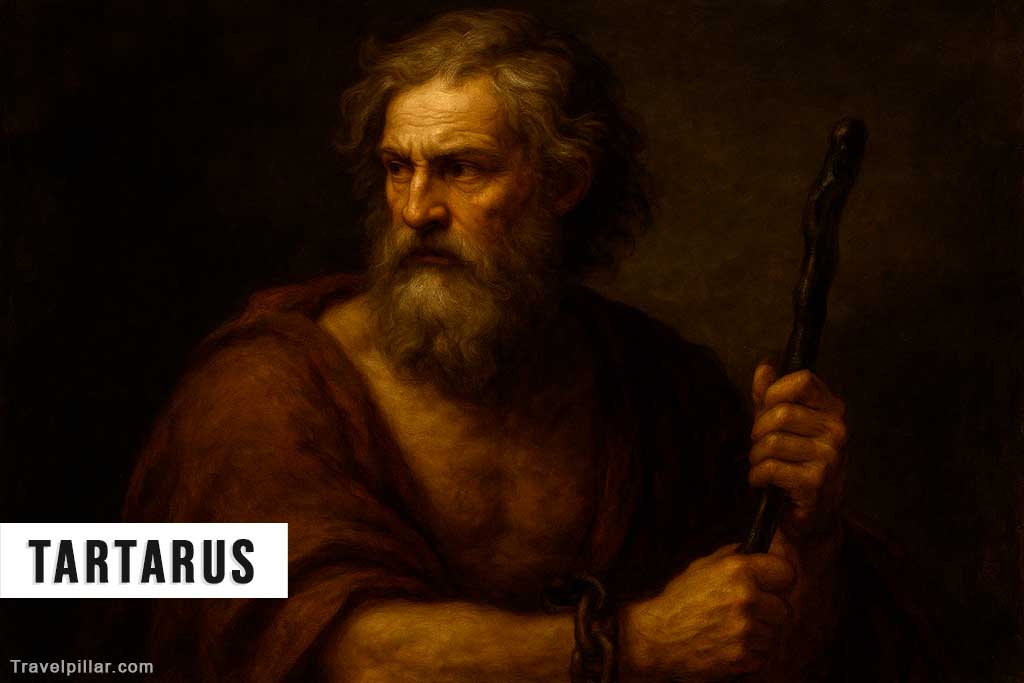
Tartarus, in Greek mythology, serves as both a primordial deity and a physical location within the ancient Greek cosmology. As a deity, Tartarus is one of the first beings to emerge from Chaos, along with Gaia (Earth) and Eros (Love), representing the darkest, deepest part of the universe. In this sense, Tartarus symbolizes the vast, inescapable abyss that existed far below the earth and was considered the ultimate prison for those condemned by the gods.
As a place, Tartarus is described as an ominous region beneath even the underworld, where the souls of the wicked and defeated enemies of the gods are held. It is most famously known as the prison of the Titans, who were cast into Tartarus by Zeus and the Olympian gods after their defeat in the Titanomachy, the great war between the Titans and Olympians. The Cyclopes and the Hecatoncheires, giant hundred-handed beings, were also imprisoned here before being released to aid Zeus in his battle against Cronus.
Tartarus is a place of eternal torment and punishment, reserved for those who had committed the most grievous offenses against the gods. Unlike the underworld, which was governed by Hades and where most souls resided after death, Tartarus was reserved for the most dangerous and rebellious beings in Greek mythology. It was guarded by powerful forces to ensure that none of its prisoners could escape.
One of the most well-known residents of Tartarus is Sisyphus, who was condemned to roll a boulder up a hill for eternity, only for it to roll back down each time he neared the top. Similarly, Tantalus, who betrayed the gods, was condemned to suffer eternal hunger and thirst, with food and water always just out of reach.
In Greek mythology, Tartarus represents the ultimate symbol of divine justice and punishment. Its presence in myths serves as a reminder of the consequences of defying the gods, emphasizing the ancient Greeks’ belief in the inevitability of retribution for those who challenge the established order.