

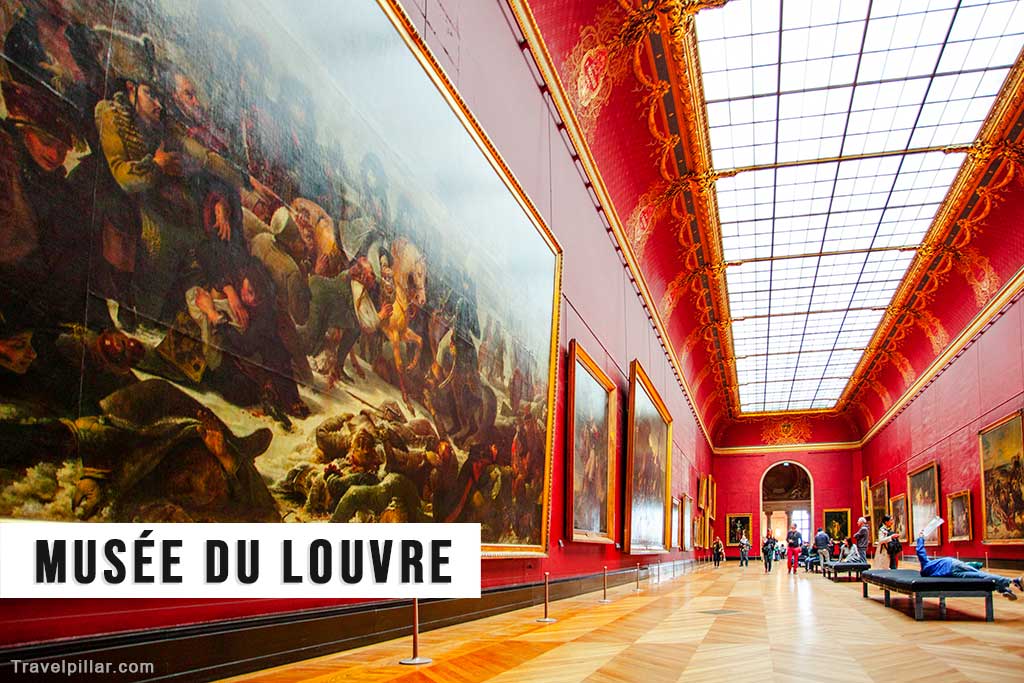
The Louvre Museum is one of the world’s largest and most visited art institutions. Located in the 1st arrondissement of Paris, the museum occupies the former royal palace of the Louvre, a structure with origins dating back to the late 12th century. It was transformed into a public museum during the French Revolution in 1793. Today, it houses a vast and diverse collection that spans from prehistoric times to the mid-19th century.

The museum is divided into several departments, including Near Eastern Antiquities, Egyptian Antiquities, Greek, Etruscan and Roman Antiquities, Islamic Art, Sculptures, Decorative Arts, Paintings, and Prints and Drawings. Among its most notable works are Leonardo da Vinci’s Mona Lisa, the ancient Greek statue Venus de Milo, and the Hellenistic sculpture Winged Victory of Samothrace. The Louvre also holds significant pieces from Mesopotamia, ancient Egypt, and the Islamic world, offering a wide-ranging overview of global art history.
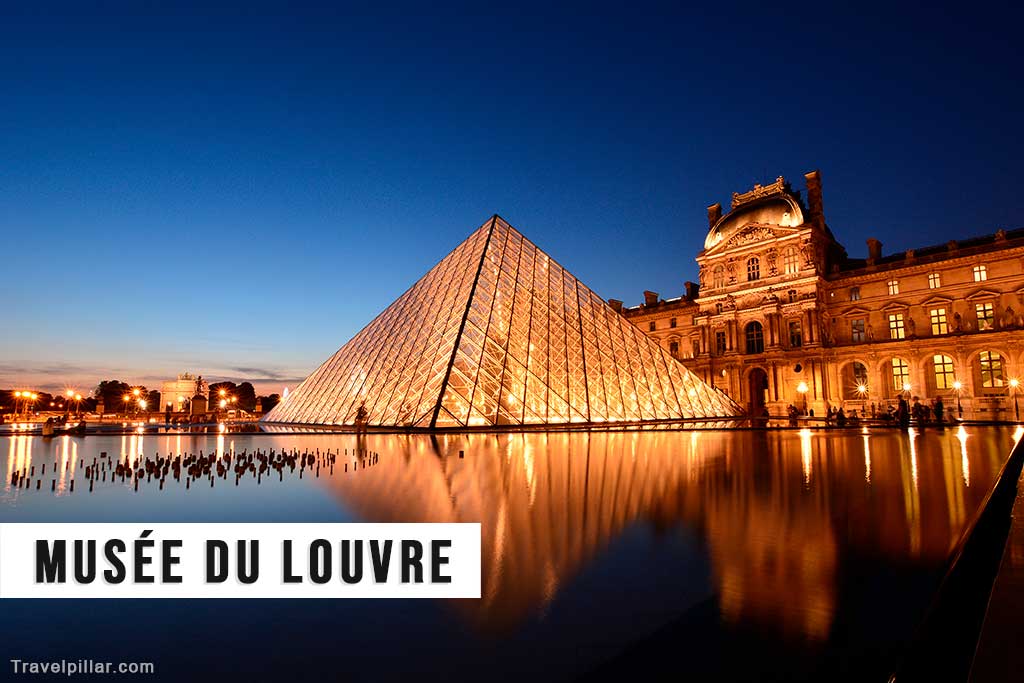
In 1989, the museum introduced a new main entrance with the addition of the glass pyramid designed by architect I. M. Pei. This structure now stands as a modern counterpoint to the classical architecture of the surrounding palace and has become one of the museum’s most recognizable features. Below the pyramid lies the expansive reception area and access point to the various wings of the museum.
The Louvre continues to serve as both a major tourist attraction and a center for academic research. It regularly hosts temporary exhibitions and educational programs in addition to managing its permanent collection. The museum is closed on Tuesdays and is accessible via several nearby Metro stations, including Palais Royal–Musée du Louvre. Visitors are advised to plan ahead due to the museum’s size and the high volume of daily visitors, particularly during peak travel seasons.
Official website: https://www.louvre.fr/en
Google map 4.7/5
Louvre Highlights
“Mona Lisa” (1503-1506)- Leonardo da Vinci
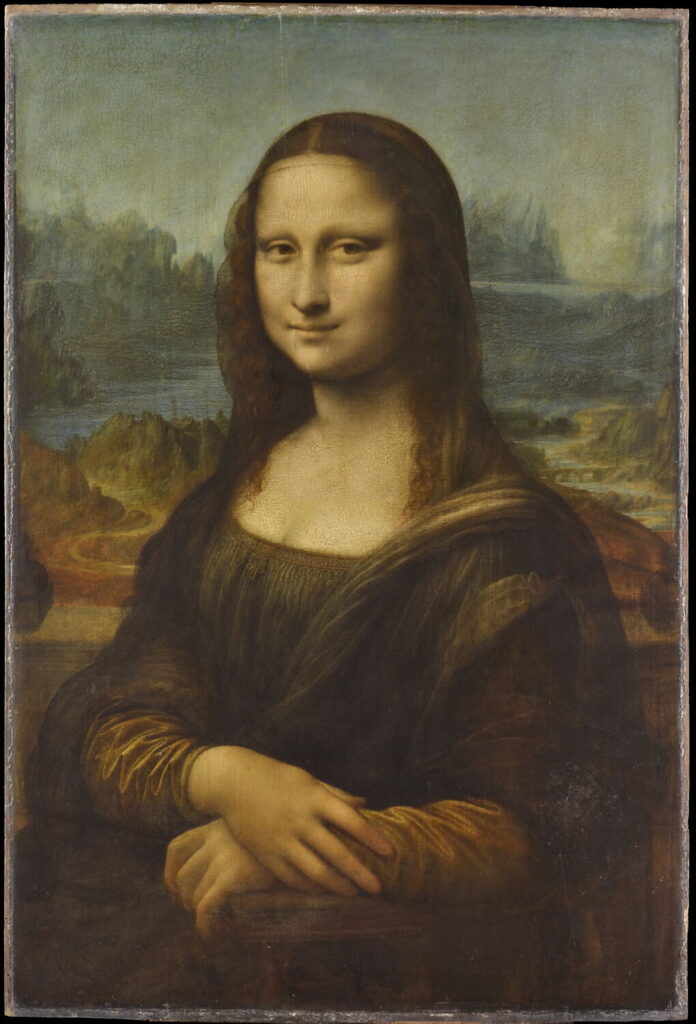
The Mona Lisa is Leonardo da Vinci’s most famous portrait, housed in the Louvre’s Denon Wing. Painted in the early 16th century, the work is celebrated for its subtle modeling, atmospheric perspective, and the subject’s enigmatic expression. The sitter is widely believed to be Lisa Gherardini, a Florentine woman. Displayed behind protective glass, the painting draws large crowds and remains one of the most visited and discussed artworks in the world.
https://collections.louvre.fr/en/
“Venus de Milo” (circa 130-100 BC) – Alexandros of Antioch

The Venus de Milo is an ancient Greek statue dating to around 100 BCE, attributed to Alexandros of Antioch. It represents Aphrodite, the goddess of love, and is notable for its missing arms and classical beauty. Carved from marble, the sculpture stands over two meters tall and exemplifies Hellenistic artistry. The statue was discovered on the island of Milos in 1820 and is displayed prominently in the museum’s Greek antiquities section.
https://collections.louvre.fr/en/
“Liberty Leading the People” (1830) – Eugène Delacroix

Liberty Leading the People (1830) by Eugène Delacroix commemorates the July Revolution in France. The painting depicts a female allegory of Liberty holding the tricolour flag and leading a group of revolutionaries over a barricade. Blending Romanticism with political symbolism, it features figures from different social classes. The composition emphasizes movement and emotion, marking a key moment in 19th-century French art and reflecting the artist’s support for revolutionary ideals.
https://collections.louvre.fr/en/
“Psyche Revived by Cupid’s Kiss” (1787-1793) – Antonio Canova
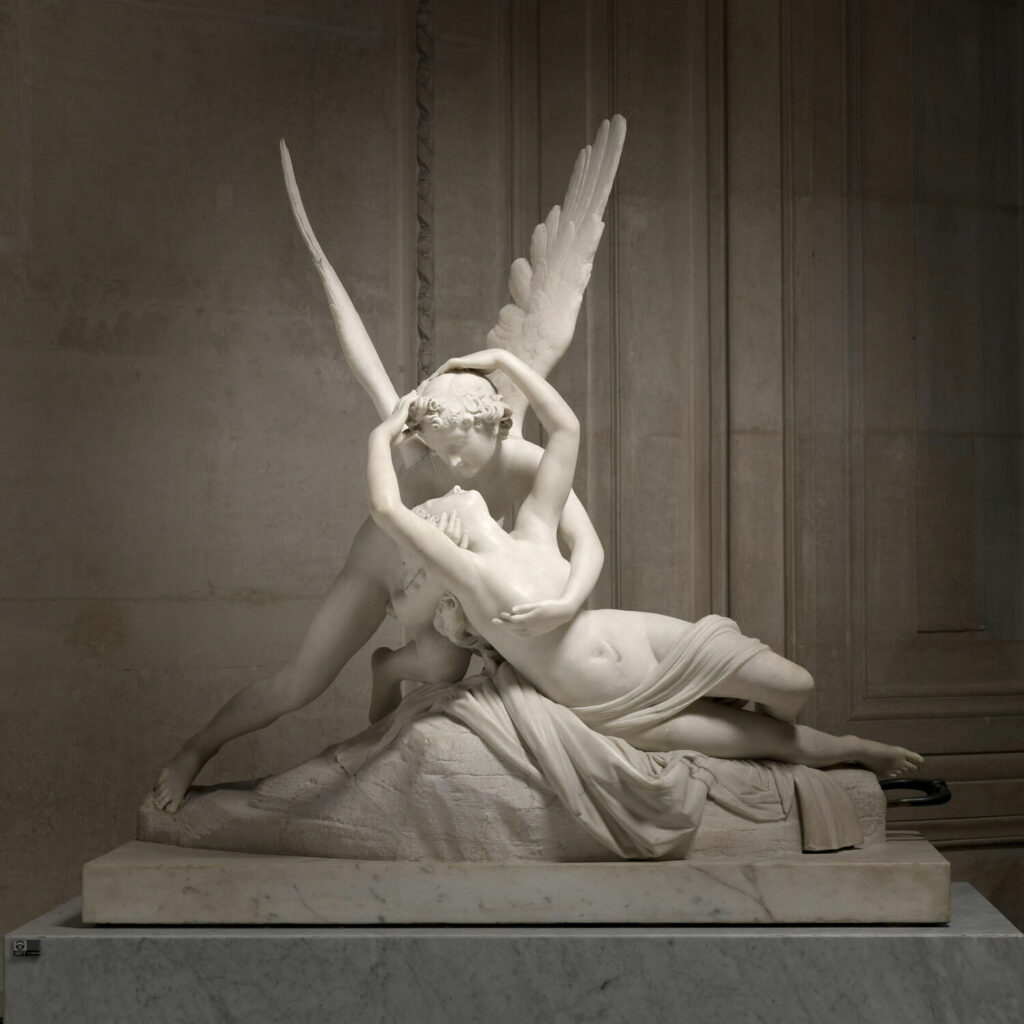
Psyche Revived by Cupid’s Kiss (1787–1793) by Antonio Canova is a neoclassical marble sculpture depicting a moment from Apuleius’s Metamorphoses. The work captures the awakening of Psyche by Cupid, emphasizing grace and emotional intensity through refined detail and balanced composition. Executed in white marble, it reflects Canova’s mastery of form and movement. The sculpture is considered a prime example of neoclassical art and Canova’s skill in conveying mythological themes.
https://collections.louvre.fr/en/
“Dying Slave” (1513-1516) – Michelangelo
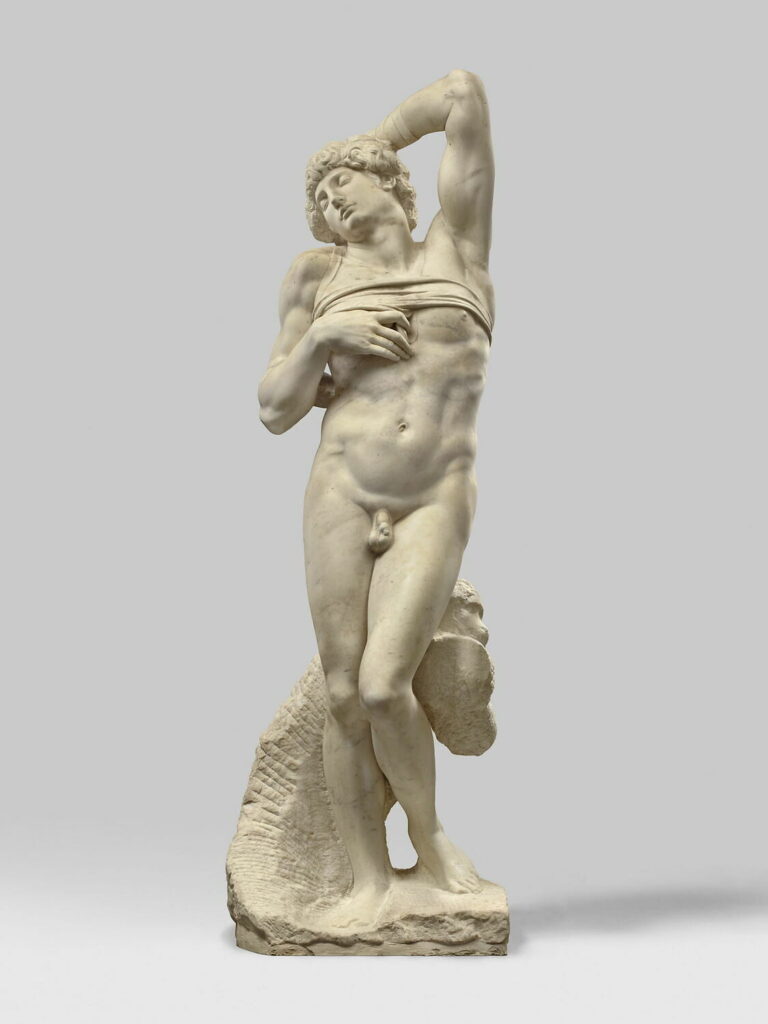
Dying Slave (1513–1516) by Michelangelo was originally intended for the tomb of Pope Julius II. Carved from marble, the sculpture depicts a young male figure in a graceful pose, suggesting a peaceful surrender to death. It reflects Michelangelo’s mastery of human anatomy and expressive form. The work exemplifies High Renaissance ideals and is often interpreted as symbolizing the soul’s release from earthly constraints or the struggle between life and death.
https://collections.louvre.fr/en/
“The Raft of the Medusa” (1818-1819) – Théodore Géricault
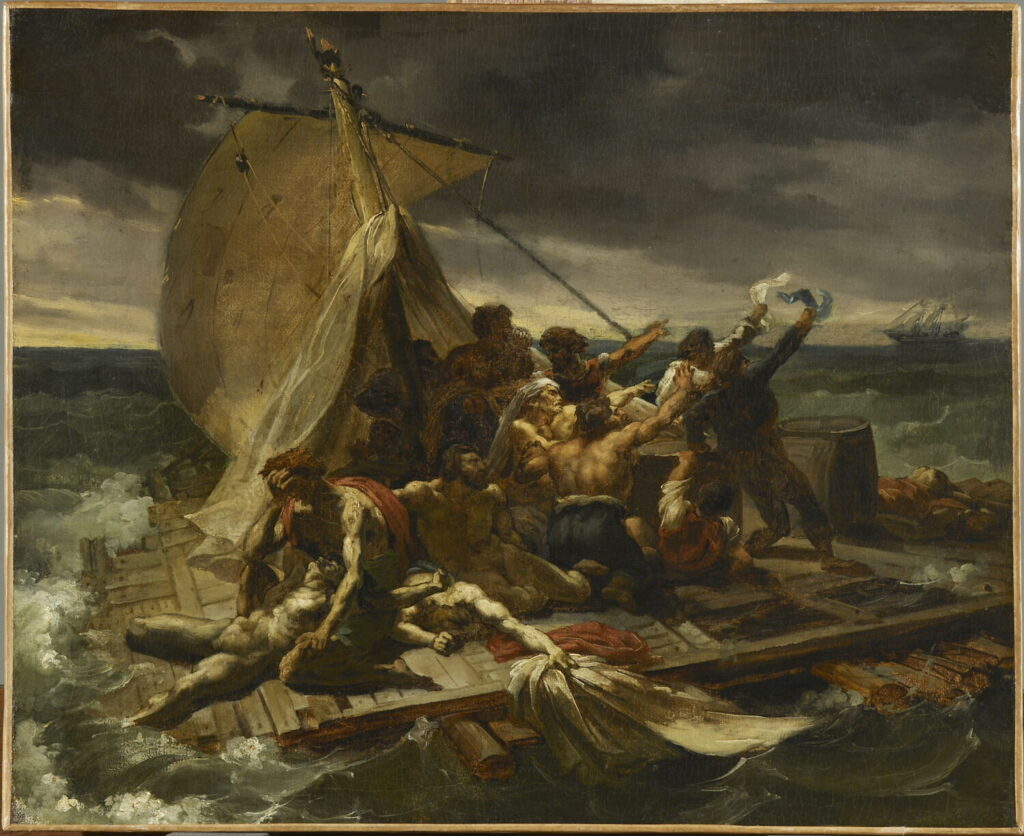
The Raft of the Medusa (1818–1819) by Théodore Géricault depicts the aftermath of a French naval disaster in 1816. The painting shows survivors on a makeshift raft awaiting rescue, highlighting themes of human suffering and political negligence. Based on eyewitness accounts, it blends realism with Romantic intensity. The large-scale canvas caused controversy upon its debut and is considered a significant work in the development of 19th-century French historical painting.
https://collections.louvre.fr/en/
“Grande Odalisque” (1814) – Jean Auguste Dominique Ingres

Grande Odalisque (1814) by Jean Auguste Dominique Ingres portrays a reclining nude woman in an imagined harem setting. Commissioned by Napoleon’s sister, the painting reflects a blend of neoclassical technique and exotic subject matter. Notable for its elongated proportions and smooth contours, the work deviates from anatomical realism in favor of stylized elegance. It marked a departure from classical norms and anticipated later developments in Orientalist and modern European art.
https://collections.louvre.fr/en/
“The Coronation of Napoleon” (1806-1807) – Jacques-Louis David

The Coronation of Napoleon (1806–1807) by Jacques-Louis David depicts the coronation ceremony of Napoleon Bonaparte in Notre-Dame Cathedral in 1804. The large-scale painting shows Napoleon crowning Empress Joséphine, emphasizing his authority and departure from traditional monarchical rites. Executed in the neoclassical style, it features detailed portraits of key figures, including Pope Pius VII. The work serves both as historical documentation and political propaganda reinforcing Napoleon’s legitimacy and power.
https://collections.louvre.fr/en/
Winged Victory of Samothrace (circa 200-190 BC)

The Winged Victory of Samothrace is a Hellenistic marble sculpture representing Nike, the Greek goddess of victory. Discovered on the island of Samothrace, it originally stood on the prow of a stone ship. The dynamic pose and detailed rendering of drapery suggest movement and triumph. Despite missing head and arms, the work exemplifies the period’s emphasis on theatricality, anatomical precision, and expressive force in public commemorative sculpture.
https://collections.louvre.fr/en/
“The Entombment” (1520-1522) – Titian

The Entombment (1520–1522) by Titian depicts the moment Christ’s body is placed in the tomb. The composition features strong diagonal movement and emotional intensity, characteristic of the Venetian High Renaissance. The figures are rendered with rich color and subtle lighting, emphasizing the physical and spiritual weight of the scene. The painting reflects Titian’s mastery of atmosphere and human expression, marking a transition toward the more dramatic sensibilities of later Baroque art.
https://collections.louvre.fr/en/
The Wedding at Cana (1563) by Paolo Veronese

The Wedding at Cana by Paolo Veronese is a large-scale painting depicting the biblical story of Christ turning water into wine. Commissioned for a Venetian monastery, the work blends a sacred subject with a contemporary Venetian banquet scene. It features over 100 figures, including historical and biblical characters. The composition showcases Veronese’s skill in color, perspective, and architectural setting, exemplifying the grandeur and theatricality of late Renaissance Venetian painting.
https://collections.louvre.fr/en/
Death Of The Virgin (1605–1606) by Caravaggio
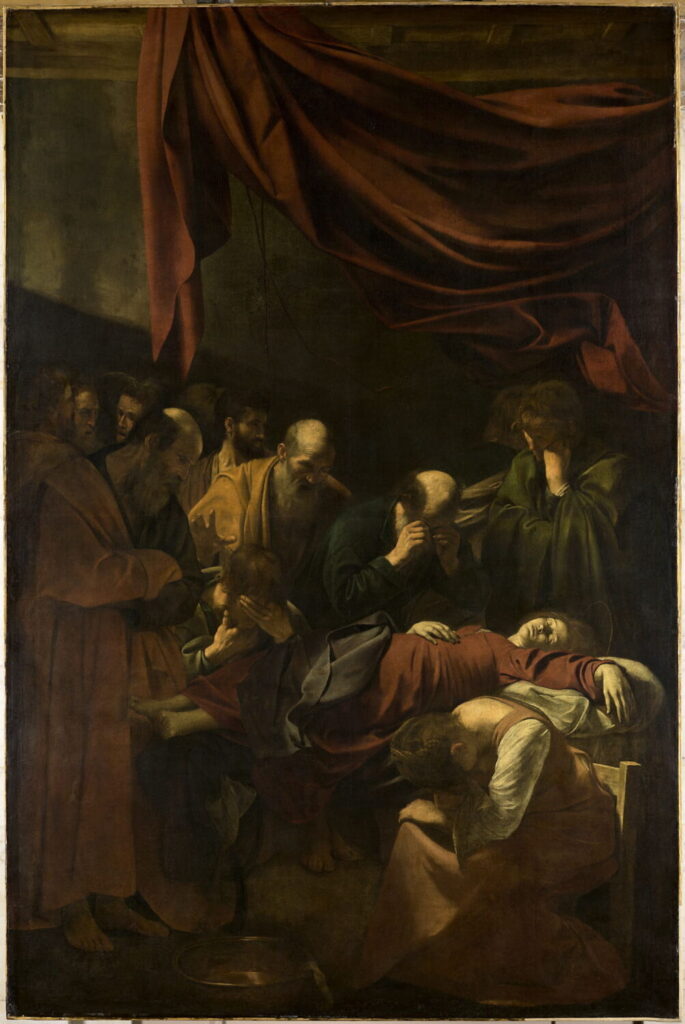
Death of the Virgin presents the Virgin Mary’s death with stark realism, departing from traditional idealized depictions. The composition emphasizes human emotion through dramatic lighting and naturalistic detail. The apostles gather around the lifeless figure, portrayed without divine attributes. Controversial at the time for its unidealized portrayal, the painting reflects Caravaggio’s influence on Baroque art through its use of chiaroscuro and emphasis on physical and psychological presence.
https://collections.louvre.fr/en/
The Inverted Pyramid (Pyramide Inversée)
The Inverted Pyramid (Pyramide Inversée) is a skylight structure located in the Carrousel du Louvre. Designed by architect I. M. Pei and completed in 1993, it serves as a modern architectural feature complementing the museum’s main glass pyramid. The structure consists of a large glass pyramid pointing downward, suspended over a smaller stone pyramid. It allows natural light into the underground space and has become a notable element of the museum’s contemporary design.
Related Post:
Best Museums in the World

Museums preserve the artistic, scientific and cultural achievements of civilisation. The institutions listed below contain some of the world’s most important collections, ranging from ancient archaeology and Renaissance painting to modern art, natural history and science.
This ranking is inevitably subjective, but the museums below stand out for the scale of their collections, the quality of their exhibitions, their historical importance and the overall visitor experience. Click on the museum name or image to explore each museum in more detail.