

Introduction
Few artists have left such a lasting mark on Western civilisation as Michelangelo. A sculptor, painter, architect and poet, he created some of the most celebrated works in history, including the statue of David, the ceiling of the Sistine Chapel and the magnificent dome of St Peter’s Basilica. Alongside Leonardo da Vinci and Raphael, Michelangelo helped define the Italian Renaissance and transformed the course of European art.
For travellers, Michelangelo’s legacy can be discovered throughout Italy. From his birthplace in the Tuscan hills and the artistic treasures of Florence to the churches, palaces and museums of Rome, many of his greatest creations remain in the places for which they were originally made. Standing beneath the Sistine Chapel ceiling or in front of the towering statue of David provides an unforgettable experience that photographs can never fully capture.
Although Michelangelo regarded himself primarily as a sculptor, his achievements extended far beyond marble. His paintings, architecture and poetry reveal an artist of extraordinary ambition and technical brilliance whose influence continues to shape art and architecture more than five centuries later.
Michelangelo at a Glance
| Nationality | Italian |
| Movement | Renaissance |
| Born | Caprese, Italy |
| Known For | Sculpture & frescoes |
| Masterpiece | David |
| Must Visit | Vatican Museums |
Early Life and Career
Michelangelo was born in 1475 in the small Tuscan town of Caprese, now known as Caprese Michelangelo in his honour. Shortly after his birth, his family returned to Florence, one of Europe’s greatest centres of art and learning during the Renaissance. Surrounded by magnificent churches, sculptures and classical ideas, Michelangelo grew up in an environment that encouraged artistic excellence.
As a teenager he became an apprentice to the painter Domenico Ghirlandaio, one of Florence’s leading artists. Although he learned the techniques of fresco painting, Michelangelo soon discovered that his true passion lay in sculpture. His exceptional talent attracted the attention of the powerful Medici family, who invited him to study classical sculptures in their gardens. There he encountered the masterpieces of ancient Greece and Rome, which profoundly influenced his understanding of the human body and artistic beauty.
Michelangelo believed that every block of marble already contained a finished figure waiting to be revealed. His task, he said, was simply to remove the unnecessary stone. This philosophy remained central to his work throughout his life and helped produce sculptures of extraordinary realism and emotional power.
After establishing his reputation in Florence, Michelangelo moved to Rome, where he received increasingly ambitious commissions from popes and wealthy patrons. His early masterpiece, the Pietà, immediately established him as one of Italy’s greatest sculptors. Soon afterwards he returned to Florence to carve the monumental statue of David, which became a symbol of the city’s independence and artistic achievement.
Although Michelangelo preferred sculpture, Pope Julius II ordered him to paint the ceiling of the Sistine Chapel. Initially reluctant to accept the commission, Michelangelo eventually spent four years working high above the chapel floor, producing one of the greatest masterpieces in the history of Western art.
In later life he devoted much of his attention to architecture, most notably the design of the great dome of St Peter’s Basilica in Rome. By the time of his death in 1564, Michelangelo was widely regarded as the greatest living artist in Europe.
Understanding Michelangelo’s Art
Michelangelo’s work is immediately recognisable for its powerful figures, remarkable understanding of human anatomy and extraordinary sense of movement. Whether working in marble or paint, he believed that the human body was the greatest expression of beauty, strength and emotion.
Unlike many Renaissance artists who concentrated on graceful elegance, Michelangelo filled his works with energy and tension. His figures often appear poised between movement and stillness, with twisting bodies, powerful muscles and expressive gestures that create a dramatic sense of life. Even when standing perfectly still, they seem ready to move.
His deep knowledge of anatomy came from years of studying the human body, including dissections carried out in hospitals. This scientific understanding allowed him to sculpt and paint muscles, bones and movement with remarkable accuracy, giving his figures an almost lifelike presence.
Michelangelo also excelled at expressing emotion. Rather than relying on exaggerated facial expressions, he often conveyed feeling through posture and body language. A slight turn of the head, the tension of a hand or the position of a shoulder can communicate strength, sorrow, determination or contemplation.
Although best known as a sculptor, Michelangelo approached painting as though he were carving marble. The figures on the Sistine Chapel ceiling possess the same powerful three-dimensional quality as his sculptures, appearing almost to emerge from the surface.
When standing in front of a work by Michelangelo, look beyond its impressive size. Notice the extraordinary detail of the human body, the sense of movement within apparently still figures and the emotional power created through posture rather than expression. Whether viewing a sculpture or a fresco, it quickly becomes clear why Michelangelo is regarded as one of the greatest masters of the Renaissance.
Masterpieces by Michelangelo
David (1501–1504)

Michelangelo’s David is one of the greatest sculptures ever created and has become a symbol of both Florence and the Renaissance. Carved from a single block of marble that other sculptors had rejected, the statue depicts the biblical hero David moments before confronting the giant Goliath.
Unlike earlier artists who showed David after his victory, Michelangelo captured the tense moment beforehand. David’s focused expression, tightly held sling and perfectly balanced stance create a powerful sense of anticipation. The extraordinary detail of the muscles, veins and anatomy demonstrates Michelangelo’s unrivalled skill as a sculptor.
Today, David is the highlight of the Galleria dell’Accademia, where visitors can admire the sculpture from every angle.
Pietà (1498–1499)
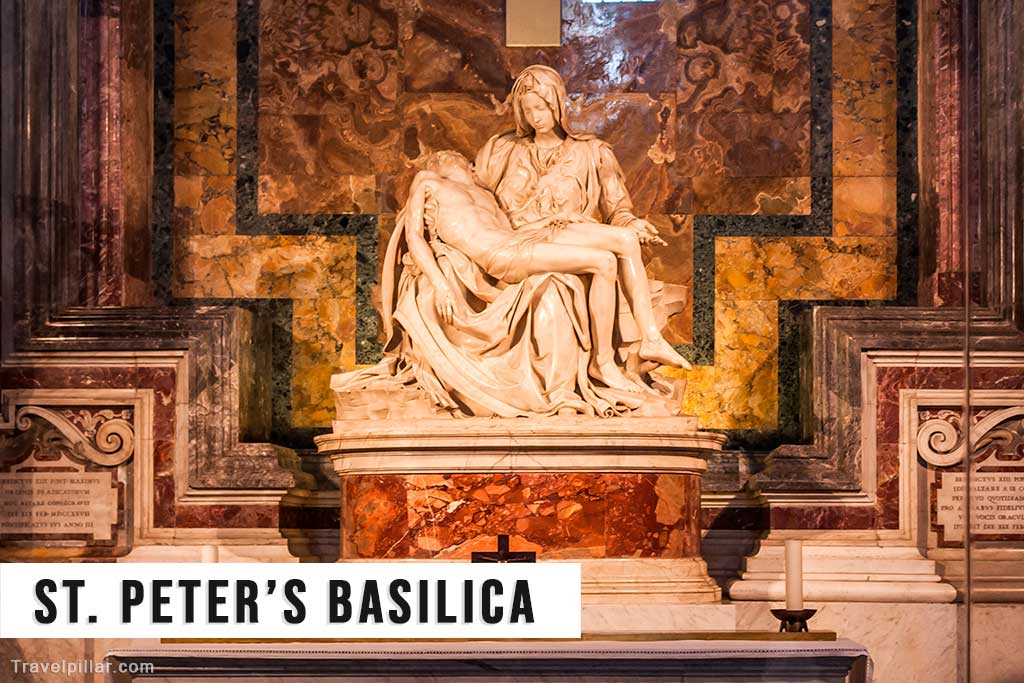
Completed when Michelangelo was only twenty-four years old, the Pietà portrays the Virgin Mary holding the body of Christ after the Crucifixion. It is widely regarded as one of the most beautiful sculptures ever carved from marble.
Rather than depicting overwhelming grief, Michelangelo created a scene of remarkable calm and dignity. Mary’s youthful appearance symbolises spiritual purity rather than her actual age, while the flowing folds of her robes contrast beautifully with Christ’s carefully modelled body.
The sculpture remains in its original location in St. Peter’s Basilica, where it is protected behind glass following an attack in 1972.
The Sistine Chapel Ceiling (1508–1512)
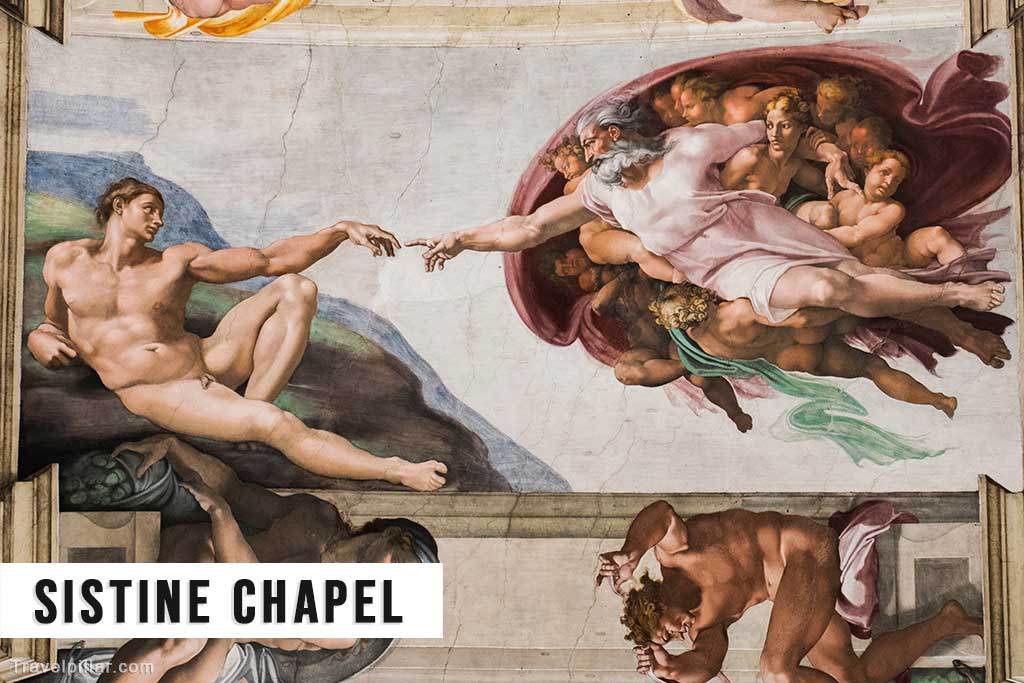
Perhaps Michelangelo’s greatest achievement, the ceiling of the Sistine Chapel transformed the history of Western art. Covering more than 500 square metres, it contains hundreds of figures illustrating scenes from the Book of Genesis, including the famous Creation of Adam.
Visitors are often surprised by the scale and complexity of the ceiling. Rather than creating one enormous painting, Michelangelo designed a carefully organised series of biblical scenes surrounded by prophets, sibyls and heroic figures. The dynamic poses and powerful anatomy of the characters continue to inspire artists more than five centuries later.
The ceiling can be seen in the Sistine Chapel, one of the world’s most visited artistic treasures.
The Last Judgement (1536–1541)
More than twenty years after completing the Sistine Chapel ceiling, Michelangelo returned to paint The Last Judgementon the chapel’s altar wall. The enormous fresco depicts the Second Coming of Christ and the final judgement of humanity.
Unlike the balanced compositions of the High Renaissance, the painting is filled with dramatic movement and emotional intensity. Muscular figures rise towards heaven while others are pulled into hell, creating one of the most powerful religious images in Christian art.
The fresco remains in the Sistine Chapel alongside the ceiling.
Moses (c. 1513–1515)
Created for the tomb of Pope Julius II, Michelangelo’s Moses is celebrated for its commanding presence and extraordinary realism. The seated prophet appears ready to rise at any moment, with powerful muscles and flowing beard carved in remarkable detail.
Visitors often notice the small horns on Moses’ head, which resulted from a medieval Latin translation describing rays of light emerging from his face. Despite the misunderstanding, the sculpture has become one of Michelangelo’s most admired works.
Today, it can be seen in San Pietro in Vincoli.
Places Connected with Michelangelo
Caprese Michelangelo
The small Tuscan town of Caprese Michelangelo is Michelangelo’s birthplace. Today, the Museo Casa Natale di Michelangelo Buonarroti explores his early life through exhibitions, reproductions and historical displays. Although he spent little of his childhood here, the town proudly celebrates its most famous son.
Florence
No city is more closely associated with Michelangelo than Florence. Visitors can admire David at the Galleria dell’Accademia, see several of his sculptures in the Bargello National Museum and explore the Medici Chapels, where Michelangelo designed both the architecture and many of the magnificent tomb sculptures. His own tomb can be visited in the Basilica of Santa Croce, one of the city’s most important churches. Walking through Florence offers an unparalleled introduction to the Renaissance world that shaped his career.
Rome
Michelangelo spent much of his life working in Rome, creating many of his greatest masterpieces. The Vatican Museums, Sistine Chapel and St Peter’s Basilica contain works that define Renaissance art, while churches throughout the city preserve sculptures designed for popes and noble families. Few cities in the world contain such an extraordinary concentration of Michelangelo’s achievements.
Where to See Michelangelo’s Art
Many of Michelangelo’s greatest works remain exactly where they were originally intended to be seen. The Vatican Museums and Sistine Chapel are essential for experiencing his monumental frescoes, while St Peter’s Basilica houses the magnificent Pietà.
In Florence, the Galleria dell’Accademia provides the unforgettable experience of standing before David, and the Bargello National Museum contains several important sculptures from different stages of his career. Together, Florence and Rome offer the finest introduction to Michelangelo’s extraordinary artistic legacy.
Legacy
Michelangelo transformed the history of sculpture, painting and architecture through his remarkable understanding of the human form and his relentless pursuit of artistic perfection. His influence can be seen in the work of countless later artists, from the Mannerists of the sixteenth century to modern sculptors and painters.
His achievements also helped define the ideals of the High Renaissance, demonstrating how technical skill, scientific observation and creative imagination could be combined to produce works of timeless beauty. More than five centuries after his death, masterpieces such as David, the Pietà and the Sistine Chapel continue to rank among the greatest artistic achievements ever created.
For travellers, Michelangelo’s legacy is best experienced in the cities where he lived and worked. Standing beneath the Sistine Chapel ceiling, admiring the marble perfection of David in Florence or contemplating the serene beauty of the Pietà in St Peter’s Basilica offers an unforgettable insight into one of history’s greatest creative minds. Few artists have left such a profound mark on the cultural landscape of Europe, and following Michelangelo’s journey through Italy remains one of the world’s greatest artistic experiences.
More Works by Michelangelo
Michelangelo produced relatively few finished sculptures and paintings compared with many artists, but several other important works can be admired in museums across Europe. If you enjoyed his best-known masterpieces, these works are also well worth seeking out.
Dying Slave (1513–1516)
https://collections.louvre.fr/en/ark:/53355/cl010091872
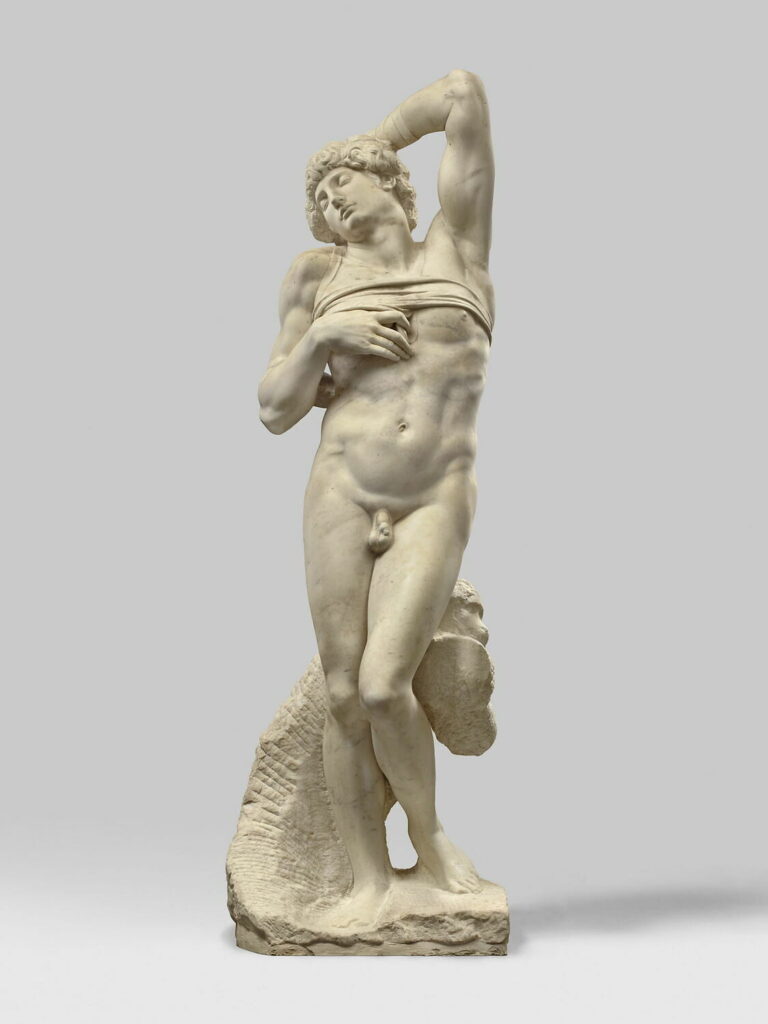
One of Michelangelo’s most celebrated sculptures, the Dying Slave was originally created for the ambitious tomb of Pope Julius II. Today it is displayed in the Louvre Museum, where visitors can admire its remarkable realism and emotional power.
The Dream (Il Sogno)
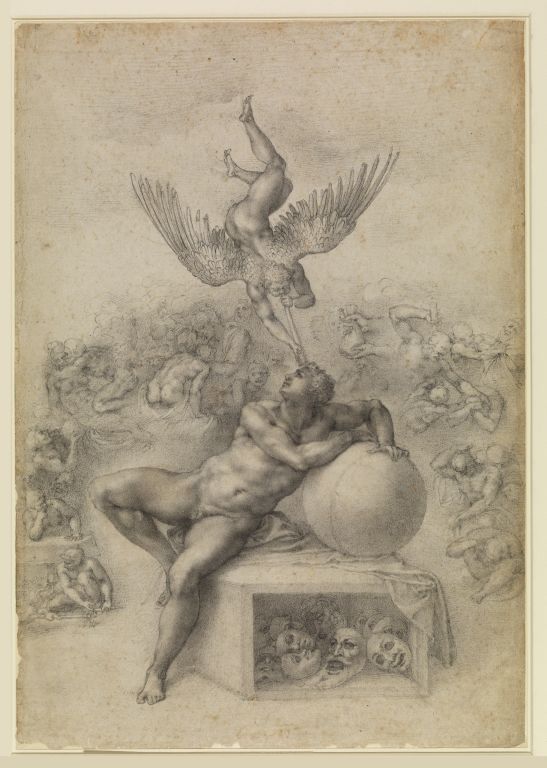
Located in the The Courtauld Gallery, this remarkable drawing explores the struggle between virtue and temptation through rich symbolism and Michelangelo’s exceptional skill as a draughtsman. It offers a fascinating insight into his imagination beyond sculpture and fresco painting.