
Gothic Revival architecture was a 19th-century movement that revived the medieval Gothic style for a new generation. Inspired by the soaring cathedrals, castles and churches of the Middle Ages, architects embraced pointed arches, ornate tracery, tall spires and richly decorated stonework, combining medieval craftsmanship with modern engineering techniques. The movement transformed the skylines of Britain, Europe and North America, producing many of the world’s most recognisable public buildings.
The style emerged during the late 18th century as part of the Romantic movement, when artists, writers and architects developed a renewed appreciation for medieval history and craftsmanship. While the Renaissance and Neoclassical periods had looked back to Ancient Greece and Rome for inspiration, Gothic Revival celebrated Europe’s medieval past. Architects believed Gothic buildings possessed a spiritual quality and artistic richness that could not be matched by the clean symmetry of Classical design.
Britain became the centre of the movement during the Victorian era, when Gothic Revival was widely adopted for churches, universities, town halls, railway stations and government buildings. The style also spread throughout Europe, North America, Australia and parts of the British Empire, where it became closely associated with education, religion and civic pride.
Although Modernism largely replaced Gothic Revival during the 20th century, many of its finest buildings remain among the most admired landmarks in the world. From the Houses of Parliament in London to university campuses in Britain and North America, Gothic Revival continues to evoke the grandeur and romance of the medieval age.
For travellers, Gothic Revival architecture provides an opportunity to experience medieval-inspired buildings that often rival their original Gothic predecessors. Understanding the movement helps explain why many iconic 19th-century landmarks appear centuries older than they actually are.
History of Gothic Revival Architecture
The roots of Gothic Revival can be traced to the late 18th century, when Romanticism encouraged a fascination with medieval history, literature and architecture. Writers, artists and scholars began to view the Gothic period not as a dark age but as a time of great artistic achievement and spiritual significance.
One of the earliest and most influential examples was Strawberry Hill House in London, remodelled by Horace Walpole from the 1740s. Although decorative rather than historically accurate, it helped spark widespread interest in medieval-inspired architecture.
During the 19th century the movement gathered momentum, particularly in Britain. Architects such as Augustus Welby Northmore Pugin argued that Gothic architecture represented the highest expression of Christian values and honest craftsmanship. His ideas greatly influenced the rebuilding of the Palace of Westminster following the devastating fire of 1834. Working alongside Sir Charles Barry, Pugin designed many of the building’s remarkable Gothic details, creating one of the greatest masterpieces of the movement.
The movement soon spread throughout Europe and North America, where Gothic Revival became especially popular for churches, universities and civic buildings. Advances in iron construction and new engineering techniques allowed architects to recreate the dramatic forms of medieval architecture while constructing larger and more complex buildings than ever before.
By the early 20th century, changing architectural tastes led to the rise of Modernism, bringing Gothic Revival to an end as a dominant style. Nevertheless, its influence remains visible in countless churches, schools, universities and public buildings throughout the world.
Key Characteristics of Gothic Revival Architecture
Although inspired by medieval Gothic architecture, Gothic Revival buildings often combined historic design with modern construction techniques. Several features make the style easy to recognise.
Pointed Arches
Pointed arches appear above doors, windows and arcades, immediately distinguishing Gothic Revival buildings from Classical styles with their rounded arches and pediments.
Tall Towers and Spires
Many Gothic Revival churches, universities and civic buildings feature tall towers, pinnacles and slender spires that emphasise height and create dramatic skylines.
Decorative Tracery
Stone tracery surrounding windows became increasingly elaborate during the movement. Large windows often feature intricate geometric patterns inspired by medieval cathedrals.
Stained-Glass Windows
Colourful stained-glass windows were widely used in churches, chapels and even some civic buildings, combining decoration with storytelling in the medieval tradition.
Rich Stone Carving
Architects incorporated carved gargoyles, pinnacles, finials, statues and decorative foliage into façades, reflecting the craftsmanship of medieval stonemasons.
Steep Roofs and Ornamental Details
Steeply pitched roofs, decorative chimneys, battlements and elaborate stone detailing helped create the picturesque appearance that became synonymous with Gothic Revival architecture.
Famous Examples of Gothic Revival Architecture
Palace of Westminster (Houses of Parliament), London, England

Following a devastating fire in 1834, the Palace of Westminster was rebuilt in the Gothic Revival style by Sir Charles Barry with the interiors and decorative details designed by Augustus Pugin. Its richly ornamented façades, pointed arches, towers and intricate stonework make it one of the finest examples of Gothic Revival architecture anywhere in the world. The iconic Elizabeth Tower, home to Big Ben, has become one of Britain’s best-known landmarks.
St Patrick’s Cathedral, New York City, USA
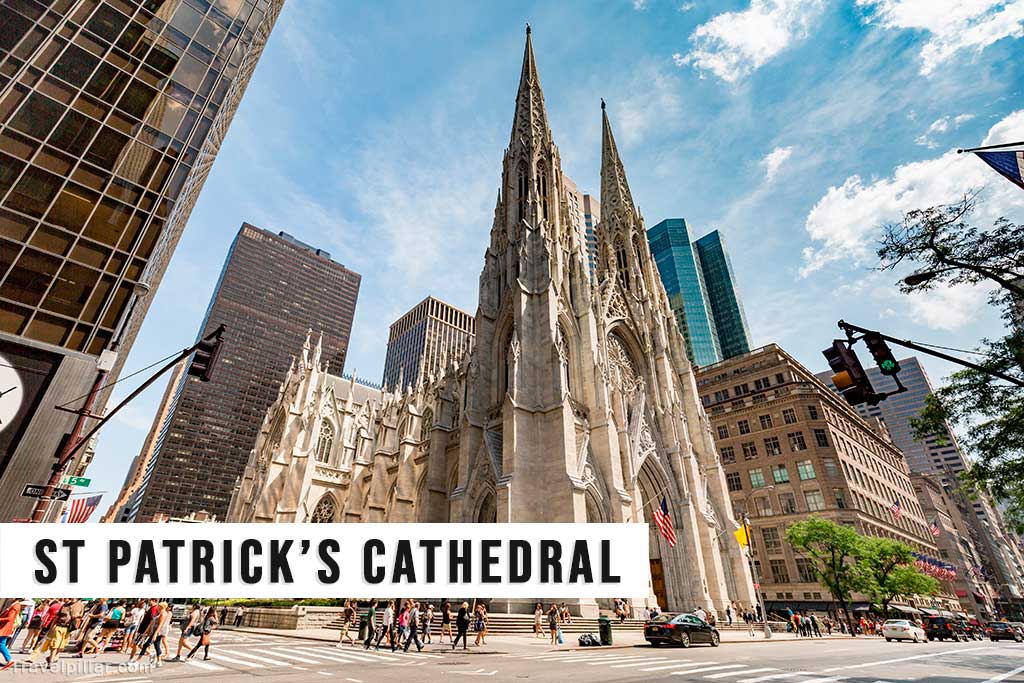
Completed in 1878, St Patrick’s Cathedral stands in striking contrast to the surrounding skyscrapers of Manhattan. Its twin spires, magnificent rose window, ribbed vaults and stained-glass windows demonstrate how Gothic Revival architecture became the preferred style for many churches in North America during the 19th century.
University of Glasgow, Scotland
Designed by Sir George Gilbert Scott, the main university building is one of Britain’s greatest Gothic Revival landmarks. Its dramatic tower, cloisters, pointed arches and richly detailed stonework create an appearance reminiscent of a medieval university, despite being completed in the late 19th century.
Parliament Hill, Ottawa, Canada
Home to Canada’s Parliament, Parliament Hill is one of the most impressive examples of Gothic Revival architecture outside Europe. The complex combines soaring towers, steep roofs, pointed arches and finely carved stone façades, while the Peace Tower has become one of Canada’s most recognisable national symbols.
Cologne Cathedral, Germany
Although Cologne Cathedral was originally begun during the Middle Ages, construction stopped for several centuries before resuming in the 19th century during the Gothic Revival. Completed in 1880 using the original medieval plans, it demonstrates the extraordinary craftsmanship and historical accuracy achieved by Gothic Revival architects.
Vienna City Hall (Rathaus), Austria
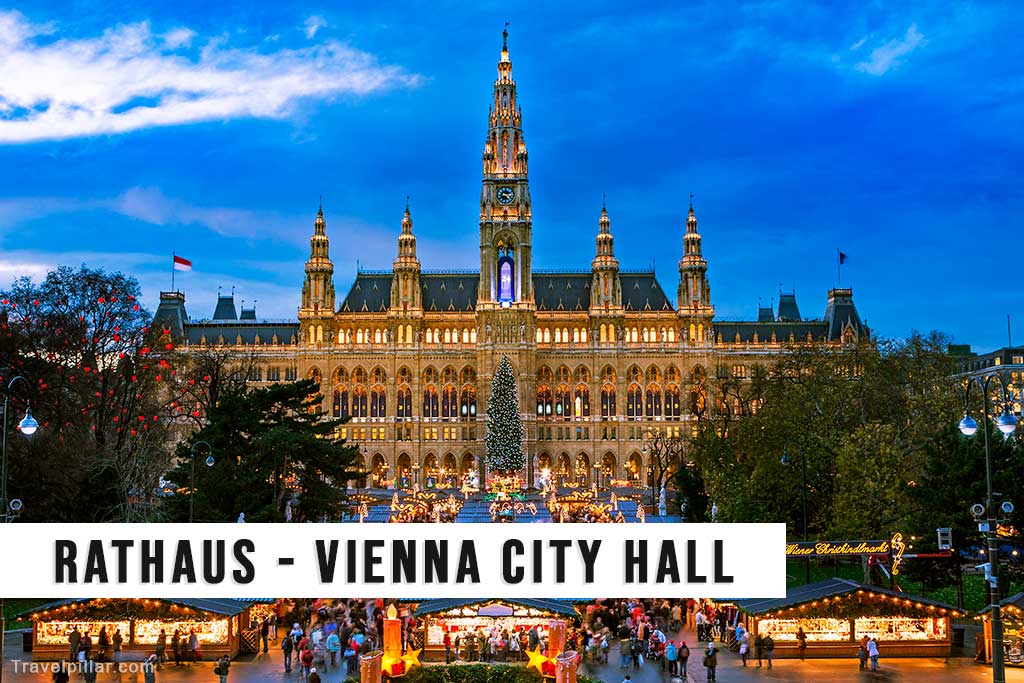
Completed in 1883, Vienna’s City Hall is one of Europe’s finest secular Gothic Revival buildings. Inspired by the great town halls of medieval Flanders, its elegant arcades, central tower and richly decorated façade reflect the civic pride of the rapidly expanding Austrian capital.
St Pancras Railway Station, London, England
The magnificent Midland Grand Hotel at St Pancras Station is one of the masterpieces of Victorian Gothic Revival architecture. Designed by Sir George Gilbert Scott, its elaborate red-brick façade, towers and decorative detailing transformed a railway hotel into one of London’s most celebrated landmarks.
Cathedral of St John the Divine, New York City, USA
One of the largest cathedrals in the world, St John the Divine began construction in 1892 and continues to evolve today. Its soaring Gothic Revival design, enormous rose windows and richly carved stonework demonstrate the enduring appeal of medieval architecture well into the modern era.
All Saints Church, Margaret Street, London, England
Designed by William Butterfield, All Saints Church is regarded as one of the finest Victorian Gothic Revival churches. Its colourful brickwork, richly decorated interior and exceptional craftsmanship helped redefine church architecture during the 19th century.
Strawberry Hill House, Twickenham, England
Although much smaller than many later examples, Strawberry Hill House is widely regarded as the birthplace of the Gothic Revival movement. Remodelled by Horace Walpole during the 18th century, its battlements, towers and Gothic detailing inspired renewed interest in medieval architecture throughout Britain.
Where to See Gothic Revival Architecture
Gothic Revival architecture spread throughout much of the British Empire, Europe and North America during the 19th century. Many of the movement’s finest buildings continue to serve as churches, universities and government buildings.
Some of the best destinations include:
- London, England – The Palace of Westminster, St Pancras Station, All Saints Church and Strawberry Hill House showcase the evolution of Gothic Revival architecture.
- Glasgow, Scotland – The University of Glasgow is one of Britain’s finest examples of Victorian Gothic design.
- Ottawa, Canada – Parliament Hill is among the world’s greatest Gothic Revival government complexes.
- New York City, USA – St Patrick’s Cathedral and the Cathedral of St John the Divine demonstrate the movement’s popularity in North America.
- Vienna, Austria – Vienna City Hall is one of Europe’s outstanding civic examples of Gothic Revival architecture.
- Budapest, Hungary – The Hungarian Parliament Building combines Gothic Revival architecture with Renaissance influences to create one of Europe’s most spectacular parliamentary buildings.
- Cologne, Germany – Cologne Cathedral illustrates both medieval Gothic architecture and the craftsmanship of the 19th-century Gothic Revival.
Why Gothic Revival Architecture Matters
Gothic Revival architecture demonstrates how great architectural styles can be reinterpreted for a new age. Rather than simply copying medieval buildings, 19th-century architects combined the beauty and craftsmanship of Gothic design with modern engineering techniques to create some of the world’s most impressive churches, universities, railway stations and government buildings. The movement reflected a renewed appreciation for history, craftsmanship and national identity during the Victorian era and beyond.
For travellers, Gothic Revival architecture offers the chance to admire buildings that capture the grandeur of the Middle Ages while belonging to a much more recent period of history. From the iconic Palace of Westminster in London and Parliament Hill in Ottawa to the great university buildings of Glasgow and the magnificent churches of New York, these landmarks demonstrate the remarkable skill of architects who revived one of Europe’s greatest architectural traditions.
Whether you’re exploring the historic cities of Britain, touring the capitals of Europe or visiting North America’s great civic buildings, Gothic Revival architecture provides a fascinating bridge between the medieval world and the modern age. Its dramatic silhouettes, intricate stonework and soaring towers continue to make it one of the most admired architectural movements of the 19th century.
See Also
If you enjoyed learning about Gothic Revival architecture, you may also be interested in:
- Gothic Architecture – Discover the medieval architectural style that inspired the Gothic Revival movement.
- Romanesque Architecture – Explore the earlier medieval style that preceded Gothic architecture.
- Neoclassical Architecture – The principal architectural rival to Gothic Revival during the 18th and 19th centuries.
- Victorian Architecture – Learn how Gothic Revival became one of the defining architectural styles of the Victorian era.
- The Industrial Revolution – Discover how advances in engineering and construction made many Gothic Revival buildings possible.