
The Louvre Museum in Paris contains one of the world’s greatest art collections, spanning ancient civilizations, the Renaissance, Neoclassicism, Romanticism and beyond. Originally built as a royal palace, the museum now houses thousands of artworks including some of the most famous paintings and sculptures ever created.
From Leonardo da Vinci’s Mona Lisa to the Winged Victory of Samothrace, the Louvre presents works that have shaped the history of Western art for centuries. The museum’s collection includes masterpieces from Ancient Greece, Renaissance Italy, Revolutionary France and the Venetian High Renaissance, displayed across several vast wings and galleries.
This guide highlights some of the most important artworks in the Louvre Museum and explains why they remain significant today.
1. Mona Lisa (1503–1506) – Leonardo da Vinci
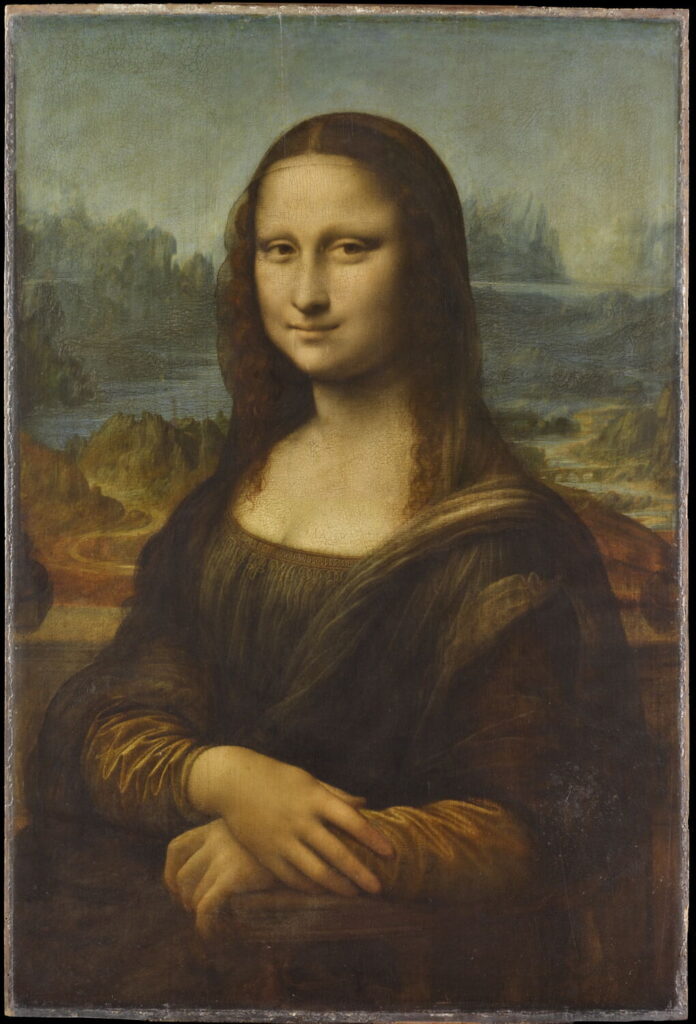
The Mona Lisa is Leonardo da Vinci’s most famous portrait and the Louvre’s best-known artwork. Painted during the early 16th century, the portrait is celebrated for its subtle modelling, atmospheric perspective and enigmatic expression. The sitter is widely believed to be Lisa Gherardini, a Florentine woman.
Despite its relatively small size, the painting attracts enormous crowds and remains one of the most discussed artworks in the world. Leonardo’s use of sfumato, where tones blend gradually without harsh outlines, gives the face a remarkably lifelike appearance.
2. Venus de Milo (circa 130–100 BC) – Alexandros of Antioch

The Venus de Milo is one of the Louvre’s most famous ancient sculptures. Dating from the Hellenistic period of Ancient Greece, the marble statue represents Aphrodite, the goddess of love and beauty.
The sculpture is particularly known for its missing arms and idealised classical form. Discovered on the island of Milos in 1820, it became one of the defining symbols of ancient Greek art and remains a major highlight of the museum’s Greek antiquities collection.
3. Winged Victory of Samothrace (circa 200–190 BC)

The Winged Victory of Samothrace depicts Nike, the Greek goddess of victory. Originally positioned on the prow of a stone ship, the sculpture was likely created to commemorate a naval triumph.
The flowing drapery and forward movement create a powerful sense of energy and motion. Although the head and arms are missing, the sculpture remains one of the greatest surviving achievements of Hellenistic Greek art.
4. Liberty Leading the People (1830) – Eugène Delacroix

Liberty Leading the People commemorates the July Revolution of 1830 in France. The painting shows Liberty personified as a woman carrying the French tricolour flag while leading revolutionaries across a barricade.
Delacroix combined Romantic drama with political symbolism, creating one of the defining images of revolution in European art. The composition includes figures from different social classes and reflects the political tensions of 19th-century France.
5. The Coronation of Napoleon (1806–1807) – Jacques-Louis David

This monumental painting by Jacques-Louis David depicts Napoleon crowning Empress Joséphine during the coronation ceremony at Notre-Dame Cathedral in Paris.
Painted in the neoclassical style, the work combines historical documentation with political propaganda. David carefully portrayed important figures from Napoleon’s court while emphasizing imperial authority and grandeur.
6. The Raft of the Medusa (1818–1819) – Théodore Géricault
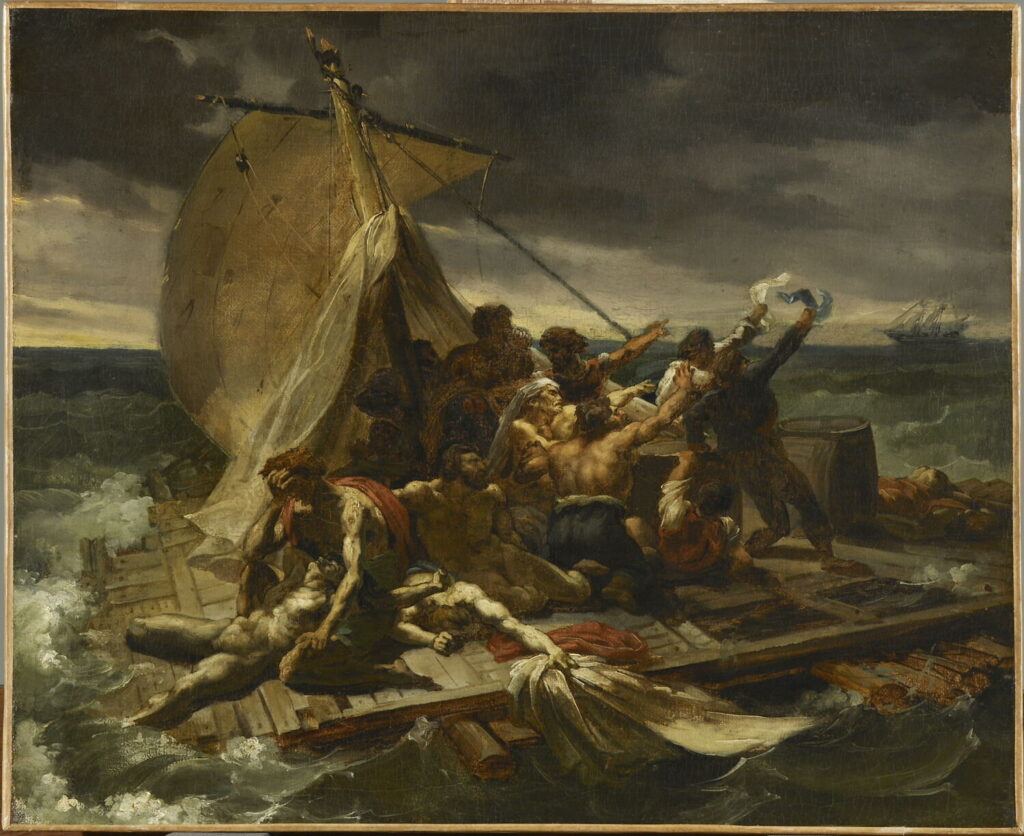
The Raft of the Medusa portrays the aftermath of a disastrous French naval shipwreck in 1816. Survivors cling to a makeshift raft while desperately searching for rescue.
Based on eyewitness accounts, the painting became famous for its emotional intensity and criticism of political incompetence. Géricault’s dramatic composition marked an important moment in the development of French Romanticism.
7. Psyche Revived by Cupid’s Kiss (1787–1793) – Antonio Canova
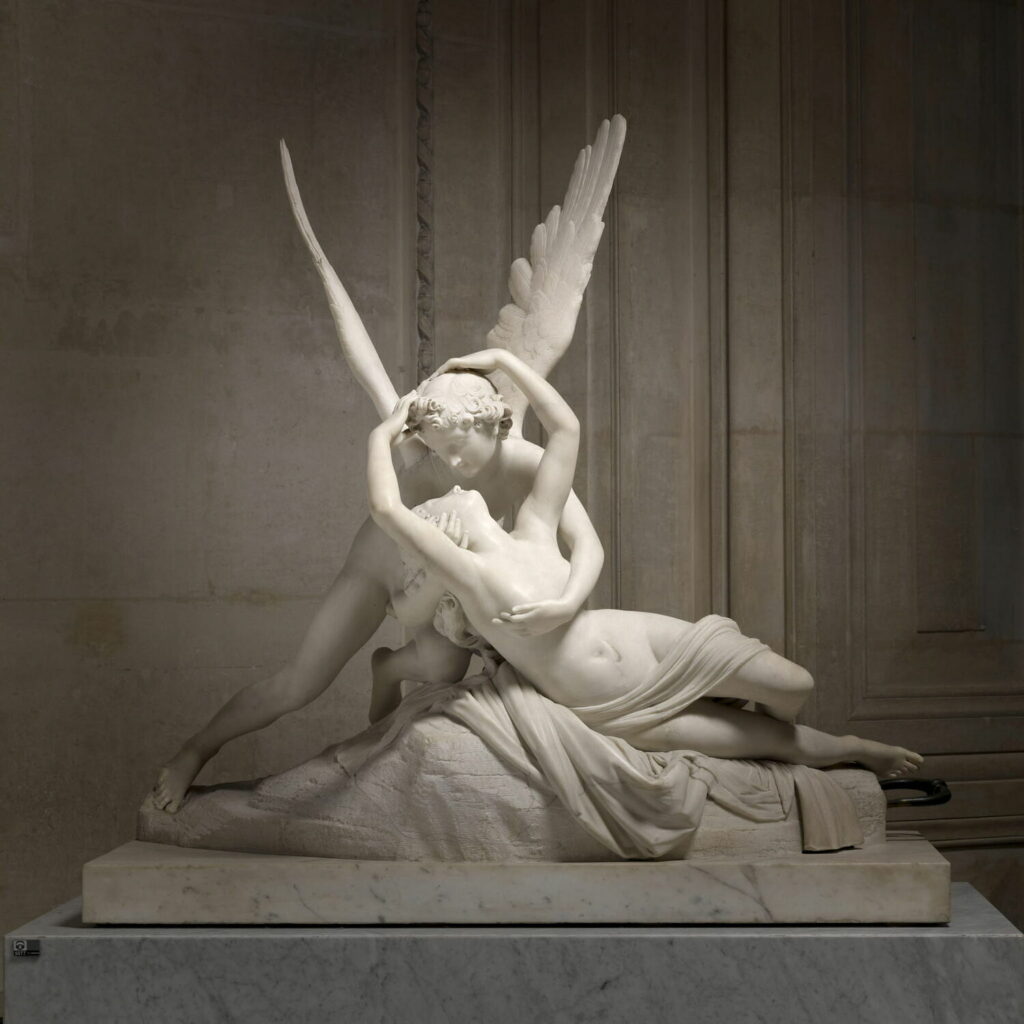
Antonio Canova’s marble sculpture depicts the mythological moment when Cupid awakens Psyche with a kiss.
The work is regarded as one of the masterpieces of Neoclassical sculpture. Canova’s careful treatment of anatomy, movement and emotion gives the sculpture both elegance and intimacy while remaining balanced and harmonious.
8. Dying Slave (1513–1516) – Michelangelo
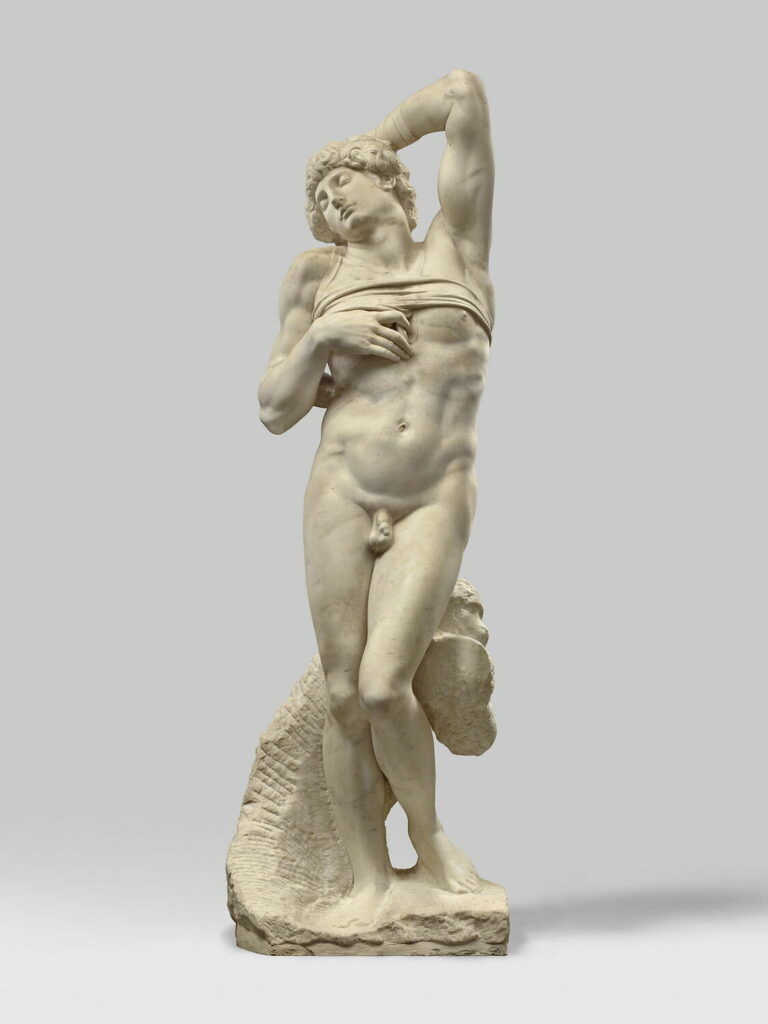
Originally intended for the tomb of Pope Julius II, Dying Slave is one of Michelangelo’s most admired sculptures.
The marble figure appears suspended between life and death, combining physical beauty with emotional tension. The sculpture reflects Michelangelo’s deep understanding of anatomy and his ability to create expressive human forms from stone.
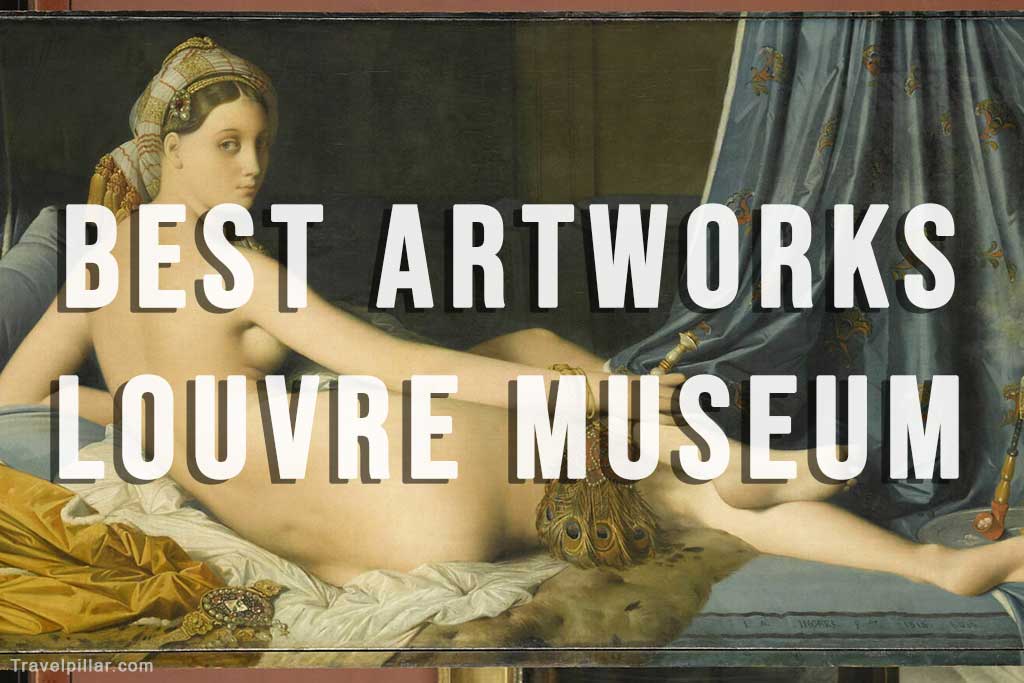
9. Grande Odalisque (1814) – Jean Auguste Dominique Ingres

Grande Odalisque portrays a reclining nude woman in an imagined harem setting. Commissioned by Napoleon’s sister, the painting blends neoclassical technique with Orientalist subject matter.
Ingres deliberately distorted anatomy by elongating the figure’s back and limbs, prioritising elegance and sensuality over realism. The painting later influenced developments in modern art.
10. The Wedding at Cana (1563) – Paolo Veronese

The Wedding at Cana is one of the largest paintings in the Louvre and depicts Christ turning water into wine during a wedding feast.
Veronese transformed the biblical event into a vast Venetian banquet scene populated by more than one hundred figures. The painting is renowned for its colour, architectural setting and theatrical composition.
11. The Entombment (1520–1522) – Titian

Titian’s The Entombment depicts Christ being carried to the tomb following the Crucifixion.
The composition combines rich Venetian colour with strong emotional intensity. Dramatic lighting and diagonal movement create a sense of physical and spiritual weight, anticipating later Baroque painting.
The Louvre Museum Paris
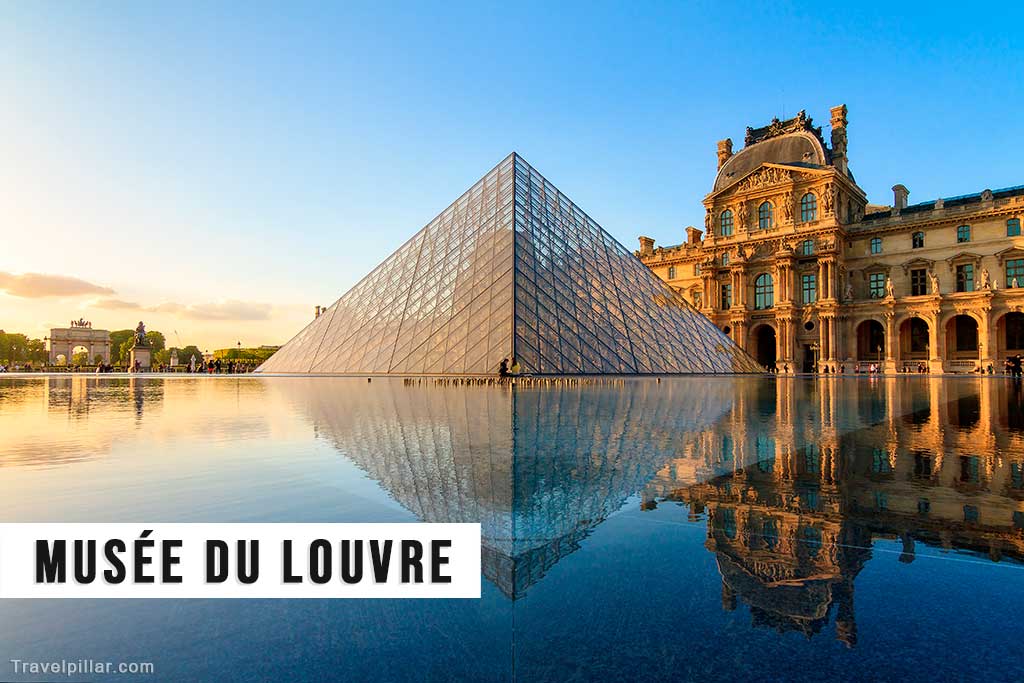
The Louvre Museum contains artworks spanning thousands of years of human history, from ancient Mesopotamian law codes to Renaissance masterpieces and revolutionary French painting. While the Mona Lisa often receives the greatest attention, many of the museum’s most remarkable works are found throughout its wider galleries.
Exploring the Louvre through its masterpieces provides insight not only into art history but also into mythology, religion, politics and the changing cultures of Europe and the ancient world.
Official website: https://www.louvre.fr/en
Google map 4.7/5