

England’s national parks protect some of the country’s most beautiful landscapes, from mountain ranges and windswept moorland to ancient forests, wetlands and dramatic coastlines. Unlike many national parks around the world, these are living landscapes where villages, farms and historic sites exist alongside nature, creating places that are as culturally rich as they are scenic.
Whether you are looking for challenging mountain hikes, peaceful countryside walks, wildlife watching or picturesque villages, England’s national parks offer an extraordinary variety of experiences. This ranking counts down the ten best national parks in England, based on scenery, outdoor activities, accessibility and overall visitor experience.
10. The Broads National Park

The Broads is England’s unique water-based national park, a landscape of rivers, lakes, marshes and windmills stretching across Norfolk and Suffolk. Created from flooded medieval peat workings, it has developed into one of the country’s most important wetland ecosystems.
The park offers a slower pace of exploration than England’s hillier national parks, with boating providing the best way to experience the landscape. Birdlife is abundant, and traditional waterside villages add to the area’s charm.
Key activities: Boating, wildlife watching, kayaking and riverside walks.
Why visit: England’s finest wetland landscape and one of the best places in the country for boating.
View full The Broads National Park guide →
9. New Forest National Park

The New Forest combines ancient woodland, open heathland and grazing pasture to create one of southern England’s most distinctive landscapes. Free-roaming ponies, donkeys, cattle and deer remain one of the park’s defining features.
Originally established as a royal hunting forest by William the Conqueror, the New Forest retains a remarkable sense of history while remaining highly accessible from London and the south coast. Traditional villages, woodland trails and extensive cycle routes make it particularly popular with families.
Key activities: Walking, cycling, horse riding and wildlife spotting.
Why visit: Ancient woodland, free-roaming animals and easy access from southern England.
View full New Forest National Park guide →
8. South Downs National Park

Stretching from Winchester to Eastbourne, the South Downs is a landscape of rolling chalk hills, flower-rich grassland and sweeping views across southern England. Its gentle terrain makes it one of the country’s most accessible national parks.
The famous South Downs Way attracts walkers and cyclists from around the world, while picturesque villages, vineyards and historic market towns provide plenty of opportunities to explore beyond the trails.
Key activities: Walking, cycling, photography and long-distance hiking.
Why visit: Beautiful rolling countryside within easy reach of London and the south coast.
View full South Downs National Park guide →
7. Northumberland National Park

Northumberland National Park protects some of England’s most remote landscapes. Vast moorland, rolling hills and quiet valleys create a strong sense of wilderness rarely found elsewhere in the country.
The park is also home to some of the darkest skies in Europe and contains significant sections of Hadrian’s Wall, allowing visitors to combine outdoor exploration with Roman history.
Key activities: Walking, stargazing and exploring Hadrian’s Wall.
Why visit: England’s most peaceful national park and one of the best places in Europe for dark-sky stargazing.
View full Northumberland National Park guide →
6. Exmoor National Park
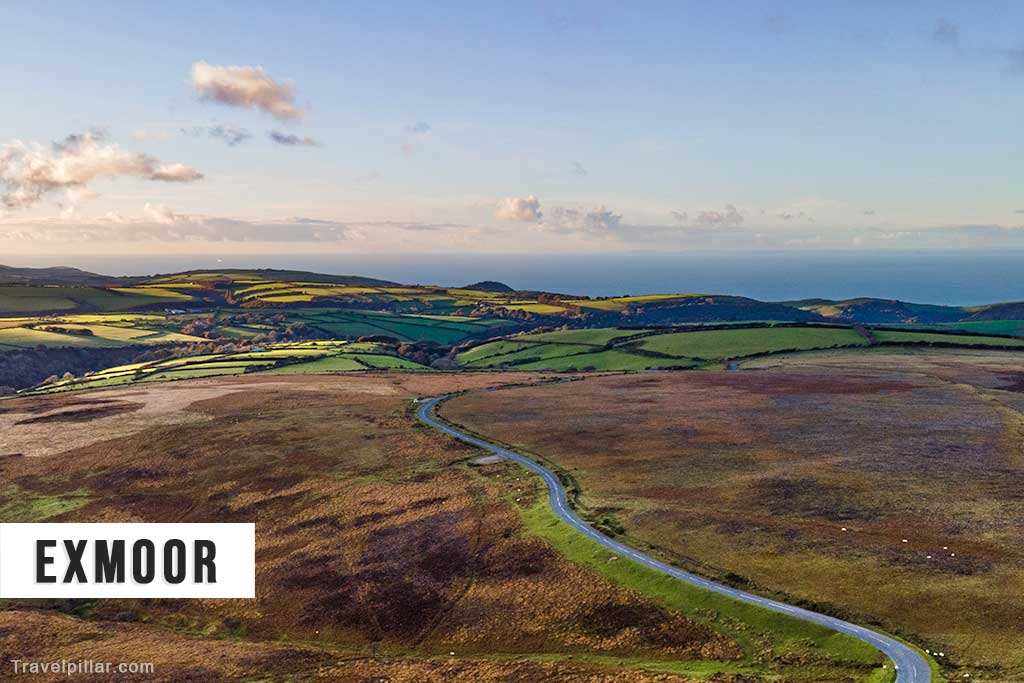
Exmoor offers a striking combination of heather-covered moorland, wooded valleys and a dramatic coastline where some of England’s highest sea cliffs plunge into the Bristol Channel.
Wild red deer roam the landscape, while coastal paths provide spectacular viewpoints across the sea. Exmoor feels noticeably quieter than many better-known national parks, making it ideal for those seeking tranquillity.
Key activities: Coastal walking, hiking, wildlife watching and stargazing.
Why visit: A rare combination of remote moorland and dramatic coastal scenery.
View full Exmoor National Park guide →
5. Dartmoor National Park
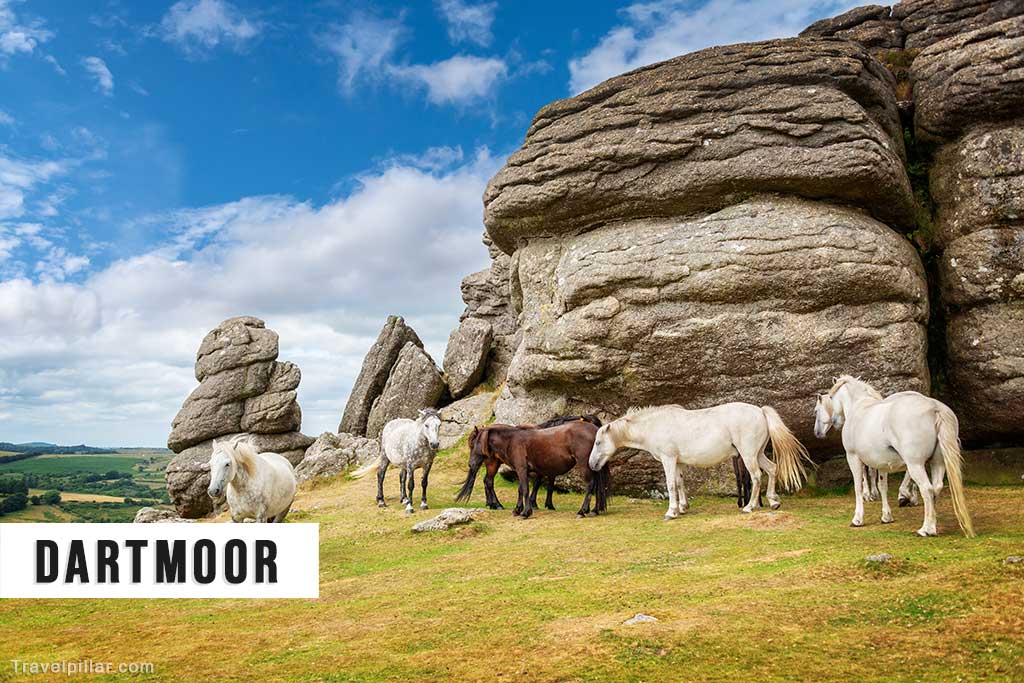
Dartmoor is one of England’s most atmospheric landscapes. Granite tors rise above vast expanses of open moorland, while prehistoric stone circles, medieval bridges and ancient farmsteads reveal thousands of years of human history.
Its wild and often unpredictable weather adds to the sense of adventure, making Dartmoor particularly popular with experienced walkers and outdoor enthusiasts.
Key activities: Hiking, exploring tors and discovering archaeological sites.
Why visit: England’s most iconic moorland landscape.
View full Dartmoor National Park guide →
4. North York Moors National Park
The North York Moors combine one of the largest expanses of heather moorland in Europe with a spectacular coastline of cliffs, beaches and fishing villages.
During late summer the moors turn vibrant shades of purple, creating one of England’s most memorable landscapes. Historic coastal towns such as Whitby add further appeal.
Key activities: Walking, coastal exploration and scenic drives.
Why visit: Stunning heather moorland combined with one of England’s finest coastlines.
View full North York Moors National Park guide →
3. Yorkshire Dales National Park

The Yorkshire Dales is a landscape shaped by centuries of farming. Limestone valleys, dry-stone walls, waterfalls and traditional villages combine to create one of England’s most recognisable rural landscapes.
Highlights include Malham Cove, Aysgarth Falls and some of the country’s most scenic walking routes. The balance between natural beauty and cultural heritage gives the Dales a unique character.
Key activities: Walking, visiting waterfalls and exploring traditional villages.
Why visit: Classic English countryside at its finest.
View full Yorkshire Dales National Park guide →
2. Peak District National Park

The Peak District became England’s first national park in 1951 and remains one of its most visited. The contrasting landscapes of the rugged Dark Peak and the gentler White Peak provide remarkable variety within a relatively compact area.
Its central location makes it easily accessible from major cities including Manchester, Sheffield and Birmingham, while attractions such as Mam Tor, Stanage Edge and Dovedale draw visitors throughout the year.
Key activities: Walking, cycling, climbing and sightseeing.
Why visit: Diverse scenery and exceptional accessibility.
View full Peak District National Park guide →
1. Lake District National Park

The Lake District stands as England’s most spectacular national park. Deep glacial lakes, rugged mountain ranges, dramatic valleys and picturesque villages combine to create scenery unmatched elsewhere in the country.
Home to England’s highest mountain, Scafell Pike, and celebrated by writers including William Wordsworth and Beatrix Potter, the park has inspired visitors for generations. Its scale, variety and abundance of outdoor activities make it the premier national park destination in England.
Key activities: Hiking, mountain walking, boating and scenic touring.
Why visit: England’s finest mountain scenery and most complete national park experience.
View full Lake District National Park guide →
Frequently Asked Questions About England’s National Parks
How many national parks are there in England?
England has 10 national parks covering some of the country’s most beautiful landscapes. Together they protect mountains, moorland, forests, wetlands, coastlines and rural countryside. The parks are managed to conserve natural beauty while supporting the communities that live and work within them.
What is the largest national park in England?
The Lake District National Park is the largest national park in England, covering approximately 2,362 square kilometres (912 square miles). It contains England’s highest mountains, deepest lakes and some of the country’s most spectacular scenery, making it one of the most visited national parks in the United Kingdom.
Which national park is best for hiking?
The Lake District is generally considered the best national park in England for hiking due to its extensive network of trails and challenging mountain routes. Popular walks include Scafell Pike, Helvellyn and Catbells. The Peak District and Yorkshire Dales are also excellent choices for walkers of all abilities.
Which national park is closest to London?
The South Downs National Park is the closest national park to London. Large parts of the park can be reached in around one hour by train or car, making it a popular destination for day trips. Its rolling chalk hills, walking trails and picturesque villages provide an easy escape from the capital.
Which national park has the highest mountain in England?
The highest mountain in England is Scafell Pike, which stands at 978 metres (3,209 feet) above sea level in the Lake District National Park. Reaching the summit is one of the country’s most popular hiking challenges and offers spectacular views across the surrounding fells.
Which national park is best for families?
The New Forest and the Broads are often considered the most family-friendly national parks. The New Forest offers easy walking and cycling routes alongside free-roaming ponies, while the Broads provides boat trips, wildlife watching and gentle waterside activities suitable for all ages.
Which national park is best for wildlife?
The Broads is one of England’s most important wildlife areas, supporting rare birds, mammals and wetland species. The New Forest is also well known for its free-roaming ponies, deer and diverse habitats, while Exmoor is one of the best places in England to see wild red deer.
Which national park is best for stargazing?
Northumberland National Park is widely regarded as the best national park in England for stargazing. Together with the nearby Kielder Forest, it forms the largest protected dark-sky area in Europe. On clear nights visitors can often see the Milky Way, planets and thousands of stars.
Which national park has the best coastal scenery?
Exmoor and the North York Moors offer some of England’s finest national park coastal scenery. Exmoor features dramatic cliffs overlooking the Bristol Channel, while the North York Moors includes rugged headlands, sandy bays and historic fishing towns such as Whitby.
Can you stay overnight in England’s national parks?
Yes. All of England’s national parks offer a wide range of accommodation, including hotels, guesthouses, cottages, campsites and holiday parks. Many visitors choose to stay for several days to fully explore the walking trails, attractions and surrounding countryside.
Conclusion
England’s national parks offer an extraordinary variety of landscapes, from the waterways of the Broads to the mountains of the Lake District. Whether you are looking for challenging hikes, family-friendly countryside, coastal scenery or peaceful wilderness, there is a national park to suit every type of traveller.
For first-time visitors, the Lake District, Peak District and Yorkshire Dales provide the broadest range of experiences. Those seeking quieter landscapes should consider Northumberland or Exmoor, while the New Forest and South Downs offer excellent accessibility from southern England.