

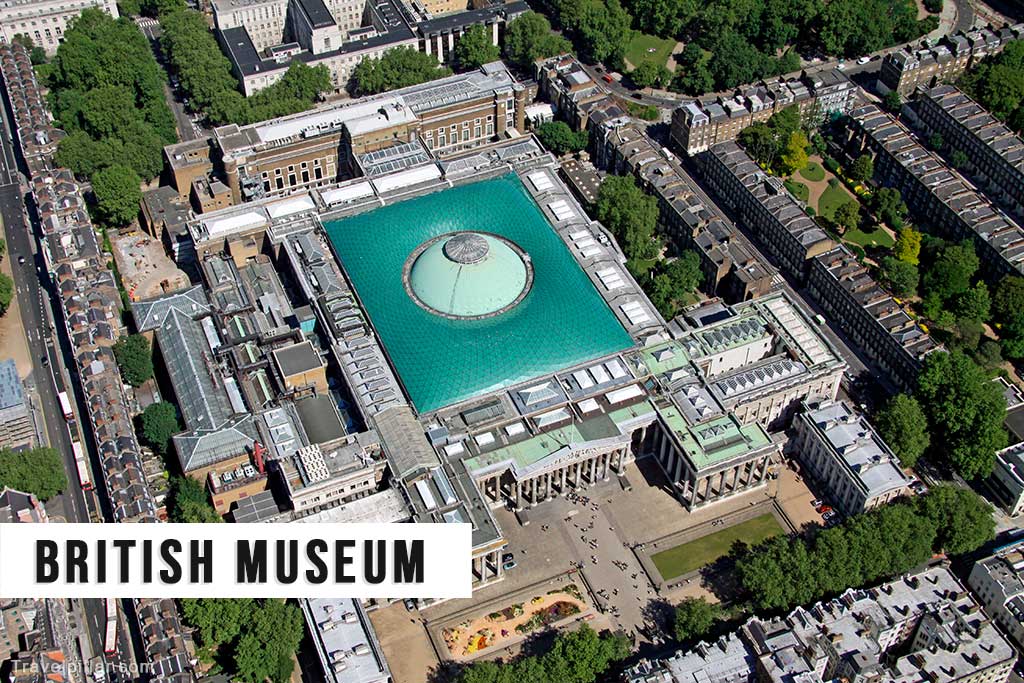
Established in 1753, the British Museum is a prominent institution located in London, dedicated to the preservation, documentation, and exhibition of human history and culture. With an expansive collection exceeding 8 million artifacts, the museum offers visitors the opportunity to delve into the development of civilizations across the globe.

A key attraction within the museum is the famed Rosetta Stone, a crucial artifact in deciphering ancient Egyptian hieroglyphs. Discovered in 1799, this slab of granodiorite bears inscriptions in three scripts—Greek, Egyptian hieroglyphs, and Egyptian Demotic—allowing scholars to unlock the mysteries of an ancient civilization.
Another noteworthy exhibit is the Elgin Marbles, a collection of classical Greek sculptures and architectural elements from the Parthenon in Athens. These pieces, acquired in the early 19th century, have been the subject of ongoing debate between the United Kingdom and Greece regarding their rightful ownership.
The British Museum’s Egyptian collection is among the most comprehensive in the world, housing over 100,000 artifacts. The Egyptian Sculpture Gallery displays a remarkable assortment of statues, tomb reliefs, and colossal sculptures, while the Egyptian Mummies exhibit offers a glimpse into the ancient embalming and burial practices of a civilization that continues to fascinate modern society.
In addition to these well-known exhibits, the museum presents an array of artifacts from other civilizations, such as the Assyrians, Babylonians, and ancient Chinese. Visitors can also explore ethnographic collections from Africa, Oceania, and the Americas, showcasing the diversity of human culture across continents and time periods.
The British Museum’s Reading Room, once frequented by esteemed scholars and authors like Karl Marx and Virginia Woolf, is an important historical site in its own right. Although no longer functioning as a library, the Reading Room remains a symbol of intellectual pursuit and discovery.
Admission to the British Museum is free, providing an accessible opportunity for individuals to immerse themselves in the history of human civilization. While the museum’s sheer size can be overwhelming, guided tours and audio guides are available to help visitors navigate and appreciate the exhibits more effectively. In conclusion, a visit to the British Museum is both an enlightening and educational experience, unveiling the diverse and complex tapestry of human history.
Official website: https://www.britishmuseum.org
Google map 4.7/5
British Museum Top 20 Highlights
Here are the top 20 highlights you shouldn’t miss:
#1 The Rosetta Stone (Room 4)
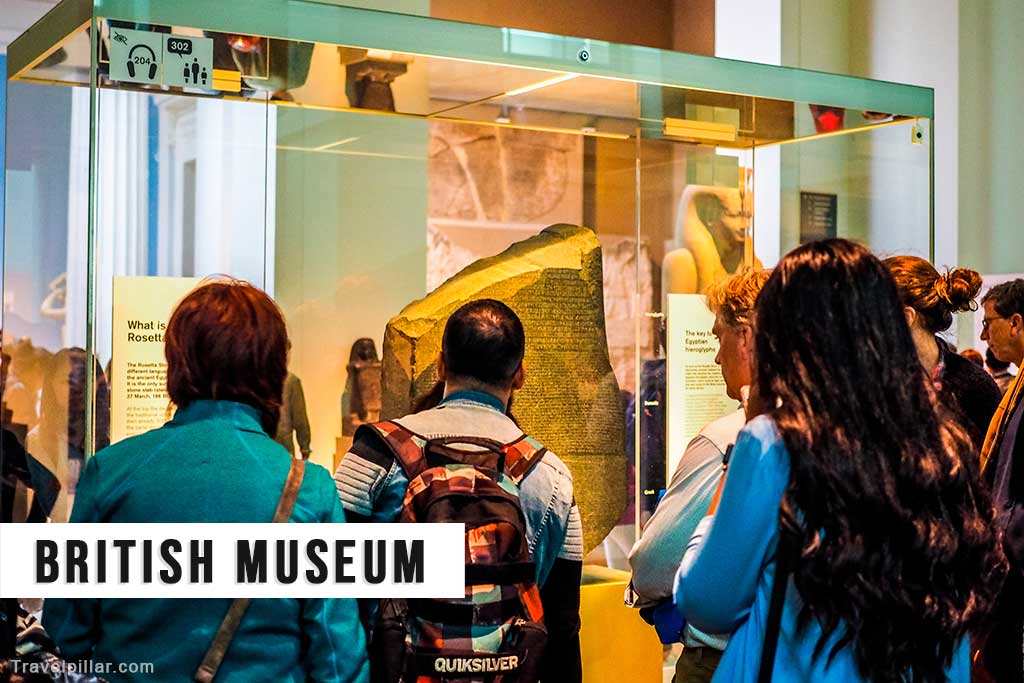
The Rosetta Stone is a granodiorite stele from 196 BCE featuring inscriptions in hieroglyphs, Demotic script, and Ancient Greek. Discovered in 1799 near Rosetta in Egypt, it provided the key to deciphering Egyptian hieroglyphs, thanks to the work of scholars like Champollion. Originally a decree honoring Pharaoh Ptolemy V, it is a cornerstone in the study of ancient languages and remains a symbol of linguistic discovery.
Web link: https://www.britishmuseum.org/
#2 The Elgin Marbles / Parthenon Sculptures (Room 18)
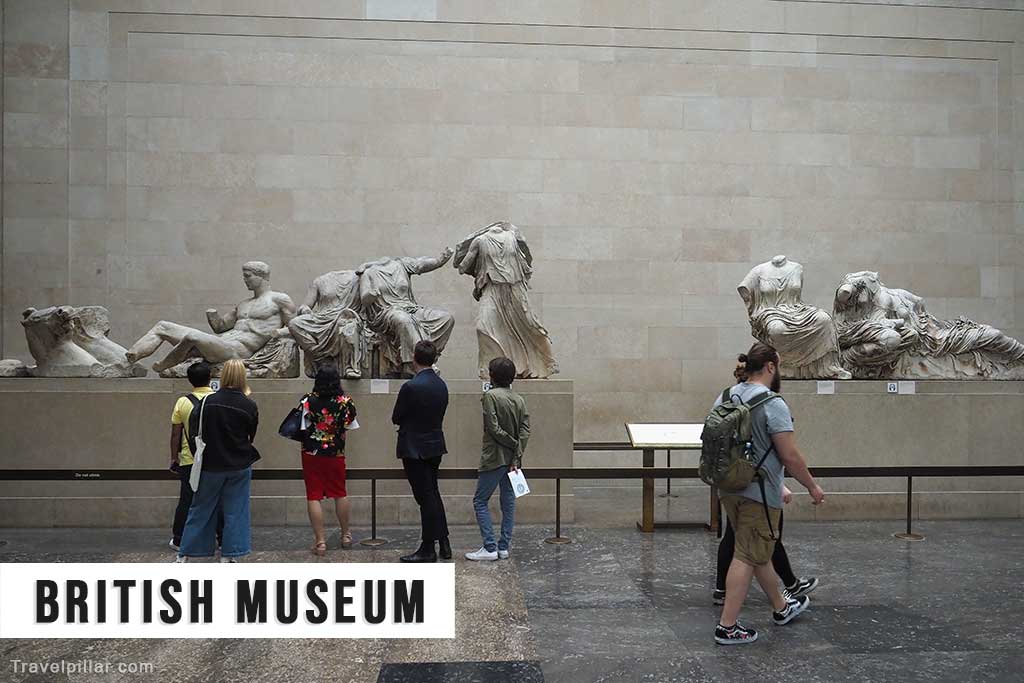
The Elgin Marbles are a collection of classical Greek sculptures from the Parthenon and other Acropolis structures in Athens, dating to the 5th century BCE. Acquired by Lord Elgin in the early 19th century, they include friezes, metopes, and pediment sculptures depicting mythological and civic themes. Their removal and display in London remain subjects of international debate over cultural heritage and artifact repatriation.
Web link: https://www.britishmuseum.org/
#3 The Egyptian Mummies (Room 62-63)
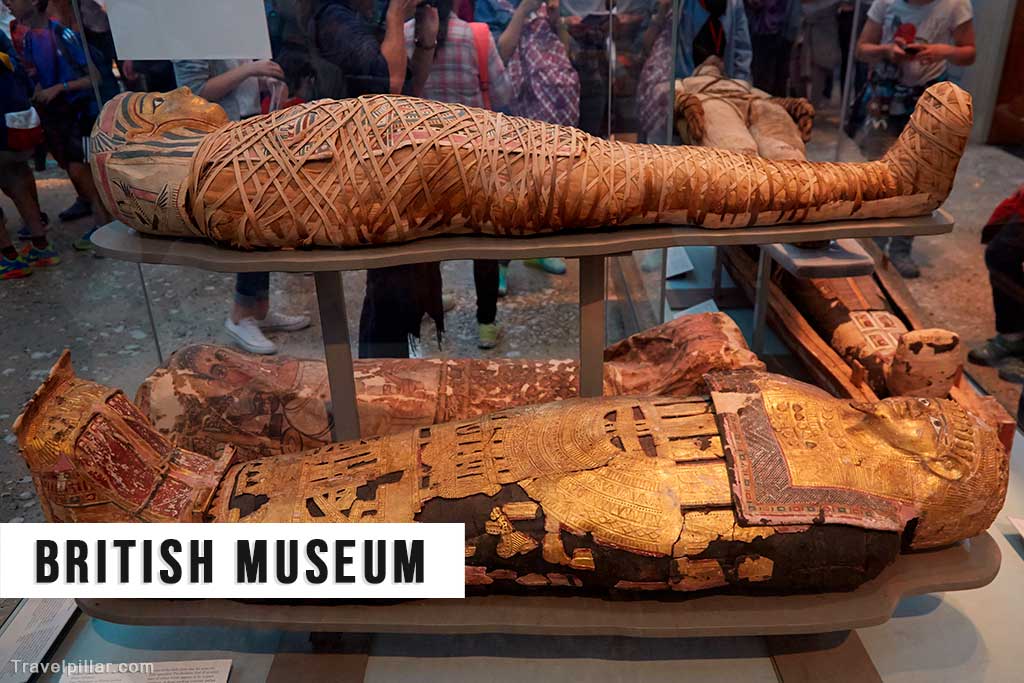
The British Museum’s collection of Egyptian mummies is one of the largest in the world. These rooms showcase mummies, sarcophagi, and funerary goods, providing insight into ancient Egyptian beliefs about the afterlife.
#4 The Lewis Chessmen (Room 40)
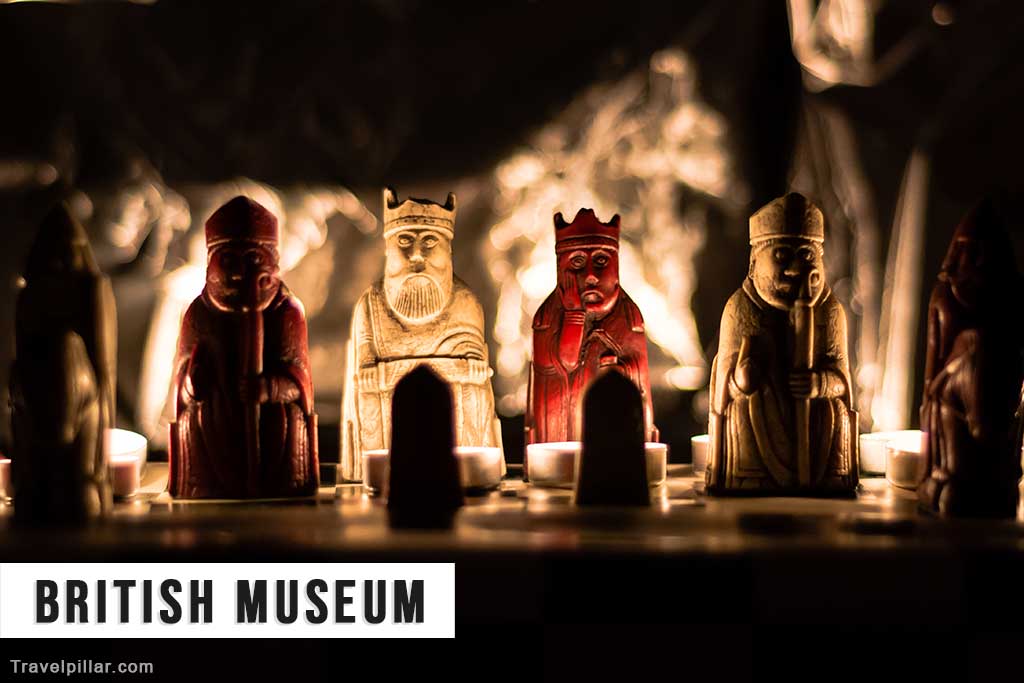
The Lewis Chessmen are a collection of 12th-century ivory chess pieces carved from walrus tusks. Discovered on the Isle of Lewis in Scotland in 1831, they consist of intricately detailed figures representing medieval Scandinavian society. Likely crafted in Norway, they reflect the cultural ties between Scandinavia and the British Isles during the period. The pieces are celebrated for their artistry and historical significance in medieval gaming.
#5 The Sutton Hoo Treasure (Room 41)
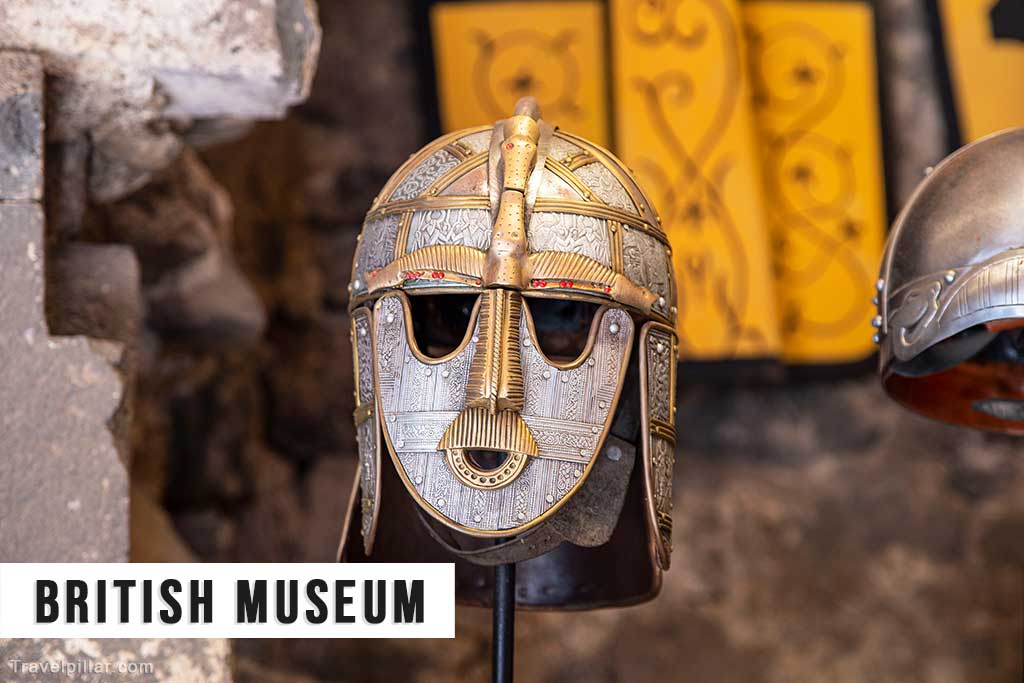
The Sutton Hoo Treasure is a 7th-century Anglo-Saxon burial hoard discovered in Suffolk, England, in 1939. It includes a ceremonial helmet, shield, gold belt buckles, and jewelry, showcasing exquisite craftsmanship. Believed to belong to a high-ranking individual, possibly King Rædwald of East Anglia, the find provides crucial insights into early medieval English culture, artistry, and connections with Europe, marking it as one of Britain’s most significant archaeological discoveries.
#6 Assyrian Lion Hunt Reliefs (Room 10b)
The Assyrian Lion Hunt Reliefs are carved panels from the palace of King Ashurbanipal at Nineveh, dating to the 7th century BCE. They depict ceremonial lion hunts, illustrating royal power and Assyrian artistic skill. The detailed scenes show the king hunting lions from a chariot, with realistic depictions of the animals in motion. These reliefs provide insights into Assyrian ideology, palace decoration, and the cultural significance of hunting as a display of authority.
#7 Hoa Hakananai’a (Room 24)
Hoa Hakananai’a is a basalt moai statue from Easter Island, carved around 1200 CE. It stands 2.4 metres tall and features intricate carvings on its back related to the birdman cult, representing spiritual and political authority. The statue originally stood at the Orongo ceremonial site and was brought to Britain in 1868. It provides insights into Rapa Nui ancestor worship, artistic traditions, and the island’s cultural and religious practices.
#8 The Royal Game of Ur (Room 56)
The Royal Game of Ur is an ancient Mesopotamian board game dating to around 2600–2400 BCE. Excavated from the Royal Cemetery at Ur, it consists of a decorative inlaid board, dice, and playing pieces. The game combines elements of chance and strategy and was played by two participants. It offers insights into Sumerian social life, craftsmanship, and early recreational activities, demonstrating the long-standing human tradition of structured board gaming.
#9 The Ife Head / Head of a King (Room 25)
The Ife Head is a brass sculpture from the ancient Yoruba city of Ife in Nigeria, dating to the 14th–15th century CE. It depicts an idealised human face with naturalistic features and incised scarification marks. Cast using the lost-wax technique, it demonstrates advanced metalworking skills. The head likely represented royalty or a deity and reflects the artistic sophistication and cultural significance of portraiture in the Ife civilisation’s religious and political contexts.
#10 Aztec Double-Headed Serpent (Room 27)
The Aztec Double-Headed Serpent is a mosaic sculpture from Mexico, dating to the 15th–16th century. Made from turquoise tiles set on a wooden base, it depicts two serpent heads joined at the centre. The serpent was an important symbol in Aztec religion, representing deities such as Quetzalcoatl. This object demonstrates the Aztecs’ advanced craftsmanship and their use of turquoise in ceremonial items associated with power, spirituality, and ritual significance.
#11 The Samurai Armour (Room 93)
The Samurai Armour is a traditional Japanese warrior’s armour, dating from the Edo period (1603–1868). It features lacquered metal plates, silk cords, and decorative crests, combining functionality with elaborate design. The armour includes a helmet, mask, and protective coverings for the torso and limbs. It reflects the social status, military role, and aesthetic values of the samurai class, demonstrating Japanese craftsmanship and the cultural significance of martial attire in feudal society.
#12 The Holy Thorn Reliquary (Room 2a)
The Holy Thorn Reliquary is a late medieval gold reliquary made in Paris around 1390–1400. It was created to house a thorn believed to be from Christ’s Crown of Thorns. The reliquary features intricate enamel work, jewels, and gilded figures depicting the Last Judgement. Commissioned for the French royal family, it reflects Gothic religious art and craftsmanship. The piece demonstrates medieval beliefs surrounding relics and their role in devotional practices.
#13 The Lindow Man (Room 50)
Lindow Man is a well-preserved bog body discovered in Cheshire, England, dating to the 1st century CE. The remains belong to a man aged around 25, who showed evidence of a violent death, suggesting ritual sacrifice. Preserved by the peat bog’s acidic conditions, his hair, skin, and internal organs remain partially intact. Lindow Man provides valuable insights into Iron Age life, death rituals, and the practice of human sacrifice in ancient Britain.
#14 The Portland Vase (Room 70)
The Portland Vase is a Roman cameo glass vessel dating from the 1st century CE. It features intricate white figures carved on dark blue glass, depicting mythological scenes whose exact interpretation remains debated. Discovered in a tomb near Rome, it demonstrates advanced Roman glassmaking and artistry. The vase influenced European ceramic design, particularly Wedgwood’s jasperware reproductions. It remains an important example of Roman luxury art and craftsmanship in glass.
#15 The Oxus Treasure (Room 52)
The Oxus Treasure is a collection of gold and silver objects from the Achaemenid Persian Empire, dating to the 5th–4th centuries BCE. Discovered near the Oxus River in modern Tajikistan, the treasure includes jewellery, votive plaques, model chariots, and figurines. It reflects the craftsmanship and artistic traditions of Persian metalwork and religious offerings. The collection provides valuable insights into Persian court culture, wealth, and the empire’s extensive artistic influence.
#16 The Jade Cong from Liangzhu (Room 33)
The Jade Cong from Liangzhu is a ritual object dating to around 2500 BCE, originating from the Liangzhu culture in the Yangtze River Delta, China. It is a cylindrical tube enclosed within a square block, carved from jade with stylised mask motifs. The cong’s exact function remains unclear but is believed to have had ceremonial significance relating to earth and heaven. It demonstrates the Liangzhu culture’s advanced jade craftsmanship and ritual practices.
#17 Statue of Ramesses II (Room 4)
The Statue of Ramesses II is a large granite sculpture from ancient Egypt, dating to the 13th century BCE. Originally located in the Ramesseum at Thebes, it depicts the pharaoh seated with inscriptions celebrating his achievements. The statue stands at over two metres tall and demonstrates the grandeur of Ramesses II’s reign. It exemplifies Egyptian royal portraiture, serving both as a political statement and as a religious image of divine kingship.
#18 Egyptian Book of the Dead (Room 62)
The Egyptian Book of the Dead is a collection of funerary texts written on papyrus, used from around 1550 BCE onwards. It contains spells, prayers, and illustrations designed to guide the deceased through the afterlife and ensure safe passage. The British Museum holds several examples, including the Papyrus of Ani, notable for its detailed vignettes. These texts provide insights into ancient Egyptian religion, burial practices, and beliefs about life after death.
#19 Statue of Tara (Room 33)
The Statue of Tara is a bronze figure from Sri Lanka, dating to the 8th century CE. It represents Tara, a Buddhist goddess of compassion and protection, depicted standing with graceful proportions and elaborate jewellery. The statue was originally gilded and demonstrates the influence of Indian Gupta art on Sri Lankan sculpture. It reflects Buddhist devotional practices and the artistic sophistication of metalworking traditions in South Asia during this period.
#20 Gilgamesh Flood Tablet (Room 55)
The Gilgamesh Flood Tablet is a clay tablet from ancient Mesopotamia, dating to the 7th century BCE. It contains part of the Epic of Gilgamesh, specifically the flood narrative that parallels the Biblical story of Noah. Written in Akkadian cuneiform, it was discovered at Nineveh in the library of King Ashurbanipal. The tablet provides important insights into Mesopotamian literature, mythology, and the transmission of flood myths across ancient cultures.
These highlights represent a wide range of cultures and time periods, offering a fascinating overview of the British Museum’s vast collection. Each artifact tells a unique story, providing insight into the history, art, and culture of civilizations from around the world.
Tour of the Highlights of the British Museum in Room Order
The Sloane Astrolabe (Room 1)
The Holy Thorn Reliquary (Room 2a)
The Rosetta Stone (Room 4)
Statue of Ramesses II (Room 4)
Assyrian Lion Hunt Reliefs (Room 10b)
The Elgin Marbles / Parthenon Sculptures (Room 18)
Crouching Venus (Room 23)
Hoa Hakananai’a (Room 24)
The Ife Head / Head of a King (Room 25)
Benin Bronzes (Room 25)
Aztec Double-Headed Serpent (Room 27)
Statue of Tara (Room 33)
Tang dynasty tomb figures (Room 33)
Chinese Jade Collection (Room 33)
The Jade Cong from Liangzhu (Room 33)
Mechanical Galleon (Room 39)
The Lewis Chessmen (Room 40)
The Sutton Hoo Treasure (Room 41)
Jade terrapin (Room 43)
The Hinton St Mary Mosaic (Room 49)
The Lindow Man (Room 50)
Basse Yutz flagons (Room 50)
Mold ceremonial gold cape (Room 51)
The Oxus Treasure (Room 52)
Gilgamesh Flood Tablet (Room 55)
The Royal Game of Ur (Room 56)
Egyptian Book of the Dead (Room 62)
The Egyptian Mummies (Room 62-63)
Mummy of Katebet (Room 63)
Sphinx of Taharqo (Room 65)
The Portland Vase (Room 70)
The Samurai Armour (Room 93)
Related Post:
Best Museums in the World

Museums preserve the artistic, scientific and cultural achievements of civilisation. The institutions listed below contain some of the world’s most important collections, ranging from ancient archaeology and Renaissance painting to modern art, natural history and science.
This ranking is inevitably subjective, but the museums below stand out for the scale of their collections, the quality of their exhibitions, their historical importance and the overall visitor experience. Click on the museum name or image to explore each museum in more detail.