
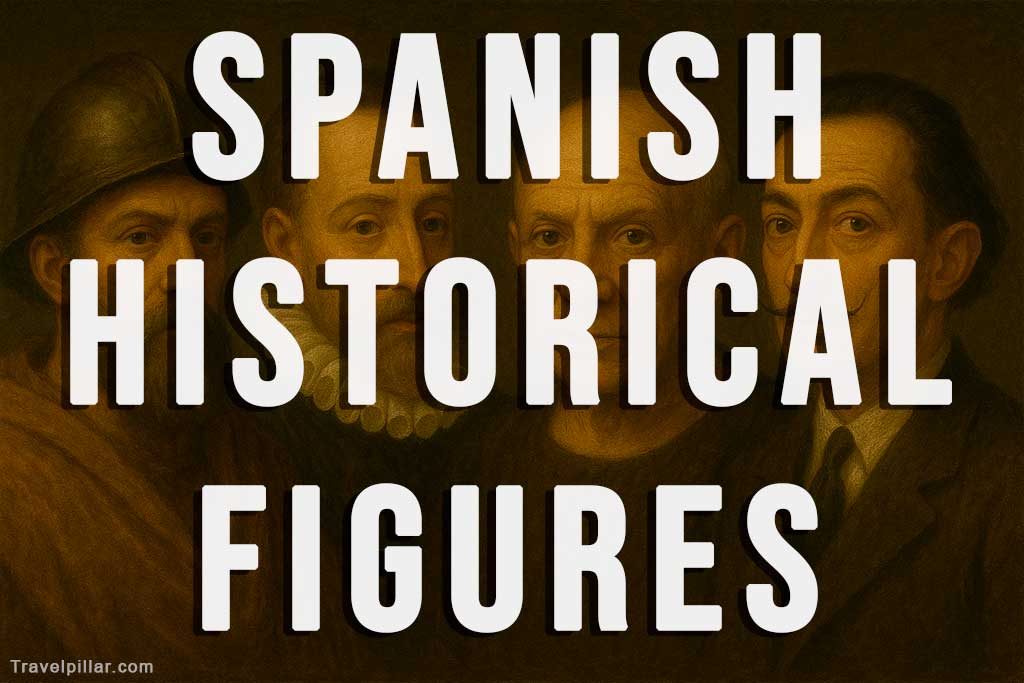
Isabella I of Castile
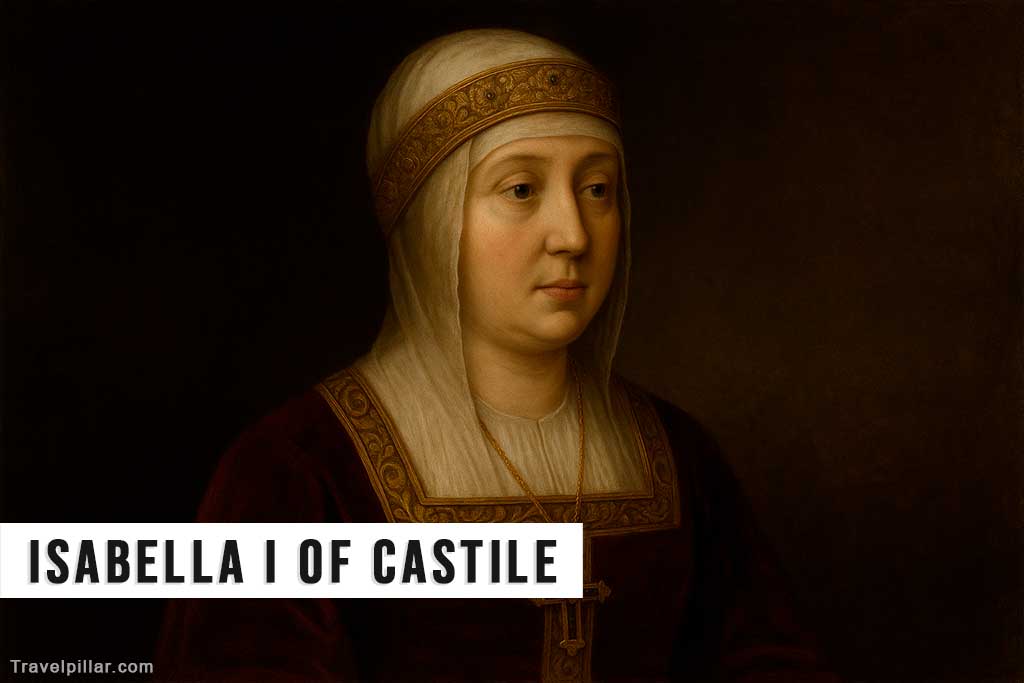
Isabella I of Castile (1451-1504) was Queen of Castile and León, ruling jointly with her husband, Ferdinand II of Aragon. Their reign solidified the foundation of modern Spain. Notably, Isabella sponsored Christopher Columbus’s 1492 voyage, leading to widespread European awareness of the Americas. Her efforts in restructuring the government reduced crime, unified the country, and strengthened royal power, earning her the epithet “Isabella the Catholic”.
Ferdinand II of Aragon
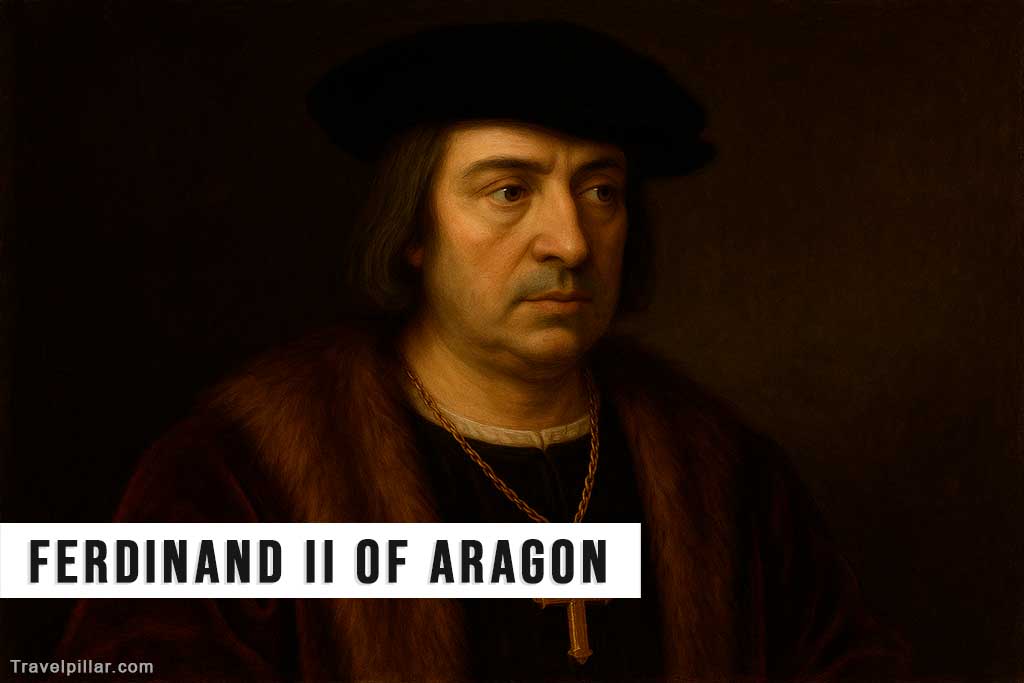
Ferdinand II of Aragon (1452–1516), also known as Ferdinand the Catholic, was King of Sicily from 1468, and King of Aragon from 1479. His marriage to Isabella I of Castile in 1469 effectively united the major Spanish kingdoms, laying the groundwork for modern Spain. Known for patronizing Christopher Columbus’s voyage to the Americas in 1492, Ferdinand’s reign was marked by religious orthodoxy, centralized royal power, and extensive territorial expansion.
Francisco Pizarro

Francisco Pizarro (1471-1541) was a Spanish conquistador, best known for his expeditions that led to the fall of the Inca Empire. In 1533, he captured and executed the Incan emperor Atahualpa, securing Spanish control over most of South America. Appointed the governor of Peru, Pizarro was instrumental in establishing Lima as the colonial capital. His brutal tactics and exploitation caused significant cultural and demographic changes, making him a controversial figure in history.
Queen Joanna of Castile
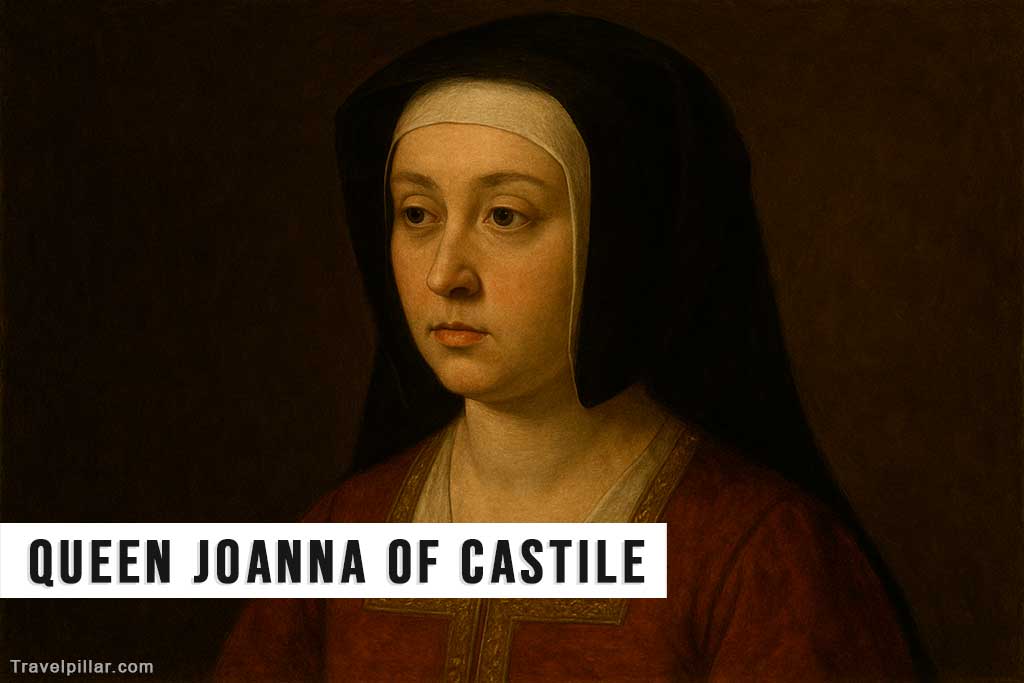
Queen Joanna of Castile (1479–1555), known as Joanna the Mad, was the daughter of Ferdinand II of Aragon and Isabella I of Castile. Her reign, from 1504 to 1555, was marked by political instability due to her alleged mental illness. Despite being queen, she spent much of her reign under the regency of her father, husband, and son. She is remembered for her tragic life, and her legacy is deeply intertwined with the history of the Habsburg dynasty.
Hernán Cortés
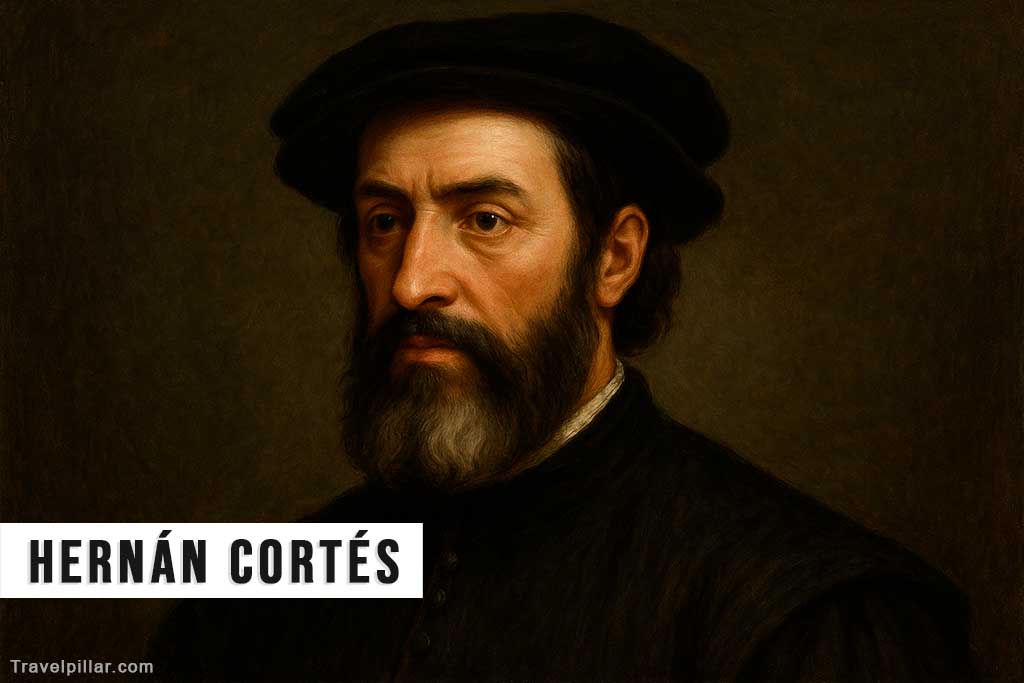
Hernán Cortés (1485-1547) was a Spanish conquistador, principally known for leading the expedition that brought about the fall of the Aztec Empire. His audacious actions significantly extended Spanish dominion in the New World. Despite the controversy surrounding his methods and consequences of his conquest, his navigational and military acumen is undeniable. His conquest fundamentally reshaped the cultural and demographic landscape of Mexico, merging European and indigenous cultures.
King Philip II of Spain

King Philip II of Spain (1527-1598), known as Philip the Prudent, was one of the most powerful monarchs in history, ruling vast territories including Spain, Portugal, Naples, Sicily, and the Netherlands. His reign (1556-1598) was marked by administrative reforms, religious persecutions, and military campaigns, including the failed invasion of England with the Spanish Armada in 1588. His reign significantly influenced the course of European and world history.
El Greco

El Greco (1541–1614), born Domenikos Theotokopoulos in Crete, was a prominent painter, sculptor, and architect of the Spanish Renaissance. He’s best known for his elongated, dramatic figures and use of vibrant, expressive color. Moving to Toledo, Spain, he created his most acclaimed works, such as “The Burial of the Count of Orgaz”. Despite the mixed reception during his lifetime, El Greco’s distinct style profoundly influenced European art, particularly in the 20th century.
Miguel de Cervantes

Miguel de Cervantes (1547-1616) was a pivotal figure in the world of literature, hailed as Spain’s greatest writer and one of the most important and influential authors in Western literature. His most notable work, “Don Quixote,” a satirical exploration of chivalric themes, is considered a cornerstone of European literature. Cervantes’s creative narrative techniques greatly contributed to the development of the modern novel, cementing his enduring legacy in global literary history.
Diego Velázquez

Diego Velázquez (1599–1660) was a prominent Spanish painter and the leading artist in the court of King Philip IV. Born in Seville, he was known for his masterful scenes of historical and cultural significance, as well as his innovative portraiture. His best-known work, “Las Meninas,” showcases his skillful realism, complex composition, and profound insight into human nature. Velázquez’s style had a significant influence on generations of artists, notably the Impressionists and realists of the 19th century.
Queen Isabella II of Spain

Queen Isabella II of Spain (1830–1904) was the queen regnant of Spain from 1833 until 1868. She ascended to the throne as a child following the death of her father, Ferdinand VII, but her reign was marked by political instability, numerous uprisings, and corruption. Her controversial personal life and her failure to respond effectively to Spain’s socioeconomic issues culminated in the 1868 revolution, leading to her exile and the proclamation of the First Spanish Republic in 1873.
Antoni Gaudí
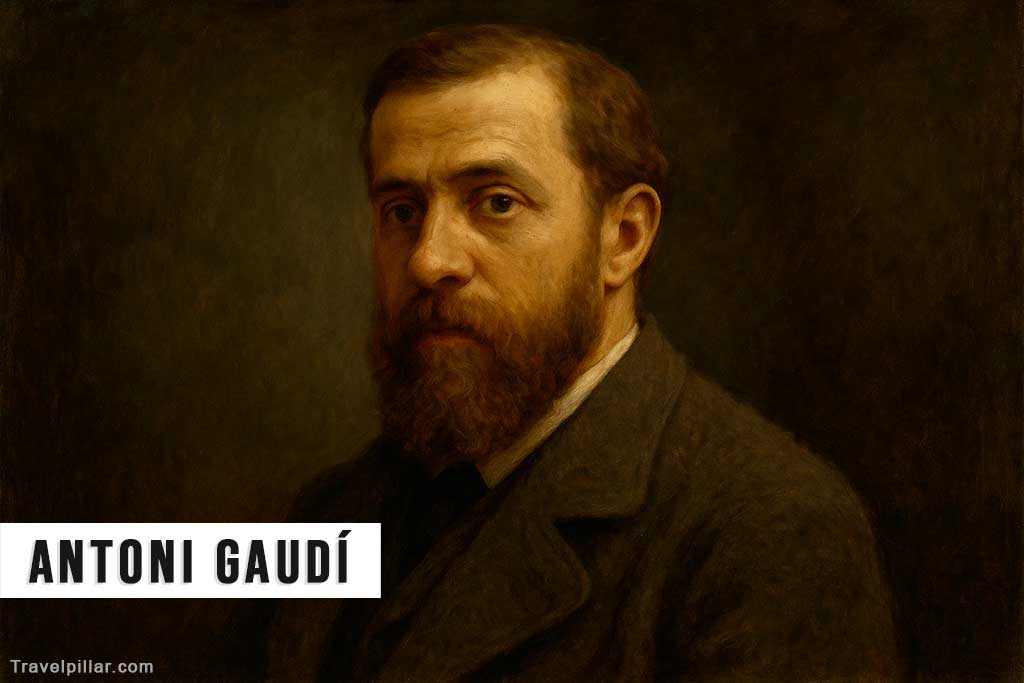
Antoni Gaudí (1852–1926) was a renowned Catalan architect who introduced a unique, visionary approach to his designs, blending Gothic and Art Nouveau elements with innovative engineering. His works are known for their organic forms, intricate detailing, and symbolic references. Gaudí’s most notable project, the Basilica of the Sagrada Família in Barcelona, remains incomplete even after his death. Gaudí’s contributions to architecture were recognized with the designation of several of his works as UNESCO World Heritage Sites.
Miguel de Unamuno

Miguel de Unamuno (1864-1936) was a prominent Spanish writer and philosopher associated with the Generation of ’98, a group of intellectuals that emerged following Spain’s defeat in the Spanish-American War of 1898. Known for his existentialist works, Unamuno challenged traditional beliefs about science, faith, and reason. His famous works include “Tragic Sense of Life” (1913) and “Mist” (1914). He served as rector of the University of Salamanca until his death in 1936.
Pablo Picasso

Pablo Picasso (1881-1973), a Spanish painter, sculptor, printmaker, ceramicist, and stage designer, was a co-founder of the Cubist movement and one of the most influential artists of the 20th century. His works, which include the renowned “Les Demoiselles d’Avignon” and “Guernica,” exemplify his innovative use of form, color, and perspective. Picasso’s prodigious output, marked by periods like the Blue and Rose, African art-inspired, and Surrealism, revolutionized artistic conventions and shaped modern art.
King Alfonso XIII of Spain
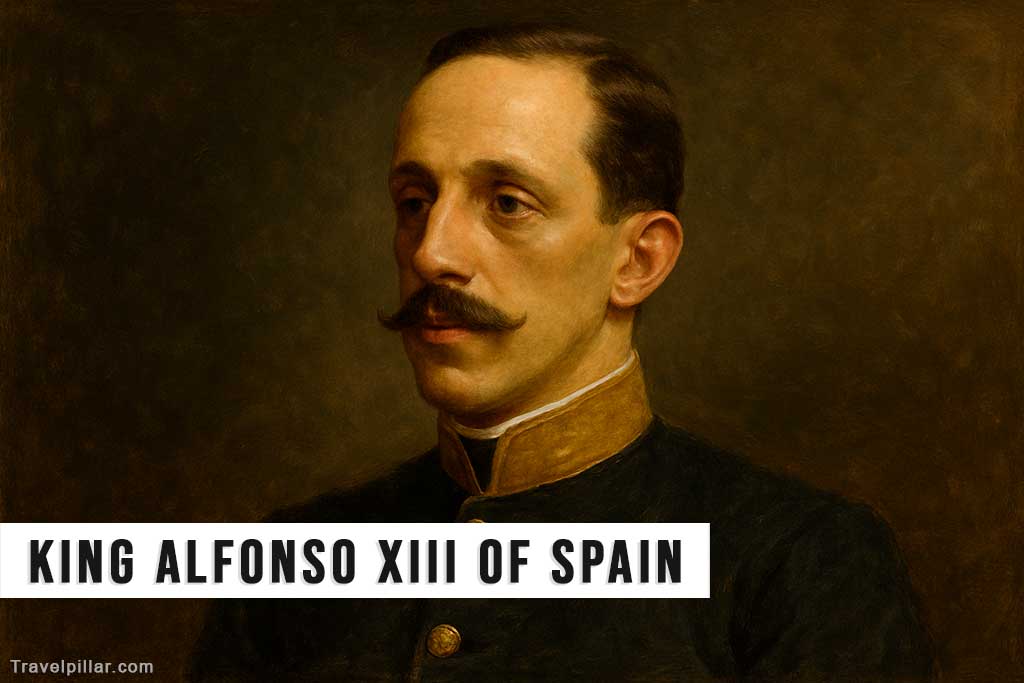
King Alfonso XIII of Spain (1886-1941) was the Spanish monarch from 1886 until the establishment of the Second Spanish Republic in 1931. Born posthumously to King Alfonso XII, he was proclaimed king at birth. His reign witnessed significant political instability, marked by numerous coups and conflicts. Alfonso was ultimately exiled following the formation of the republic. Despite attempts to restore monarchy, he abdicated in favor of his son, Don Juan, in 1941.
Queen Victoria Eugenia of Spain
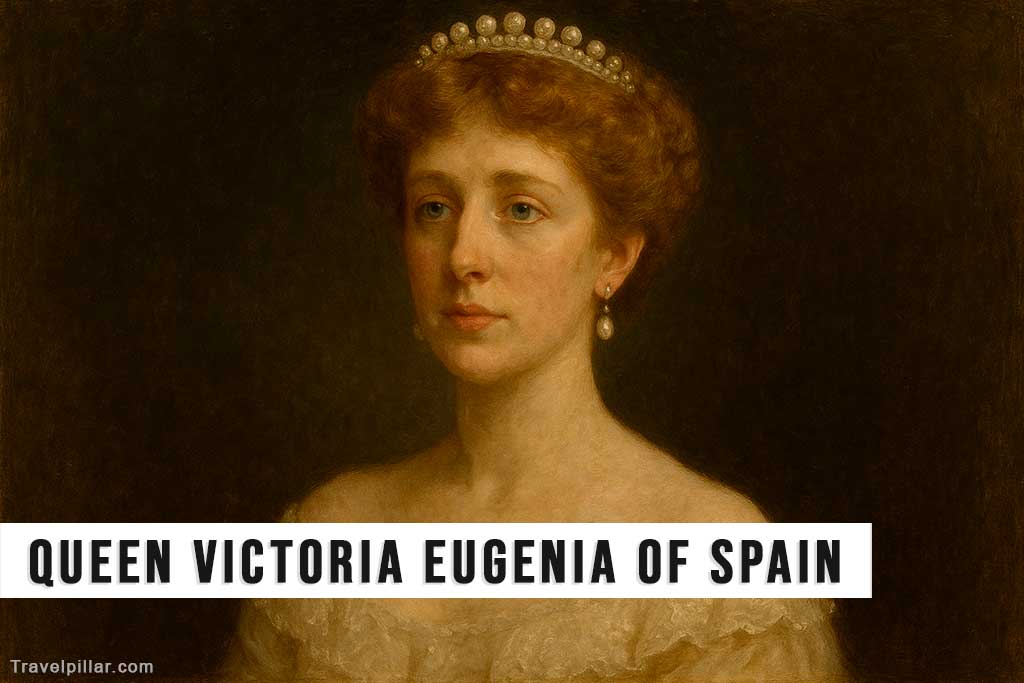
Queen Victoria Eugenia of Spain (1887-1969), known as Ena, was the wife of King Alfonso XIII and the grandmother of King Juan Carlos I. Born as a British princess, she married into the Spanish royal family in 1906. Her reign was marked by political turmoil, including the dictatorships of Primo de Rivera and Franco. After the establishment of the Second Spanish Republic, she lived in exile, returning to Spain only after Franco’s death.
Francisco Franco
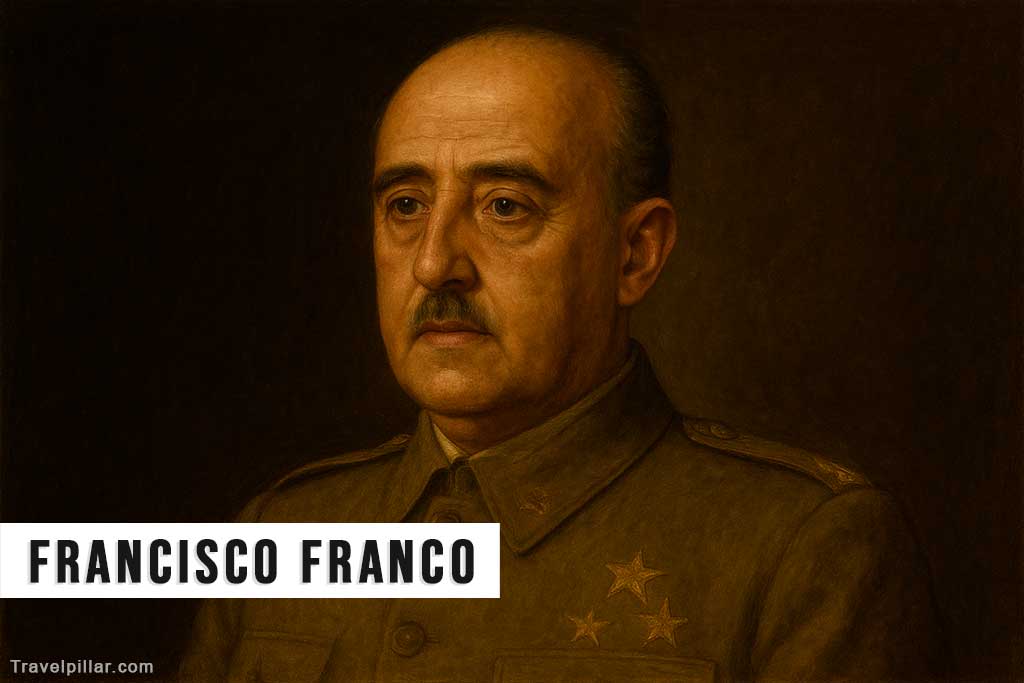
Francisco Franco (1892–1975) was a Spanish general who ruled Spain as a dictator from 1939 until his death in 1975. He led the Nationalist forces to victory against the Republican side in the Spanish Civil War (1936–1939), after which he abolished multiparty democracy and established an authoritarian regime. Under Franco’s rule, Spain remained largely isolated from international affairs and underwent significant economic modernization. His regime was marked by human rights abuses and suppression of political dissent.
Federico García Lorca
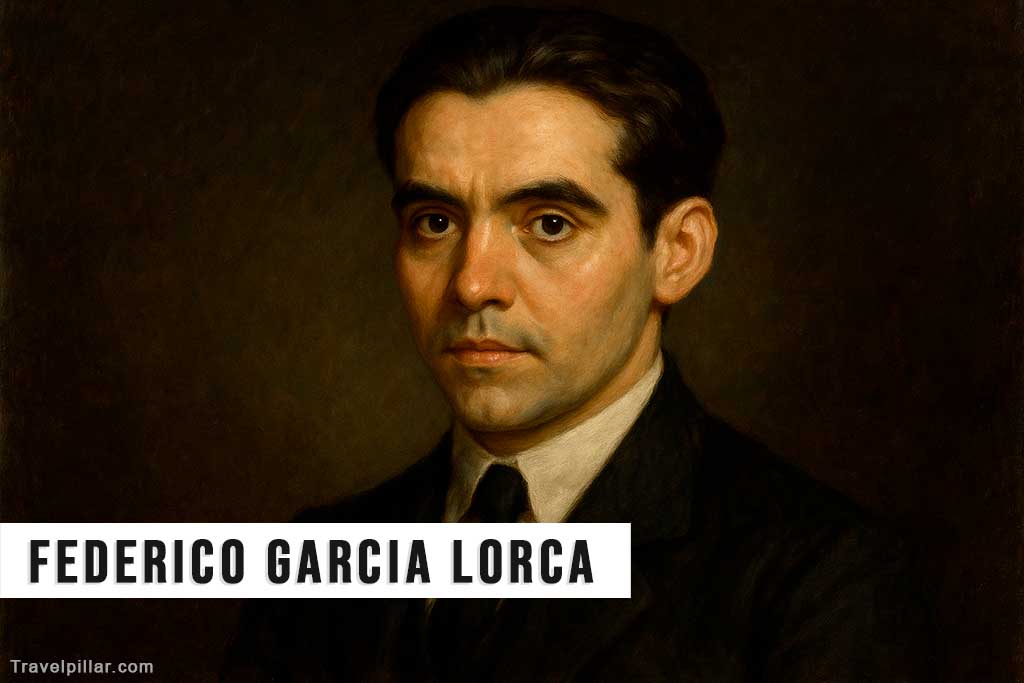
Federico García Lorca (1898-1936) was a Spanish poet, playwright, and theatre director, renowned for his contributions to the Spanish literary movement known as the Generation of ’27. His works, including “Blood Wedding”, “Yerma”, and “The House of Bernarda Alba”, often depict tragic and dramatic themes of love, death, and societal norms. Lorca’s promising career was cut short when he was executed at the start of the Spanish Civil War for his progressive ideals.
Salvador Dalí
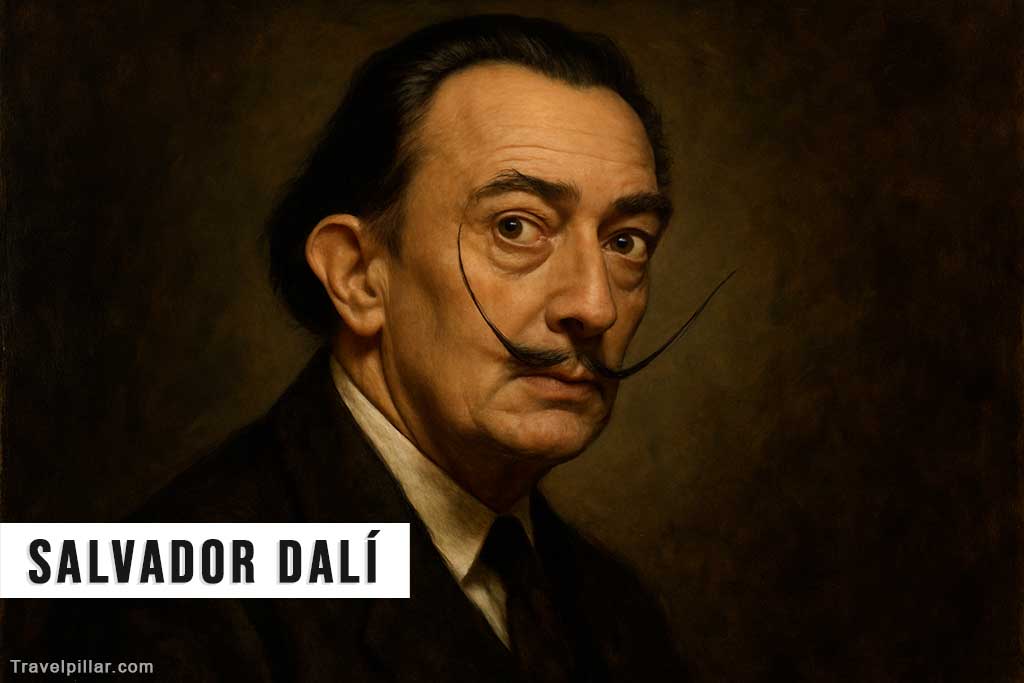
Salvador Dalí (1904-1989) was a prominent Spanish surrealist artist renowned for his technically skilled, imaginative works. Born in Figueres, Catalonia, Spain, his best-known work, “The Persistence of Memory” (1931), exemplifies his explorations of dreamscapes and subconscious imagery. An eccentric personality, Dalí dabbled in various media, including film, sculpture, and photography. His grandiose behavior and distinctive, flamboyant style made him a global icon in popular culture.