

The Metropolitan Museum of Art is a world-renowned institution located in New York City, United States. Founded in 1870, this esteemed museum has grown to become one of the largest and most prestigious art museums in the world. With a collection spanning over 5,000 years of art history, the Met houses more than two million works of art from across the globe.
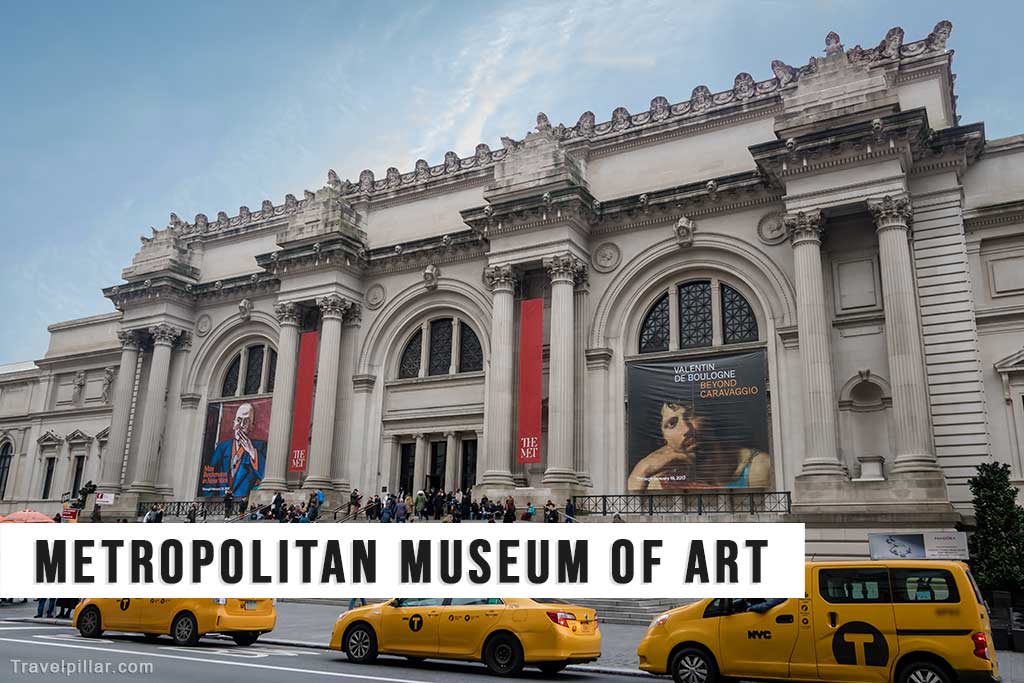
Situated in the heart of Manhattan along Fifth Avenue, the Met occupies an impressive building designed in the Beaux-Arts architectural style. Covering over two million square feet, the museum’s vast complex includes the main building, as well as The Met Cloisters, a dedicated museum for medieval European art and architecture located in Fort Tryon Park.
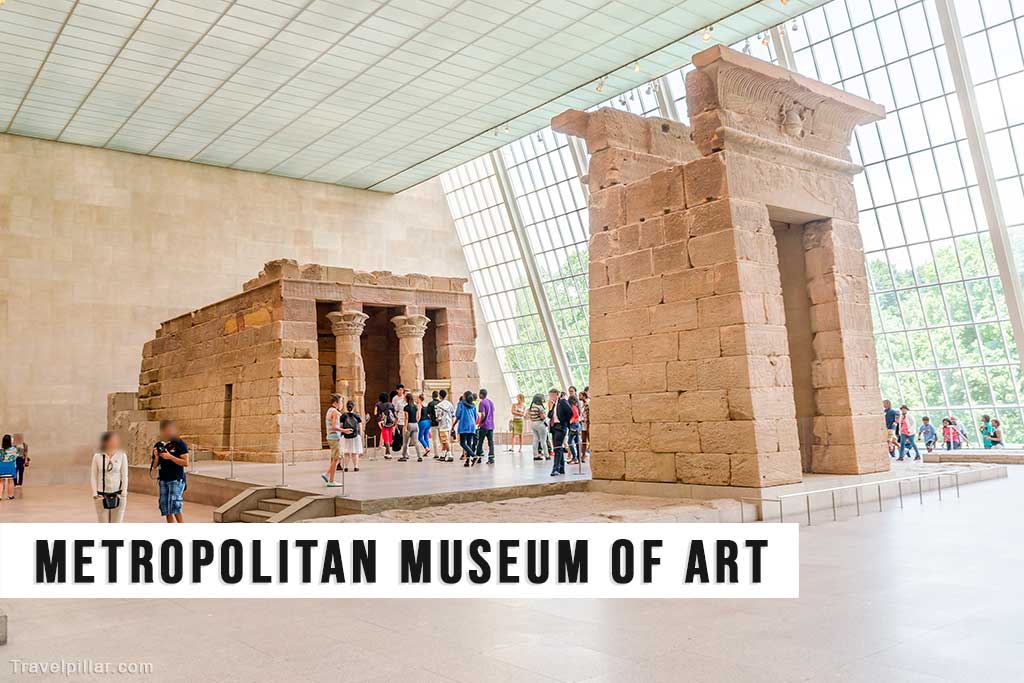
The Met’s comprehensive collection is divided into 17 curatorial departments, encompassing various periods, regions, and artistic disciplines. These include Ancient Near Eastern Art, Asian Art, European Paintings, Islamic Art, Modern and Contemporary Art, and the American Wing, among others. Notable works on display include Vincent van Gogh‘s “Wheat Field with Cypresses,” Emanuel Leutze’s “Washington Crossing the Delaware,” and Johannes Vermeer‘s “Young Woman with a Water Pitcher.”

In addition to its permanent collection, the Met also hosts rotating exhibitions, educational programs, and special events throughout the year. Open seven days a week, the museum offers a pay-what-you-wish admission policy for New York State residents and a fixed admission fee for non-residents.
Official website:
https://www.metmuseum.org
Google map 4.8/5
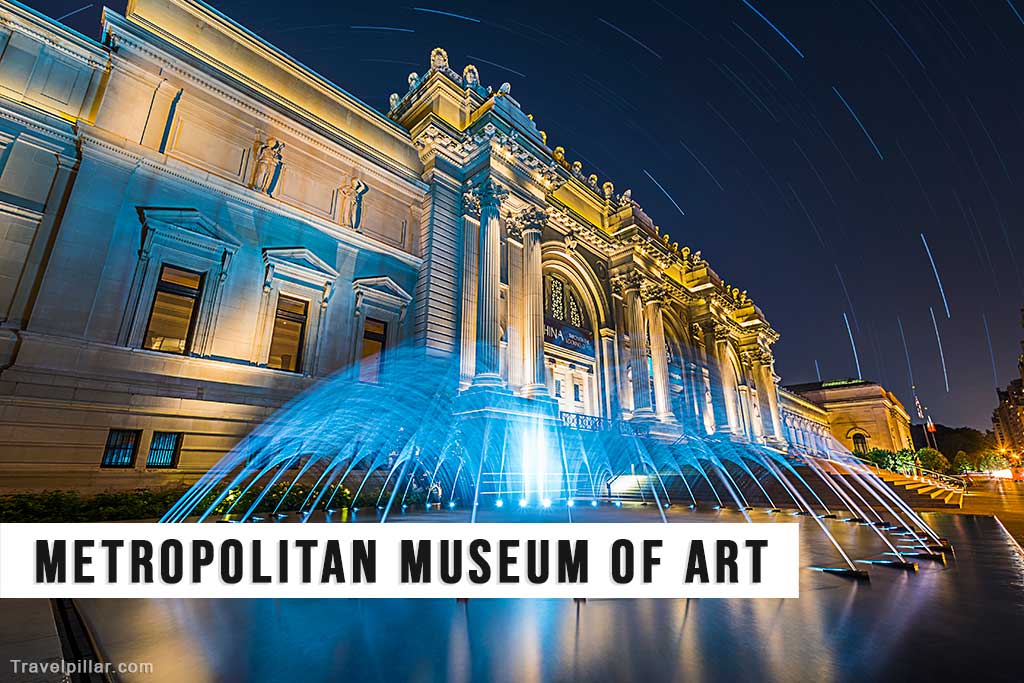
Highlights from the Metropolitan Museum of Art
Here are some of the highlights from the Paintings Collection. Please check the MET’s website for up-to-date paintings currently on display.
Emanuel Leutze’s “Washington Crossing the Delaware” (1851) – A large-scale painting depicting George Washington’s historic crossing during the American Revolutionary War. Wikipedia
Johannes Vermeer‘s “Young Woman with a Water Pitcher” (1662) – A serene domestic scene featuring a woman with a water pitcher in a sunlit room. Wikipedia
Diego Velázquez‘s “Portrait of Juan de Pareja” (1650) – A striking and empathetic portrait of the artist’s enslaved assistant. Wikipedia
John Singer Sargent’s “Madame X” (also known as “Portrait of Madame X”) (1884) – A striking and controversial portrait of Virginie Amélie Avegno Gautreau, a Parisian socialite. Wikipedia
Jackson Pollock’s “Autumn Rhythm (Number 30)” (1950) – A large-scale abstract expressionist painting characterized by Pollock’s signature “drip” technique. Wikipedi
Edgar Degas‘ “The Dance Class” (1874) – A scene capturing a ballet class, showcasing Degas’ fascination with movement and his masterful use of light and color. Wikipedia
Paul Cézanne‘s “Still Life with Apples and a Pot of Primroses” (1890) – A vivid still life showcasing Cézanne’s unique approach to color and composition. Wikipedia
Paul Gauguin‘s “Ia Orana Maria (Hail Mary)” (1891) – A colorful painting depicting a Tahitian interpretation of the Virgin Mary and Christ Child, reflecting Gauguin’s experiences in French Polynesia. Wikipedia
Paul Cézanne‘s “The Card Players” (1890-92) – A series of five oil paintings depicting men playing cards, exemplifying Cézanne’s fascination with the human figure. Wikipedia
Claude Monet’s “Haystacks (Effect of Snow and Sun)” (1891) – Part of Monet’s famous Haystacks series, capturing the play of light and shadow on a snow-covered haystack. Wikipedia
Claude Monet‘s “Bridge over a Pond of Water Lilies” (1899) – A serene and luminous painting of a bridge in Monet’s garden at Giverny, showcasing the artist’s signature Impressionist style. Wikipedia
Claude Monet‘s “La Grenouillère” (1869) – An early Impressionist painting depicting a popular leisure spot on the Seine, capturing the fleeting effects of light and atmosphere. Wikipedia
Henri Rousseau‘s “The Repast of the Lion” (circa 1907) – A bold and imaginative painting of a lion feeding in a lush jungle, demonstrating Rousseau’s distinctive naïve style. Wikipedia
Pablo Picasso‘s “The Actor” (1904) – A large painting from Picasso’s Rose Period, featuring a melancholic figure on a stage. Wikipedia
Vincent van Gogh‘s “Self-Portrait with a Straw Hat” (1887) – An expressive self-portrait demonstrating Van Gogh’s bold brushwork and vibrant color palette. Wikipedia
Amedeo Modigliani’s “Jeanne Hébuterne” (1919) – A tender and sensitive portrait of Modigliani’s lover and muse, characterized by the artist’s elongated forms and elegant lines. Wikipedia
Related Post:
Best Museums in the World

Museums preserve the artistic, scientific and cultural achievements of civilisation. The institutions listed below contain some of the world’s most important collections, ranging from ancient archaeology and Renaissance painting to modern art, natural history and science.
This ranking is inevitably subjective, but the museums below stand out for the scale of their collections, the quality of their exhibitions, their historical importance and the overall visitor experience. Click on the museum name or image to explore each museum in more detail.