
Hercules (Heracles)

Hercules, known as Heracles in Greek mythology, is a renowned hero celebrated for his immense strength and completing the Twelve Labors. The son of Zeus and the mortal Alcmene, Hercules was tasked with these labors as a form of penance, facing challenges such as slaying the Nemean Lion and capturing the Golden Hind. His adventures took him across the Greek world, cementing his legacy as a symbol of bravery and resilience. Temples and sites in Greece honor his mythological achievements.
Odysseus
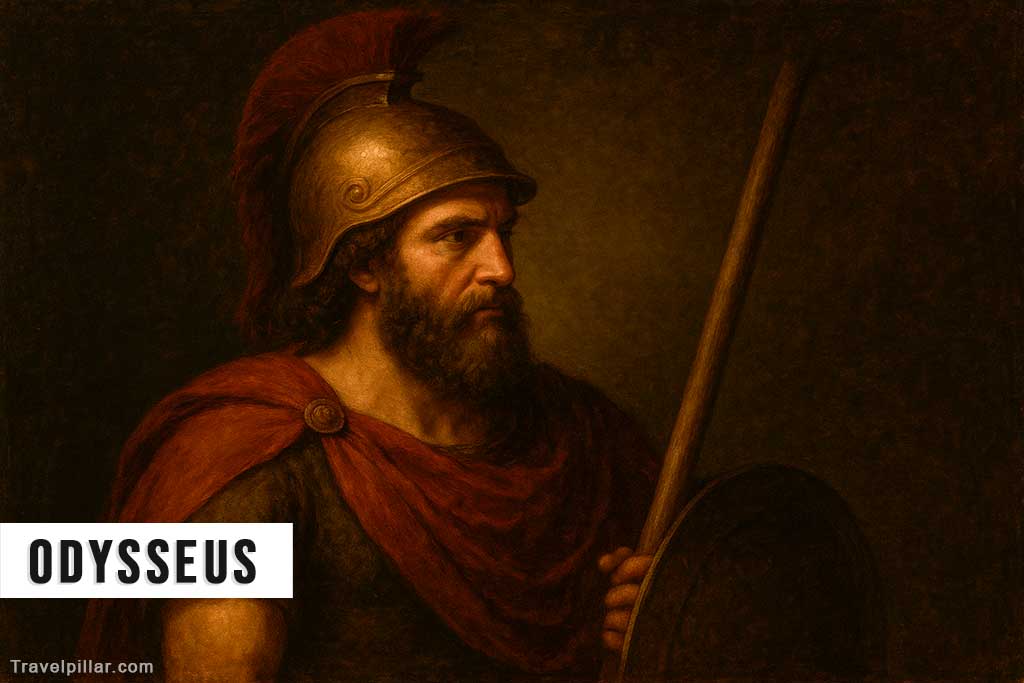
Odysseus, the king of Ithaca, is a central figure in Greek mythology, renowned for his intelligence and leadership. He played a pivotal role in the Greek victory during the Trojan War and is best known for his long and arduous journey home, as detailed in Homer’s The Odyssey. His ten-year voyage involved encounters with mythical creatures, gods, and numerous challenges. Odysseus symbolizes resourcefulness and endurance, and modern visitors to Ithaca can explore the island linked to his legendary exploits.
Achilles

Achilles, a central figure in Greek mythology, was the greatest warrior of the Trojan War, as depicted in Homer’s Iliad. The son of Peleus and the nymph Thetis, he was nearly invulnerable except for his heel, which became his downfall. Achilles’ rage and eventual slaying of the Trojan hero Hector are key elements of the Iliad. His story reflects themes of heroism, pride, and mortality. Sites like ancient Troy commemorate his legendary role in Greek myth.
Perseus

Perseus, a notable hero in Greek mythology, is best known for slaying the Gorgon Medusa and rescuing Andromeda from a sea monster. The son of Zeus and the mortal Danaë, Perseus embarked on a series of adventures aided by divine gifts, including a reflective shield from Athena. His defeat of Medusa, whose gaze turned people to stone, and subsequent heroic deeds made him a celebrated figure. Ancient sites, such as Argos, are closely linked to his legendary exploits.
Theseus
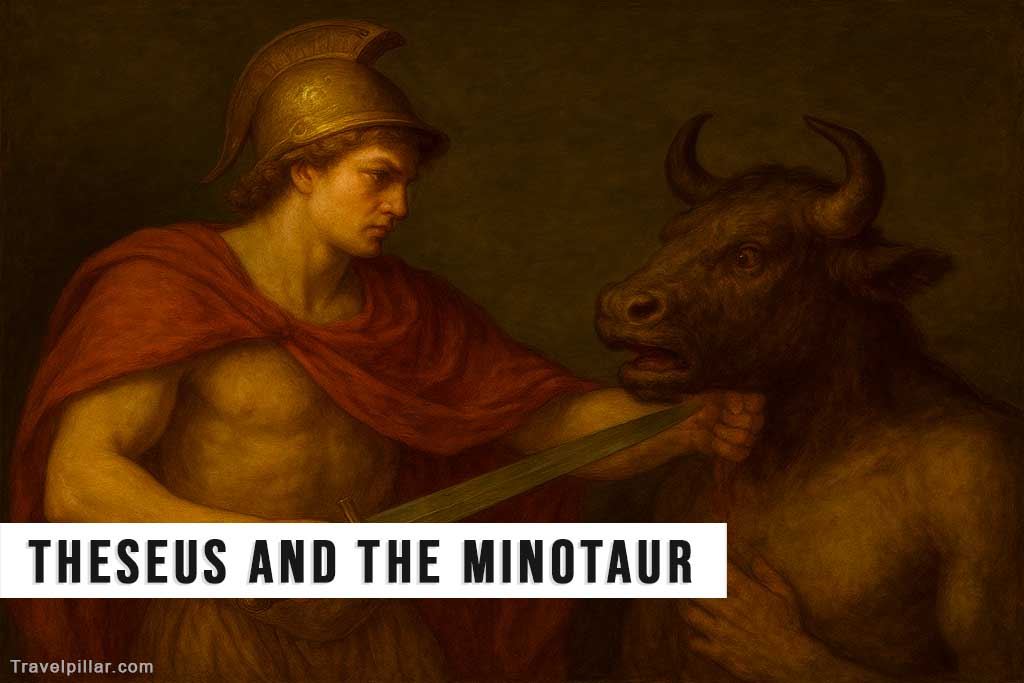
Theseus, a legendary hero in Greek mythology, is renowned for slaying the Minotaur, a half-man, half-bull creature housed in the labyrinth of Crete. As the son of King Aegeus of Athens, Theseus volunteered to end the tribute of young Athenians sent to the Minotaur. With the help of Ariadne, he navigated the labyrinth and killed the beast. Theseus later became king of Athens, known for unifying Attica. Ancient sites in Athens commemorate his heroic legacy.
Jason
Jason, a prominent figure in Greek mythology, is best known as the leader of the Argonauts and his quest for the Golden Fleece. The son of Aeson, rightful king of Iolcus, Jason assembled a crew of heroes, including Heracles and Orpheus, to retrieve the fleece from Colchis. With the help of Medea, a sorceress and the king’s daughter, Jason completed his mission. His adventures are linked to sites such as ancient Thessaly and Colchis, now modern-day Georgia.
Helen of Troy

Helen of Troy, often called “the face that launched a thousand ships,” is a key figure in Greek mythology, whose abduction by Paris of Troy triggered the Trojan War. Known for her extraordinary beauty, she was the wife of Menelaus, king of Sparta. Her role in the conflict between Greece and Troy is central to Homer’s Iliad. Visitors to sites such as Sparta and ancient Troy can explore the legendary locations tied to Helen’s mythological story.
Orpheus
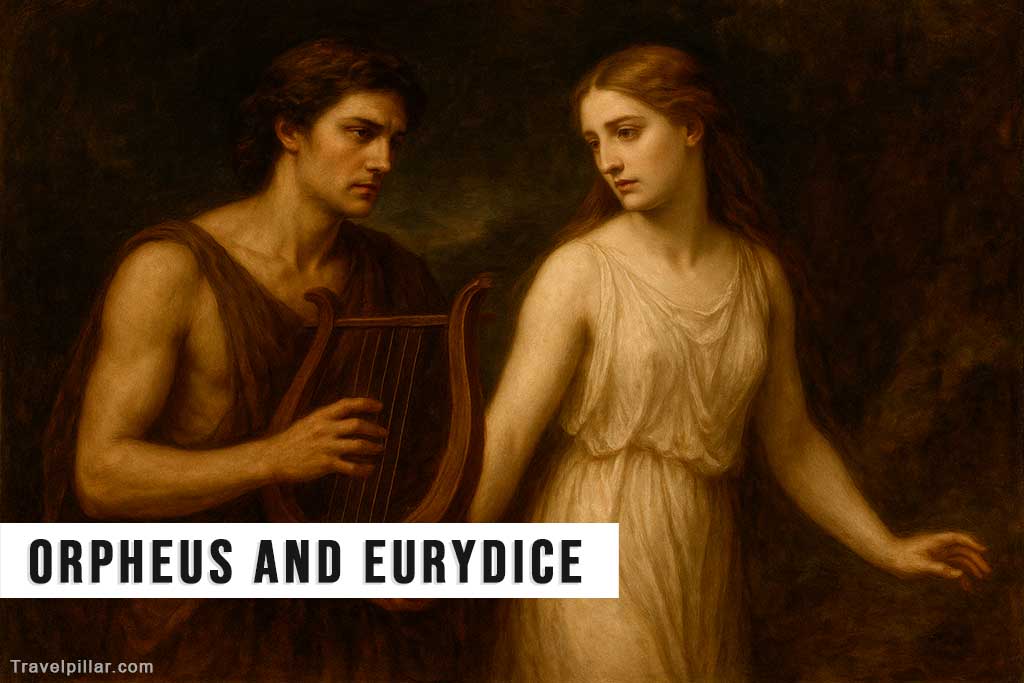
Orpheus, a legendary figure in Greek mythology, was known for his extraordinary musical abilities, capable of charming all living things and even the gods. His most famous myth involves his attempt to retrieve his wife, Eurydice, from the underworld. Through his music, he persuaded Hades and Persephone to release her, but he tragically lost her again by looking back too soon. Orpheus’ legacy is tied to regions like Thrace, where his story and influence on ancient Greek culture endure.
Paris

Paris, a prince of Troy in Greek mythology, is best known for his pivotal role in the events leading to the Trojan War. As the judge of the beauty contest between Hera, Athena, and Aphrodite, he awarded the golden apple to Aphrodite, who promised him the love of Helen of Sparta. His abduction of Helen, considered the most beautiful woman in the world, sparked the war. Visitors can explore ancient Troy, a key site associated with Paris’ myth.
Hector
Hector was the prince of Troy and its greatest warrior during the Trojan War. As the eldest son of King Priam and Queen Hecuba, Hector was known for his bravery and sense of duty, defending Troy against the Greek forces. His most famous battle was against Achilles, where Hector was slain outside the city’s walls. Hector’s death marked a turning point in the war. Ancient Troy, now in modern Turkey, is linked to his legend.
Other Important Figures
Ariadne
Ariadne was the daughter of King Minos of Crete. She is best known for helping the hero Theseus navigate the labyrinth and defeat the Minotaur. After being abandoned by Theseus on the island of Naxos, Ariadne was discovered by Dionysus, the god of wine, who fell in love with her and made her his immortal wife. Visitors to Crete and Naxos can explore sites linked to her mythological legacy.
Pandora
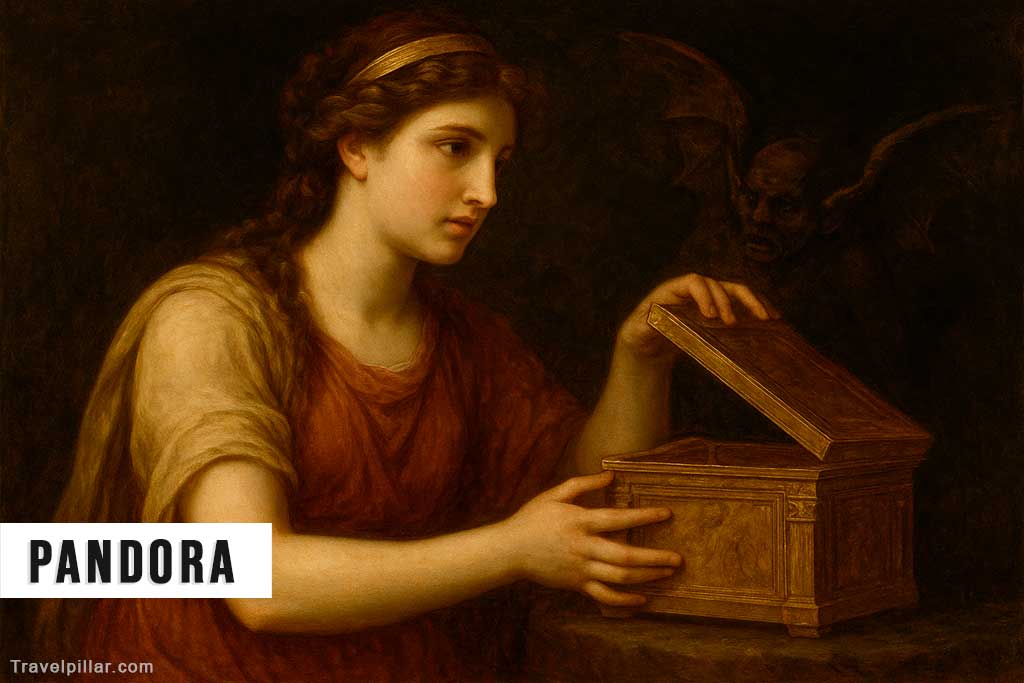
Pandora, in Greek mythology, was the first mortal woman, created by the gods as a punishment for humanity after Prometheus stole fire. Zeus gave her a jar (often referred to as “Pandora’s Box”) containing all the evils of the world, which she inadvertently opened, releasing suffering into human life. Only hope remained inside. Pandora’s story is a key myth about the origins of human misfortune. Sites in Greece, like ancient Athens, often reference myths tied to the gods’ influence over mankind.
Narcissus
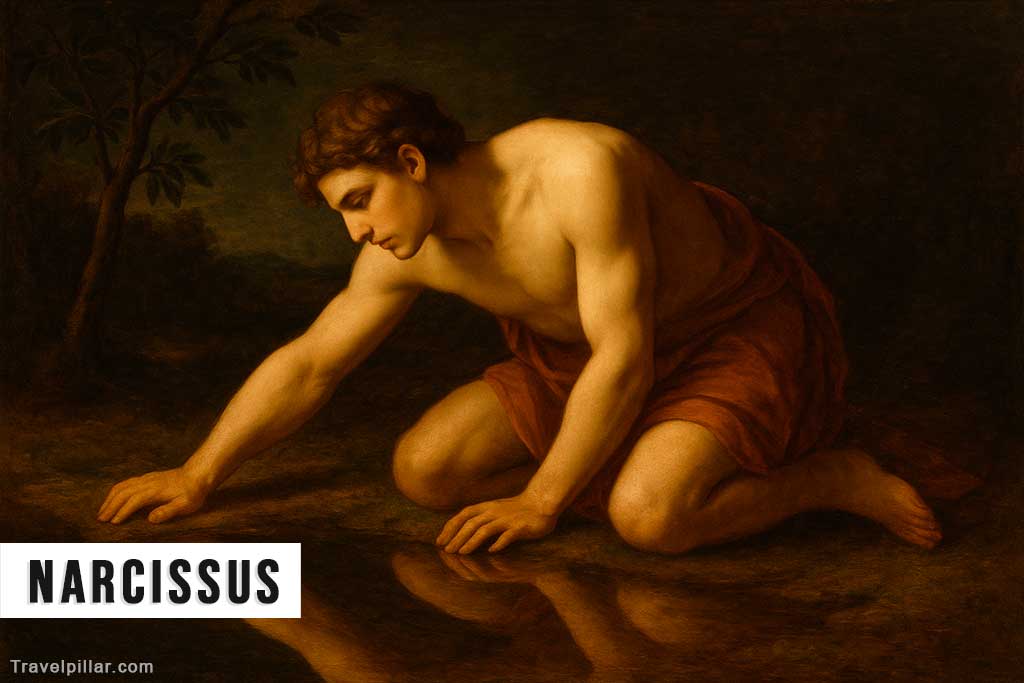
Narcissus was a hunter renowned for his extraordinary beauty. According to the myth, he fell in love with his own reflection in a pool of water, unable to look away, eventually wasting away or drowning. His self-obsession gave rise to the term “narcissism,” symbolizing excessive self-love. Narcissus’s myth is a cautionary tale about vanity and pride. Visitors to regions like Boeotia, where his myth is set, can explore landscapes tied to his story.
Leda
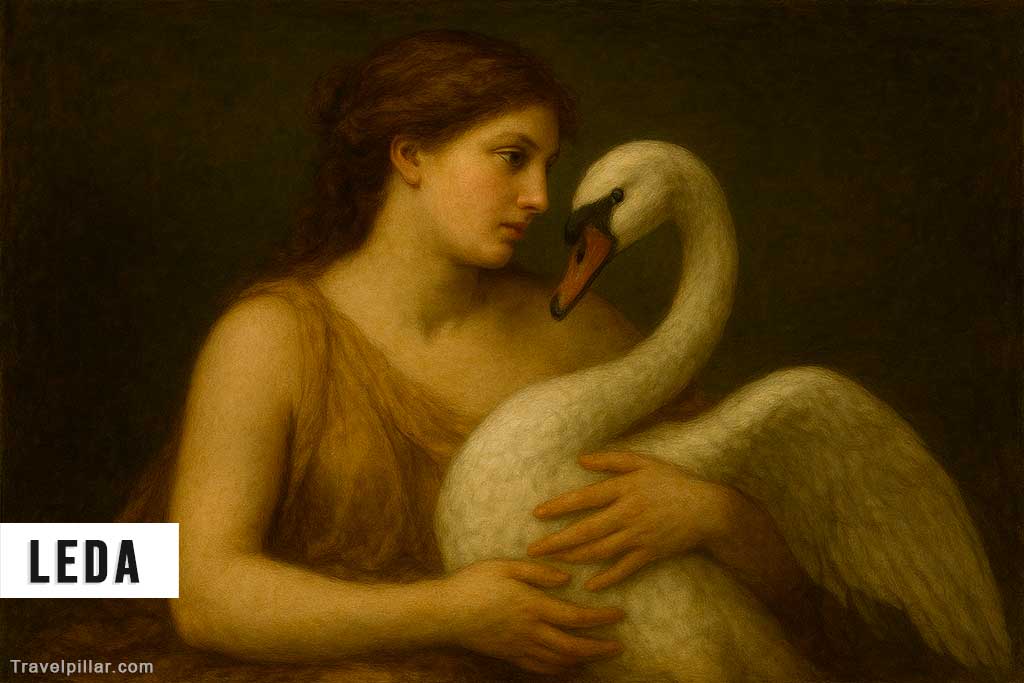
Leda was the queen of Sparta and wife of King Tyndareus. She is most famous for her encounter with Zeus, who, in the form of a swan, seduced her. From this union, Leda bore several children, including Helen of Troy and the twins Castor and Pollux, known as the Dioscuri. Leda’s myth has inspired numerous artistic depictions throughout history, and Sparta remains a key location associated with her legend.
The Dioscuri – Castor and Pollux

The Dioscuri, Castor and Pollux, are twin brothers, sons of Leda. Castor was mortal, born to King Tyndareus, while Pollux was immortal, born to Zeus. Renowned for their bravery, the twins participated in many adventures, including the quest for the Golden Fleece. After Castor’s death, Pollux asked Zeus to share his immortality, and the twins were transformed into the constellation Gemini. The city of Sparta, their birthplace, is closely associated with their legend.
Nike
Nike was the Greek goddess of victory, often associated with success in both war and athletic competitions. She was commonly depicted with wings and is known for accompanying gods such as Zeus and Athena. Nike held symbolic significance in ancient Greek culture, representing triumph and glory. Statues and imagery of Nike appeared in temples, coins, and artworks, and she played an important role in rituals and public commemorations of military or sporting achievements.
The Three Graces
The Three Graces, known in Greek mythology as the Charites, were Aglaea (Splendour), Euphrosyne (Mirth), and Thalia (Good Cheer), daughters of Zeus and Eurynome. They personified beauty, joy, and generosity, often accompanying Aphrodite. Rather than dramatic heroes, they symbolised harmony and the exchange of goodwill. Frequently shown dancing in a circle, they represented the idea that beauty and grace flourish through connection and shared delight.
The Muses
The Muses were nine goddesses in Greek mythology who presided over the arts and sciences. Daughters of Zeus and Mnemosyne (Memory), they inspired poetry, music, history, and astronomy. Each Muse governed a specific field, from epic poetry to dance. Artists and writers traditionally invoked them for guidance. The Muses symbolised creative inspiration itself, suggesting that artistic achievement flows from divine memory and imagination combined.