
Beaux-Arts architecture is one of the grandest and most elegant architectural styles of the late 19th and early 20th centuries. Characterised by monumental scale, Classical symmetry, richly decorated façades and lavish interiors, it became the preferred style for museums, opera houses, railway stations, libraries, government buildings and grand civic monuments. Combining the principles of Classical Greek and Roman architecture with Renaissance and Baroque influences, Beaux-Arts architecture celebrated beauty, prestige and civic pride on an impressive scale.
The style takes its name from the prestigious École des Beaux-Arts (School of Fine Arts) in Paris, where generations of architects received rigorous training in Classical design. Students studied the architecture of Ancient Greece and Rome before learning how to create monumental public buildings using careful planning, symmetry and elaborate decorative detail. Graduates of the school went on to influence architecture throughout Europe, North America and beyond.
Beaux-Arts architecture flourished during a period of rapid industrial growth and urban expansion. As cities became wealthier, governments and institutions commissioned magnificent public buildings that reflected confidence, prosperity and national ambition. Advances in steel construction also allowed architects to design larger buildings while concealing modern engineering beneath elegant Classical façades.
Although Modernism gradually replaced Beaux-Arts architecture after the First World War, many of its masterpieces remain among the world’s most admired public buildings. Grand museums, railway stations, theatres and civic buildings constructed during this period continue to define the character of many of the world’s greatest cities.
For travellers, Beaux-Arts architecture is impossible to miss. From the magnificent boulevards of Paris and the grand museums of New York to impressive railway stations and public buildings across Europe, understanding the style reveals one of the most confident and ambitious periods in architectural history.
History of Beaux-Arts Architecture
Beaux-Arts architecture developed in France during the 19th century through the teaching of the École des Beaux-Arts in Paris. Founded on the study of Classical architecture, the school encouraged architects to create balanced, monumental buildings enriched with sculpture, decorative carving and carefully planned interiors.
The movement reached its peak between approximately 1880 and 1920, coinciding with a period of rapid economic growth, industrialisation and urban redevelopment. Governments, wealthy patrons and cultural institutions commissioned grand public buildings designed to demonstrate civic pride and national importance. The style became particularly popular for museums, libraries, courthouses, railway stations, universities and opera houses.
The rebuilding of Paris under Emperor Napoleon III and Baron Haussmann helped establish Beaux-Arts architecture as the defining style of the French capital. Wide boulevards, monumental public buildings and elegant apartment blocks created a unified urban landscape that influenced city planning around the world.
The style spread rapidly beyond France. In the United States, many architects trained at the École des Beaux-Arts or adopted its principles after studying in Europe. As a result, cities such as New York, Washington, D.C., Boston and Chicago gained magnificent museums, libraries, railway stations and government buildings inspired by the Parisian model.
By the 1920s, changing tastes favoured the cleaner lines of Art Deco and Modernism, bringing the Beaux-Arts era to an end. Nevertheless, its influence remains visible in countless landmark buildings that continue to serve as cultural and civic centres today.
Key Characteristics of Beaux-Arts Architecture
Beaux-Arts architecture combines Classical symmetry with rich decoration and monumental scale. Although individual buildings vary, several defining features appear throughout the movement.
Monumental Scale
Beaux-Arts buildings were designed to impress. Large façades, grand entrances and imposing public spaces reflected the growing importance of civic institutions during the late 19th century.
Classical Symmetry
Inspired by Ancient Greece and Rome, buildings were carefully planned around balanced, symmetrical layouts. Every element contributes to an overall sense of harmony and order.
Grand Staircases
Many Beaux-Arts buildings feature magnificent ceremonial staircases that create a dramatic entrance and emphasise the building’s grandeur. These often become focal points of the interior.
Rich Sculptural Decoration
Statues, relief carvings, columns, pediments, balustrades and ornamental cornices decorate both the exterior and interior. Unlike the simplicity of Neoclassical architecture, Beaux-Arts embraces lavish decorative detail.
Domes and Colonnades
Large domes, sweeping colonnades and monumental porticos frequently appear on museums, libraries and government buildings, reinforcing their Classical inspiration.
Luxurious Interiors
Marble halls, painted ceilings, mosaics, elaborate chandeliers and decorative ironwork create richly appointed interiors that match the grandeur of the exterior architecture.
Famous Examples of Beaux-Arts Architecture
Palais Garnier (Paris Opera), Paris, France

Completed in 1875 and designed by Charles Garnier, the Palais Garnier is widely regarded as the masterpiece of Beaux-Arts architecture. Its magnificent façade is adorned with columns, sculptures and gilded decoration, while the lavish interior features grand staircases, marble halls and one of the world’s most spectacular opera auditoriums. It remains one of Paris’s most iconic landmarks.
Grand Palais, Paris, France

Built for the 1900 Exposition Universelle, the Grand Palais combines Classical symmetry with an enormous iron-and-glass roof that demonstrates the engineering innovations of the period. Its richly decorated stone façade contrasts beautifully with its light-filled exhibition spaces, making it one of Paris’s finest Beaux-Arts buildings.
Petit Palais, Paris, France

Constructed alongside the Grand Palais for the 1900 World’s Fair, the Petit Palais is another outstanding example of Beaux-Arts design. Its elegant colonnades, domed entrance, decorative mosaics and beautifully landscaped courtyard now house one of Paris’s finest art museums.
Grand Central Terminal, New York City, USA

One of the world’s most famous railway stations, Grand Central Terminal combines monumental architecture with remarkable engineering. Completed in 1913, its grand concourse, marble staircases, celestial ceiling and richly decorated façade make it one of the greatest achievements of American Beaux-Arts architecture.
New York Public Library, New York City, USA
Opened in 1911, the New York Public Library is celebrated for its impressive marble façade, monumental entrance steps and the famous stone lion statues that guard its entrance. Inside, elegant reading rooms and richly decorated interiors reflect the grandeur expected of one of the world’s leading libraries.
The Metropolitan Museum of Art, New York City, USA
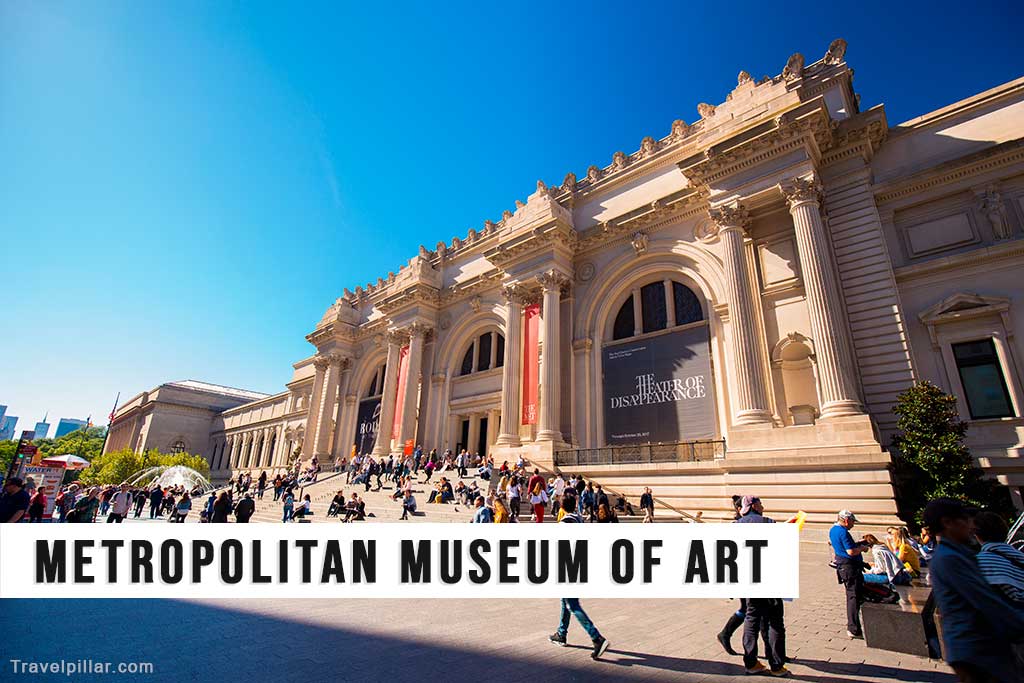
The monumental Fifth Avenue façade of the Metropolitan Museum of Art is one of the finest examples of Beaux-Arts architecture in the United States. Its broad staircase, Corinthian columns and richly ornamented entrance have become one of New York’s most recognisable architectural landmarks.
Musée d’Orsay, Paris, France

Originally built as the Gare d’Orsay railway station for the 1900 World’s Fair, this magnificent Beaux-Arts building combines an elegant stone exterior with an impressive iron and glass train shed. Today it houses one of the world’s greatest collections of Impressionist and Post-Impressionist art.
San Francisco City Hall, California, USA
Completed in 1915, San Francisco City Hall is one of America’s finest civic buildings. Its magnificent dome, grand staircases and richly decorated interiors demonstrate how Beaux-Arts architecture was used to express civic pride and confidence following the devastating 1906 earthquake.
Union Station, Washington, D.C., USA
Inspired by the great railway stations of Europe, Union Station opened in 1907 as one of America’s grandest transportation hubs. Its monumental colonnades, vaulted halls and richly decorated waiting rooms reflect the elegance and ambition of the Beaux-Arts movement.
Palace of Justice (Palais de Justice), Brussels, Belgium
One of the largest buildings constructed during the 19th century, Brussels’ Palace of Justice combines monumental Classical design with richly decorated interiors and an enormous central dome. Its scale and grandeur make it one of Europe’s most impressive civic buildings.
Where to See Beaux-Arts Architecture
Beaux-Arts architecture flourished in major cities during the late 19th and early 20th centuries, particularly where governments and wealthy institutions commissioned grand public buildings.
Some of the best destinations include:
- Paris, France – The birthplace of Beaux-Arts architecture, featuring the Palais Garnier, Grand Palais, Petit Palais, Musée d’Orsay and many elegant public buildings.
- New York City, USA – Grand Central Terminal, the New York Public Library, the Metropolitan Museum of Art and numerous Fifth Avenue landmarks showcase American Beaux-Arts architecture.
- Washington, D.C., USA – Union Station, the Library of Congress and many government buildings reflect the monumental influence of the style.
- San Francisco, USA – The magnificent City Hall and several civic buildings demonstrate the popularity of Beaux-Arts architecture in early 20th-century America.
- Brussels, Belgium – The Palace of Justice is one of Europe’s grandest examples of monumental Beaux-Arts architecture.
- Buenos Aires, Argentina – Often called the “Paris of South America,” the city contains numerous Beaux-Arts-inspired palaces, theatres and civic buildings dating from its golden age.
Why Beaux-Arts Architecture Matters
Beaux-Arts architecture represents the height of civic ambition during the late 19th and early 20th centuries. Combining the elegance of Classical architecture with the grandeur of the Renaissance and Baroque periods, it produced some of the world’s finest museums, libraries, opera houses, railway stations and government buildings. The movement celebrated art, culture and public life, creating monumental buildings that were designed to inspire visitors while demonstrating the wealth and confidence of rapidly growing cities.
For travellers, Beaux-Arts architecture offers the opportunity to experience many of the world’s most impressive public spaces. Whether admiring the splendour of the Palais Garnier in Paris, standing beneath the celestial ceiling of Grand Central Terminal in New York or exploring the grand museums and civic buildings of Washington, D.C., these landmarks showcase the remarkable craftsmanship and artistic vision of the era. Their richly decorated façades, monumental staircases and luxurious interiors continue to impress more than a century after they were built.
Although Beaux-Arts architecture was eventually replaced by the cleaner lines of Art Deco and Modernism, its influence remains unmistakable. Many of the world’s greatest cultural institutions still occupy Beaux-Arts buildings, ensuring that this magnificent architectural style continues to be admired by millions of visitors every year.
See Also
If you enjoyed learning about Beaux-Arts architecture, you may also be interested in:
- Neoclassical Architecture – Discover the Classical architectural tradition that inspired the Beaux-Arts movement.
- Baroque Architecture – Explore the grand and theatrical style that influenced many Beaux-Arts architects.
- Art Nouveau Architecture – Learn how Art Nouveau developed alongside Beaux-Arts while embracing a very different artistic philosophy.
- Art Deco – Discover the bold geometric style that gradually replaced Beaux-Arts architecture during the 1920s and 1930s.
- Paris – Explore the city where Beaux-Arts architecture was born and where many of its greatest masterpieces can still be admired today.