

Julius Caesar

Julius Caesar (100 BCE-44 BCE) was a Roman military and political leader, renowned for his instrumental role in the transformation of the Roman Republic into the Roman Empire. His military conquests, particularly the Gallic Wars, expanded Rome’s territory significantly. Caesar’s authoritarian rule, culminating in his self-appointment as “dictator for life,” provoked his assassination in 44 BCE. His life and death significantly impacted Rome’s subsequent history, and his legacy remains influential.
Augustus
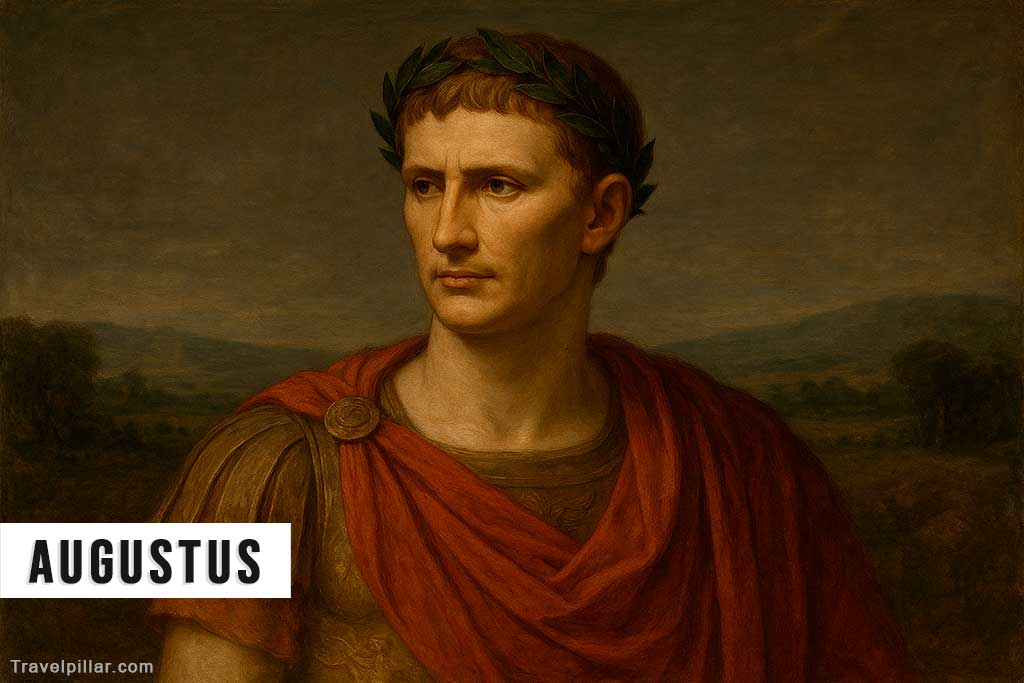
Augustus (63 BC–AD 14) was the first Roman emperor, ruling from 27 BC until his death. Originally named Octavian, he was Julius Caesar’s adopted heir and played a crucial role in ending the Roman Republic. His reign established the Pax Romana, a period of relative peace across the empire. Augustus reformed Rome’s political system, expanded its territories, and initiated construction projects, including temples and public buildings, shaping Rome into an imperial capital.
Christopher Columbus

Christopher Columbus (1451-1506) was an Italian explorer who completed four voyages across the Atlantic Ocean under the auspices of the Catholic Monarchs of Spain. His journeys opened the way for the widespread European exploration and eventual conquest of the Americas. His expeditions, though controversial, changed the course of world history.
Leonardo da Vinci
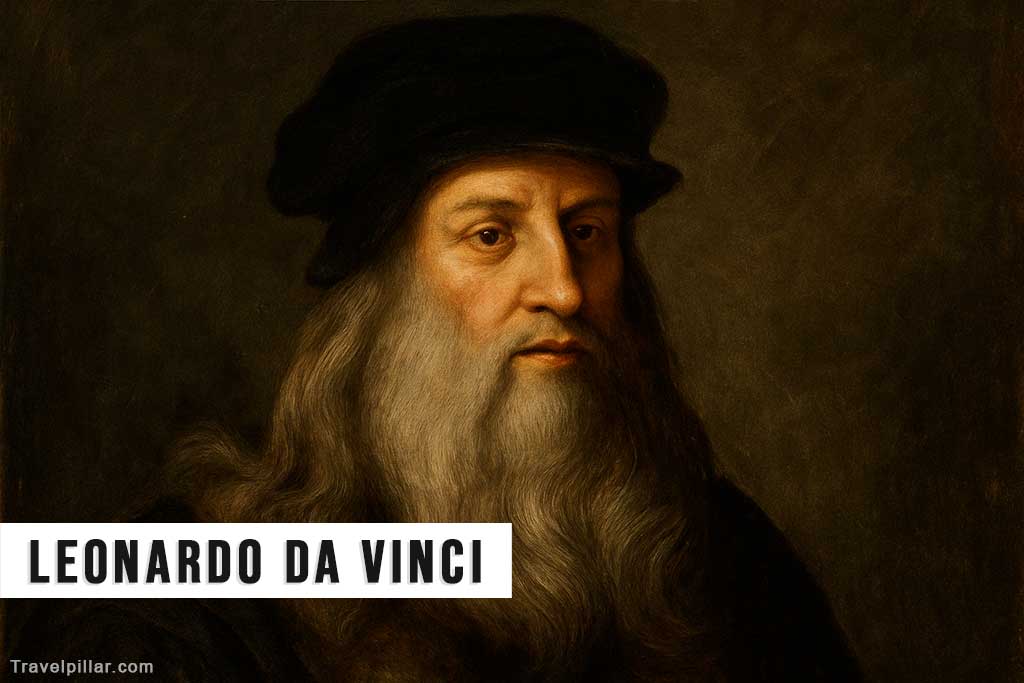
Leonardo da Vinci (1452-1519) was an Italian polymath active during the Renaissance. His interests ranged from painting to science, and he created enduring works, such as “Mona Lisa” and “The Last Supper.” Da Vinci’s notebooks reveal his innovative mind and curiosity about the world.
Michelangelo

Michelangelo Buonarroti (1475-1564) was an Italian Renaissance artist renowned for his masterpieces in sculpture, painting, and architectural design. His iconic works include the marble statue of “David” in Florence, the “Pieta” in St. Peter’s Basilica, and the Sistine Chapel ceiling frescoes in Vatican City. Michelangelo’s profound influence on Western art endures, marking him as one of history’s most impactful creative geniuses.
Galileo Galilei
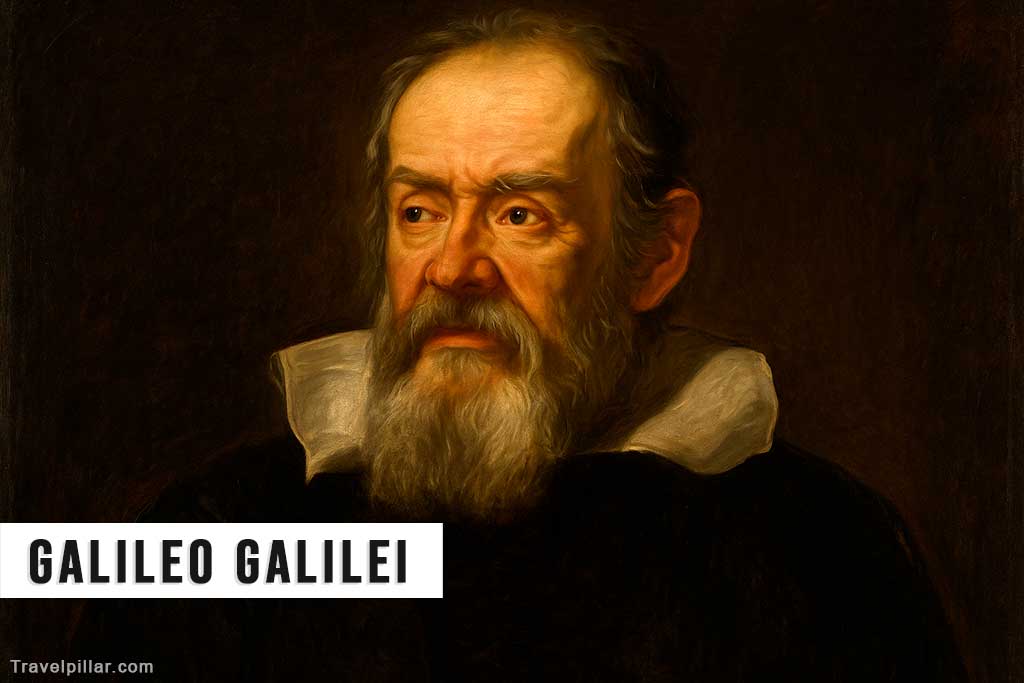
Galileo Galilei (1564-1642) was an Italian astronomer and physicist noted for his significant contributions to the scientific revolution. His advocacy for the heliocentric model of the solar system led to conflict with the Catholic Church, symbolizing the tension between science and religion.
Niccolò Machiavelli
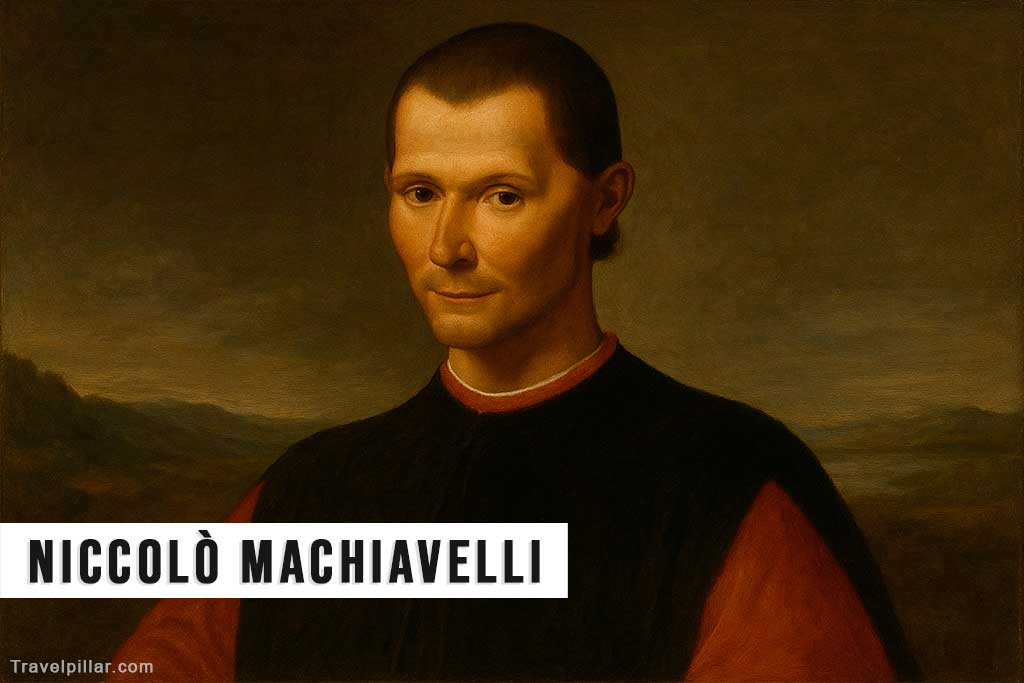
Niccolò Machiavelli (1469-1527) was an Italian political philosopher known primarily for “The Prince,” his pragmatic treatise on political leadership. His amoral and realistic approach to politics introduced the term “Machiavellian” into popular lexicon, referring to cunning or duplicitous behavior.
Marco Polo

Marco Polo (1254-1324) was a Venetian merchant, explorer, and writer who travelled extensively throughout Asia. His accounts, as depicted in “The Travels of Marco Polo,” introduced Europeans to Central Asia and China, significantly influencing subsequent exploration and cartography.
Dante Alighieri

Dante Alighieri (1265-1321) was an Italian poet, moral philosopher, and political thinker best known for “The Divine Comedy,” a monumental epic poem that has profoundly influenced Western literature. This literary masterpiece provides a comprehensive portrayal of the afterlife and stands as a seminal work in the Italian literary canon. Dante’s exploration of themes like sin, redemption, and love has rendered his work timeless and universally relevant.
Giuseppe Garibaldi
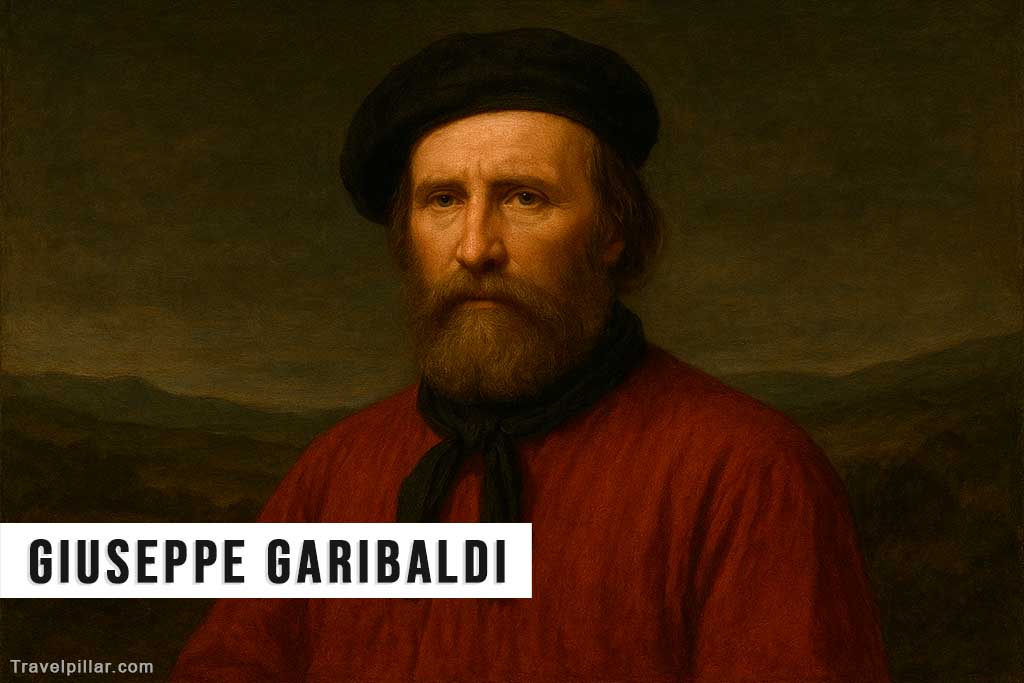
Giuseppe Garibaldi (1807-1882) was an Italian general, nationalist, and key figure in the Italian Risorgimento. Born in Nice, he spent much of his early life in exile due to his revolutionary activities. Returning to Italy in 1848, he led volunteer forces in several military campaigns that contributed to the unification of Italy in 1861. Garibaldi’s charismatic leadership, military successes, and fervent nationalism earned him the nickname “Hero of the Two Worlds.”
Vittorio Emanuele II

Vittorio Emanuele II (1820-1878) was the first king of a united Italy. Born into the House of Savoy, he became King of Sardinia in 1849 and played a key role in the Italian unification movement, known as the Risorgimento. In 1861, he was proclaimed King of Italy, uniting various independent states. His reign saw the consolidation of Italy’s borders, though his methods were often marked by militaristic and forceful strategies.
Benito Mussolini
Benito Mussolini (1883-1945) was an Italian political leader and the founder of Italian Fascism. He ruled Italy as Prime Minister from 1922 until 1943. Mussolini established a one-party dictatorship, suppressing political dissent and promoting nationalist and totalitarian ideals. He allied with Nazi Germany during World War II. Overthrown in 1943, Mussolini was arrested and eventually executed by Italian partisans in 1945. His regime is remembered for its oppressive policies and contribution to the Axis powers’ efforts during the war.
Giuseppe Verdi

Giuseppe Verdi (1813-1901) was an Italian composer, celebrated for his operas that have remained popular in the global repertoire. Born in Le Roncole, Verdi displayed musical talent early and went on to compose over 25 operas. His notable works include “La Traviata,” “Aida,” and “Rigoletto,” characterized by their dramatic intensity and musical innovation. Verdi’s music significantly impacted the Italian Risorgimento, and his operas remain central to the standard repertoire worldwide.
Antonio Vivaldi
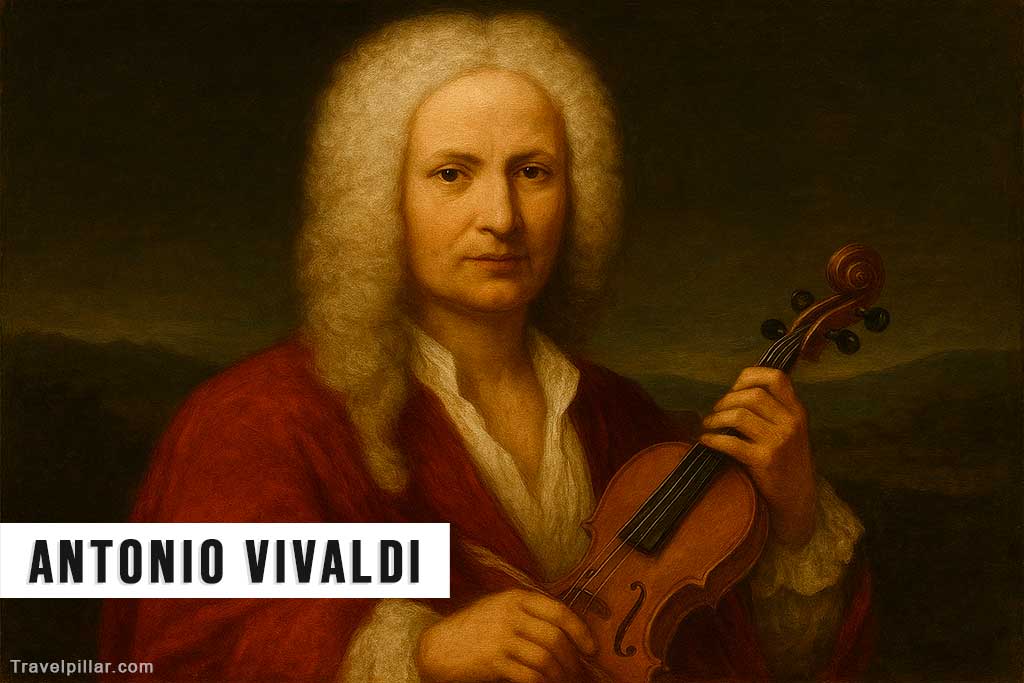
Antonio Vivaldi (1678-1741) was an Italian composer, violinist, and cleric famed for his instrumental concertos. Born in Venice, his most recognized work is “The Four Seasons,” a series of violin concertos that are among the most popular pieces in the classical music repertoire. His prolific output, innovative compositions, and virtuosic violin technique have left an indelible mark on Western music.
Alessandro Volta

Alessandro Volta (1745-1827) was an Italian physicist renowned for inventing the voltaic pile, the first electric battery. His pioneering work in electricity led to the development of modern electric power. Born in Como, his contributions were so influential that the unit of electric potential, the volt, was named in his honor. His other notable accomplishments include the discovery of methane and the invention of the electrophorus, an early electrostatic generator.
Guglielmo Marconi

Guglielmo Marconi (1874-1937) was an Italian inventor and electrical engineer, celebrated for his pioneering work on long-distance radio transmission. His development of the Marconi’s law and radio telegraph system earned him a Nobel Prize in Physics in 1909. Recognized as the father of long-distance radio communication, his work laid the foundation for much of today’s radio and wireless technology.
Giorgio Vasari
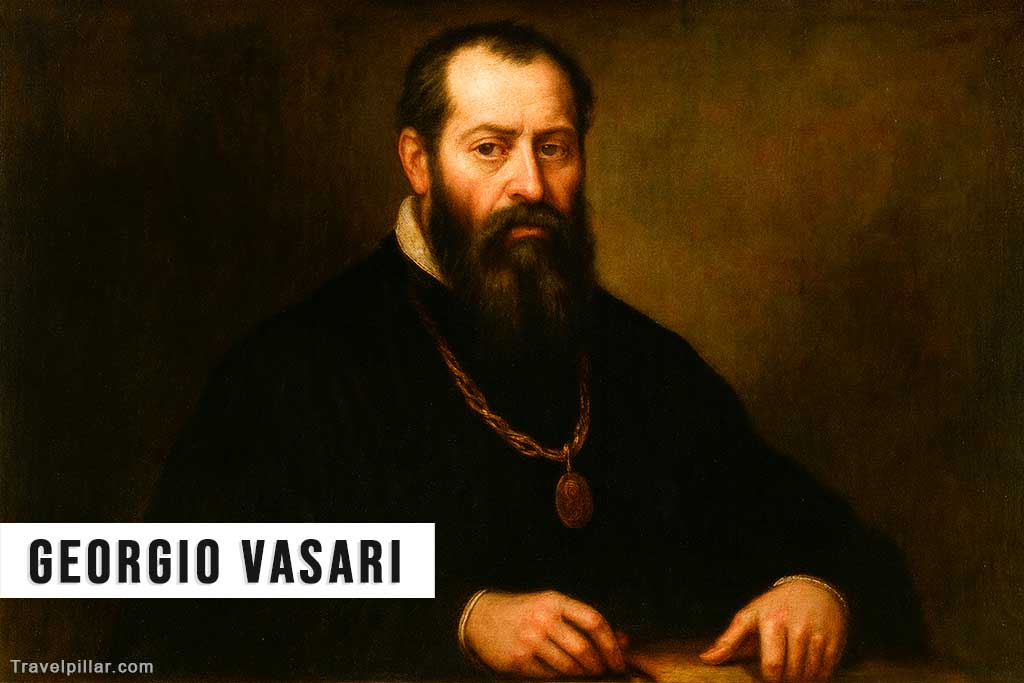
Giorgio Vasari (1511-1574) was an Italian painter, architect, and writer, known for his seminal work “The Lives of the Most Excellent Painters, Sculptors, and Architects.” Often considered the first art historian, Vasari’s accounts provide invaluable insights into the Italian Renaissance art world. His architectural contributions include the Uffizi Gallery in Florence, and as a painter, he was a part of the Medici court in Florence, executing numerous frescoes and altar pieces.
Amerigo Vespucci
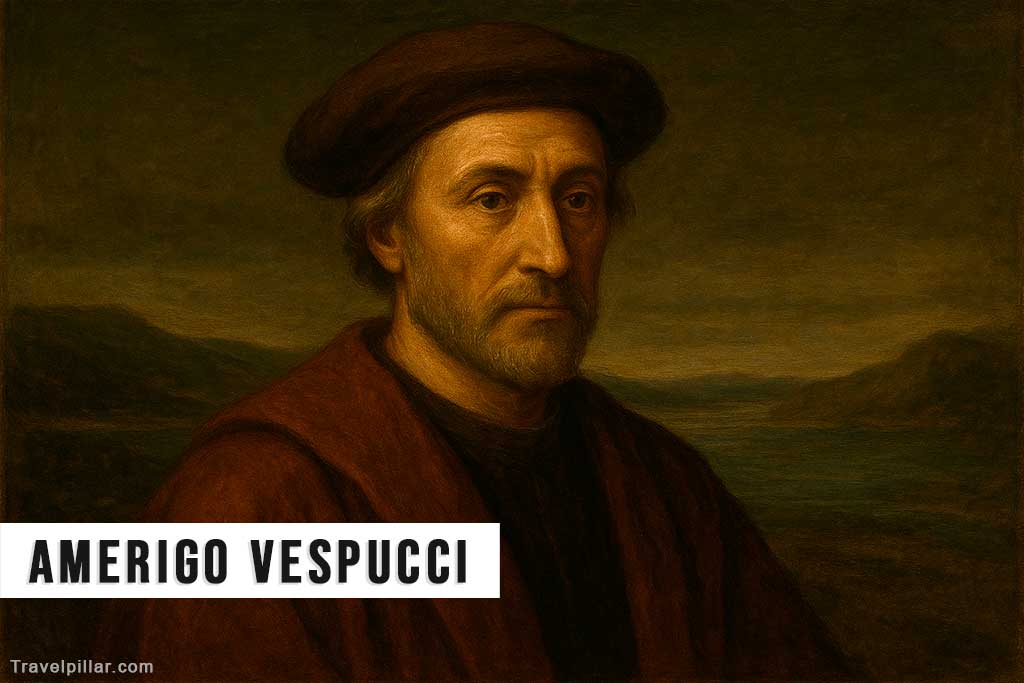
Amerigo Vespucci (1454-1512) was an Italian explorer, financier, and cartographer, known for his voyages to the Americas in the late 15th and early 16th centuries. His assertion that the New World was a separate continent from Asia challenged contemporary geographical understanding, leading to the use of the name “America” derived from his Latin name “Americus.”
Giotto di Bondone

Giotto di Bondone (1266/7–1337) was an Italian painter and architect from Florence, hailed as a pioneering figure in the Italian Renaissance. Renowned for his innovative use of perspective and human emotion, his frescoes in the Scrovegni Chapel in Padua are considered milestones in Western art. His architectural contributions include the design of the bell tower (Campanile) of the Florence Cathedral.
St. Francis of Assisi

St. Francis of Assisi (1181/1182-1226) was an Italian Catholic friar and preacher. Founder of the men’s Order of Friars Minor, the women’s Order of Saint Clare, and the Third Order of Saint Francis, he is one of the most venerated religious figures in history. Known for his love of nature and simple lifestyle, St. Francis is the patron saint of animals and the environment.
Enrico Fermi
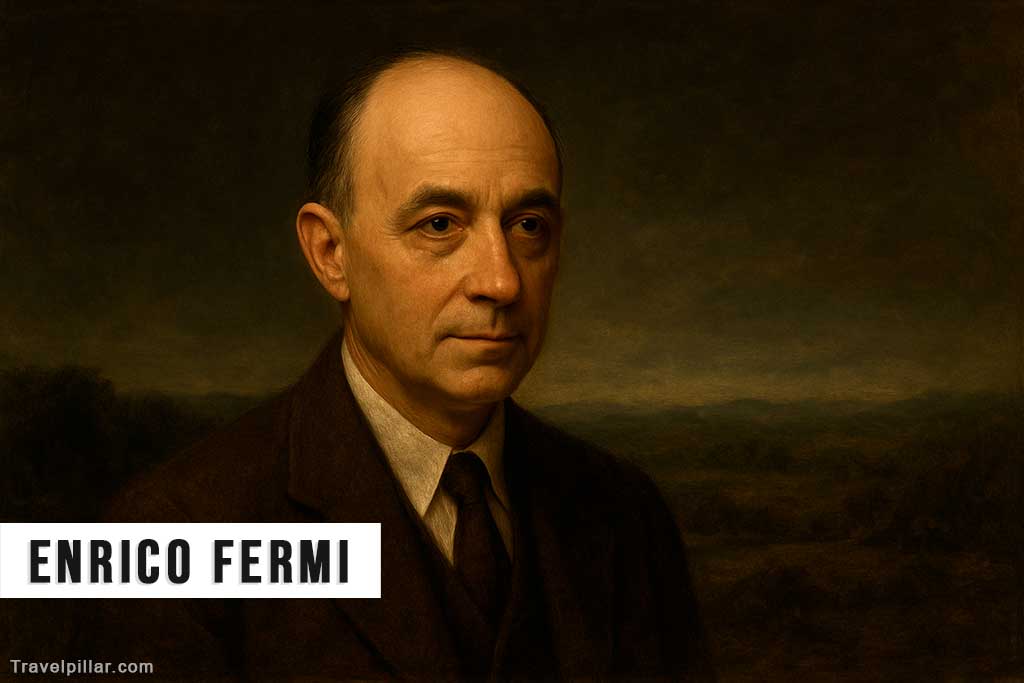
Enrico Fermi (1901-1954) was an Italian-American physicist and the creator of the world’s first nuclear reactor, the Chicago Pile-1. His work on the development of quantum theory, nuclear and particle physics, and statistical mechanics earned him the Nobel Prize in Physics in 1938. A key figure in the Manhattan Project, Fermi made significant contributions to the development of the atomic bomb.