

The Olympian Gods
The main Greek gods, also known as the Olympian gods, are the principal deities in ancient Greek religion and mythology. They reside on Mount Olympus and are:
Zeus
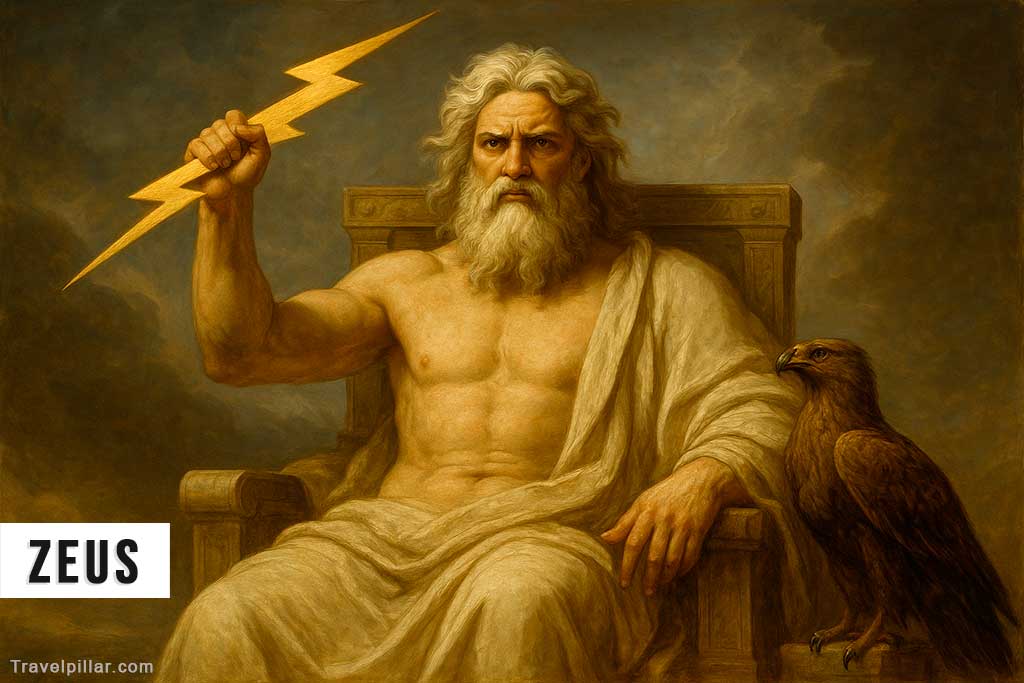
The supreme ruler of the Olympian gods, Zeus is the god of the sky, lightning, and thunder. He is known for his numerous love affairs and is often depicted wielding a lightning bolt. As the most powerful of the Greek gods, Zeus is a symbol of authority, justice, and order, presiding over the affairs of both gods and humans.
Hera

As the queen of the gods and the wife of Zeus, Hera is the goddess of marriage, women, and family. She is known for her jealousy and vengeful nature, especially towards Zeus’s lovers and their offspring. Despite this, Hera also represents the sanctity of marriage and the importance of family life.
Poseidon
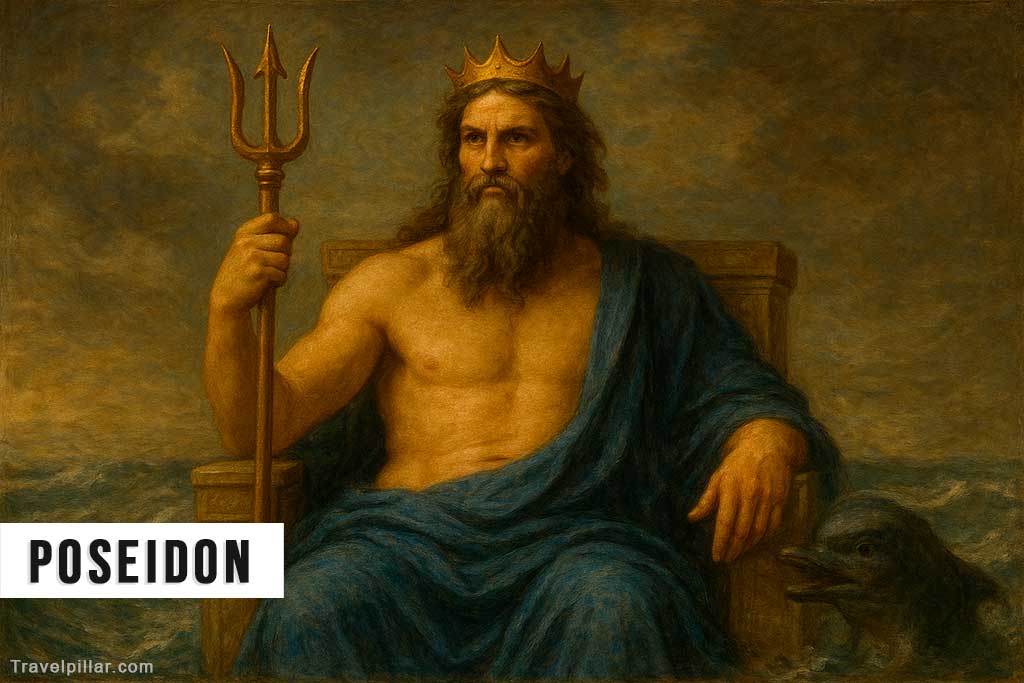
The powerful god of the sea, Poseidon is also associated with earthquakes and horses. He is often depicted holding a trident and is known for his temperamental and vengeful nature. As the brother of Zeus and Hades, Poseidon plays a significant role in many myths and legends.
Demeter
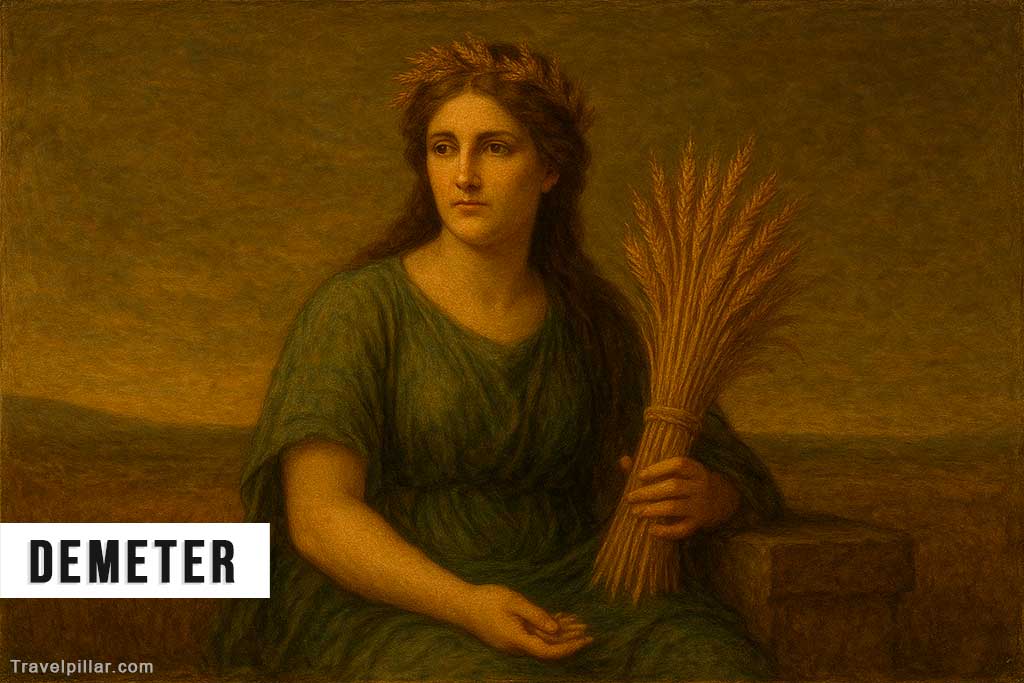
The goddess of agriculture, harvest, and fertility, Demeter is responsible for the growth of crops and the changing of the seasons. She is a nurturing and maternal figure, and her most famous myth involves the abduction of her daughter Persephone by Hades, which explains the cycle of the seasons.
Athena

The virgin goddess of wisdom, warfare, and crafts, Athena is the daughter of Zeus, who sprang fully grown and armored from his forehead. As the patron goddess of Athens, Athena is often depicted with an owl and a shield. Known for her strategic prowess and calm demeanor, she serves as a symbol of knowledge, justice, and civilization.
Apollo

The god of music, poetry, art, sun, light, and prophecy, Apollo is the son of Zeus and Leto and the twin brother of Artemis. He is associated with healing, truth, and enlightenment and is often depicted holding a lyre or a bow and arrow. As the embodiment of harmony and reason, Apollo plays a crucial role in many myths and legends.
Artemis
The virgin goddess of the hunt, wilderness, wild animals, and the moon, Artemis is the daughter of Zeus and Leto and the twin sister of Apollo. She is a protector of young women and is known for her independence, fierceness, and skill with a bow and arrow. As a symbol of purity and the untamed natural world, Artemis is revered in many Greek myths.
Ares

The god of war, violence, and bloodshed, Ares is the son of Zeus and Hera. He is often depicted wearing armor and carrying weapons, and is associated with the chaotic and destructive aspects of battle. Despite his fierce nature, Ares is also linked to the courage and strength of warriors, playing a central role in many Greek myths and legends.
Aphrodite

The goddess of love, beauty, and desire, Aphrodite is said to have been born from the foam of the sea. She is known for her many love affairs, both with gods and mortals, and is often depicted with doves or a myrtle wreath. As the embodiment of love and passion, Aphrodite plays a key role in numerous myths and legends.
Hephaestus

The god of fire, metalworking, and crafts, Hephaestus is the son of Hera and is often depicted as a lame or deformed figure. Despite his physical appearance, Hephaestus is a skilled artisan and is responsible for crafting many of the gods’ divine weapons and armor. He is married to Aphrodite and serves as a symbol of creativity, craftsmanship, and resilience.
Hermes

The messenger of the gods, Hermes is the god of trade, thieves, and travel. He is the son of Zeus and the nymph Maia, and is known for his speed, cunning, and eloquence. Often depicted wearing winged sandals and a winged helmet, Hermes also serves as a guide for souls to the underworld. As the embodiment of communication, diplomacy, and commerce, Hermes plays a vital role in many Greek myths and legends.
Dionysus

The god of wine, festivities, and pleasure, Dionysus is the son of Zeus and the mortal Semele. He is often depicted holding a thyrsus (a staff topped with a pinecone) and accompanied by revelers and wild animals. As the god of ecstasy and transformation, Dionysus is associated with the liberating power of wine and the creative potential of the human spirit. His cult and festivals were an essential part of ancient Greek religious practices, and he plays a significant role in numerous myths and legends.
Other Key Deities
Hestia
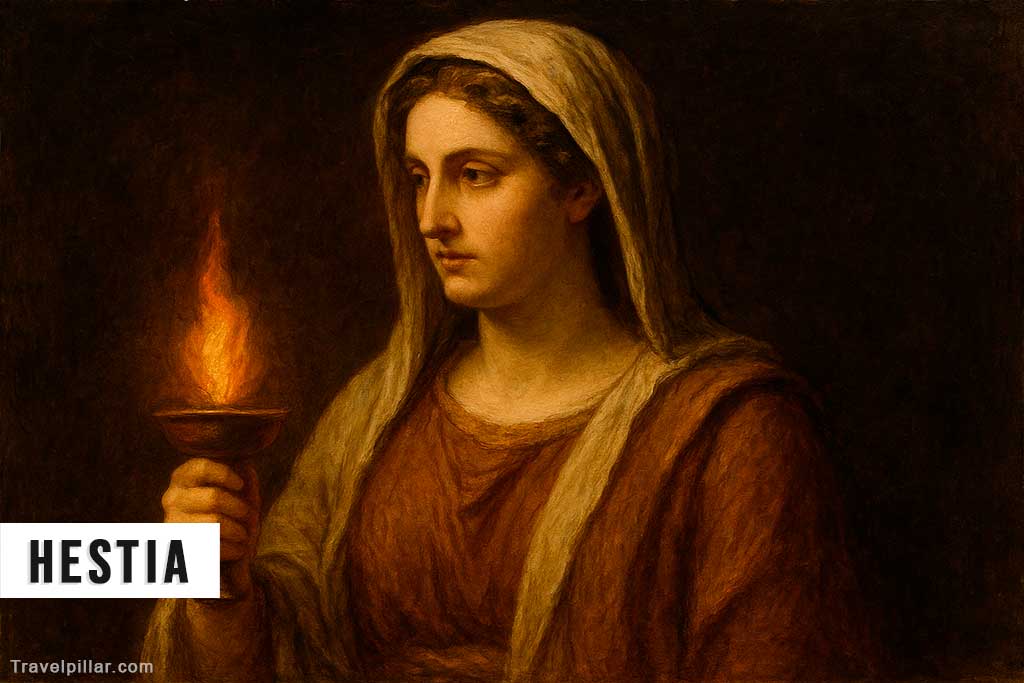
Hestia, the Greek goddess of the hearth, home, and family, was one of the original twelve Olympian deities. As the personification of domestic stability and order, she played a central role in ancient Greek households and civic life. Hestia was honored at the hearth of every home and at public hearths in city-states, symbolizing unity and community. Though temples specifically dedicated to her were rare, her presence was deeply integrated into everyday religious practices throughout Greece.
Hades
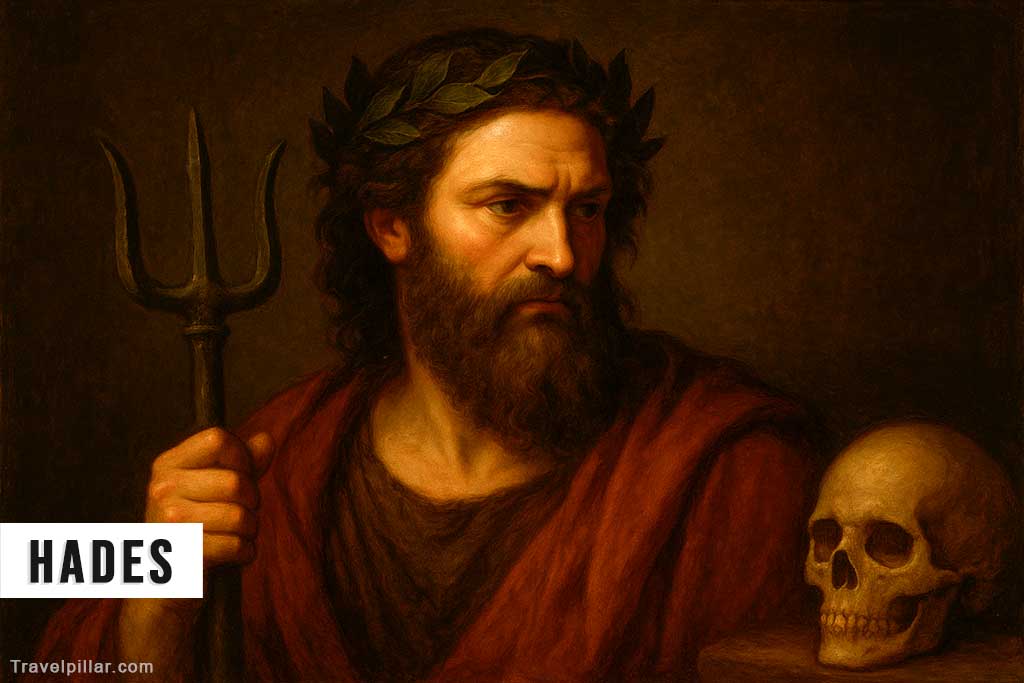
Hades, the ancient Greek god of the underworld, was the ruler of the realm of the dead and a key figure in Greek mythology. As the brother of Zeus and Poseidon, Hades presided over the afterlife, ensuring the orderly passage of souls. Though often associated with death, he was not considered evil but rather a necessary part of the natural cycle. Temples dedicated to Hades were rare, as his worship was more associated with funeral rites and the underworld.
Persephone
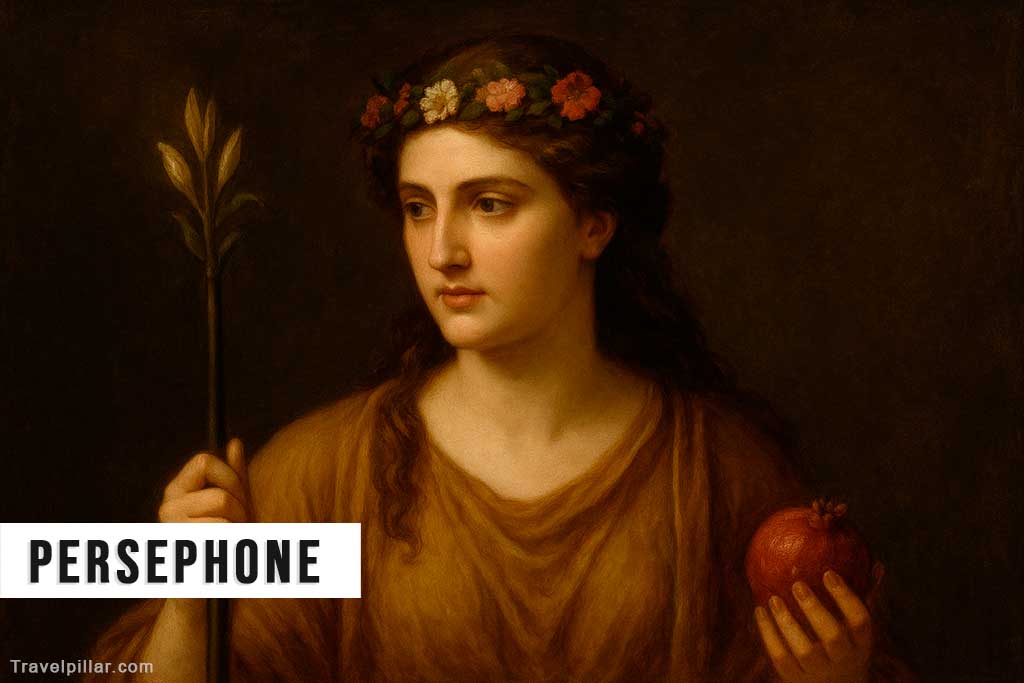
Persephone, the daughter of Demeter and Zeus, is the Greek goddess of spring and the queen of the underworld. Her myth, centered on her abduction by Hades, explains the cycle of the seasons. Persephone spends part of the year in the underworld, causing winter, and returns to the earth in spring, symbolizing rebirth and growth. Her story plays a significant role in ancient Greek religious rites, particularly in the Eleusinian Mysteries, which explored themes of life and death.