

The Scottish National Gallery, located on the Mound in the heart of Edinburgh, Scotland, is a prominent art institution that showcases a vast collection of European paintings and sculptures spanning from the Renaissance to the early 20th century. Opened in 1859, the gallery is housed in a stunning neoclassical building designed by renowned Scottish architect William Henry Playfair. The gallery offers free admission to its permanent collection, making it accessible to a broad audience of art enthusiasts and casual visitors alike.
The Scottish National Gallery’s collection features works by renowned international artists, including Titian, Rembrandt, Vermeer, Botticelli, Monet, and Van Gogh, as well as distinguished Scottish artists such as Sir Henry Raeburn, Allan Ramsay, and Sir David Wilkie.
In addition to its permanent collection, the gallery hosts temporary exhibitions that showcase various aspects of art history and the works of specific artists. The gallery also offers a range of educational programs, workshops, and guided tours, ensuring visitors can engage with and appreciate the art on display.
As a cultural institution dedicated to showcasing the best of European art, the Scottish National Gallery provides an enriching experience for visitors to Edinburgh, making it an essential destination for art lovers and history enthusiasts.
Official website: https://www.nationalgalleries.org
Google map 4.6/5
Highlights of the Scottish National Gallery
“The Monarch of the Glen” – Sir Edwin Landseer
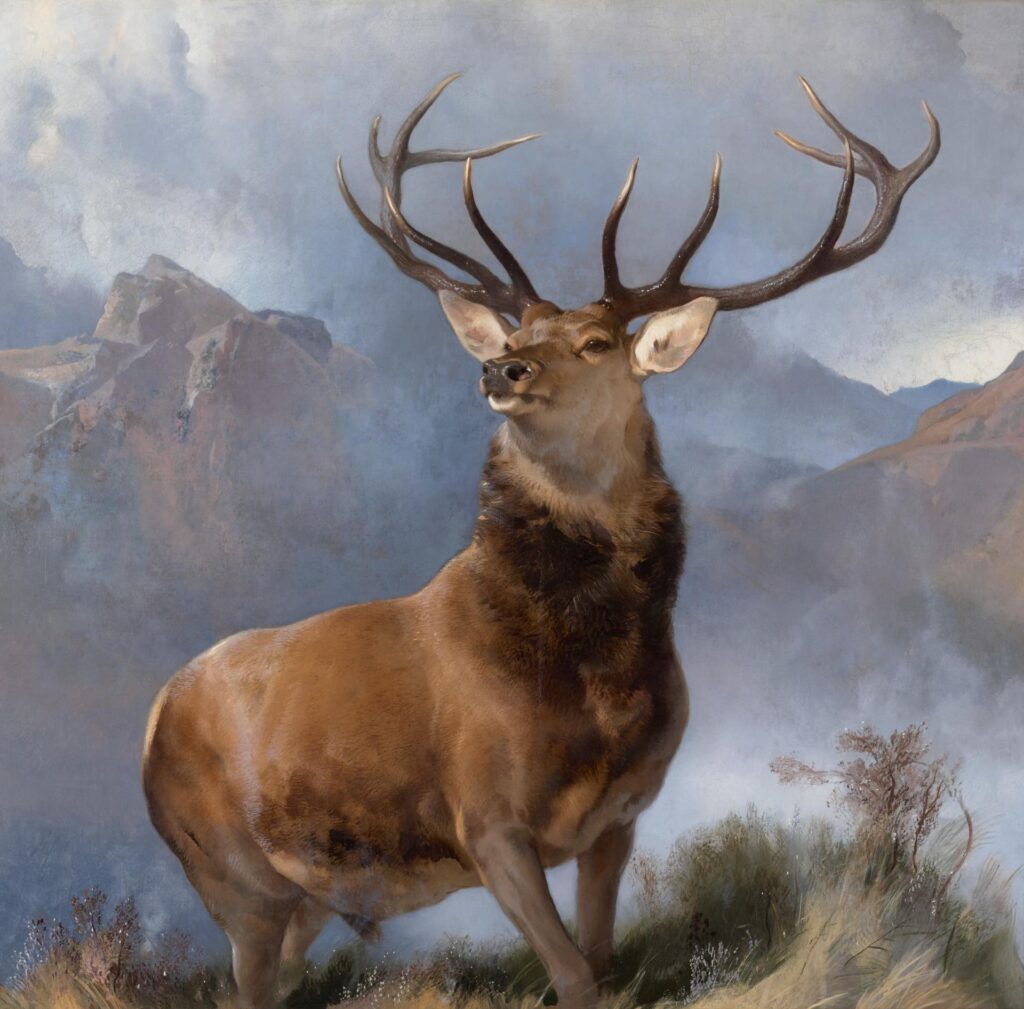
“The Monarch of the Glen” by Sir Edwin Landseer is a 19th-century oil painting depicting a red deer stag against a Highland landscape. Completed in 1851, it became an iconic image of Scotland’s natural heritage. The composition reflects Victorian ideals of nobility and the sublime in nature. Originally commissioned for the House of Lords, it now resides in the Scottish National Gallery and remains one of the most recognisable works in British art.
Web page: https://www.nationalgalleries.org/
“Olive Trees” – Vincent van Gogh

“Olive Trees” by Vincent van Gogh is part of a series painted in 1889 during his stay at the Saint-Rémy-de-Provence asylum. The work depicts twisting olive trees under a dynamic sky, reflecting Van Gogh’s expressive brushwork and intense colour palette. It explores the emotional and spiritual resonance of nature. The painting is housed in the Scottish National Gallery and is a significant example of Post-Impressionist landscape painting.
Web page: https://www.nationalgalleries.org/
“Vision of the Sermon (Jacob Wrestling with the Angel)” – Paul Gauguin

“Vision of the Sermon (Jacob Wrestling with the Angel)” by Paul Gauguin was painted in 1888 during his time in Brittany. It depicts Breton women witnessing a biblical vision after a sermon, with Jacob and the angel shown in a red, abstracted background. The work marks a departure from naturalism, using bold colour and symbolic content. It is a key example of Gauguin’s Synthetist style and post-Impressionist experimentation with form and meaning.
Web page: https://www.nationalgalleries.org/
“The Reverend Robert Walker Skating on Duddingston Loch” – Sir Henry Raeburn
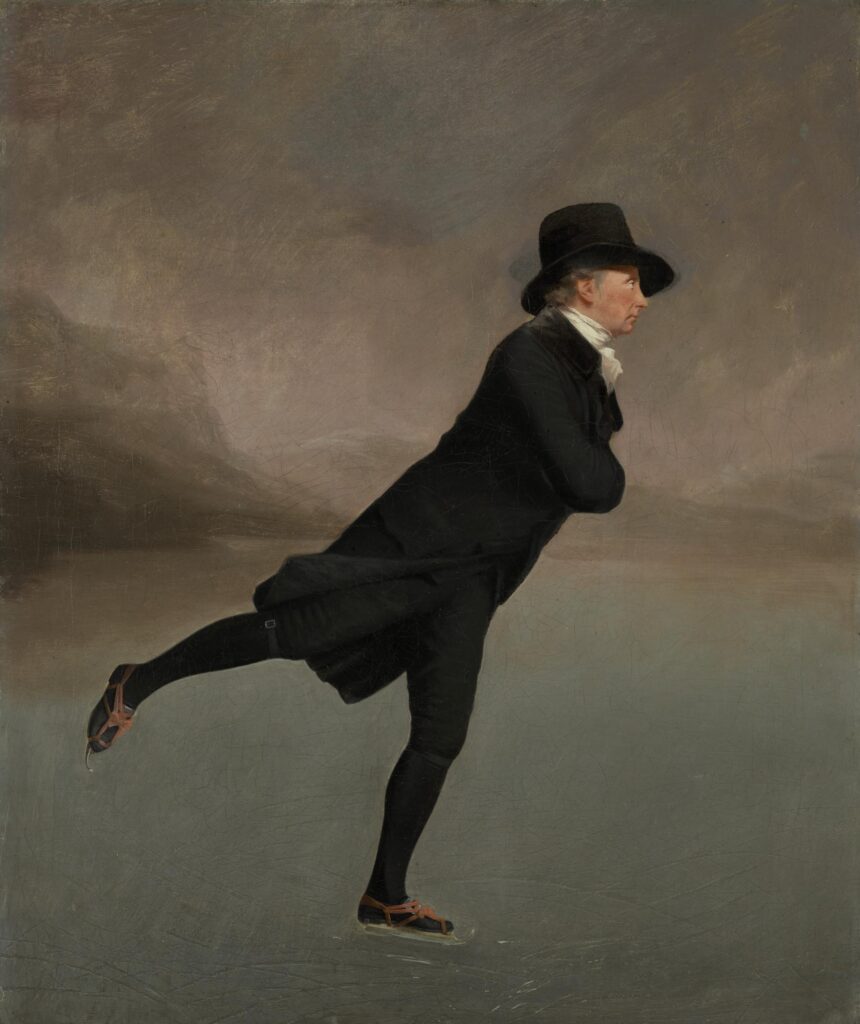
“The Reverend Robert Walker Skating on Duddingston Loch” by Sir Henry Raeburn is a late 18th-century portrait depicting a Church of Scotland minister ice skating. The composition is notable for its balance, simplicity, and understated elegance. The dark attire contrasts with the frozen loch, creating a striking visual effect. Celebrated as a masterpiece of Scottish portraiture, the painting is one of the most recognisable works in the Scottish National Gallery’s collection.
Web page: https://www.nationalgalleries.org/art-and-artists/5327
“Diana and Actaeon” by Titian

“Diana and Actaeon” by Titian is a mythological painting completed between 1556 and 1559. It depicts the moment the hunter Actaeon stumbles upon the goddess Diana bathing, leading to his transformation into a stag. The composition reflects Titian’s late style, marked by dynamic movement and rich colour. Part of a series for King Philip II of Spain, the painting is jointly owned by the National Galleries of Scotland and the National Gallery, London.
Web page: https://www.nationalgalleries.org/
“Venus Rising from the Sea” by Titian

“Venus Rising from the Sea” by Titian is a 16th-century painting depicting the Roman goddess emerging from the sea, assisted by a nymph. The work exemplifies Venetian Renaissance art through its soft modelling, sensual form, and atmospheric landscape. Likely painted around 1520, it showcases Titian’s early mastery of colour and composition. The painting is held in the Scottish National Gallery and is considered a key example of mythological subject matter in Renaissance art.
Web page: https://www.nationalgalleries.org/
“Diana and Callisto” by Titian
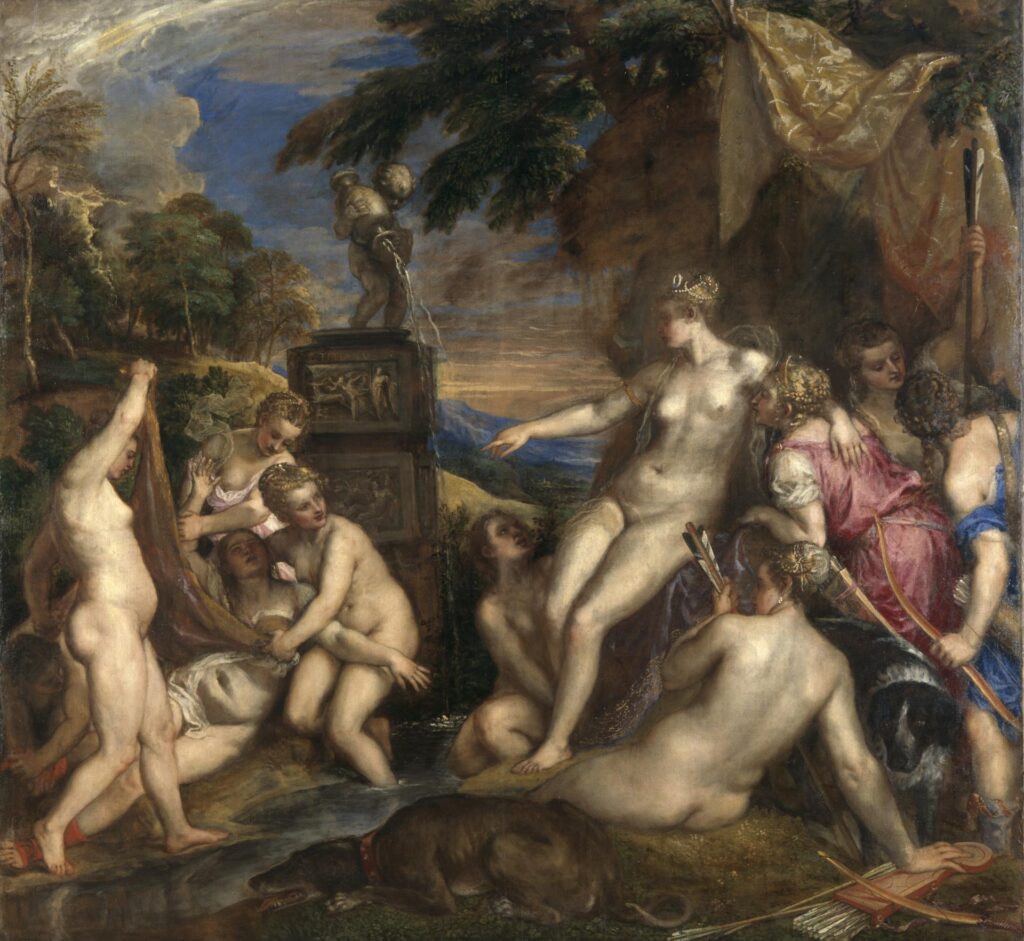
“Diana and Callisto” by Titian was painted between 1556 and 1559 as part of a mythological series for King Philip II of Spain. The scene shows the goddess Diana banishing the nymph Callisto upon discovering her pregnancy. The composition features dynamic figures, classical architecture, and rich Venetian colour. It exemplifies Titian’s mature style and narrative complexity. The painting is jointly owned by the Scottish National Gallery and the National Gallery, London.
Web page: https://www.nationalgalleries.org/
“The Virgin Adoring the Sleeping Christ Child” – Sandro Botticelli

“The Virgin Adoring the Sleeping Christ Child” by Sandro Botticelli is a devotional painting from the late 15th century. It depicts the Virgin Mary in quiet reverence before the infant Christ, who lies sleeping on the ground. The composition reflects Botticelli’s refined linear style and delicate use of colour. Characterised by serene emotion and graceful form, the work is an important example of Italian Renaissance religious art in the Scottish National Gallery.
Web page: https://www.nationalgalleries.org/
“Christ in the House of Martha and Mary” – Johannes Vermeer

“Christ in the House of Martha and Mary” by Johannes Vermeer is one of the artist’s earliest known works, completed around 1654–1656. It depicts Christ seated with Martha and Mary in a domestic interior, emphasising themes of service and contemplation. The painting features restrained colour, soft lighting, and careful composition. As one of Vermeer’s few religious scenes, it holds a distinctive place within his limited but significant body of work.
Web page: https://www.nationalgalleries.org/
“A Seascape, Shipping by Moonlight” – Claude Monet

“A Seascape, Shipping by Moonlight” by Claude Monet is an early work painted in the 1860s, depicting boats at sea under a moonlit sky. The painting captures atmospheric effects through loose brushwork and a subdued palette, characteristic of Monet’s developing Impressionist style. It reflects the artist’s interest in light, water, and maritime subjects. The work is part of the Scottish National Gallery’s notable collection of 19th-century French painting.
Web page: https://www.nationalgalleries.org/
“Grainstacks: Snow Effect” – Claude Monet

“Grainstacks: Snow Effect” by Claude Monet is part of his renowned series depicting haystacks near his home in Giverny. Painted in 1891, this version captures the scene under snow, emphasising changing light and atmosphere. The work reflects Monet’s interest in seasonal variation and transient effects. With its layered brushwork and cool tonal palette, the painting is a key example of Impressionist landscape and forms part of the Scottish National Gallery’s French collection.
Web page: https://www.nationalgalleries.org/
“Diego Martelli” – Edgar Degas

“Diego Martelli” by Edgar Degas is a portrait painted in 1879 of the Italian art critic and supporter of the Impressionists. Martelli is shown seated in a relaxed pose, surrounded by books and papers, reflecting his intellectual interests. The composition combines informality with psychological depth. Degas’s use of muted tones and precise drawing demonstrates his interest in realism and character study. The work is a notable example of Degas’s portraiture in the Scottish National Gallery.
Web page: https://www.nationalgalleries.org/
“Lady Agnew of Lochnaw” – John Singer Sargent

“Lady Agnew of Lochnaw” by John Singer Sargent is a portrait painted in 1892, depicting Gertrude Vernon, wife of Sir Andrew Agnew. Seated in a French Bergère chair, she gazes directly at the viewer with a composed expression. The work is noted for its fluid brushwork, pale colour palette, and psychological insight. It exemplifies Sargent’s refined portrait style and is among the most celebrated paintings in the Scottish National Gallery’s collection.
Web page: https://www.nationalgalleries.org/
“The Three Graces” – Antonio Canova

“The Three Graces” by Antonio Canova is a neoclassical marble sculpture depicting the mythological daughters of Zeus—Euphrosyne, Aglaea, and Thalia. Completed in the early 19th century, the work exemplifies Canova’s idealised style, with smooth surfaces and harmonious proportions. The composition reflects classical themes of beauty, joy, and elegance. Displayed in the Scottish National Gallery, it is considered a key example of neoclassical sculpture and a highlight of the gallery’s European collection.
Web page: https://www.nationalgalleries.org/
“The Bell Rock Lighthouse” – J.M.W. Turner
“The Bell Rock Lighthouse” by J.M.W. Turner is a dramatic seascape painted around 1819, depicting the lighthouse off the east coast of Scotland during a storm. The composition emphasises the contrast between human engineering and natural forces, using light, atmosphere, and dynamic brushwork. The painting reflects Turner’s interest in maritime subjects and the sublime. It is a notable example of British Romantic painting in the Scottish National Gallery’s collection.
Web page: https://www.nationalgalleries.org/
“An Old Woman Cooking Eggs” – Diego Velázquez
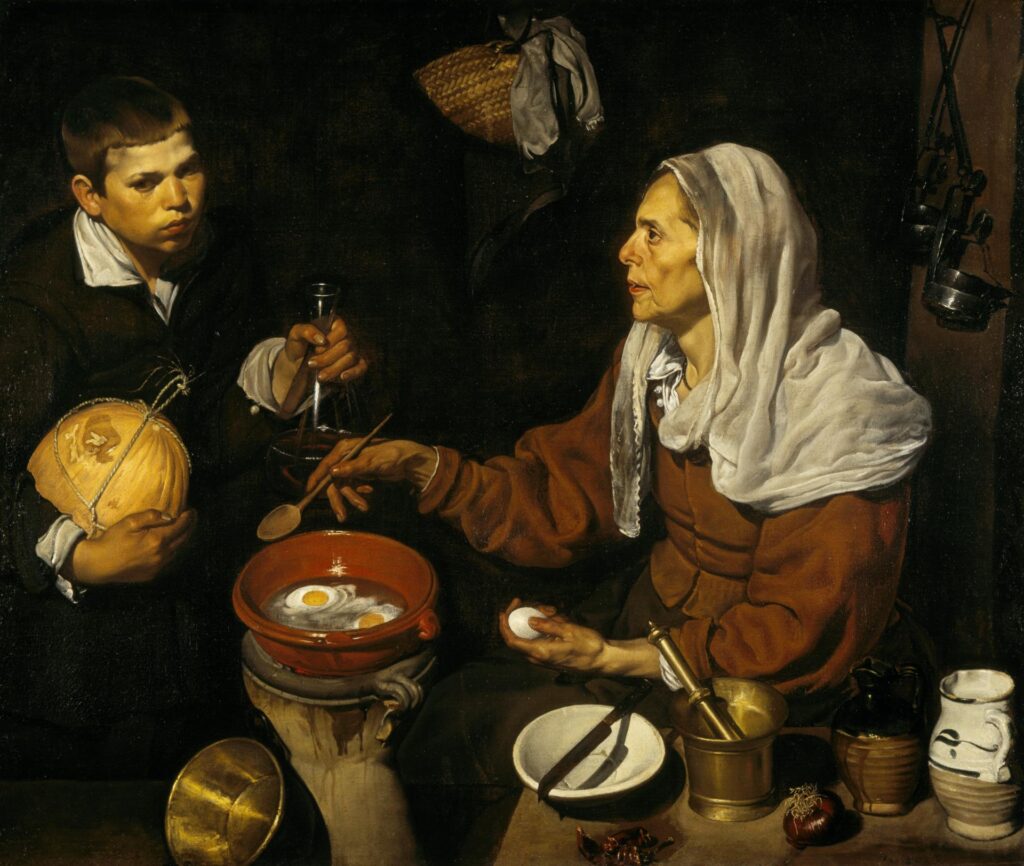
“An Old Woman Cooking Eggs” by Diego Velázquez is an early work painted around 1618, showcasing the artist’s mastery of realism. It depicts a domestic kitchen scene with detailed still life elements and strong contrasts of light and shadow. The composition demonstrates Velázquez’s interest in everyday subjects and his technical skill in rendering textures and forms. Held in the Scottish National Gallery, it is a significant example of Spanish Baroque genre painting.
Web page:https://www.nationalgalleries.org/
“The Nativity with Two Angels” – Filippino Lippi
“The Nativity with Two Angels” by Filippino Lippi is a late 15th-century Italian Renaissance painting depicting the birth of Christ. The Virgin Mary and infant Jesus are shown in a modest setting, accompanied by two angels. The composition reflects Lippi’s delicate figures, soft colouring, and attention to detail. Combining devotional intimacy with classical elements, the work is a significant example of Florentine religious art in the Scottish National Gallery’s collection.
Web page: https://www.nationalgalleries.org/
“A Woman in Bed (Sarah Awaiting Tobias)” – Rembrandt van Rijn
“A Woman in Bed (Sarah Awaiting Tobias)” by Rembrandt van Rijn is a small oil painting completed around 1645–46. It depicts a woman reclining in bed, interpreted as the biblical Sarah awaiting her husband Tobias. The composition features warm lighting, rich textures, and psychological depth, characteristic of Rembrandt’s mature style. The painting exemplifies his skill in conveying human emotion and is an important work in the Scottish National Gallery’s Dutch collection.
Web page: https://www.nationalgalleries.org/
“Christ Blessing (The Saviour of the World)” – El Greco
“Christ Blessing (The Saviour of the World)” by El Greco is a late 16th-century devotional painting. It depicts Christ raising his right hand in blessing while holding a globe in his left, symbolising his dominion over the world. The work features elongated forms, expressive gesture, and dramatic lighting, typical of El Greco’s distinctive style. It is a key example of Spanish Mannerism in the Scottish National Gallery’s European painting collection.
Web page: https://www.nationalgalleries.org/
“The Big Trees” – Paul Cézanne
“The Big Trees” by Paul Cézanne is a late landscape painting, completed around 1902–1904. It depicts a dense arrangement of tall trees rendered with layered brushstrokes and subtle colour modulation. The composition reflects Cézanne’s interest in structure and form within nature, bridging Impressionism and modernism. The work demonstrates his evolving approach to spatial organisation and is a significant example of his mature style in the Scottish National Gallery’s collection.
Web page: https://www.nationalgalleries.org/
Black Horse, Study for ‘Bathers at Asnières’ – Georges Seurat
“Black Horse, Study for ‘Bathers at Asnières’” by Georges Seurat is a preparatory oil study for his major painting Bathers at Asnières (1884). The study depicts a dark horse near the riverbank, rendered with subtle tonal shifts and controlled brushwork. It reflects Seurat’s early exploration of light, composition, and form before his development of pointillism. The work is part of the Scottish National Gallery’s holdings of late 19th-century French painting.
Web page: https://www.nationalgalleries.org/
“The Hon. Mrs. Graham” – Thomas Gainsborough
“The Hon. Mrs. Graham” by Thomas Gainsborough is a full-length portrait painted in 1777, depicting Mary Cathcart, the wife of Thomas Graham. The sitter is shown in an elegant pose with flowing garments, characteristic of Gainsborough’s refined Rococo style. The composition combines graceful movement with a natural landscape setting. Regarded as one of the artist’s finest works, the painting is a highlight of 18th-century British portraiture in the Scottish National Gallery.
Web page: https://www.nationalgalleries.org/
“The Feast of Herod” – Sir Peter Paul Rubens
“The Feast of Herod” by Sir Peter Paul Rubens is a dramatic Baroque painting depicting the biblical episode in which Salome presents the head of John the Baptist to King Herod. Completed around 1633, the composition features dynamic figures, rich colour, and intense emotion, characteristic of Rubens’s mature style. The work exemplifies his narrative skill and command of theatricality and is a significant example of Flemish Baroque painting in the Scottish National Gallery.
Web page: https://www.nationalgalleries.org/
“The Ladies Waldegrave” – Sir Joshua Reynolds
“The Ladies Waldegrave” by Sir Joshua Reynolds is an 18th-century group portrait painted around 1780–81. It depicts the three daughters of the Earl of Waldegrave engaged in domestic arts—embroidery, tambour work, and winding silk. The composition combines elegance and informality, reflecting Enlightenment ideals of refinement and virtue. Painted in Reynolds’s grand manner style, the work is a notable example of British portraiture and is held in the Scottish National Gallery’s collection.
Web page: https://www.nationalgalleries.org/
The Adoration of the Magi – Giorgio Vasari
“The Adoration of the Magi” by Giorgio Vasari is a 16th-century Mannerist painting depicting the biblical scene of the Three Kings presenting gifts to the infant Christ. The composition features elongated figures, vivid colours, and complex spatial arrangements, characteristic of Vasari’s style. Known for his role as an artist and biographer, Vasari combines narrative detail with decorative elegance. The painting is part of the Scottish National Gallery’s collection of Italian Renaissance art.
Web page: https://www.nationalgalleries.org/