
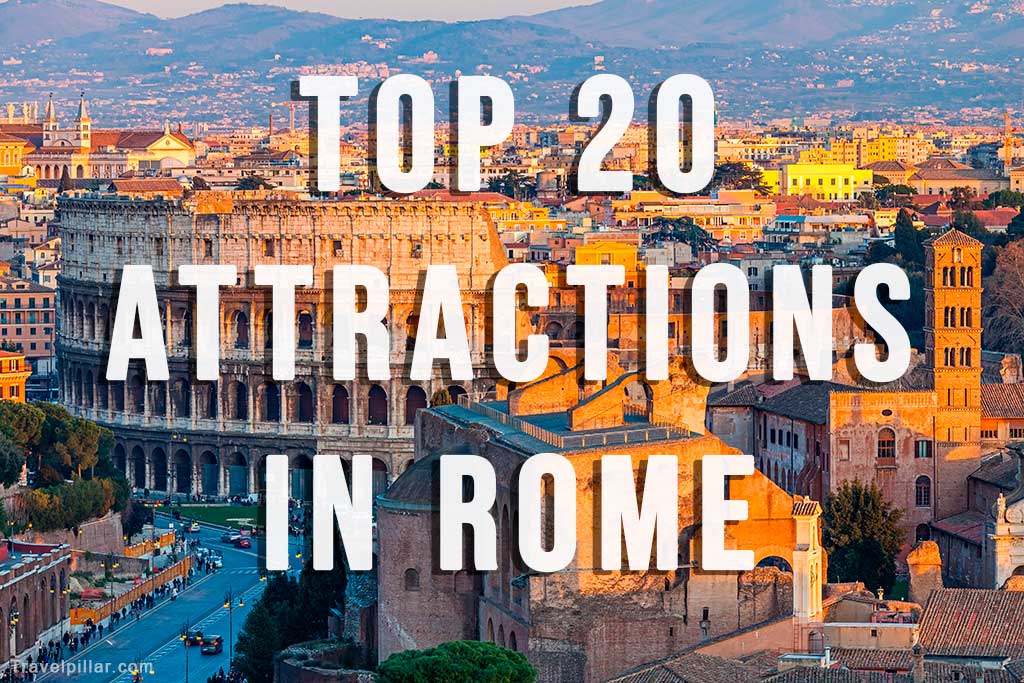
The top attractions in Rome illustrate the city’s extensive historical, religious, and cultural heritage. They include ancient Roman sites, Renaissance and Baroque architecture, major basilicas, and distinctive neighbourhoods. Together, these locations provide insight into Rome’s development from imperial capital to centre of Christianity and modern European city. Visiting these attractions offers an overview of the artistic achievements, urban planning, and social life that have shaped Rome’s identity over more than two millennia.
#1 Vatican City – Città del Vaticano

Vatican City is the world’s smallest nation headed by the Pope, covering just 50 ha (120 acres). This enclave within Rome is a treasure trove of art, history, and spirituality. Explore the rich cultural heritage of the Catholic Church and marvel at the architectural grandeur of its buildings. Attractions not to be missed within the Vatican City are:
Official tourism websites:
https://www.vatican.va (Catholic Church)
https://www.museivaticani.va (Museums & Tourism)
#2 The Pantheon

The Pantheon is a well-preserved ancient Roman temple dedicated to all gods, later converted into a Christian church. Completed during Emperor Hadrian’s reign around 126 AD, it features a massive dome with a central oculus, symbolizing the heavens. Its harmonious proportions and architectural innovation, including unreinforced concrete construction, have inspired structures worldwide. Located in Piazza della Rotonda, the Pantheon remains a significant cultural and historical landmark in Rome.
Official website: https://www.pantheonroma.com
Google map 4.8/5
#3 The Roman Forum – Foro Romano
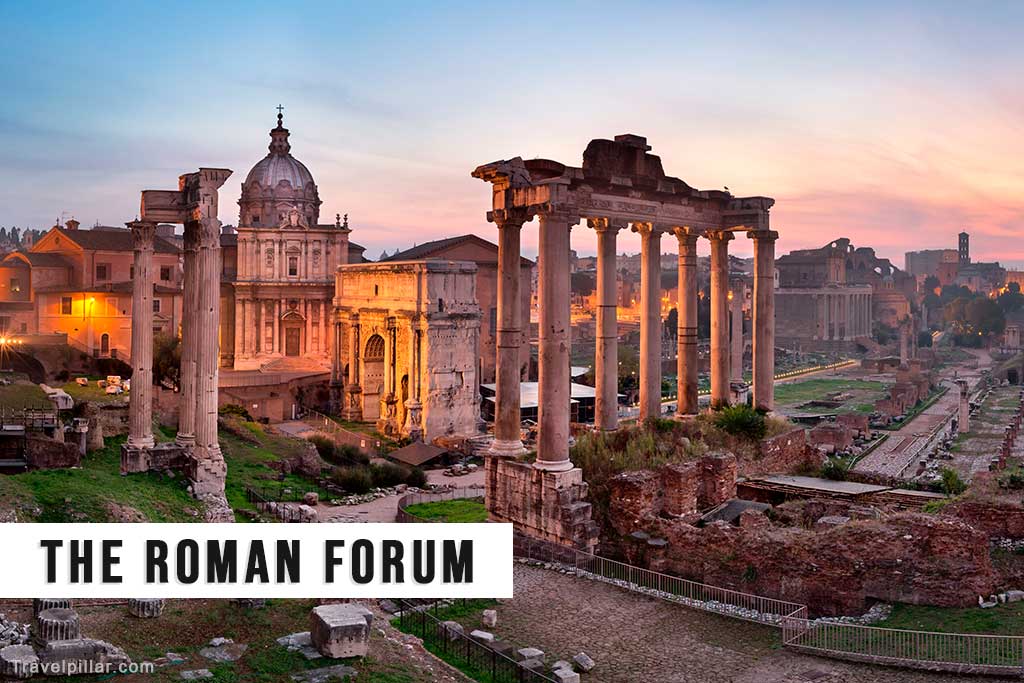
The Roman Forum, located between the Palatine and Capitoline Hills, was the political, religious, and social centre of ancient Rome. Developed over centuries, it features ruins of significant structures, including the Temple of Saturn, the Arch of Titus, and the Curia. The Forum hosted triumphal processions, public speeches, and market activities. As a symbol of Roman civilization, it offers valuable insights into the city’s history and architectural grandeur.
Official website: https://colosseo.it/en/
Entrance tickets can be purchased for 24hr or 48hr entry and include access to the Colosseum, Roman Forum and Palatine Hill – check website for prices and opening hours
Google map 4.7/5
#4 Colosseum

The Colosseum, also known as the Flavian Amphitheatre, is an iconic ancient Roman structure located in the heart of Rome. Completed in 80 AD under Emperor Titus, it hosted gladiatorial games, animal hunts, and public spectacles. Its elliptical design could accommodate up to 50,000 spectators. Despite damage over centuries, its architectural ingenuity and historical significance make it one of the most renowned landmarks in the world and a symbol of ancient Roman engineering.
Official website: https://colosseo.it/en/
Entrance tickets can be purchased for 24hr or 48hr entry and include access to the Colosseum, Roman Forum and Palatine Hill – check website for prices and opening hours
Google map 4.7/5
#5 Santa Maria Maggiore – Basilica di Santa Maria Maggiore
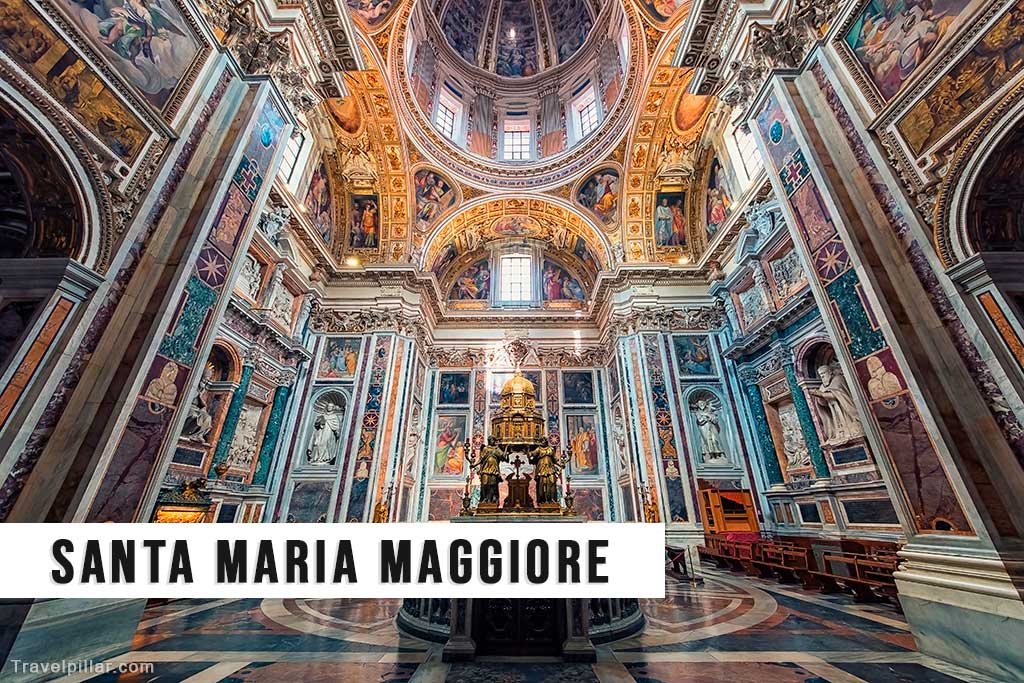
Santa Maria Maggiore, one of Rome’s four major basilicas, is a remarkable example of early Christian architecture. Built in the 5th century, it features stunning mosaics depicting biblical scenes and a richly adorned interior blending Roman and Baroque elements. The basilica houses significant relics, including a fragment of Christ’s manger. Located on the Esquiline Hill, it remains a major pilgrimage site and a testament to Rome’s religious and artistic heritage.
Official website: https://www.basilicasantamariamaggiore.va/en/
Google map 4.8/5
#6 Palatine Hill
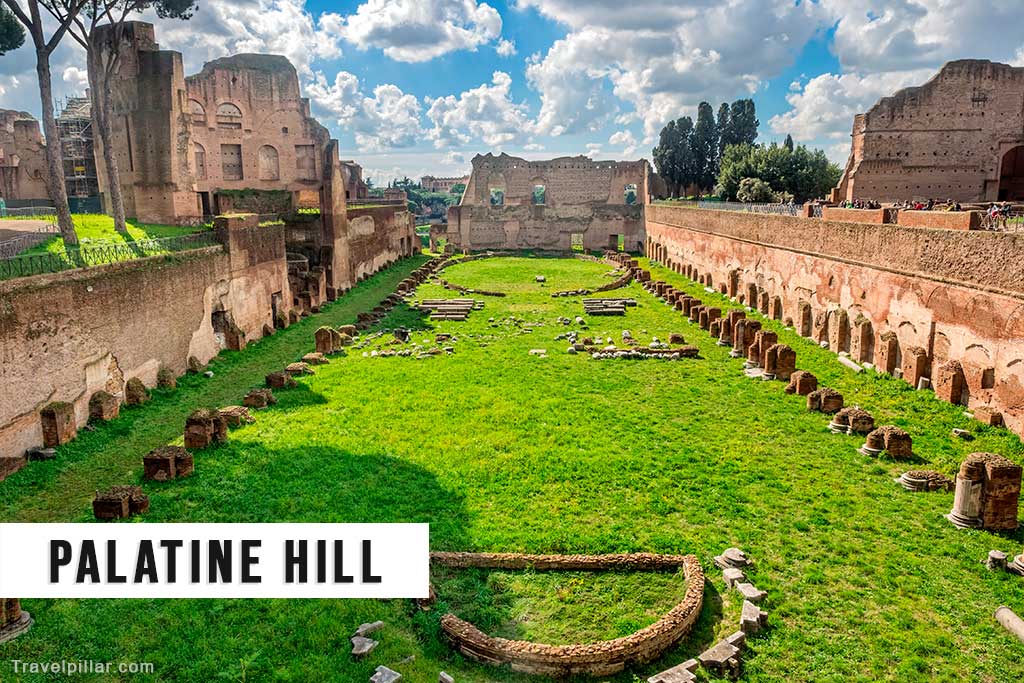
Palatine Hill, one of Rome’s seven hills, is a historically significant site overlooking the Roman Forum and Circus Maximus. Known as the legendary birthplace of Rome, it was home to emperors and aristocrats. Archaeological remains include imperial palaces, temples, and gardens. The site offers panoramic views and insights into ancient Roman civilization. Its rich history and central role in Rome’s founding make it an essential destination for visitors exploring the city’s heritage.
Official website: https://colosseo.it/en/
Entrance tickets can be purchased for 24hr or 48hr entry and include access to the Colosseum, Roman Forum and Palatine Hill – check website for prices and opening hours
Google map 4.7/5
#7 Trastevere (Neighborhood)
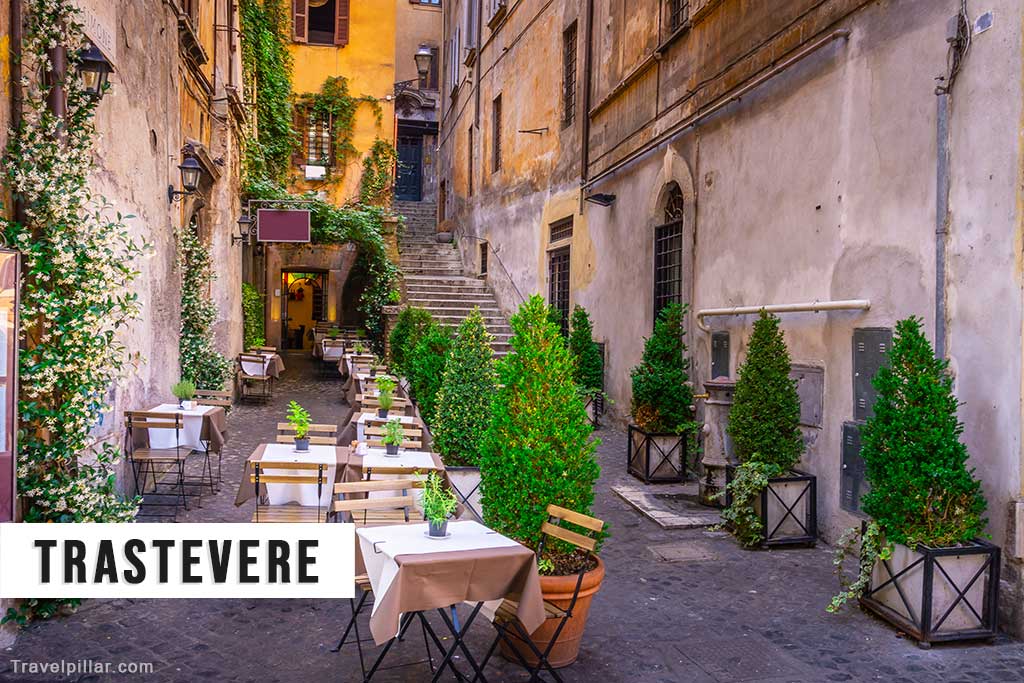
Trastevere is known for its charming cobblestone streets, medieval architecture, and vibrant atmosphere. Located across the Tiber River, it offers landmarks such as the Basilica of Santa Maria in Trastevere, one of Rome’s oldest churches. The area is filled with traditional trattorias, artisan shops, and lively piazzas. Trastevere’s blend of history, culture, and local character makes it a popular destination for those exploring authentic Roman life.
#8 Trevi Fountain – Fontana di Trevi

The Trevi Fountain is an iconic Baroque masterpiece completed in 1762. Designed by Nicola Salvi and adorned with sculptures by Pietro Bracci, it depicts Neptune flanked by allegorical figures. The fountain’s grandeur and cascading water symbolize abundance and vitality. Tradition holds that tossing a coin ensures a return to Rome. Positioned at the junction of three ancient aqueducts, it remains a celebrated landmark and a symbol of Roman artistry.
Official website: https://www.turismoroma.it
Outdoor public attraction, FREE entrance
Google map 4.8/5
#9 Piazza Navona
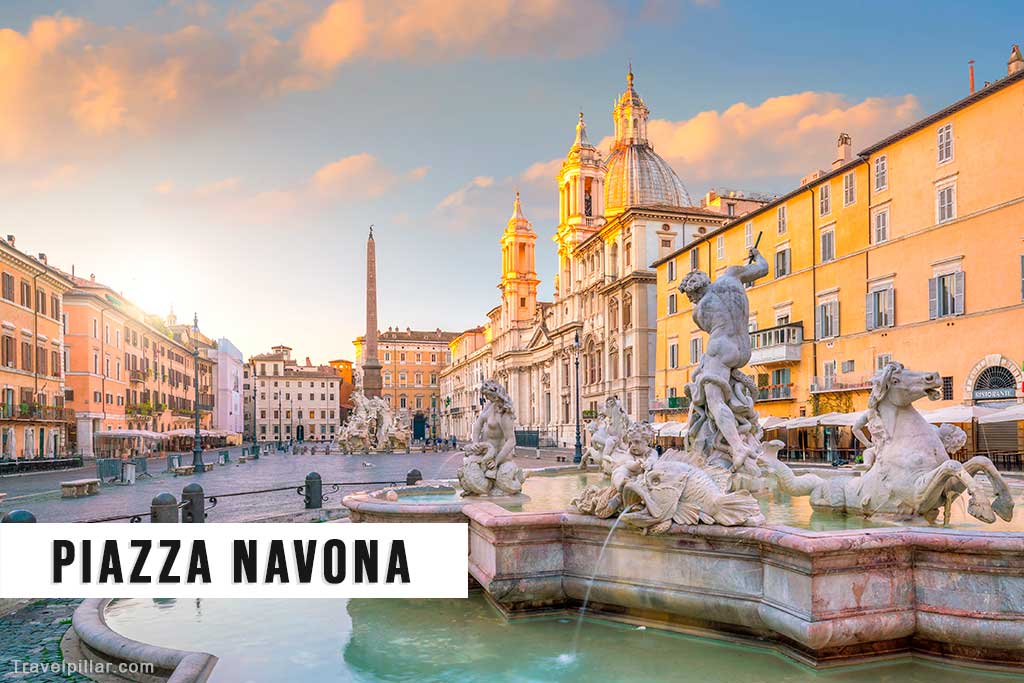
Piazza Navona is a historic square built on the site of the ancient Stadium of Domitian. Renowned for its Baroque architecture, it features the Fountain of the Four Rivers by Gian Lorenzo Bernini, the Church of Sant’Agnese in Agone by Francesco Borromini, and two additional fountains. Once a venue for public events, the piazza is now a lively gathering place, showcasing Rome’s artistic heritage and vibrant atmosphere.
Official website: https://www.turismoroma.it
Outdoor public attraction, FREE entrance
Google map 4.7/5
#10 Piazza Venezia
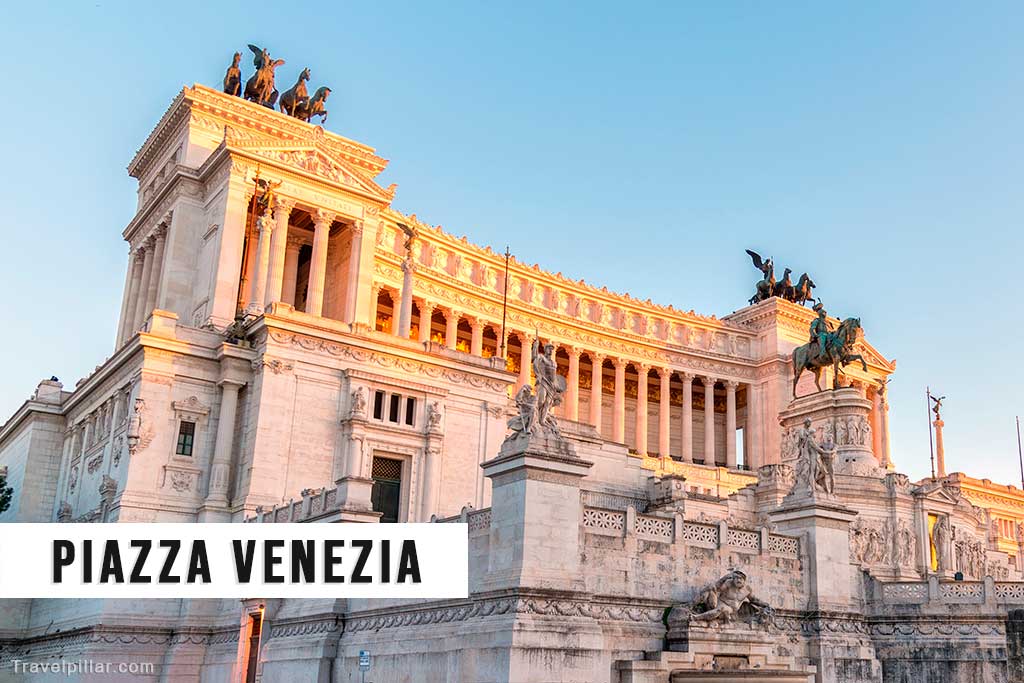
Piazza Venezia is a major intersection and historic square. Dominated by the imposing Vittorio Emanuele II Monument, it commemorates Italy’s unification. The square connects key landmarks, including the Roman Forum and Via del Corso. Palazzo Venezia, once a papal residence, adds to its historical significance. As a hub of activity, Piazza Venezia serves as a focal point for exploring Rome’s cultural and architectural heritage.
Official website: https://www.turismoroma.it
Outdoor public attraction, FREE entrance
Google map 4.7/5
#11 Galleria Colonna Museum and Gallery
Galleria Colonna, located in the historic Palazzo Colonna is a private art gallery showcasing a significant collection of Baroque and Renaissance artworks. The gallery, established in the 17th century, features masterpieces by artists such as Carracci, Guercino, and Tintoretto, set within the opulent interiors of a noble Roman palace.
Official website: https://www.galleriacolonna.it
Google map 4.9/5
#12 Basilica di Santa Maria in Ara Coeli

Basilica di Santa Maria in Ara Coeli is a medieval church located on Rome’s Capitoline Hill. Known for its Romanesque-Gothic architecture, the basilica features an impressive wooden ceiling and ancient Roman columns. It houses the Santo Bambino statue and the 9th-century frescoes depicting the life of St. Francis of Assisi.
Google map 4.8/5
#13 Basilica of San Giovanni in Laterano
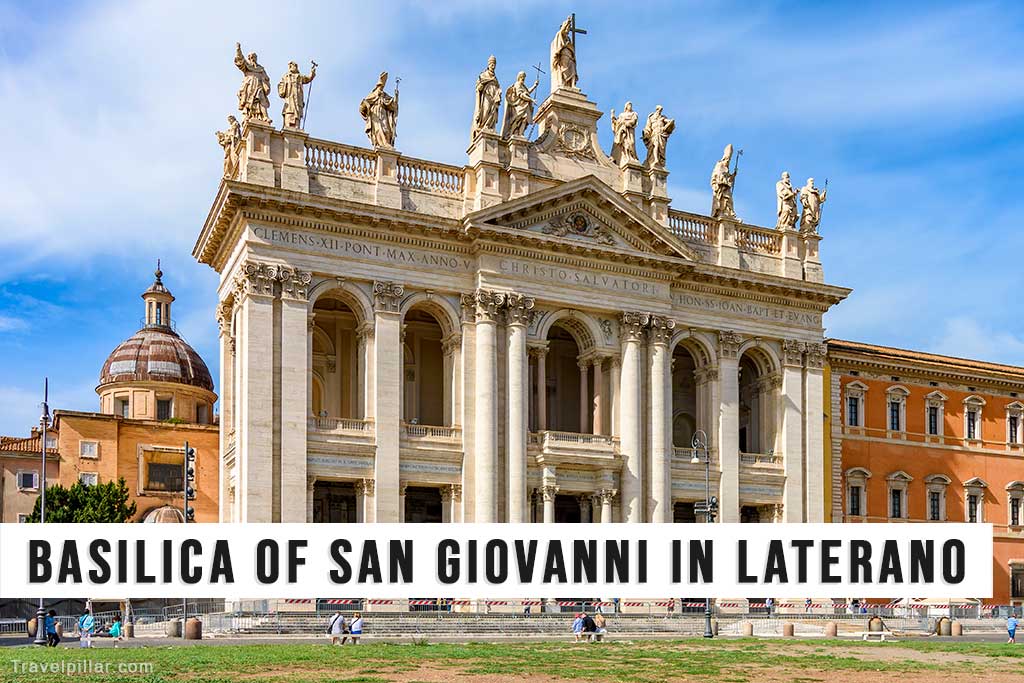
The Basilica of San Giovanni in Laterano is Rome’s cathedral and the oldest of the city’s four major basilicas. As the official ecclesiastical seat of the Pope, it holds a significant status within the Catholic Church. The basilica features a Baroque facade, ancient relics, and impressive interior artworks and decorations.
Official website: https://www.basilicasangiovanni.va/ (only in Italian)
Google map 4.8/5
#14 Chiesa di Sant’Ignazio di Loyola
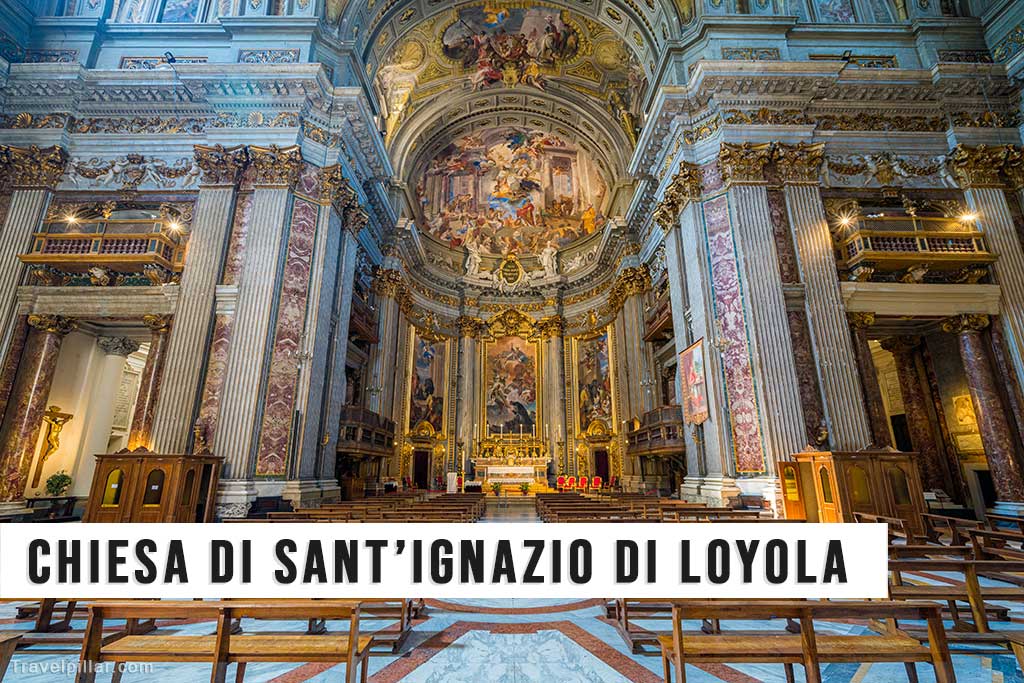
Chiesa di Sant’Ignazio di Loyola is a Baroque church dedicated to St. Ignatius of Loyola, founder of the Jesuit order. Completed in 1650, it is known for its trompe-l’oeil ceiling fresco, The Triumph of the Name of Jesus, by Andrea Pozzo, and its grand, richly decorated interior.
Google map 4.8/5
#15 Chiesa del Gesù

Chiesa del Gesù is the mother church of the Jesuit order in Rome, exemplifying Baroque architecture. Completed in 1584, it is renowned for its richly decorated interior, including the ceiling fresco The Triumph of the Name of Jesus by Giovanni Battista Gaulli. The church is a significant site for Jesuit history and worship.
Google map 4.8/5
#16 Capitoline Hill (Piazza del Campidoglio)

Piazza del Campidoglio, designed by Michelangelo in the 16th century, is a historic square on Rome’s Capitoline Hill. It is surrounded by significant buildings, including Palazzo Senatorio, Palazzo dei Conservatori, and Palazzo Nuovo, which house the Capitoline Museums. The square features the Equestrian Statue of Marcus Aurelius, a prominent landmark in Rome.
Google map 4.7/5
#17 Capitoline Museums

The Capitoline Museums, located on Capitoline Hill, are among the oldest public museums in the world, established in 1471 by Pope Sixtus IV. The collection spans ancient Roman sculptures, Renaissance art, and archaeological artifacts. Highlights include the bronze She-Wolf, symbolizing Rome, and the equestrian statue of Marcus Aurelius. Housed in two palaces connected by an underground gallery, the museums offer a comprehensive view of Rome’s artistic and historical legacy.
Official website: https://www.museicapitolini.org/en
Google map 4.7/5
#18 Castel Sant’Angelo

Castel Sant’Angelo, also known as the Mausoleum of Hadrian, is a historic fortress in Rome located on the banks of the Tiber River. Originally built as a mausoleum for Emperor Hadrian in the 2nd century AD, it later served as a papal residence, fortress, and prison. Today, it functions as a museum, showcasing its varied history and offering panoramic views of the city from its terraces.
Official website: https://www.museiitaliani.it/
Google map 4.7/5
#19 Imperial Fora
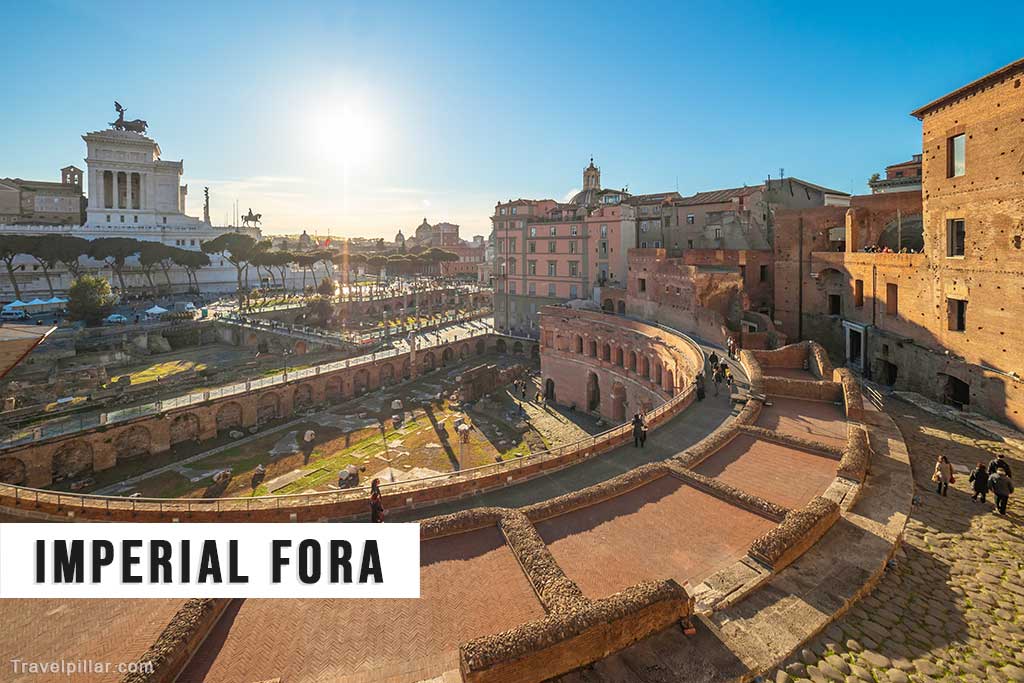
The Imperial Fora are a series of monumental public squares in Rome, built between 46 BC and 113 AD to serve as centers for political, religious, and commercial activities. The complex includes the Forum of Caesar, Forum of Augustus, Forum of Vespasian, Forum of Nerva, and Trajan’s Forum, each featuring temples, basilicas, and open spaces. These fora showcase the architectural and cultural achievements of ancient Rome and remain significant archaeological and historical sites.
Google map Via dei Fori Imperiali 4.7/5
#20 Borghese Gallery (Galleria Borghese)
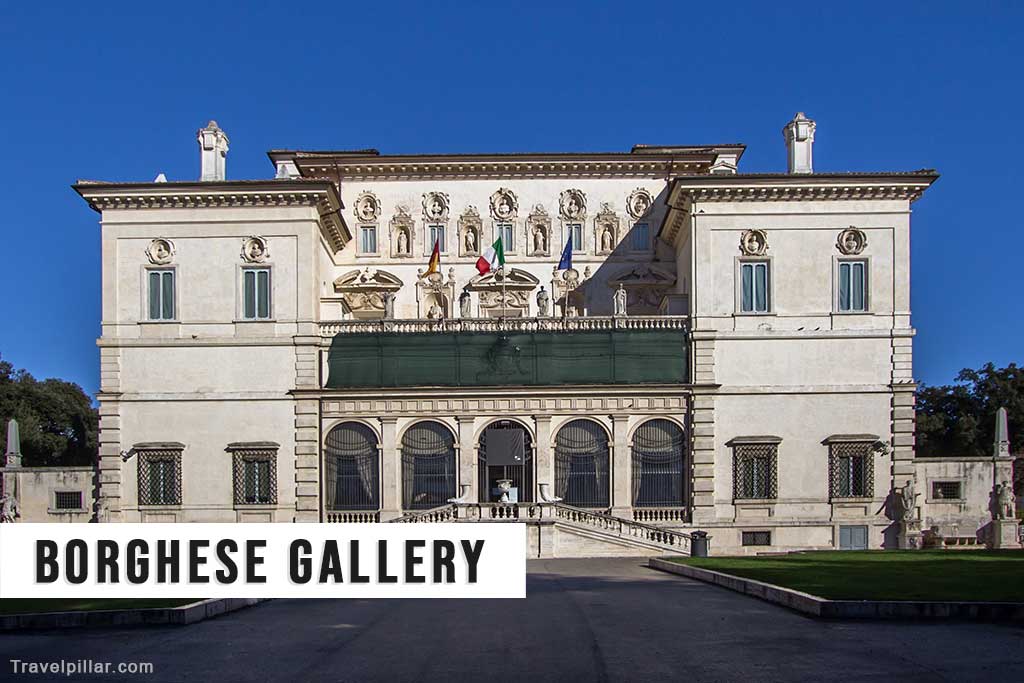
The Borghese Gallery and Museum, located in Villa Borghese Gardens, houses a prestigious collection of art. Built in the 17th century for Cardinal Scipione Borghese, it showcases masterpieces by Bernini, Caravaggio, Raphael, and Titian. Highlights include Bernini’s sculptures Apollo and Daphne and David, as well as Caravaggio’s Boy with a Basket of Fruit. The museum’s harmonious blend of art, architecture, and landscaped gardens makes it a cultural treasure.
Official website: https://galleriaborghese.cultura.gov.it/en/
Open 09:00-19:00 Tuesday to Sunday. Standard adult ticket €13 students 18-25 €2. Check website for up-to-date prices and opening hours
Google map 4.6/5

